全球经济格局重构

Search documents
评论 | 世界在不确定性中寻找新平衡
Xin Lang Cai Jing· 2025-12-30 00:29
Economic Overview - The global economy in 2025 is expected to show resilience despite challenges such as U.S. tariffs, ongoing geopolitical conflicts, and increased financial volatility, with growth projected to exceed expectations [1] - The International Monetary Fund (IMF) has raised its global economic growth forecast for 2025 to 3.2%, while the U.S. economy is expected to grow only 2.0% in 2025 and further decline to 1.7% in 2026 [1] - Emerging markets and developing economies are projected to be the main drivers of global growth, with a forecasted growth rate of 4.2% in 2025, particularly strong in ASEAN countries at 4.7% [1] Trade Dynamics - Global trade is undergoing a transformation, with a 4.9% year-on-year increase in global goods trade volume in the first half of 2025, and an annual forecast adjustment to 2.4% [2] - The growth in trade is attributed to both pre-tariff stockpiling in the U.S. and expanding trade among developing countries, with Asia contributing significantly to global trade growth [2] - The trade system faces deep challenges, including unilateral tariffs and geopolitical conflicts, which have created significant turmoil in the past 80 years [2] Technological and Green Transition - AI and green transitions are identified as dual driving forces for economic growth, with AI investments expected to boost global trade by 34% to 37% by 2040 [3] - However, there are risks associated with AI investments, which may resemble the internet bubble if returns do not meet expectations [3] - China's investments in renewable energy technologies have reduced global clean energy costs, with the penetration rate of new energy vehicles exceeding 50% [3] China's Economic Stability - China's GDP growth in the first three quarters of 2025 is reported at 5.2%, with the total expected to surpass 140 trillion yuan for the year, driven by consumption and manufacturing investment [4] - The country is enhancing its macroeconomic stability through policies aimed at high-level opening up and expanding cooperation, including the launch of the Hainan Free Trade Port [4] - China's focus on AI and biotechnology in its 14th Five-Year Plan is expected to provide market opportunities and technology transfer for developing countries [4] Future Outlook - The resilience of the global economy in 2025 is attributed to technological breakthroughs and the rise of emerging economies, with a need to find balance amid uncertainties in 2026 [4] - Potential market volatility may arise from trade policy disagreements, U.S. debt risks, and uncertainties in Japan's stimulus plans, but opportunities remain in AI applications and green technology [4]
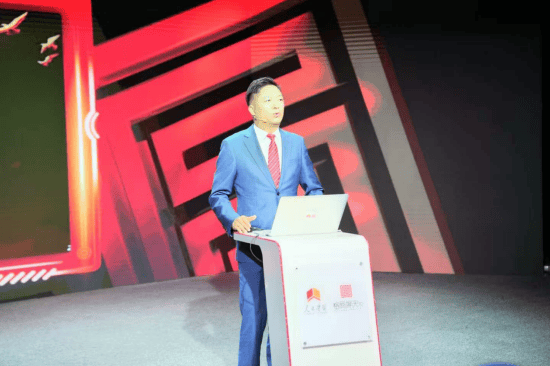
曹军武第571期讲座:展望十五五,中国经济的关键突破与发展蓝图
Sou Hu Cai Jing· 2025-09-30 04:50
Group 1 - The core viewpoint of the lecture is that China's economy is entering a critical transformation period, with a focus on key breakthroughs and development plans during the "14th Five-Year Plan" [1] - The lecture emphasizes the integration of macro strategies and microeconomic levels, providing specific paths for China's economic development over the next five years [1][5] - The importance of addressing global changes, industrial restructuring, and technological innovation challenges is highlighted [1][5] Group 2 - The restructuring of the global economic landscape and China's strategic response is analyzed, particularly in the context of the US-China rivalry and energy transitions [3][5] - The shift from being merely a "world factory" to becoming a rule-maker in the global economy is emphasized [3] - The competition over AI chips, digital economy, and technology standards is identified as a new battleground, requiring Chinese companies to strategically position themselves [3][5] Group 3 - The strategic layout in technology independence, industrial upgrading, green transformation, and digital currency is detailed [5][6] - Emphasis is placed on technological innovation in AI chips, hydrogen energy, and high-end equipment manufacturing to overcome technological bottlenecks [5][6] - The focus on digital transformation through digital currency and enhancing financial service efficiency is outlined [5][6] Group 4 - High-quality development is identified as the main theme for China's future economy, shifting from speed to quality [6] - The need for innovation and transformation in manufacturing, technology, and energy industries is stressed [6] - Companies are guided on aligning their strategies with national strategies for efficient resource allocation [6][8] Group 5 - Systemic risks such as energy crises, supply chain risks, and financial volatility are analyzed, with specific strategies proposed for mitigation [7][8] - The impact of energy cost fluctuations on production and the strategic opportunities in renewable energy sectors are discussed [7] - Companies are advised on diversifying supply chains and managing financial risks through various strategies [8][22] Group 6 - The importance of central-local collaboration and policy support in driving China's economic development is emphasized [8][10] - State-owned enterprises are encouraged to take a leading role in high-end manufacturing and digital industries [8] - The collaboration between local governments and industry funds is analyzed for reducing R&D costs and enhancing innovation capabilities [8][10] Group 7 - Key measures and action plans for companies during the "14th Five-Year Plan" period are outlined, focusing on strategic investments in AI, computing power, and green energy [10][12] - The need for precise identification of policy support areas and capital flows for investment is highlighted [15][16] - Companies are encouraged to engage in cross-border mergers and acquisitions to enhance their global market presence [16] Group 8 - The integration of green transformation and corporate social responsibility (ESG) is discussed, particularly in the context of China's dual carbon goals [33][34] - Companies are advised to establish comprehensive carbon emission management systems and engage in green technology innovation [34][19] - The importance of collaboration with supply chains and local governments for promoting green technology is emphasized [19][34] Group 9 - The need for enhanced risk management capabilities in response to complex international situations is highlighted [22][24] - Companies are encouraged to diversify their supply chains and establish long-term contracts for critical raw materials [22][23] - Financial risk management strategies, including the use of financial instruments for hedging, are recommended [23][24] Group 10 - The importance of innovation and execution capabilities for companies to gain a competitive edge in the market is stressed [24][25] - Companies are advised to strengthen strategic decoding and organizational management to ensure effective execution of strategic goals [25] - The integration of capital, technology, and industry resources is emphasized to enhance innovation capabilities [25]