供应链多元化

Search documents
Sonders: Base Case is "Rolling Recessions" Through Market Segments
Youtube· 2026-03-26 15:50
Market Overview - The current market is characterized by a short-term orientation, with significant amounts of money being driven by retail traders and systematic hedge funds, leading to rapid rotations in market sectors [3][4] - There is a perception of complacency regarding the potential long-term impacts of ongoing geopolitical conflicts, particularly in the energy sector [4] Geopolitical Impact - The ongoing conflict has led to a reevaluation of supply chains, similar to the changes seen during the pandemic, with a focus on the necessity for diversification due to chokepoints like the Strait of Hormuz [5][6] - The military actions have resulted in significant production shutdowns, particularly in LNG capabilities, which are expected to take 3 to 5 years to rebuild [6] Economic Outlook - The potential for sectoral recessions is highlighted, with the possibility of rolling recessions affecting different parts of the economy rather than a full economic recession [10][12] - Sustainable increases in oil prices could exacerbate these sectoral recessions, particularly impacting consumer-oriented sectors with high energy costs [13] Federal Reserve Considerations - The Federal Reserve is facing challenges due to its dual mandate of managing inflation and the labor market, complicating its decision-making process regarding interest rates [15][16] - Current labor market data suggests resilience, but any significant weakness could lead the Fed to maintain its current policy stance rather than pursue rate hikes [16][17]


全球稀土,在库存彻底耗尽之前
汽车商业评论· 2026-03-23 23:06
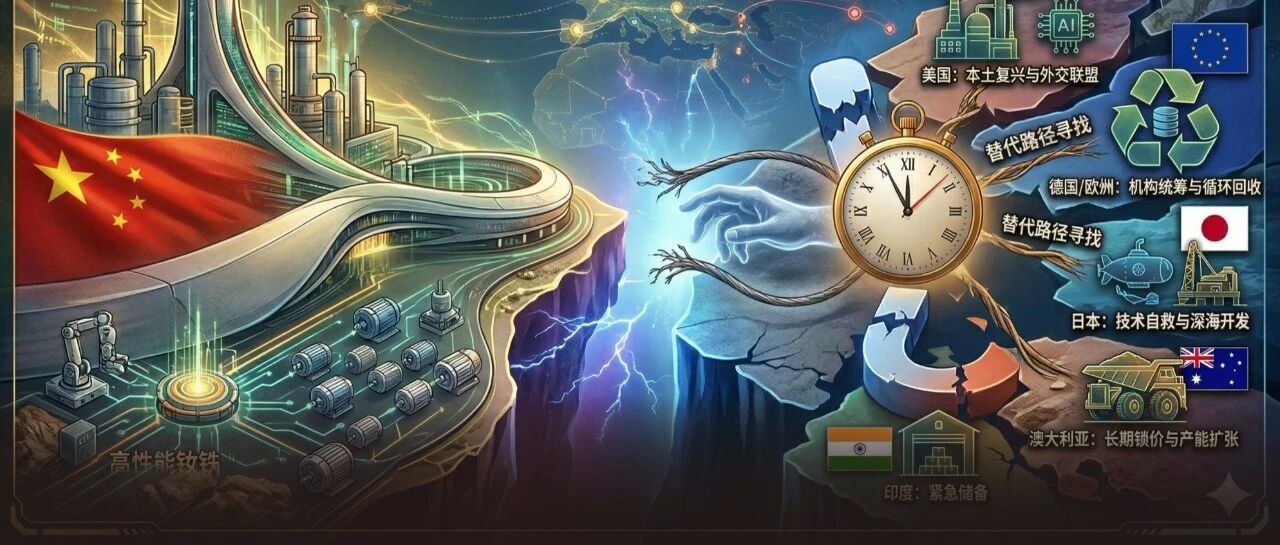
Core Insights - The article discusses the increasing tensions between Japan and the U.S. against China regarding rare earth minerals, emphasizing the need for diversification in supply chains [3][4] - China's stringent export controls on rare earths, particularly since 2025, have raised concerns about the global automotive industry's reliance on these materials [4][18] - The article highlights the challenges faced by countries seeking alternatives to Chinese rare earths, including performance, cost, and time constraints [20][21] Group 1: Japan-U.S. Cooperation - Japan and the U.S. have agreed to strengthen cooperation to diversify the supply chain of critical minerals, including rare earths [3] - The meeting in Tokyo marks a significant step in addressing the risks associated with over-reliance on specific regions for critical minerals [3][4] - The urgency for alternative sources is underscored by the fact that China controls approximately 90% of global rare earth processing capacity [4][18] Group 2: Impact of China's Export Controls - China's export controls on rare earths have been described as the most stringent in history, establishing a comprehensive control system over the entire industry chain [4][18] - The automotive industry is particularly vulnerable, with estimates suggesting that a complete halt in Chinese supplies could lead to significant production disruptions within two months [4][7] - The article compares the rare earth supply crisis to the semiconductor crisis, indicating its potential to severely impact production lines [13] Group 3: Challenges in Finding Alternatives - The performance of rare earth magnets is difficult to replicate, as they provide significant advantages in size and efficiency for electric motors [19][20] - The cost of rare earth permanent magnets produced in China is approximately 60% lower than that of foreign competitors, making it challenging for others to compete [20] - Developing new rare earth mines and refining facilities is a lengthy process, often taking 5 to 10 years, which complicates the search for alternatives [21] Group 4: Global Supply Chain Restructuring - Countries are increasingly collaborating to mitigate reliance on Chinese rare earths, with Japan and the U.S. planning joint development of rare earth resources [28][29] - The U.S. has signed multiple bilateral agreements to enhance its critical mineral supply chain, indicating a shift towards multilateral cooperation [33][34] - European countries are also exploring collaborative models to secure critical raw materials, similar to Japan's approach [35] Group 5: China's Strategic Shift - China is shifting its focus from resource control to technology control in the rare earth sector, aiming to enhance the value-added aspects of its industry [43][44] - The article notes that China's advancements in rare earth technology could solidify its dominance in the global market, even as other countries seek alternatives [51] - The establishment of a comprehensive compliance framework for rare earth exports indicates China's intent to maintain influence over global supply chains [49][51]


宁德时代:以量补价
YOUNG财经 漾财经· 2026-03-19 14:11
Core Viewpoint - CATL's 2025 financial report has exceeded market expectations, showcasing its dominance in the battery industry despite a declining market share in domestic power battery installations [4][5][19]. Financial Performance - In 2025, CATL achieved a revenue of 423.7 billion yuan, a year-on-year increase of 17%, and a net profit of 72.2 billion yuan, up 42% [5]. - The company reported a daily profit of nearly 200 million yuan and held over 300 billion yuan in cash [5]. - The fourth quarter saw a significant revenue surge, exceeding 140 billion yuan, marking a 36.6% year-on-year increase [7]. Market Share and Sales Growth - CATL's domestic power battery installation market share has declined from 52.1% in 2021 to 43.42% in 2025 [6][19]. - The company sold 661 GWh of lithium batteries in 2025, a 39.16% increase year-on-year, benefiting from a growing industry demand [8]. - The global sales of new energy vehicles reached 21.47 million units in 2025, a 21.5% increase, with China's sales surpassing 13.875 million units [8]. Business Segments - The power battery segment generated 316.5 billion yuan in revenue, accounting for 74.7% of total revenue, with a year-on-year growth of 25.08% [8]. - The energy storage business has become a significant growth driver, with revenue increasing to 62.44 billion yuan, a growth of 8.99% [9]. - CATL's energy storage battery shipments reached 121 GWh, a 29% increase, maintaining its global market leadership [9]. Production Capacity and Utilization - CATL's battery system production capacity was 772 GWh in 2025, with a utilization rate of 96.9% [11]. - The company faced short-term capacity shortages, leading to some orders being unfulfilled [11]. International Expansion - CATL's overseas revenue reached 129.6 billion yuan, accounting for 30.6% of total revenue, indicating a significant growth in international markets [11]. - The company has accelerated its global expansion, with plans for new production facilities in Hungary, Spain, and Indonesia [21]. Profitability and Financial Health - The net profit margin for 2025 was 18.12%, an increase of 3.20 percentage points year-on-year [13]. - The company generated a net cash flow from operating activities of 133.2 billion yuan, with total cash and cash equivalents nearing 392.5 billion yuan [12]. Inventory and Contract Liabilities - CATL's inventory reached 94.52 billion yuan, a 58% increase, with a significant portion being unfinished products [14]. - Contract liabilities surged to 49.2 billion yuan, reflecting a strong order backlog but also indicating potential future demand concerns [17]. Competitive Landscape - CATL's market share has been eroded by competitors like BYD and other second-tier manufacturers, leading to a more fragmented market [20]. - The company is actively seeking to strengthen partnerships and optimize collaborations with key automotive clients to secure its market position [21]. Technological Development - CATL is focusing on sodium-ion and solid-state battery technologies, with significant investments in research and development [22]. - The company aims to commercialize sodium batteries in various applications by 2026, while solid-state batteries are expected to see limited production until 2027 [22]. Future Outlook - Management remains optimistic about maintaining profitability in 2026, despite potential challenges from raw material price fluctuations and market demand [18]. - The company anticipates a compound annual growth rate of 20%-30% over the next five years, driven by ongoing electrification trends [18].


韩媒:三星已向TCL华星订购1500万片OLED手机面板
WitsView睿智显示· 2026-03-17 04:34
Core Viewpoint - Samsung Electronics' MX division has decided to purchase approximately 15 million OLED panels from TCL Huaxing Optoelectronics (CSOT) for mid-range smartphones, citing TCL's superior price competitiveness as the primary reason for this decision [2][4]. Group 1: Supply Chain and Cost Management - Historically, Samsung's A series OLED panels were exclusively supplied by Samsung Display, ensuring stable quality and maintaining internal supply chains [4]. - Rising memory prices have increased manufacturing costs, prompting Samsung's MX division to seek supply chain diversification to lower display panel costs [4]. - TCL's OLED panels are estimated to be at least 20% cheaper than those from Samsung Display, making them an attractive alternative for Samsung [4][5]. Group 2: Impact on Samsung Display and Market Dynamics - The decision to source panels from TCL has led to significant internal conflict between Samsung's MX division and Samsung Display, with the latter seeking intervention from the group organization to reverse the decision [5]. - The shift to TCL's panels is expected to impact Samsung Display's profitability, especially with reduced orders for the A series and rising memory prices leading to a cutback in low-end product lines [5]. - Samsung Electronics shipped approximately 240 million smartphones last year, with the A series being a flagship product line that accounts for over half of its sales [5].

索尼CIS,碰到大麻烦了
半导体芯闻· 2026-03-16 10:26
Core Viewpoint - The article discusses the challenges faced by Sony in its image sensor production, particularly affecting its supply chain for Apple, while highlighting potential benefits for Samsung's semiconductor business due to Apple's diversification efforts [1][2]. Group 1: Sony's Image Sensor Challenges - Sony is experiencing yield issues at its Nagasaki Technology Center, which is crucial for producing CMOS image sensors, accounting for over 80% of its smartphone sensor sales [1]. - The yield problems could disrupt supply to major clients like Apple, prompting Sony to deploy additional manpower to resolve these issues [1]. - Sony holds a dominant position in the global image sensor market with a market share of 51.6%, significantly ahead of Samsung's 15.4% and OmniVision's 11.9% [1]. Group 2: Samsung's Opportunities - Apple is diversifying its supply chain, collaborating with Samsung to develop new semiconductor production technology, which may include image sensors for future iPhones [2]. - Samsung's ISOCELL brand has developed competitive image sensor technology, including the world's first 200-megapixel sensor, positioning it well for potential inclusion in Apple's supply chain [2]. - The recent increase in capacity utilization at Samsung's foundries, exceeding 80%, is expected to improve the performance of its non-memory semiconductor business, with profitability anticipated by Q4 of this year [3].


天虹国际集团(02678):首次覆盖报告:全球纱线龙头,盈利进入上行期
GUOTAI HAITONG SECURITIES· 2026-03-08 01:27
Investment Rating - The report assigns a "Buy" rating to the company, Tianhong International Group, with a target price of HKD 10.20 based on a 2026 PE of 8X [8][19]. Core Insights - Tianhong International Group is recognized as a global leader in yarn production, with a significant portion of its production capacity located in Vietnam. The company has successfully cleared high inventory levels and is entering a period of profit growth [3][19]. - The report forecasts that the company's net profit attributable to shareholders will reach RMB 8.9 billion, RMB 10.4 billion, and RMB 11.3 billion for the years 2025, 2026, and 2027, respectively, reflecting year-on-year growth rates of 60.5%, 17.2%, and 8.7% [18][19]. Summary by Sections 1. Company Overview - Tianhong International Group, founded in 1997, is one of the largest suppliers of core-spun cotton textiles globally. The company has strategically expanded its yarn production capacity in Vietnam since 2006, which has positioned it well in the market [19][20]. 2. Financial Analysis - The company's revenue for 2024 is projected at RMB 23.03 billion, with a slight increase of 1.3% year-on-year. The gross profit is expected to be RMB 2.863 billion, and the net profit attributable to shareholders is forecasted at RMB 554 million, marking a significant recovery from previous losses [6][18]. - The report highlights that 76.1% of the company's costs are related to raw materials, primarily cotton, indicating that profit margins are sensitive to fluctuations in cotton prices [19][34]. 3. Future Outlook - The global yarn market is expected to grow at a CAGR of 5.9% from 2025 to 2032, with the market size projected to reach RMB 12,602.9 billion by 2032. Tianhong's yarn revenue is anticipated to account for approximately 2.1% of this market in 2024 [42][43]. - The company is actively working on debt repayment and reducing leverage, which is expected to lower financial expenses and enhance profitability. It plans to repay RMB 8-10 billion in debt annually over the next three years [44][48].
a.k.a. Brands (AKA) - 2025 Q4 - Earnings Call Transcript
2026-03-05 22:32
Financial Data and Key Metrics Changes - For the full year 2025, net sales increased by 4.4% to $600 million, marking consecutive growth [5][31] - Gross margin expanded by 30 basis points to 57.3%, despite facing tariff headwinds that negatively impacted margins by approximately 100 basis points [9][32] - Adjusted EBITDA for the year was $19.7 million, or 3.3% of net sales, down from $23.3 million or 4.1% the previous year [32] Business Line Data and Key Metrics Changes - The U.S. region, the largest market, saw net sales growth of 7% to $394 million, accounting for 66% of total business [5][10] - Princess Polly, the largest brand, delivered double-digit net sales growth and expanded its omni-channel strategy, opening seven new stores in the U.S. and one in Australia [6][14] - Petal and Pup performed well, particularly in dresses and event wear, and expanded its wholesale presence, especially at Nordstrom [19][22] Market Data and Key Metrics Changes - Net sales in Australia increased by 1.6% to $58.1 million, indicating a stable market performance [28] - Total orders rose by 6.4% year-over-year to 2.2 million, with active customers increasing to 4.18 million [29] Company Strategy and Development Direction - The company’s strategy for 2026 focuses on three core priorities: attracting customers through direct channels, expanding brand awareness via retail and wholesale, and streamlining operations [11][12] - The company is embedding AI across its operations to enhance customer experience and operational efficiency, expecting it to drive margin expansion in the coming years [12][11] Management's Comments on Operating Environment and Future Outlook - Management expressed confidence in the company’s momentum entering 2026, with expectations for net sales growth between $625 million and $635 million [34][35] - The company anticipates adjusted EBITDA of between $27 million and $29 million for fiscal 2026, with a focus on improving gross margins and operational discipline [35][36] Other Important Information - The company completed a structural transformation of its supply chain, with approximately 50% of U.S. sourcing now from outside China [8] - Inventory levels decreased by 10% year-over-year, reflecting improved inventory management practices [8][34] Q&A Session Summary Question: Can you walk us through the key drivers of the EBITDA guide for 2026? - Management indicated that the bulk of the EBITDA improvement will come from gross margin expansion, moving past the headwinds faced in 2025 [41][42] Question: What percentage of the revenue mix now comes from retail? - Management confirmed strong store performance and productivity, with plans to continue expanding the store footprint [45][46] Question: How do you envision the business retail versus wholesale? - Management highlighted the opportunity for growth in both retail and wholesale, with a focus on opening more stores while also expanding wholesale partnerships [50][52] Question: How are you thinking of the cadence with top line and adjusted EBITDA? - Management noted that growth is expected to be mid-single digits for the full year, with a more challenging comparison in Q1 due to prior year disruptions [55][56] Question: Can you provide more detail on the key assumptions driving deceleration in growth? - Management explained that the deceleration is largely due to tougher comparisons from prior year performance, particularly in the wholesale channel [68]

国际油价飙升推高运输成本 深圳集装箱运输协会呼吁“坚守合理运价底线,拒绝恶性竞争”
经济观察报· 2026-03-05 07:15
Core Viewpoint - The Shenzhen Container Transportation Association has issued an initiative to maintain industry stability amid rising international oil prices, which have surged to the $80-$90 per barrel range, with potential to exceed $100-$120 if the situation worsens [2][4]. Group 1: Current Industry Challenges - The escalation of military actions in the Middle East has led to Iran closing the Strait of Hormuz, disrupting global energy transport and causing a significant rise in international oil prices, which has severely impacted the global shipping market [2]. - The rapid increase in fuel costs, combined with challenges such as route diversions, shipping delays, and tight capacity, is expected to significantly raise operational costs for transportation companies [2][5]. - The container transportation prices at Shenzhen ports have been on a downward trend, pushing company profits and driver incomes to the brink of loss, necessitating heightened vigilance in the face of drastic external changes [2][5]. Group 2: Recommendations from the Initiative - The association calls for adherence to reasonable pricing standards and a rejection of malicious competition, urging companies to avoid quotes below cost and to ensure prices cover real costs such as fuel, insurance, labor, and equipment [5]. - It emphasizes the importance of enhancing information sharing among companies to reduce panic-driven price drops caused by information asymmetry, and to collectively resist bad practices like delayed payments from clients [5]. - The initiative also advocates for resisting illegal and unethical behaviors to maintain industry order, including avoiding commercial bribery and false advertising [5]. Group 3: Long-term Implications - Reports from various third-party consulting firms indicate that the geopolitical situation in the Middle East will have profound impacts on global energy supply, key shipping routes, and regional investment environments [5]. - The Ningbo (China) Supply Chain Innovation Research Institute suggests that the evolving geopolitical landscape has shifted from a short-term crisis to a long-term variable affecting global supply chains [5]. - Companies are encouraged to transition from passive responses to proactive strategies, including diversifying markets and supply chains, enhancing risk management, and utilizing financial and insurance tools to hedge against volatility [5].

美光首家印度工厂,终于落成
半导体行业观察· 2026-03-01 03:13
Core Viewpoint - Micron Technology has opened its first semiconductor assembly and testing plant in Sanand, India, expanding its global manufacturing scale and supporting India's role in the semiconductor value chain [2][3] Group 1: Plant Details - The Sanand facility will process advanced DRAM and NAND wafers into finished memory and storage products, with expectations to assemble and test tens of millions of chips by 2026 and scale up to hundreds of millions by 2027 [2] - The project represents a joint investment of approximately $2.75 billion from Micron and its government partners, with the first phase including over 500,000 square feet of cleanroom space [2] - The plant has commenced commercial production, with initial products delivered to Dell Technologies for use in laptops produced in India [2] Group 2: Strategic Implications - Micron's investment reflects a broader transformation in India from a focus on semiconductor design and software to hardware production, with assembly, testing, and packaging being crucial for building a comprehensive semiconductor ecosystem [3] - The Sanand plant contributes to supply chain diversification, as traditionally, memory packaging and testing have been concentrated in East and Southeast Asia, thus enhancing supply chain resilience amid growing demand driven by artificial intelligence [3] - While India may not immediately compete with established backend centers like Taiwan, Malaysia, or Singapore, Micron's establishment in India could influence future investment decisions, demonstrating the feasibility of large-scale semiconductor operations in the country [3]


重磅!苹果将采用国产存储芯片!
国芯网· 2026-02-27 12:59
Core Viewpoint - Apple is advancing its supply chain diversification strategy by considering partnerships with Chinese storage chip manufacturers for its upcoming iPhone 18 series and other products, marking a significant shift in its supply chain dynamics [2][4]. Group 1: Supply Chain Diversification - Apple is planning to collaborate with two Chinese storage companies to provide memory and storage chips for its iPhone 18 series, MacBook, and desktop Mac products, indicating a potential entry of domestic storage chips into Apple's supply chain [4]. - The decision to engage with Chinese manufacturers is driven by a combination of industry conditions and Apple's own needs, as the company has historically relied on suppliers like Kioxia, Samsung, and SK Hynix, which dominate the memory chip supply [4]. - The global memory chip industry is currently facing supply tightness and significant price increases, with Kioxia reportedly doubling its NAND chip prices and requiring quarterly renegotiations, putting pressure on Apple's profit margins and highlighting the risks of a single-source supply chain [4]. Group 2: Strategic Response - To mitigate supply risks and cost pressures while reducing dependence on Japanese and Korean suppliers, Apple has initiated a supply chain optimization plan, evaluating the inclusion of domestic DRAM and NAND flash memory chips into its core supply system [4]. - This strategic move is seen as a critical response to the changing industry landscape, allowing Apple to leverage the technological capabilities and cost advantages of domestic manufacturers [4]. - If Apple successfully integrates Chinese storage chips into its products, it would represent a milestone event for the Chinese semiconductor industry, bringing substantial benefits [5].