全球经济走向

Search documents
最猛资产!突然引发热议
Ge Long Hui A P P· 2025-12-03 09:05
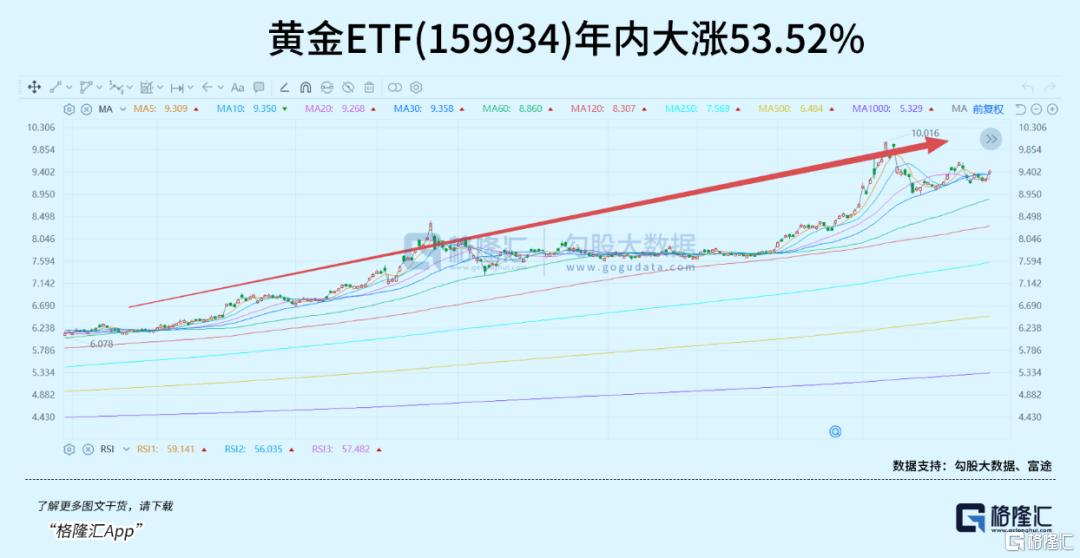
Core Viewpoint - Recent fluctuations in gold prices have sparked significant market discussions, with some investors strategically exiting while others are buying against the trend [1][2]. Group 1: Gold Market Dynamics - International gold prices have rebounded to around $4,300, with Comex gold showing a year-to-date increase of over 60% [2]. - Gold ETFs have seen substantial inflows, with the popular gold ETF (159934) rising 53.52% this year and net inflows reaching 12.64 billion yuan [2]. - The ongoing geopolitical tensions, particularly the Russia-Ukraine conflict, have heightened market concerns about global energy and food supply chains [6][7]. Group 2: Geopolitical and Economic Factors - The potential for U.S. military actions adds to market uncertainty, as recent statements from Trump suggest new military engagements could arise [8]. - The macroeconomic landscape is also shifting, with speculation about a dovish candidate for the next Federal Reserve chair, which could create significant discrepancies in market expectations regarding monetary policy [10][11]. - The intertwining of geopolitical conflicts and central bank policy directions points to a future of potential macroeconomic volatility [12]. Group 3: Investment Trends and Demand - The demand for gold is supported by structural factors, with central banks expected to purchase over 800 tons of gold by the third quarter of 2025, continuing a strong trend since 2022 [16]. - The strategic motivations behind central bank gold purchases have evolved from merely diversifying foreign exchange reserves to a focus on risk mitigation [16]. - The ongoing demand for gold as a neutral asset amidst geopolitical tensions and financial sanctions enhances its strategic value [17]. Group 4: Future Outlook - The market is at a critical juncture, with traditional asset pricing models failing under high debt, volatility, and policy uncertainty, increasing the demand for reliable value storage tools like gold [19]. - Geopolitical conflicts are expected to continue driving demand for gold, as unresolved issues will sustain the need for hedging against risks [22]. - The outlook for gold remains positive, supported by expectations of a potential recession and the likelihood of rapid interest rate cuts by central banks [29][30]. Group 5: Investment Vehicles and Performance - Gold ETFs are becoming increasingly popular due to their low costs and liquidity, with the latest scale of gold ETF (159934) reaching 34.7 billion yuan [32]. - Gold stocks have also performed well, with the E Fund CSI Hong Kong-Shenzhen Gold Industry Index (A: 021362; C: 021363) showing a year-to-date increase of over 79% [33]. - The index focuses on key companies in the gold and copper sectors, including major players like Zijin Mining and Shandong Gold [33].




国际风云变幻,热点事件聚焦
Sou Hu Cai Jing· 2025-09-19 13:06
Group 1: International Events and Security - The 12th Beijing Xiangshan Forum opened on September 18, focusing on "Safeguarding International Order and Promoting Peaceful Development," with over 1,800 participants from more than 100 countries and organizations [3] - Chinese Defense Minister Dong Jun emphasized the importance of Taiwan's return to China as a key component of post-war international order, asserting that the Chinese military is prepared to thwart any separatist attempts [3] - Assistant Foreign Minister Hong Lei presented a speech on reforming global security governance, contributing China's perspective and solutions to international security issues [3] Group 2: Economic Developments - The Federal Reserve announced a 25 basis point cut in the federal funds rate, lowering it to a target range of 4.00%-4.25%, marking its first rate cut since December 2024 [4] - Following the announcement, gold prices briefly exceeded $3,704 per ounce before closing at $3,658.89, a decrease of 0.83%, while the dollar index fell by 0.07% [4] - The rate cut aims to stimulate economic growth amid challenges, but it raises concerns about potential asset bubbles and currency depreciation, prompting other central banks to reassess their monetary policies [4] Group 3: Ongoing Conflicts - The escalation of the Israel-Palestine conflict has drawn significant international attention, with Israel's military actions in Gaza leading to a humanitarian crisis [5] - The UN Security Council's attempt to pass a ceasefire resolution was blocked by the US veto, resulting in widespread criticism and calls for a fair resolution to the conflict [5] - The Gulf Cooperation Council condemned Israel's actions and emphasized the need for military and intelligence coordination among member states to enhance regional defense integration [5] Group 4: Technology Sector Developments - Nvidia announced a $5 billion investment to acquire a stake in Intel, becoming one of its largest shareholders with over 4% ownership [6] - The partnership aims to develop PC and data center chips, with Intel incorporating Nvidia's graphics technology into its PC chips [6][7] - This collaboration is viewed as a strategic move to address intense competition in the global semiconductor industry, potentially reshaping market dynamics and impacting the technology sector [7]

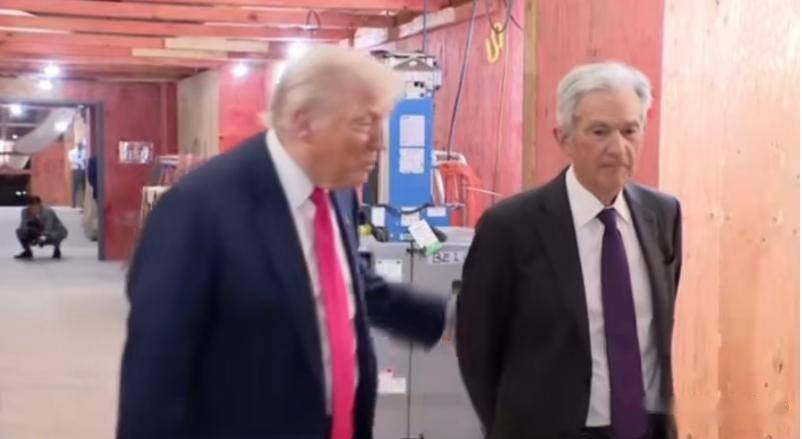
想动美联储主席,就算如今强势的川普都要三思而后行
Sou Hu Cai Jing· 2025-07-26 11:12
Core Insights - The article emphasizes the significant influence of the Federal Reserve Chair, particularly Jerome Powell, over global economic directions, surpassing even that of political leaders like the U.S. President [1][3][11] Group 1: Federal Reserve's Influence - The Federal Reserve, under Powell's leadership, has the power to shape global economic trends, a fact acknowledged even by the U.S. President [3][5] - Powell's firm stance on maintaining the independence of the Federal Reserve highlights its critical role in the U.S. political landscape, often leading to tensions with political figures like former President Trump [5][9] - The decisions made by the Federal Reserve, such as interest rate changes, have far-reaching effects on global financial markets, demonstrating the institution's pivotal role in economic stability [5][9][11] Group 2: Historical Context - Historical Federal Reserve Chairs, including Paul Volcker, have set precedents for maintaining the independence of the institution, which has been crucial in managing economic crises [7][11] - Powell continues this tradition, making decisions that may diverge from political pressures, thereby reinforcing the Federal Reserve's authority in economic matters [7][9] - The article suggests that the true power in shaping economic policy often lies with financial institutions and their leaders rather than elected officials [11][13]