全球科技竞争

Search documents
独家|欧美“围猎”海外中资半导体
Guan Cha Zhe Wang· 2026-01-16 08:27
Group 1 - The core issue revolves around the control dispute of Nexperia, a semiconductor company, which has drawn significant attention from the Chinese and Dutch governments, as well as businesses since October last year [2] - The Dutch government's freezing of Nexperia's shares is linked to the U.S. Department of Commerce's entity list and the 50% ownership penetration rule, which has led to severe disruptions in the global automotive supply chain [2][3] - The legal basis for the Dutch government's actions is the Dutch Supply of Materials Act, which has rarely been invoked, making the upcoming court ruling crucial for the future of Nexperia [2] Group 2 - The ongoing legal battle is expected to see the Dutch government support the European management of Nexperia, which could set a precedent for foreign investment reviews and government scrutiny of investments made years prior [3] - The chairman of Nexperia's parent company, Wingtech Technology, emphasized that the essence of the Nexperia issue is rooted in geopolitical tensions and global technology competition, framing the Dutch actions as a form of "national expropriation" [3] - There is a call for the Dutch government to withdraw its administrative orders to alleviate concerns over chip shortages globally, highlighting the need for a resolution to restore confidence in international investments [2]


西部证券晨会纪要-20251031
Western Securities· 2025-10-31 02:03
Group 1: Global Technology Competition - The report outlines three potential scenarios for global technology competition over the next decade: baseline scenario (strategic equilibrium between China and the US), optimistic scenario (China becomes an innovation leader), and pessimistic scenario (China's industrial upgrade falls short) [6][7] - Key technologies are defined as frontier technologies (AI, semiconductors, quantum computing, biopharmaceuticals), advanced manufacturing, and critical infrastructure technologies (energy and advanced networks) [6][7] - The US focuses on invention and innovation, while China aims for large-scale innovation in key industries, with both countries undergoing reforms in their innovation systems [6][7] Group 2: Softcom Power (301236.SZ) - For the first three quarters of 2025, Softcom Power reported revenue of 25.38 billion yuan, a year-on-year increase of 14.30%, and a net profit of 0.99 billion yuan, up 30.21% [15][17] - The company is guided by four strategic directions: intelligence, autonomy, greening, and internationalization, with a focus on enhancing software and digital technology services [16][17] - Future revenue projections for Softcom Power are 35.9 billion yuan, 41.3 billion yuan, and 47.7 billion yuan for 2025-2027, with net profits expected to be 0.384 billion yuan, 0.526 billion yuan, and 0.855 billion yuan respectively [17] Group 3: Dingjie Smart (300378.SZ) - Dingjie Smart's revenue for the first three quarters of 2025 reached 1.614 billion yuan, a 2.6% increase year-on-year, with a net profit of 0.051 billion yuan, up 2.4% [19][21] - The company is experiencing short-term pressure in mainland China but is seeing stable performance in non-mainland markets, driven by deepening applications and market expansion [19][20] - Revenue projections for Dingjie Smart are 2.502 billion yuan, 2.726 billion yuan, and 2.989 billion yuan for 2025-2027, with net profits expected to be 0.191 billion yuan, 0.233 billion yuan, and 0.301 billion yuan respectively [21] Group 4: Hai Tian Wei Ye (603288.SH) - Hai Tian Wei Ye reported a revenue increase of 6.02% to 21.628 billion yuan for the first three quarters of 2025, with a net profit of 5.322 billion yuan, up 10.54% [22][24] - The company experienced a slowdown in revenue growth in Q3, with a 2.48% increase to 6.398 billion yuan, while net profit rose by 3.40% to 1.408 billion yuan [23][24] - The company is focusing on creating new growth points and enhancing efficiency through digital production [24] Group 5: Guizhou Moutai (600519.SH) - Guizhou Moutai's revenue for the first three quarters of 2025 was 130.904 billion yuan, a 6.32% increase, with a net profit of 64.627 billion yuan, up 6.25% [26][28] - The company reported stable sales performance for its flagship Moutai liquor, while other series faced pressure [27][28] - Future earnings per share (EPS) projections for Guizhou Moutai are 72.87 yuan, 77.31 yuan, and 82.70 yuan for 2025-2027, maintaining a "buy" rating [28] Group 6: Xian Cai Co., Ltd. (600095.SH) - Xian Cai Co., Ltd. reported a significant increase in net profit of 203.39% for the first three quarters of 2025, reaching 0.442 billion yuan [46][47] - The company's revenue for Q3 was 0.655 billion yuan, a 43.77% increase year-on-year, driven by a surge in commission income [47][48] - The company is expected to achieve a net profit of 0.608 billion yuan for 2025, reflecting a 456.6% increase [48]




全球科技竞争路线图:胜任者有力,自胜者强
Western Securities· 2025-10-30 08:03
Group 1: Global Technology Competition Scenarios - The global technology competition may unfold in three scenarios: 1) Benchmark scenario: strategic equilibrium is achieved globally, with China maintaining its manufacturing lead but facing challenges in complex technology fields[1] - 2) Optimistic scenario: China becomes the innovation leader, shifting the global innovation production center's geographic location[1] - 3) Pessimistic scenario: China's industrial upgrade progresses slower than expected[1] Group 2: Key Technologies and Innovations - Key technologies include frontier technologies such as AI, semiconductors, quantum computing, and biotechnology, as well as advanced manufacturing and critical infrastructure technologies[1] - In AI, the performance gap between Chinese and American models is narrowing, with the number of significant AI models in the U.S. at 40 compared to China's 15 in 2024[2] - In semiconductors, China's institutional advantages and large-scale market are expected to help local companies overcome technological barriers[2] Group 3: Economic and Policy Implications - The U.S. manufacturing sector is projected to gain 244,000 jobs in 2024 due to reshoring initiatives and foreign direct investment[2] - Risks include policy uncertainty, economic risks from demand weakness and inflation, and supply chain disruptions due to geopolitical factors[3] - The U.S. government is focusing on enhancing supply chain resilience and economic security through increased spending and subsidies[2] Group 4: Biotechnology and Healthcare - In biotechnology, both the U.S. and China show similar overall performance, with the U.S. excelling in gene engineering and vaccine research, while China leads in drug production due to large-scale public investment[2] - In 2023, the U.S. FDA approved 55 new drugs, with 3 from Chinese developers, while China's NMPA approved 87 drugs, including 5 innovative drugs[2]
未来产业,大国科技竞赛“必争之地” | 新京报专栏
Xin Jing Bao· 2025-10-28 16:24
Core Insights - The "15th Five-Year Plan" outlines strategic priorities for China's economic and social development, emphasizing the importance of future industries such as quantum technology, biomanufacturing, hydrogen energy, nuclear fusion, brain-computer interfaces, embodied intelligence, and 6G technology as new economic growth points [2][3][11] Future Industries - The six identified future industries are expected to fundamentally alter production methods and drive high-quality economic development, reflecting China's strategic response to global technological competition [3][4] - Quantum technology is anticipated to initiate a second quantum revolution, while hydrogen and nuclear fusion energy may provide ultimate solutions for energy challenges [3][4] - Brain-computer interfaces and embodied intelligence are set to usher in a new era of human-machine integration, and 6G will define the infrastructure for future intelligent societies [3][4] Social Impact - The development of these future industries is projected to significantly transform social structures and lifestyles, with brain-computer interfaces potentially unlocking human cognitive boundaries and aiding in the treatment of severe diseases [4][5] - Embodied intelligence, combining robotics and AI, is expected to reshape various sectors including industry, services, and healthcare [4][5] - The alignment of these technologies with sustainable development goals is highlighted, with hydrogen and nuclear fusion supporting carbon neutrality, and biomanufacturing reducing reliance on petroleum-based materials [4][5] Economic Transformation - Future industries are positioned as core engines for economic transformation, shifting the growth model from factor-driven to innovation-driven [5][11] - Biomanufacturing is identified as a key pathway for a green industrial revolution, with projections indicating that by 2030, biobased chemicals could replace 25% of organic chemicals and 20% of petroleum fuels in the U.S. [5] - China's biomanufacturing market is valued at 420 billion yuan in 2023, with significant growth potential compared to the U.S. [5] Strategic Value - Maintaining a leading position in these fields is crucial for national security and industrial autonomy, especially in the context of intensified global competition [6][11] - Quantum communication's unconditional security is seen as a means to establish a national information highway, while biomanufacturing technology is critical for food and pharmaceutical supply chain stability [6][11] Regional Collaboration - The future industries involve a global competition for strategic advantage, with China adopting a "top-level design + regional collaboration" approach to drive development [6][7] - Major cities like Beijing, Shanghai, and Shenzhen are emerging as technology hubs, leveraging their resources to lead in quantum technology, brain-computer interfaces, and 6G [6][7] - The regional economic structure is expected to deepen, with eastern coastal areas dominating core technology R&D and high-end manufacturing, while central and western regions focus on supporting functions [7] International Cooperation - China is enhancing international cooperation, as evidenced by the signing of the upgraded free trade agreement with ASEAN, which includes digital and green economy collaboration [7][10] - Major cities are hosting international future industry summits to attract global talent and capital, fostering an open innovation ecosystem [7][10] Long-term Vision - The global competition for future industries is intense, with countries vying for strategic advantages in technological transformation [8][9] - China's proactive planning through the "15th Five-Year Plan" aims to capitalize on technological iterations and achieve a leapfrog development in key areas [10][11] - The focus on establishing a collaborative innovation ecosystem and participating in international standard-setting is essential for enhancing China's influence in global industrial chains [10][11]
独家洞察 | 中美关税战火再燃,全球科技链陷“大地震”?
慧甚FactSet· 2025-10-15 02:22
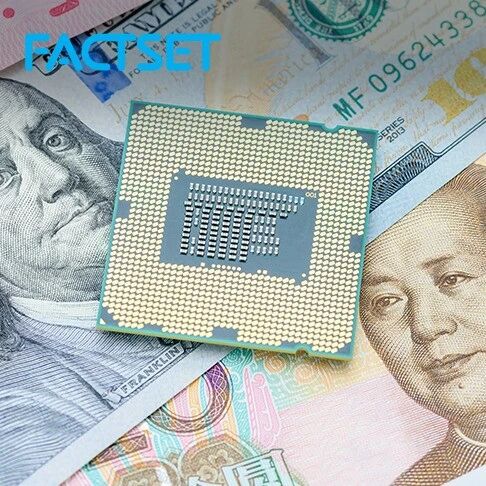
Core Viewpoint - The article discusses the escalating trade tensions between the U.S. and China, particularly focusing on the recent U.S. tariffs on Chinese rare earth exports and China's corresponding export controls on rare earth materials, highlighting the strategic importance of these materials in technology and defense sectors [1][3][6]. Group 1: U.S. Tariffs and Market Reaction - On October 10, President Trump announced a 100% tariff on Chinese goods starting November 1, in response to China's export controls on rare earths [1]. - Following this announcement, U.S. stock markets experienced significant declines, with the S&P 500 dropping 2.71%, the Dow Jones down 1.90%, and the Nasdaq falling 3.56%, indicating market concerns over potential disruptions in global supply chains and rising inflation [3]. Group 2: China's Export Control Measures - On October 9, China's Ministry of Commerce announced comprehensive export controls on rare earths, which are critical for military and semiconductor applications, marking a full-chain coverage from extraction to export [3]. - The Chinese government clarified that the export controls do not equate to a ban, as compliant applications for civilian use will still be approved, emphasizing a regulated approach to maintain trade [4]. Group 3: Importance of Rare Earths - Rare earths are essential in modern technology and defense, often referred to as "industrial vitamins," with China holding about one-third of global reserves and over 70% of mining and refining capabilities [6]. - The strategic significance of rare earths is underscored by their applications in various high-tech products, including smartphones, electric vehicles, and advanced military systems, making them a critical resource in the U.S.-China technological competition [6]. Group 4: Future Negotiations and Economic Implications - There is speculation about the potential for renewed negotiations between the U.S. and China around the time of the APEC meeting, as the timing of the tariff implementation may serve as a political window for dialogue [7]. - The economic costs of high tariffs could lead to significant repercussions for both nations, with estimates suggesting that U.S. effective tax rates could rise above 20%, potentially increasing core CPI from 3.4% to 3.5% or higher [7].
国际风云变幻,热点事件聚焦
Sou Hu Cai Jing· 2025-09-19 13:06
Group 1: International Events and Security - The 12th Beijing Xiangshan Forum opened on September 18, focusing on "Safeguarding International Order and Promoting Peaceful Development," with over 1,800 participants from more than 100 countries and organizations [3] - Chinese Defense Minister Dong Jun emphasized the importance of Taiwan's return to China as a key component of post-war international order, asserting that the Chinese military is prepared to thwart any separatist attempts [3] - Assistant Foreign Minister Hong Lei presented a speech on reforming global security governance, contributing China's perspective and solutions to international security issues [3] Group 2: Economic Developments - The Federal Reserve announced a 25 basis point cut in the federal funds rate, lowering it to a target range of 4.00%-4.25%, marking its first rate cut since December 2024 [4] - Following the announcement, gold prices briefly exceeded $3,704 per ounce before closing at $3,658.89, a decrease of 0.83%, while the dollar index fell by 0.07% [4] - The rate cut aims to stimulate economic growth amid challenges, but it raises concerns about potential asset bubbles and currency depreciation, prompting other central banks to reassess their monetary policies [4] Group 3: Ongoing Conflicts - The escalation of the Israel-Palestine conflict has drawn significant international attention, with Israel's military actions in Gaza leading to a humanitarian crisis [5] - The UN Security Council's attempt to pass a ceasefire resolution was blocked by the US veto, resulting in widespread criticism and calls for a fair resolution to the conflict [5] - The Gulf Cooperation Council condemned Israel's actions and emphasized the need for military and intelligence coordination among member states to enhance regional defense integration [5] Group 4: Technology Sector Developments - Nvidia announced a $5 billion investment to acquire a stake in Intel, becoming one of its largest shareholders with over 4% ownership [6] - The partnership aims to develop PC and data center chips, with Intel incorporating Nvidia's graphics technology into its PC chips [6][7] - This collaboration is viewed as a strategic move to address intense competition in the global semiconductor industry, potentially reshaping market dynamics and impacting the technology sector [7]

上市公司加码布局新材料赛道
Zhong Guo Hua Gong Bao· 2025-08-12 01:47
Group 1 - Multiple listed companies are actively announcing investments and acquisitions, driving the new materials industry to gain momentum [1] - Suzhou Jinfeng Technology Co., Ltd. plans to invest approximately 1.014 billion yuan in a new production base focused on thermal management materials for consumer electronics and new energy [1] - China National Chemical Corporation intends to acquire 100% of Nantong Xingchen Composite Materials Co., Ltd., which has a complete industrial chain from raw materials to high-end materials [1] - Suzhou Kema Material Technology Co., Ltd. aims to acquire 73% of Suzhou Kaixin Semiconductor Technology Co., Ltd. for 102 million yuan, enhancing its capabilities in silicon carbide materials [1] - Other companies like Xin Fengming Group and Dongmu New Materials Group are also expanding into various new materials sectors, including bio-based materials and plastic modification [1] Group 2 - New materials are considered a core element for driving the transformation and upgrading of the manufacturing industry, especially in the context of global technological competition [2] - Key areas such as flame-retardant materials for electric vehicle batteries and lightweight composite materials for low-altitude economy are expected to attract significant capital focus [2] - Companies with independent intellectual property rights are likely to receive more policy and capital support, accelerating the industrialization of technology through collaborative mergers and acquisitions [2] - The new materials industry features high technical barriers and significant added value, with leading companies enhancing competitiveness through vertical integration [2] - Head companies are pursuing technological mergers and industry chain collaboration to achieve breakthroughs, while facing pressure from compressed profit margins [2]


70多家中企被盯上,美国制裁再加码!但是受不受制裁,中国自己说的才算!
Sou Hu Cai Jing· 2025-03-29 13:45
Group 1 - The article highlights the increasing tension in US-China relations, particularly due to US tariffs and sanctions, which have not deterred China but rather strengthened its resolve and attracted more international cooperation [1][3] - The US Department of Commerce has blacklisted over 80 companies, including more than 70 Chinese firms, primarily in high-tech sectors like artificial intelligence and quantum computing, citing national security concerns [1][3] - The article argues that US sanctions may inadvertently accelerate China's technological advancements, as external pressure often stimulates internal innovation and development [3][5] Group 2 - Despite US restrictions, China's position in the global supply chain remains strong, with domestic companies increasing their self-research capabilities and achieving breakthroughs in key technologies [5][7] - Japan has also imposed a 95.2% anti-dumping tax on graphite electrode exports to China, indicating a heightened vigilance towards the Chinese market and an attempt to secure a dominant position in international markets [5] - The article emphasizes that the current situation presents both challenges and opportunities for China, urging the country to enhance international cooperation and continue reform and innovation efforts [7][8]