
全面与进步跨太平洋伙伴关系协定(CPTPP)

Search documents
欧盟与澳大利亚达成FTA,脱美贸易圈在扩大
日经中文网· 2026-03-25 06:18
Group 1 - The EU and Australia have reached a compromise on a Free Trade Agreement (FTA), which will eliminate tariffs on 99% of EU products and 98% of Australian products [2][8] - The FTA is expected to create a free trade area covering nearly 500 million people and accounting for about 20% of the world's GDP [4] - The agreement aims to reduce Australia's trade dependency on China, especially after tensions arose due to Australia's call for an independent investigation into the origins of COVID-19 [9] Group 2 - The EU has been actively expanding its free trade network beyond the US, having recently signed FTAs with Mercosur and India, and is looking to establish new trade rules in collaboration with CPTPP [4][11] - The FTA negotiations included concessions from both sides, with the EU making some compromises on geographical indications (GI) and Australia opening its financial services and government procurement markets [8] - The EU plans to accelerate policy coordination with the Indo-Pacific region, focusing on security and defense partnerships, similar to agreements established with Japan [11]


柬埔寨申请加入CPTPP
日经中文网· 2025-12-16 08:00
Core Viewpoint - Cambodia has applied to join the Comprehensive and Progressive Agreement for Trans-Pacific Partnership (CPTPP) to diversify its export markets, especially in light of high tariffs imposed by the U.S. on Cambodian goods [2][4]. Group 1 - Cambodia's exports to the U.S. account for approximately 40% of its total exports, highlighting the need for market diversification due to the U.S. imposing tariffs as high as 49% [2][4]. - The CPTPP, which was signed by 12 countries in 2016, aims to promote high-level free trade, and its relevance has increased amid rising protectionism [2][4]. - The CPTPP negotiations require unanimous consent from the existing 12 member countries to initiate discussions on tariff reductions, with ongoing negotiations involving 10 countries and regions, including Cambodia [4]. Group 2 - The CPTPP was re-negotiated and renamed after the U.S. withdrawal under the Trump administration, with the remaining 11 countries signing the agreement in 2018 [4]. - The CPTPP is currently in negotiations with Costa Rica and has decided to initiate talks with Uruguay, indicating ongoing expansion efforts [4]. - The UK is set to join the CPTPP in 2024 following its exit from the European Union, further expanding the agreement's reach [4].
CPTPP与乌拉圭启动加入谈判,寻求扩大自贸区
日经中文网· 2025-11-24 08:00
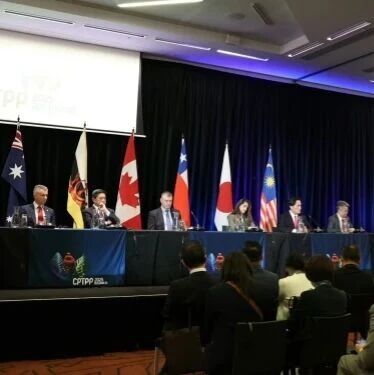
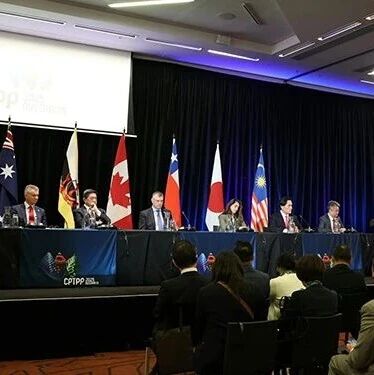
Group 1 - The CPTPP ministerial meeting in Melbourne on November 21 decided to initiate new membership negotiations with Uruguay, highlighting the strategic significance of maintaining and expanding free trade zones amid rising protectionism [2][6] - The meeting acknowledged that Indonesia, the Philippines, and the UAE meet the criteria for membership and will decide in 2026 whether to start negotiations with these countries [4] - Australia's Trade Minister Farrell expressed anticipation for new members to join by the end of the year, while avoiding a clear response regarding China's 2021 application for membership [5] Group 2 - The meeting raised concerns about economic coercion, particularly in light of China's actions, and emphasized the importance of cooperation to address market distortions and supply chain disruptions [6] - Uruguay's nominal GDP is approximately $80 billion, with a population exceeding 3 million, and its membership in the Southern Common Market reflects its commitment to free trade and democracy [6] - The CPTPP, which began in 2016, now includes 12 countries after the UK joined, covering about 7% of the world's population and accounting for approximately 15% of global GDP and 18% of trade [7]
0.2%—1.1%;2.5%—11.8%,增长!中国加入CPTPP将为全球带来经济红利
Yang Shi Wang· 2025-11-07 03:42
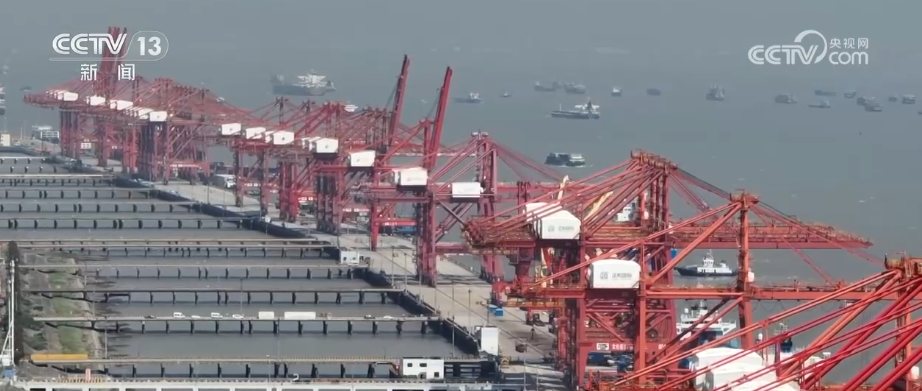
Core Points - The Comprehensive and Progressive Agreement for Trans-Pacific Partnership (CPTPP) is seen as a pathway to achieving a free trade area in the Asia-Pacific region [1] - The Chinese government is actively promoting its efforts to join the CPTPP, emphasizing its importance [1][5] Economic Impact - Joining the CPTPP is projected to generate economic benefits for member countries and enhance regional cooperation, with estimates indicating that China's accession could lead to GDP growth for members ranging from 0.2% to 1.1% and export growth between 2.5% and 11.8% [3] - The integration of China into the CPTPP is expected to foster a larger and more interconnected supply chain system within the region [3] Commitment to Openness - China is committed to expanding high-level foreign trade and hopes that CPTPP members will recognize the positive implications of its accession, thereby accelerating the process and contributing to economic integration in the Asia-Pacific [5]
马凯硕答21:美国退群之际,东亚自贸区加速推进意义重大
2 1 Shi Ji Jing Ji Bao Dao· 2025-11-05 10:52
Group 1 - The core viewpoint emphasizes the significance of advancing the Free Trade Area of the Asia-Pacific (FTAAP) amidst the current geopolitical landscape, particularly as China prepares to host APEC in 2026 [1][2] - Kishore Mahbubani highlights that the ongoing push for free trade agreements in East Asia lays a crucial foundation for the FTAAP, especially in light of the U.S. retreat from international trade agreements [1] - The potential inclusion of India in the Regional Comprehensive Economic Partnership (RCEP) is seen as a way to enhance regional cooperation and elevate the FTAAP's prospects [1] Group 2 - The Regional Comprehensive Economic Partnership (RCEP) has come into full effect, covering 15 countries with a total population of 2.3 billion and a GDP of $26 trillion, representing 30% of the global economy, making it the largest free trade area [2] - The Comprehensive and Progressive Agreement for Trans-Pacific Partnership (CPTPP) is another significant trade agreement in the Asia-Pacific, involving 12 countries and setting high standards that can serve as a reference for the FTAAP [2] - Mahbubani asserts that the synergy between RCEP and CPTPP will facilitate the transition of FTAAP from a vision to a practical reality, with China's leadership role in APEC expected to inject new momentum into this process [2]
李在明:日韩应建立新合作框架
日经中文网· 2025-09-12 02:38
Group 1 - The core viewpoint of the article emphasizes the need for a new economic cooperation framework between South Korea and Japan, as stated by President Lee Jae-myung during his 100-day press conference [2][4] - President Lee highlighted the fundamental restructuring of the global economic order and the importance of focusing on cooperation within the Asian region [4] - He mentioned that the identities and thoughts of the leaders of South Korea and Japan are not as important as the potential for cooperation beyond historical and territorial issues [4] Group 2 - The article notes that the relationship between South Korea and Japan is very challenging, comparable to the inter-Korean relationship [5] - President Lee expressed difficulties in reaching a consensus regarding Japan's upcoming labor memorial ceremony at the Sado Gold Mine, indicating that negotiations will continue but he will not attend this event [5]

维护多边贸易体制,共同应对全球挑战,中国新西兰展望新的十年
Huan Qiu Shi Bao· 2025-06-20 23:02
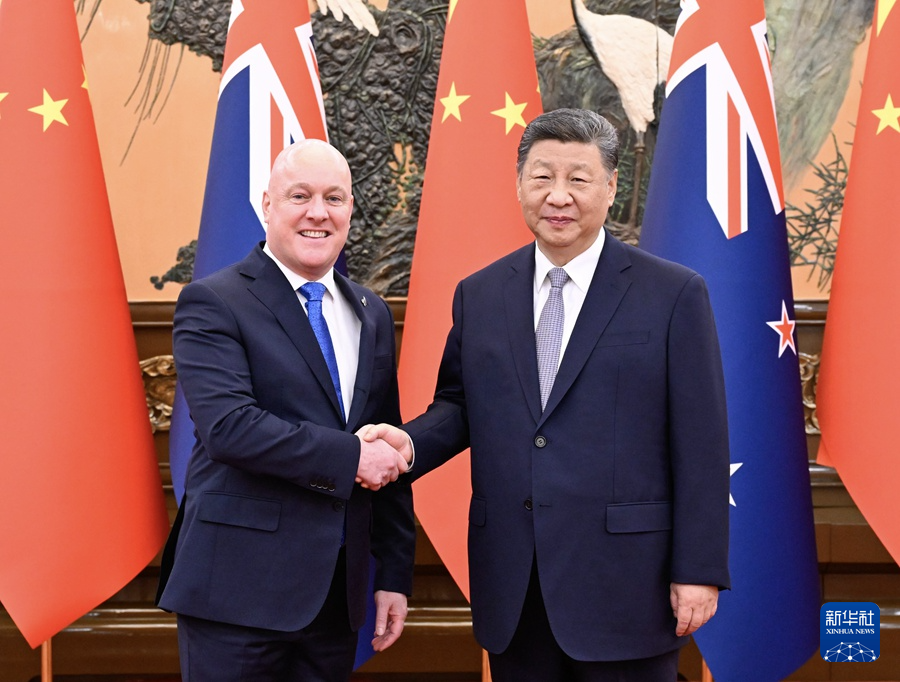
Group 1 - The core message of the meeting between Chinese President Xi Jinping and New Zealand Prime Minister Luxon emphasizes the importance of deepening trade and investment cooperation, with both leaders aiming for significant advancements in bilateral relations over the next decade [2][3][4] - Luxon led a delegation of 28 business leaders to China, highlighting the significance of China as New Zealand's largest trading partner, accounting for over 20% of New Zealand's total exports of goods and services [5][8] - The two countries signed multiple cooperation documents covering customs, food safety, organic product certification, climate change, and cultural heritage, indicating a broadening of collaborative efforts [5][9] Group 2 - New Zealand's approach to its relationship with China is characterized by consistency and predictability, with both major political parties recognizing China as an important partner [6][7] - Luxon expressed the need for New Zealand to increase its visibility in China, as the number of Chinese tourists and students has not yet returned to pre-pandemic levels, indicating a potential area for growth in bilateral exchanges [8] - The joint statement from the leaders also acknowledged New Zealand's support for China's application to join the Comprehensive and Progressive Agreement for Trans-Pacific Partnership (CPTPP), reflecting a commitment to multilateral trade frameworks [9]
RCEP迈入第四年,如何共建高水平自由贸易区?
Zhong Guo Xin Wen Wang· 2025-05-26 06:22
Core Insights - The RCEP is seen as a hopeful framework to counteract the challenges posed by unilateralism and trade protectionism, with experts emphasizing the need for its expansion and enhancement [1][2][3] Group 1: RCEP's Current Status and Challenges - RCEP has become a new engine for regional economic growth, with the share of intermediate goods trade in total trade increasing from 65% in 2021 to 68.3% in 2024 [1] - Despite its successes, RCEP faces challenges such as low rule utilization and an incomplete implementation mechanism, with applications for membership from Hong Kong, Sri Lanka, and Chile still pending [1][2] Group 2: Recommendations for RCEP's Future - Experts suggest that RCEP should quickly establish expansion standards and procedures, improve governance structures, and create an independent RCEP secretariat [2] - There is a call for RCEP to upgrade from being the largest free trade area to a high-level free trade area, focusing on service trade, digital economy, and green finance [3] - The integration of RCEP with CPTPP is recommended to enhance trade rules, reduce non-tariff barriers, and simplify origin certification processes [3] Group 3: Regional Cooperation and Integration - The cooperation between ASEAN and China is highlighted as the cornerstone of RCEP, with recent negotiations on the China-ASEAN Free Trade Area 3.0 incorporating digital economy and green transition [4] - Future efforts should not only solidify regional cooperation but also promote cross-regional collaboration, exemplified by upcoming summits that aim to leverage complementary advantages [4]
中外专家吁尽快推动香港加入RCEP
Zhong Guo Xin Wen Wang· 2025-05-24 14:49
Core Viewpoint - Experts are urging for the expedited inclusion of Hong Kong into the Regional Comprehensive Economic Partnership (RCEP), highlighting its potential benefits for trade and economic growth in the region [1][2]. Group 1: RCEP Overview - RCEP officially came into effect on January 1, 2022, with applications from Hong Kong, Sri Lanka, and Chile for membership, but no expansions have been realized yet [1]. - The absence of expansion could pose serious challenges to RCEP, which is considered the world's largest and most inclusive free trade arrangement [1]. Group 2: Benefits of Hong Kong's Inclusion - Hong Kong's trade statistics indicate that 70% of its goods trade, over 40% of its service trade, and 60% of its investments are within the RCEP region, suggesting that its inclusion would significantly enhance RCEP's international influence [1]. - The potential role of Hong Kong in RCEP extends beyond traditional trade facilitation, encompassing areas such as the digital economy and green economy, which could accelerate RCEP's growth [1]. Group 3: Unique Advantages of Hong Kong - Hong Kong possesses unique advantages as a free trade port, a global financial center, and a logistics hub, which, combined with its commitment to innovation and regional cooperation, would create mutual benefits for all RCEP members [1]. - The RCEP Joint Committee Chair from ASEAN, Tina Kuniarasari, emphasized the need for a more flexible application process for Hong Kong, considering its cultural and institutional context [2].