养老产业发展

Search documents
春节见闻③ | 山东青岛:宜居之城的养老产业新答卷
申万宏源研究· 2026-02-19 08:01
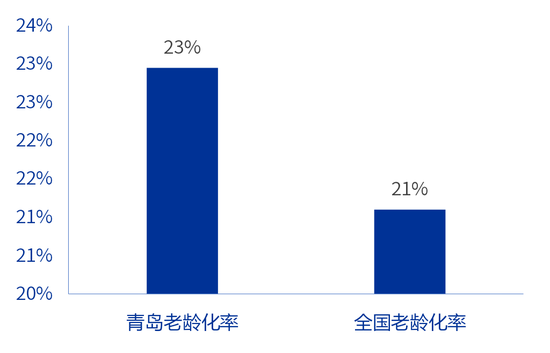
Core Viewpoint - Qingdao is experiencing significant growth in its elderly care industry, driven by a combination of policy support, increasing demand, and supply upgrades as it transitions into a moderately aging society with an elderly population of 2.38 million, representing 23.0% of its total population [4][5]. Group 1: Current Status of Elderly Care in Qingdao - Qingdao has entered a moderately aging society, with an elderly population of 2.38 million, which is 1.9 percentage points higher than the national average [4][5]. - The local government is enhancing elderly care services through various measures, including increasing pensions and subsidies, which improve the payment capacity and consumption willingness of the elderly [4]. - By the end of 2025, Qingdao aims to establish 297 elderly care institutions, with 180 rated three stars or above, and create a comprehensive network of elderly care facilities at the district, town, and village levels [4][6]. Group 2: Example of High-End Elderly Community - Taikang Qinyuan - Taikang Qinyuan, located in Chengyang District, exemplifies a mature high-end elderly community with a vibrant atmosphere and a variety of activities for residents [8][9]. - The community features well-designed apartments with senior-friendly furniture and a comprehensive healthcare system, including a secondary rehabilitation hospital and partnerships with top-tier hospitals [9]. - The occupancy rate of Taikang Qinyuan exceeds 80%, with monthly fees ranging from 7,000 to over 20,000 yuan, catering primarily to local retirees and professionals [9]. Group 3: Trends in Qingdao's Elderly Care Industry - The elderly care market in Qingdao is developing a tiered supply system that caters to different income levels and health conditions, from government-supported nursing homes to embedded community care centers and high-end communities like Taikang Qinyuan [14]. - There is a growing integration of medical services within elderly care, with facilities like Taikang Qinyuan providing on-site healthcare and direct access to hospitals, which is crucial for elderly individuals with varying health needs [14]. - Technological advancements are being incorporated into elderly care, with features such as smart wristbands and fall monitoring systems becoming standard, and the government is promoting a smart elderly care service platform for more convenient service delivery [14].



申万宏源轻工分析师魏雨辰:宜居之城山东青岛的养老产业新答卷
Xin Lang Zheng Quan· 2026-02-19 06:09
Core Insights - Qingdao has entered a moderately aging society with an elderly population of 2.38 million, accounting for 23.0% of its total population, which is 1.9 percentage points higher than the national average [2][7] - The local government is actively promoting the growth of demand and upgrading supply in the elderly care sector through various policies, including increasing pensions and subsidies [2] - The development of a comprehensive three-tier elderly care facility network is underway, with plans to establish 297 elderly care institutions and 1,300 community service stations by the end of 2025 [2][7] Group 1: Current Status of Elderly Care in Qingdao - Qingdao's elderly care service demand is characterized by multi-level, diverse, and personalized needs due to its aging population [2] - The government is enhancing elderly individuals' payment capabilities and consumption willingness through various measures, including subsidies for rural elderly care services [2] - The supply side is being upgraded with the transformation of facilities into specialized comprehensive elderly care centers and the expansion of high-end elderly care services [2] Group 2: Case Study of TaiKang Qinyuan - TaiKang Qinyuan, located in Chengyang District, exemplifies a high-end elderly community with a vibrant atmosphere and a variety of activities for residents [4][9] - The community features well-designed apartments with elderly-friendly furniture and a built-in secondary rehabilitation hospital for daily health management [9] - The occupancy rate of TaiKang Qinyuan exceeds 80%, with monthly fees ranging from 7,000 to over 20,000 yuan, including accommodation and cleaning services [9] Group 3: Trends in Qingdao's Elderly Care Industry - The elderly care market in Qingdao is developing a clear tiered supply system catering to different income levels and health conditions [12] - There is a significant integration of medical and elderly care services, with facilities like TaiKang Qinyuan providing on-site medical support and partnerships with top hospitals [12] - Technological advancements are being incorporated into elderly care, with smart devices and a government initiative for a smart elderly care service platform [12] Group 4: Future Outlook - Qingdao is positioning itself as a model for modern elderly care development, combining inclusive policies, diverse supply, medical integration, and technological empowerment [13] - The city aims to evolve into a "nurturing city" and a "happy city" as the elderly care supply system continues to improve and service models innovate [13]

真金白银 为失能老人家庭减负
Jin Rong Shi Bao· 2026-02-04 05:32
Core Viewpoint - A nationwide policy will be implemented starting January 1, 2026, providing elderly individuals with moderate to severe disabilities with subsidies for elderly care services, with an estimated total funding scale of 150 billion to 200 billion yuan based on a maximum monthly deduction of 800 yuan per person [1][8]. Group 1: Policy Implementation - The Ministry of Civil Affairs and the Ministry of Finance jointly announced the launch of the elderly care service consumption subsidy project, which will run from January to December 2026 [2]. - The subsidy project is an expansion of a pilot program initiated in 2025, which had already shown positive results in trial regions [2][8]. - Eligible recipients include elderly individuals assessed as having moderate, severe, or complete disabilities [2]. Group 2: Subsidy Details - The subsidy covers home, community, and institutional elderly care services, including meal assistance, bathing, cleaning, and both long-term and short-term institutional care [3]. - The subsidy will be distributed as electronic consumption vouchers through the "Minzheng Tong" app, with a validity of one month [3][4]. - The deduction rate for the vouchers generally ranges from 30% to 60% of the service cost, with higher rates for home care services [4]. Group 3: Regional Implementation - Many provinces and municipalities, including Hubei, Shaanxi, and Beijing, have already started the subsidy project, allowing eligible elderly individuals to apply for and redeem electronic vouchers [5][6]. - As of January 22, 2026, significant numbers of vouchers have been redeemed in various regions, indicating a successful rollout of the program [7]. Group 4: Economic Impact - Experts view the subsidy project as a milestone in the development of elderly care services in China, significantly expanding the beneficiary population and integrating various welfare systems [8]. - The funding for the subsidies will be shared between central and local governments, with different funding ratios based on regional classifications [8]. - The project aims to stimulate the elderly care service market, shifting the focus from basic support to quality improvement in services [9].
2025中国人口老龄化趋势分析
Sou Hu Cai Jing· 2025-08-09 16:16
Group 1: Current Status of Aging Population - As of the end of 2024, the population aged 60 and above in China will exceed 300 million, reaching 310.31 million, accounting for 22.0% of the total population [1] - The population aged 65 and above will reach 220.23 million, making up 15.6% of the total population [1] - China has entered a moderately aging society, with the aging population becoming a key factor affecting national development [1] Group 2: Characteristics of Aging Population - China has the largest elderly population globally, with approximately 220 million people aged 65 and above, representing one-fourth of the world's elderly population [3] - The aging process in China is significantly faster than in developed countries, with only 21 years taken to transition from aging (7%) to deep aging (14%) [5] Group 3: Future Trends and Projections - By 2030, the elderly population in China is expected to reach 380 million, and by 2035, it will increase to around 420 million, accounting for over 30% of the total population [13] - By 2050, the total population is projected to decline to 1.25 billion, with the elderly population proportion reaching approximately 37.4% [13] Group 4: Regional Disparities - There are significant regional differences in aging levels, with Liaoning having the highest proportion of people aged 65 and above at 21.06% in 2023, while Guangdong, Xinjiang, and Tibet have not yet reached 10% [14] - The aging population is more pronounced in rural areas compared to urban areas, with the elderly population proportion in rural areas increasing from 10.1% in 2010 to 19.3% in 2022 [10] Group 5: Economic and Social Impacts - The demographic dividend is diminishing as the population from the baby boom era exits the labor market, leading to a decline in the working-age population from 1.01 billion in 2013 to 960 million in 2023 [18] - The elderly dependency ratio reached 22.5% in 2023, indicating that for every five working-age individuals, one elderly person is supported [19] - The pension burden is increasing, with the ratio of insured workers to retirees declining from 3.2:1 in 2010 to 2.7:1 in 2022 [20] Group 6: Healthcare System Impacts - The prevalence of chronic diseases is rising, with chronic diseases being the leading cause of death among urban and rural residents, affecting over 300 million people nationwide [23] - The total medical expenses are increasing rapidly due to the aging population and the high incidence of chronic diseases [24] - There is a growing demand for integrated medical and elderly care services, which will become essential for meeting the diverse health needs of the elderly population [26] Group 7: Employment Market Impacts - The supply of labor is shrinking as the proportion of elderly individuals increases and the working-age population decreases [27] - The overall labor participation rate is declining due to lower participation rates among the elderly [27] - The service sector, particularly in elderly care, healthcare, and wellness, is expected to create numerous job opportunities, shifting the employment structure towards "silver economy services" [27]