
科技赋能养老

Search documents
申万宏源轻工分析师魏雨辰:宜居之城山东青岛的养老产业新答卷
Xin Lang Zheng Quan· 2026-02-19 06:09
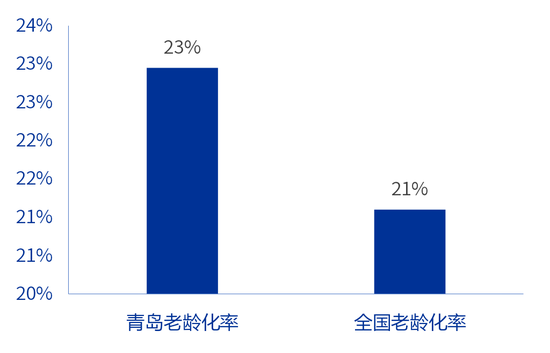
Core Insights - Qingdao has entered a moderately aging society with an elderly population of 2.38 million, accounting for 23.0% of its total population, which is 1.9 percentage points higher than the national average [2][7] - The local government is actively promoting the growth of demand and upgrading supply in the elderly care sector through various policies, including increasing pensions and subsidies [2] - The development of a comprehensive three-tier elderly care facility network is underway, with plans to establish 297 elderly care institutions and 1,300 community service stations by the end of 2025 [2][7] Group 1: Current Status of Elderly Care in Qingdao - Qingdao's elderly care service demand is characterized by multi-level, diverse, and personalized needs due to its aging population [2] - The government is enhancing elderly individuals' payment capabilities and consumption willingness through various measures, including subsidies for rural elderly care services [2] - The supply side is being upgraded with the transformation of facilities into specialized comprehensive elderly care centers and the expansion of high-end elderly care services [2] Group 2: Case Study of TaiKang Qinyuan - TaiKang Qinyuan, located in Chengyang District, exemplifies a high-end elderly community with a vibrant atmosphere and a variety of activities for residents [4][9] - The community features well-designed apartments with elderly-friendly furniture and a built-in secondary rehabilitation hospital for daily health management [9] - The occupancy rate of TaiKang Qinyuan exceeds 80%, with monthly fees ranging from 7,000 to over 20,000 yuan, including accommodation and cleaning services [9] Group 3: Trends in Qingdao's Elderly Care Industry - The elderly care market in Qingdao is developing a clear tiered supply system catering to different income levels and health conditions [12] - There is a significant integration of medical and elderly care services, with facilities like TaiKang Qinyuan providing on-site medical support and partnerships with top hospitals [12] - Technological advancements are being incorporated into elderly care, with smart devices and a government initiative for a smart elderly care service platform [12] Group 4: Future Outlook - Qingdao is positioning itself as a model for modern elderly care development, combining inclusive policies, diverse supply, medical integration, and technological empowerment [13] - The city aims to evolve into a "nurturing city" and a "happy city" as the elderly care supply system continues to improve and service models innovate [13]


代表委员风采丨毛雪:让智能主动适配老年人生活
Xin Lang Cai Jing· 2026-01-18 22:33
Core Viewpoint - The article emphasizes the importance of integrating technology into elderly care services to address the challenges faced by the aging population, particularly in the context of smart elderly care solutions [1][2][3]. Group 1: Current Challenges in Elderly Care - The aging population is increasing rapidly, necessitating urgent improvements in elderly care services through technology [1]. - Many elderly individuals, especially those over 75, struggle to use smart devices, highlighting the need for technology to adapt to their needs rather than the other way around [1][2]. Group 2: Technological Solutions and Initiatives - The company has successfully implemented a pilot project for smart elderly care equipment, benefiting over 10,000 elderly individuals [2]. - A smart elderly care platform named "Xiaoai Guanjia" has been developed, utilizing IoT, internet, and cloud computing to facilitate communication between elderly individuals and service providers [2]. Group 3: Policy Recommendations - The company plans to propose three key recommendations to address issues in the elderly care sector: establishing a major technology initiative for elderly care robots, creating provincial demonstration application scenarios, and promoting a rental model for elderly care robots supported by government and enterprises [2][3].
一键呼叫,为独居老人筑起“安心网”
Xin Lang Cai Jing· 2026-01-18 16:22
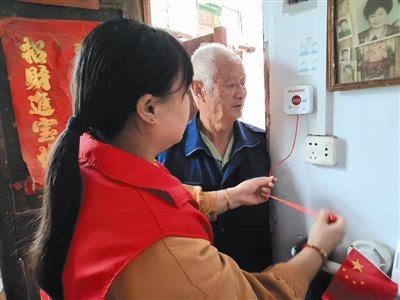
Core Viewpoint - The article highlights the innovative elderly care system in Taiping Community, which combines traditional warmth with modern technology to ensure the safety and well-being of senior residents, particularly those living alone [2][3][4] Group 1: Community Demographics and Needs - Taiping Community has a population of 603, with 297 residents aged 60 and above, indicating a significant elderly demographic [2] - The community has implemented a detailed "one person, one file" system to monitor the conditions of each elderly resident [2] Group 2: Care Models and Initiatives - The community has adopted a three-tiered care model consisting of "graded visits + neighborly watch + 5G emergency call" to enhance safety for the elderly [2] - Regular visits are scheduled based on age and health status: three times a week for those over 90 or with disabilities, twice a week for those aged 70-89, and once a week for those aged 60-69 [2] Group 3: Neighborly Support and Technology Integration - The community encourages neighborly support by pairing elderly residents with nearby households to form mutual aid partnerships, enhancing daily care [3] - A one-button emergency call device has been installed for elderly residents, allowing them to quickly alert five pre-set contacts in case of emergencies [3] Group 4: Comprehensive Care Services - The community offers meal assistance and cultural activities, along with weekly health check-ups coordinated with the local health clinic [3] - A proactive approach is taken to visit elderly residents who miss meals, ensuring a comprehensive care loop [3] Group 5: Expansion and Impact - The "one-button call" system is being expanded from Taiping Community to 11 other villages and communities in the town, showcasing a scalable model for elderly care [4] - The initiative exemplifies how traditional wisdom can be revitalized through technology, providing a model for broader implementation of similar elderly care services [4]
21社论丨坚持需求导向,让科技更好赋能银发经济
2 1 Shi Ji Jing Ji Bao Dao· 2026-01-13 22:32
Core Viewpoint - The Ministry of Civil Affairs and eight other departments have jointly issued measures to cultivate the elderly care service industry and promote the silver economy, focusing on technological innovation to upgrade service models rather than just infrastructure and subsidies [1][2]. Group 1: Policy Measures - The new measures emphasize the importance of technology-driven upgrades in elderly care services, encouraging research and development in elderly care technology and products [1][2]. - The policy aims to foster a new ecosystem of elderly care services that integrates technology, creating new business models and expanding domestic consumption [2][3]. Group 2: Market Potential - By 2035, the population aged 60 and above in China is expected to exceed 400 million, accounting for over 30% of the total population, indicating a significant consumer demand potential [1]. - The shift in consumption behavior among the elderly, from basic life security to a pursuit of quality living, presents opportunities for high-quality, personalized elderly care services and products [1][2]. Group 3: Technological Integration - The policy supports the development of smart elderly care devices and rehabilitation robots, promoting their integration with elderly care institutions to enhance the application of new technologies [2][3]. - The construction of smart elderly care communities and integrated home care platforms is encouraged, utilizing big data, cloud computing, and AI to improve service levels [3]. Group 4: Challenges and Solutions - Despite the promising outlook for the silver economy, challenges such as limited product supply and service experience need to be addressed, particularly the adaptation of technology for the elderly [4]. - To tackle the issue of technology adaptation, there is a need for demand-driven and problem-oriented approaches, including the establishment of standards for elderly-friendly technology [4].
八部门出台14项举措促进银发经济发展
Zhong Guo Zheng Quan Bao· 2026-01-13 20:46
Core Insights - The Ministry of Civil Affairs reported that by the end of 2025, there will be 41,700 elderly care institutions in China, employing 722,000 people, with private and public-private institutions making up 71.9% of the total [1] Group 1: Policy Measures - The Ministry of Civil Affairs and eight other departments have issued measures to support the development of the elderly care service industry and the silver economy, focusing on technology empowerment, brand building, supply-demand matching, environmental optimization, and support for resources [1][2] - Specific initiatives include encouraging technological innovation in elderly care services, such as the use of big data, cloud computing, artificial intelligence, and robotics to enhance service efficiency and quality [2][3] Group 2: Financial Support and Market Development - The Ministry of Civil Affairs plans to develop specialized financial support policies to encourage social capital participation and provide diverse financing options tailored to the elderly care industry [1][4] - The Ministry aims to create competitive elderly care service brands and leading enterprises, enhancing accessibility, convenience, and intelligence in elderly care services to meet diverse needs [4] Group 3: Integration and Collaboration - The Ministry of Commerce will focus on integrating elderly care services with home care and domestic services, promoting high-quality development in the home service industry [3] - Efforts will be made to establish a platform for matching supply and demand in elderly care services, creating new consumption scenarios and fostering an open cooperative environment [3]
科技赋能银发经济 智慧养老站上风口
Zheng Quan Ri Bao· 2026-01-13 17:05
Core Insights - The Chinese government has introduced significant policies to support the development of the elderly care industry and the silver economy, focusing on brand development and technological empowerment [1] - The aging population in China is rapidly increasing, with projections indicating that by the end of 2024, there will be 310 million individuals aged 60 and above, representing 22% of the total population [2] - There is a critical shortage of professional elderly care workers, with an expected shortfall of over 5 million caregivers in the next five years [2] - Technology, particularly robotics, is seen as a key solution to address the challenges in elderly care, with companies developing smart care products tailored to the needs of the elderly [2][3] Policy and Industry Development - The Ministry of Civil Affairs and other departments have issued measures to promote the cultivation of elderly care service providers and the development of the silver economy, marking a strategic shift from merely addressing shortcomings to promoting growth [1] - The policy emphasizes the role of elderly care robots as a core area for technological empowerment, aiming to attract social capital and accelerate the growth of the silver economy [1] Technological Advancements - Companies are increasingly focusing on the development of smart elderly care products, with Haier launching 208 age-friendly products, including AI smart beds and rehabilitation robots [3] - The integration of IoT platforms by companies like General Universal Health Technology aims to address data silos in elderly care services, enhancing the overall service ecosystem [3] Application Scenarios - Elderly care robots are being deployed in various settings, including institutions, communities, and homes, focusing on high-frequency tasks such as delivery, safety monitoring, and rehabilitation assistance [4][5] - Specific examples include the use of 5G delivery robots in nursing homes and safety monitoring robots in community centers, showcasing the practical application of technology in elderly care [5] Industry Challenges and Future Directions - The industry faces challenges related to the practicality and humanization of elderly care robots, emphasizing the need for products that genuinely meet the needs and habits of the elderly [5] - Recommendations for future development include reducing costs and enhancing reliability to make technology accessible to more families, as well as fostering cross-industry collaboration for seamless integration of health data [5]
视频丨优化养老服务发展环境 民政部等八部门出台多项措施
Yang Shi Xin Wen Ke Hu Duan· 2026-01-13 07:12
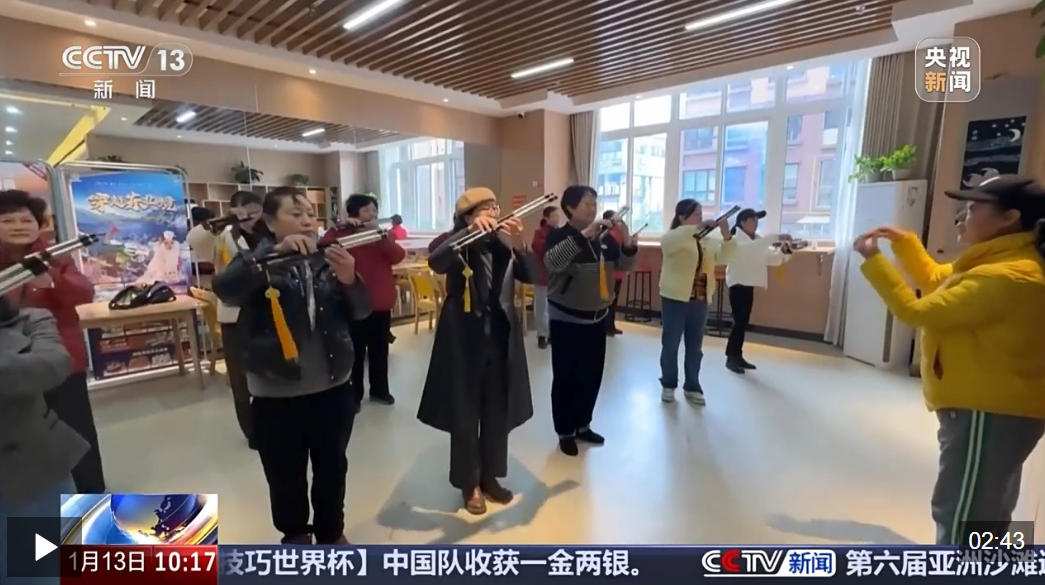
Core Viewpoint - The Ministry of Civil Affairs and seven other departments have introduced measures to cultivate the elderly care service industry and promote the silver economy, aiming to enhance the vitality of various elderly care service providers and better meet the diverse needs of the elderly population [2] Group 1: Brand Development - The measures emphasize strengthening brand building for elderly care services, encouraging the establishment of distinctive brand signage and enhancing brand recognition [3] - Provincial civil affairs departments are encouraged to standardize the names and signage of various elderly care service providers to improve brand identification [3] - Support for trademark registration and protection for well-known brands in the elderly care sector is also highlighted [3] Group 2: Market Supply and Demand - The measures propose optimizing the supply of elderly care services and age-friendly products, promoting community-based service integration [4] - Encouragement for the development of specialized medical accompaniment services and mobile bathing services for the elderly is included [4] - The initiative also promotes the development of age-appropriate clothing and food products tailored to the elderly [4] Group 3: Supply-Demand Platform - Support for local governments to establish dedicated elderly care sections within existing platforms to enhance service demonstration and resource linkage is outlined [5] - The measures encourage the use of trade fairs and exhibitions to facilitate connections between manufacturers, service providers, and consumers in the elderly care market [5] - E-commerce platforms and supermarkets are encouraged to create special shopping events and interfaces for elderly consumers [5] Group 4: Technological Empowerment - The measures advocate for technological advancements in elderly care, including the use of big data, AI, and smart home technologies [6] - Support for the development of care robots and other innovative technologies to meet the daily needs of the elderly is emphasized [6] - The initiative encourages collaboration between elderly care institutions and technology developers to enhance user experience with smart products [6] Group 5: Development Environment - The measures call for the creation of a fair competitive environment for elderly care institutions, including the reform of classification and support policies [7] - Restrictions that hinder fair competition in government procurement processes for elderly care services are to be eliminated [7] Group 6: Standards and Certification - The establishment of national standards for elderly products and services is prioritized, along with a certification system to guide procurement practices [8] - The measures aim to protect the rights of the elderly by combating fraudulent practices and ensuring compliance in the elderly care market [8] Group 7: Support and Resources - Local civil affairs departments are tasked with providing regular updates on elderly population statistics and available support policies [9] - The measures encourage the establishment of a nurturing mechanism for elderly care service providers and the optimization of licensing processes [9] - Support for stable operations of elderly care institutions through land supply and financial assistance is also included [9]
事关银发经济 八部门联合发布
Shang Hai Zheng Quan Bao· 2026-01-13 05:08
Core Viewpoint - The Ministry of Civil Affairs introduced measures to cultivate the elderly care service sector and promote the silver economy through systematic policy support aimed at enhancing the operational vitality of service providers and advancing structural reforms in supply-side elderly care [1][3]. Group 1: Key Measures - The measures include 14 specific initiatives across five areas, focusing on brand development, market supply-demand matching, technological empowerment, environmental optimization, and increased support for resources [3][4]. - Encouragement for elderly care service providers to enhance brand recognition and protection, providing clear policy pathways for developing well-known brands and leading enterprises in the sector [3]. - Promotion of market-oriented supply-demand matching by optimizing elderly care services and products, facilitating community-based home care through chain operations, and enhancing online and offline service accessibility [3]. Group 2: Technological Empowerment - Strong support for integrating technology into elderly care services, including the use of big data, artificial intelligence, and robotics to improve health monitoring and personalized services for the elderly [3][6]. - Focus on the development and application of humanoid robots and health monitoring devices in various settings such as homes and care institutions, transitioning from mechanical care to precise service delivery [6][7]. Group 3: Environmental Optimization - Creation of a fair competitive environment and establishment of a standard certification system to monitor and evaluate the implementation of standards for silver products and services, while combating illegal activities against the elderly [3][4]. - Improvement of administrative services to attract social investment in elderly care, including the implementation of a unified online service for licenses across regions to reduce operational costs for service providers [4]. Group 4: Market Development - The Ministry of Commerce aims to enhance the supply of quality elderly care services by developing home care services, creating platforms for supply-demand matching, and promoting new consumption scenarios for the elderly [7]. - Plans to accelerate the development of new business models and pilot programs for consumption, while encouraging e-commerce platforms to enrich the supply of elderly-friendly products and services [7].
优化养老服务发展环境 民政部等八部门出台多项措施
Yang Shi Wang· 2026-01-13 02:36
Core Viewpoint - The Ministry of Civil Affairs and seven other departments have introduced measures to cultivate the elderly care service industry and promote the silver economy, aiming to enhance the vitality of various elderly care service providers and better meet the diverse needs of the elderly population [1] Group 1: Brand Development - The measures emphasize strengthening brand building for elderly care services, encouraging the establishment of distinctive brand signage and enhancing brand recognition [2] - Provincial civil affairs departments are encouraged to standardize the names and signage of various elderly care service providers to improve brand identification [2] - Support for trademark registration and protection for well-known elderly care brands is highlighted, promoting the implementation of brand strategies [2] Group 2: Market Supply and Demand - The measures propose optimizing the supply of elderly care services and age-friendly products, promoting community-based service integration through chain operations [3] - Encouragement for the development of specialized medical accompaniment services and mobile bathing services for the elderly is included [3] - The initiative also promotes the development of age-appropriate food and clothing, as well as home modifications to create suitable living environments for the elderly [3] Group 3: Supply and Demand Platforms - Support for local governments to establish dedicated elderly care sections within existing platforms to enhance service demonstration and resource linkage is outlined [4] - The use of expos and fairs to facilitate connections between manufacturers, service providers, and consumers in the elderly care sector is encouraged [4] - E-commerce platforms and supermarkets are urged to create dedicated shopping sections for elderly consumers to enhance convenience [4] Group 4: Technological Empowerment - The measures advocate for technological advancements in elderly care, including the application of big data, AI, and smart home technologies for health monitoring and personalized services [5] - Development of robotic solutions for daily care and emotional support for the elderly is promoted, along with collaboration across industries [5] - Support for the testing and application of smart elderly care products in service institutions is emphasized to enhance user experience [5] Group 5: Development Environment Optimization - The measures call for creating a fair competitive environment by reforming the classification of elderly care institutions and optimizing support policies [7] - Establishment of a standard certification system for elderly products and services is proposed to guide procurement practices [7] - Protection of elderly rights through education and regulation against fraudulent practices in the elderly care market is highlighted [7] Group 6: Support for Operating Entities - The measures suggest reducing administrative inspections on elderly care institutions to prevent arbitrary practices and ensure fair treatment [8] - Promotion of reasonable pricing and positive publicity for elderly care services through various media channels is encouraged [8] Group 7: Resource Support - Local civil affairs departments are tasked with providing regular updates on elderly population statistics and service facility distributions to support service providers [9] - Encouragement for the establishment of a nurturing mechanism for elderly care service providers to apply for specialized small and medium enterprises is included [9] - Support for land supply and operational stability for elderly care facilities based on local aging population needs is emphasized [9]
民政部等八部门:大力支持科技赋能养老服务
Xin Lang Cai Jing· 2026-01-13 01:56
Core Viewpoint - The Ministry of Civil Affairs and seven other departments have introduced measures to foster the elderly care service sector and promote the silver economy through technological advancements and product development [1] Group 1: Encouragement of Technological Development - The measures encourage breakthroughs in elderly care technology and product research and development [1] - There is a focus on the digital transformation of elderly care services, utilizing big data, cloud computing, artificial intelligence, and Beidou technology for health monitoring and personalized services [1] Group 2: Support for Robotics and Cross-Industry Collaboration - The initiative promotes the development of elderly care robots to meet the daily care, emotional support, and social needs of the elderly [1] - It aims to facilitate collaboration and technological integration across industries, including robotics, medical rehabilitation, and smart home technologies [1] Group 3: Product Development and Application - The measures advocate for the acceleration of research and development in embodied intelligence technology, new materials, genetic technology, and rehabilitation aids [1] - There is an emphasis on exploring advanced technologies such as brain-machine interfaces, exoskeleton robots, and muscle exosuits to support elderly individuals with declining physical functions [1] Group 4: Enhancing User Experience - Support is provided for the integration of smart elderly care devices and rehabilitation robots into care institutions, enhancing user experience through shared services, equipment leasing, and pilot testing [1] - The initiative encourages collaboration between various elderly care institutions and smart product developers to create demonstration and experience areas for elderly-friendly technology [1]