
农业中关村

Search documents
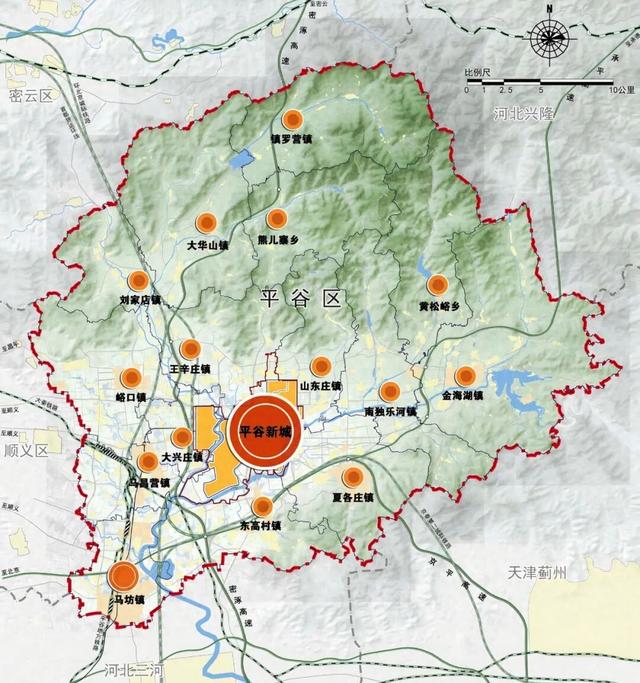
平谷区乡镇国土空间规划全获批,“高大尚” 平谷未来可期
Xin Lang Cai Jing· 2026-02-25 10:47
Group 1 - The core viewpoint of the news is that Pinggu District has achieved full approval of land spatial planning for all 15 towns, laying a solid foundation for the development strategy of "high-end, large-scale, and fashionable" Pinggu, which focuses on high-tech agriculture, logistics, and leisure [1][9][27] Group 2 - The planning process in Pinggu District emphasizes systematic thinking and problem orientation, implementing a "three synchronizations" approach to ensure that planning is practical and effective [3][17] - The integration of 108 specialized research results into the town planning process ensures that major infrastructure projects and ecological protection are accurately incorporated into land use layouts [3][9] Group 3 - The planning includes a comprehensive industrial development plan for all 15 towns, ensuring that projects align with the planning and that resources follow the projects [9][21] - Specific strategies for logistics development have been implemented, including the creation of approximately 2800 acres of industrial space to meet the demands of modern logistics [9][23] Group 4 - The planning process has involved community engagement, ensuring that local insights and needs are incorporated into the planning outcomes, making them more applicable and grounded in local realities [14][17] - Innovative mechanisms have been introduced to address the challenges of resource allocation, transforming static plans into dynamic engines for regional potential [17][19] Group 5 - The planning has led to significant advancements in agricultural high-tech initiatives, with the introduction of smart greenhouse clusters and numerous "Doctor Farms" across various towns [21][23] - The logistics sector is being strengthened through the establishment of a multi-modal transport hub in Mafu Town, supported by significant investments in infrastructure [23][24] Group 6 - The leisure industry is being enhanced through the development of national-level recreational areas and unique cultural tourism projects, contributing to the overall quality of life in the region [25][27] - Future plans include ongoing monitoring and evaluation of the implementation of these strategies to ensure they translate into high-quality development outcomes [27][29]

农业科技创新持续突破 北京建设“种业之都”
Zhong Guo Xin Wen Wang· 2025-11-27 03:46
Core Insights - During the "14th Five-Year Plan" period, Beijing has leveraged its capital's technological talent advantage, achieving an agricultural technology progress contribution rate of 75%, with comprehensive technological strength leading the nation [1][4]. Agricultural Development - The construction of Beijing as a "seed industry capital" is rapidly advancing, with 29 seed enterprises selected as national seed industry backbone enterprises, the highest in the country [1][4]. - The number of newly approved crop varieties annually ranks among the top in the nation, with 9 species leading internationally in breeding levels and 18 species being domestically advanced [1][4]. Quality Improvement Initiatives - The city has implemented a three-year action plan for high-quality vegetable industry development, enhancing agricultural supply-side structural reforms, and significantly improving agricultural quality and efficiency [3]. - Agricultural production capacity is steadily increasing, with self-sufficiency rates for key agricultural products like vegetables, eggs, and milk improving [3]. Technological and Policy Support - Over the past five years, a series of policies have been introduced to support agricultural technology enterprises, focusing on top-level design, innovation mechanisms, and the transformation of research results [4]. - The establishment of a seed resource protection system has led to the preservation of 2.144 million seed resources in Beijing, ranking first in the nation [4]. Rural Development and Tourism - The integration of agriculture, culture, and tourism is being promoted, with over a hundred premium leisure tourism routes launched in the suburbs, fostering new business models such as rural markets and specialty cuisine [5]. - The city aims to enhance rural development, governance, and living standards, positioning itself as a "window" for a strong agricultural nation [5].