
种业之都

Search documents
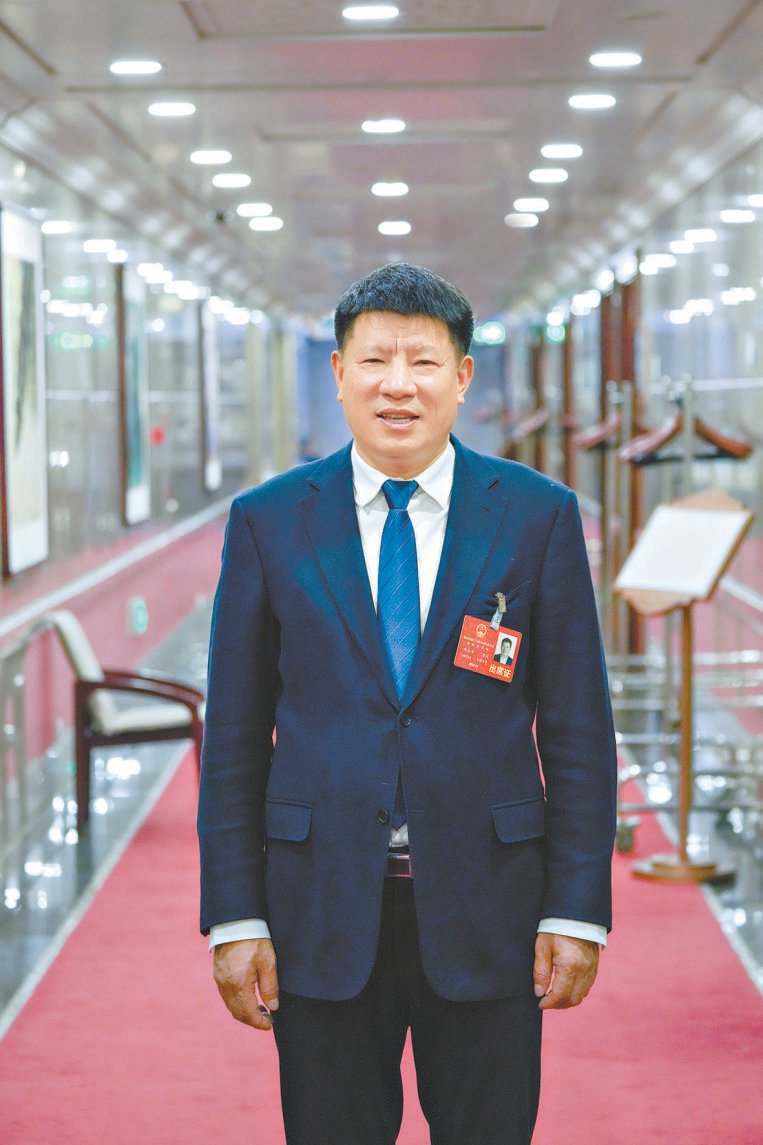
三大维度发力打造京字号种业航母
Xin Lang Cai Jing· 2026-01-28 23:07
Group 1 - The core viewpoint of the article emphasizes the need to enhance the quality and efficiency of urban modern agriculture, with a focus on developing a leading seed industry in Beijing [2] - Liu Baoping, a representative and chairman of Beijing Tongzhou International Seed Industry Technology Co., suggests creating a high-level coordination mechanism to promote the development of the Tongzhou Yujiawu International Seed Industry Technology Park [2] - The proposal includes integrating the park's development into Beijing's 14th Five-Year Plan for agricultural science and technology, ensuring its core positioning in crop seed industry while aligning with the livestock breeding industry in Pinggu [2] Group 2 - The article highlights the importance of comprehensive policy support, including the integration of technology, enterprises, and talent resources, to strengthen the foundation for industry development [2] - It suggests upgrading the innovation platform system, improving core platforms like breeding accelerators, and establishing an AI-based breeding technology platform [2] - The goal is to increase the technology achievement transformation rate in the park to over 40%, creating a closed-loop development ecosystem from research and development to promotion [2]

北京如何再造活力片区
Bei Jing Ri Bao Ke Hu Duan· 2025-12-09 22:41
Group 1 - The article discusses the development of various vibrant areas in Beijing during the 14th Five-Year Plan period, highlighting the importance of urban planning that focuses on "scene creation" rather than just spatial construction [2][3] - The Olympic Center area is identified as a key region with potential for enhanced urban vitality through the introduction of diverse leisure activities and commercial elements to attract both residents and tourists [1][2] - The five new plains cities surrounding Beijing are crucial for the coordinated development of the Beijing-Tianjin-Hebei urban agglomeration, with a current economic total close to 1 trillion yuan and a resident population exceeding 30% of the city [3][4] Group 2 - The article emphasizes the role of technological innovation in rural revitalization, showcasing Beijing's advancements in agricultural technology, such as the rapid breeding of new crop varieties [5][6] - The establishment of a breeding accelerator and a crop adversity assessment platform in Beijing is highlighted as a significant step towards enhancing agricultural productivity and resilience [5][6] - The integration of urban and rural areas is seen as a pathway to modernization, with a focus on the dual flow of various factors, including technology, between cities and rural areas [6]

时报数说 “十四五”期间北京快速推进“种业之都”建设
Zheng Quan Shi Bao· 2025-11-27 19:35
Core Viewpoint - The article discusses the recent financial performance and strategic developments of a specific company, highlighting its growth trajectory and market positioning [2] Financial Performance - The company reported a revenue increase of 15% year-over-year, reaching $1.5 billion in the last quarter [2] - Net profit rose to $300 million, reflecting a 10% increase compared to the previous year [2] - The company's earnings per share (EPS) improved to $1.20, up from $1.10 in the same quarter last year [2] Strategic Developments - The company announced plans to expand its operations into new markets, targeting a 20% increase in market share over the next two years [2] - A new product line is set to launch in Q3, expected to contribute an additional $200 million in revenue [2] - The company is investing $50 million in technology upgrades to enhance operational efficiency [2]
农业科技创新持续突破 北京建设“种业之都”
Zhong Guo Xin Wen Wang· 2025-11-27 03:46
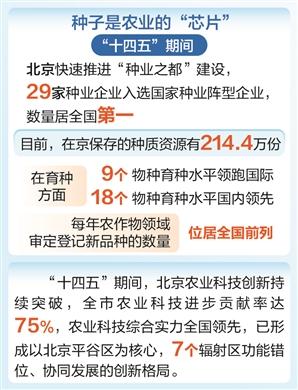
Core Insights - During the "14th Five-Year Plan" period, Beijing has leveraged its capital's technological talent advantage, achieving an agricultural technology progress contribution rate of 75%, with comprehensive technological strength leading the nation [1][4]. Agricultural Development - The construction of Beijing as a "seed industry capital" is rapidly advancing, with 29 seed enterprises selected as national seed industry backbone enterprises, the highest in the country [1][4]. - The number of newly approved crop varieties annually ranks among the top in the nation, with 9 species leading internationally in breeding levels and 18 species being domestically advanced [1][4]. Quality Improvement Initiatives - The city has implemented a three-year action plan for high-quality vegetable industry development, enhancing agricultural supply-side structural reforms, and significantly improving agricultural quality and efficiency [3]. - Agricultural production capacity is steadily increasing, with self-sufficiency rates for key agricultural products like vegetables, eggs, and milk improving [3]. Technological and Policy Support - Over the past five years, a series of policies have been introduced to support agricultural technology enterprises, focusing on top-level design, innovation mechanisms, and the transformation of research results [4]. - The establishment of a seed resource protection system has led to the preservation of 2.144 million seed resources in Beijing, ranking first in the nation [4]. Rural Development and Tourism - The integration of agriculture, culture, and tourism is being promoted, with over a hundred premium leisure tourism routes launched in the suburbs, fostering new business models such as rural markets and specialty cuisine [5]. - The city aims to enhance rural development, governance, and living standards, positioning itself as a "window" for a strong agricultural nation [5].
150万亩永久基本农田落图落地,北京粮食生产连续5年较快增长
Xin Jing Bao· 2025-11-26 11:53
Core Insights - Beijing has implemented the strictest farmland protection system, restoring the cultivated land area to 1.97 million acres and completing the mapping of 1.5 million acres of permanent basic farmland [1][2] - The city has made significant advancements in agricultural technology, achieving a 75% contribution rate from agricultural technology progress and leading the nation in comprehensive technological strength [2][3] - The development of rural industries has been prioritized, with a focus on enhancing the production of local specialties and creating new rural business models [6][4] Group 1: Agricultural Development - The area of high-standard farmland built has reached 840,000 acres, with a focus on modern facility agriculture and the establishment of demonstration zones [2] - The self-sufficiency rates for key agricultural products such as vegetables, eggs, and milk have steadily increased [2] - Beijing has developed a robust seed industry, with 214.4 million preserved germplasm resources, ranking first in the country [3] Group 2: Rural Infrastructure and Services - Over 95% of administrative villages have completed village planning, and rural infrastructure improvements have been largely completed [4] - The city has introduced over 200 new urban entrepreneurial entities to develop rural new business formats, enhancing the local economy [4] - The income of rural residents has consistently grown faster than that of urban residents, with a projected increase of 9,730 yuan per capita by 2024 [7] Group 3: Policy and Governance - Beijing has implemented various policies to support rural collective economic development and improve governance in rural areas [8] - The city has made progress in land reform, with 23,87 plots of land entering the open market for transactions since 2021 [8] - The government aims to continue promoting urban-rural integration and modern agricultural development in the next five years [9]
中共北京市委关于制定北京市国民经济和社会发展第十五个五年规划的建议
Bei Jing Qing Nian Bao· 2025-11-25 19:17
Group 1: Health and Public Safety - The implementation of a health-first development strategy aims to enhance public health systems and capabilities, focusing on the prevention and control of major infectious diseases [1] - The initiative includes the establishment of a comprehensive medical, insurance, and pharmaceutical governance mechanism, promoting public hospital reforms and improving primary healthcare facilities [1] - The development of a national medical center and the promotion of traditional Chinese medicine are also key components of the health strategy [1] Group 2: Food Safety - The enhancement of food safety levels involves the establishment of a leading national food safety standard system and strict regulation throughout the food production and consumption process [2] - A digital management platform for food safety will be created to improve inspection and testing capabilities [2] - Focus areas include food safety in schools, childcare institutions, and elderly care facilities, along with the development of fresh food cold chain logistics [2] Group 3: Urban Development - The promotion of urban renewal emphasizes systematic and comprehensive updates to urban areas, including the renovation of old residential buildings and the improvement of community infrastructure [4] - The initiative aims to enhance the living environment and promote the development of green spaces and community services [4] - The construction of a modern transportation system is also prioritized to improve connectivity and efficiency within urban areas [7] Group 4: Rural Revitalization - The strategy for rural revitalization focuses on enhancing agricultural productivity and ensuring food security while promoting sustainable rural development [6] - The integration of technology in agriculture and the development of modern agricultural systems are key objectives [6] - Efforts will be made to improve rural living conditions and promote local economic development through various initiatives [6] Group 5: Environmental Protection - The commitment to pollution prevention includes comprehensive measures to improve air and water quality, as well as soil management [10] - The establishment of a "zero waste city" initiative aims to enhance waste management and recycling efforts [10] - The promotion of green urban development and the construction of garden cities are part of the broader environmental strategy [11] Group 6: Digital Transformation - The creation of a data element comprehensive experimental zone and the establishment of national data management centers are part of the push for digital transformation [8] - The initiative includes the development of smart city infrastructure and the promotion of digital public services [8] - Efforts will be made to enhance energy digitalization and the construction of new energy systems [8] Group 7: Governance and Social Stability - The enhancement of social governance capabilities focuses on improving community services and strengthening grassroots governance [15] - The strategy includes measures to prevent and address social issues, ensuring a stable and harmonious society [15] - The emphasis on national security and risk prevention highlights the importance of maintaining stability in various sectors [14]