
准备金制度

Search documents
鲍威尔敞开降息大门,或接近停止缩表(附讲稿)
华尔街见闻· 2025-10-14 23:44
Core Views - The Federal Reserve Chairman Jerome Powell indicated a potential interest rate cut this month due to a deteriorating labor market, despite the impact of the government shutdown on economic assessments [1][2][3] - Powell suggested that the Fed may halt its balance sheet reduction in the coming months, as the economic growth trajectory appears slightly stronger than expected [2][6][7] Labor Market and Employment - The labor market shows increasing downside risks, with Powell noting that the balance of risks regarding employment and inflation has shifted, leading to the decision to cut rates in September [3][5][46] - Despite a low unemployment rate in August, wage growth has significantly slowed, partly due to a decrease in immigration and labor force participation [2][46] - Job openings have declined, which may reflect an impending rise in the unemployment rate [5][46][47] Inflation and Economic Indicators - Current data suggests that rising commodity prices are primarily due to tariffs rather than broader inflationary pressures [4][48] - The core Personal Consumption Expenditures (PCE) inflation rate was 2.9% over the past 12 months, slightly up from earlier in the year, with short-term inflation expectations rising while long-term expectations remain aligned with the 2% target [48] Monetary Policy and Balance Sheet Management - Powell emphasized the importance of balancing the dual mandate of employment and inflation, stating that there is no risk-free policy path [5][48] - The Fed's balance sheet, which stood at $6.5 trillion as of October 8, consists mainly of $2.4 trillion in Federal Reserve notes and $3 trillion in reserves [21][22] - The Fed plans to stop reducing its balance sheet when reserves are slightly above what is deemed sufficient, with indications that liquidity is tightening [7][40] Market Stability and Future Outlook - Powell highlighted the need for careful management to avoid a repeat of the 2019 repo market crisis, indicating that the Fed will take cautious measures to maintain market stability [8][10][40] - The Fed's framework for sufficient reserves has proven effective in controlling policy rates and supporting financial stability [38][44] - The Fed is closely monitoring various indicators to inform its decisions regarding the balance sheet and interest rates in light of evolving economic conditions [40][45]

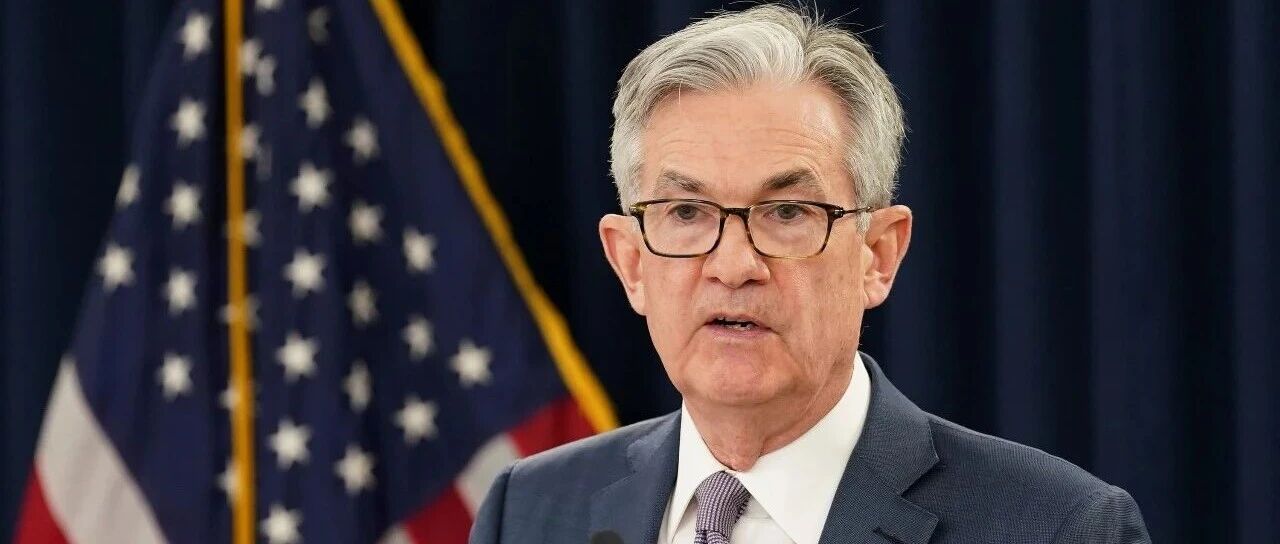
鲍威尔敞开降息大门:就业下行风险显著,或接近停止缩表
Hua Er Jie Jian Wen· 2025-10-14 22:29
Core Viewpoint - The Federal Reserve Chairman Jerome Powell indicated a potential interest rate cut this month due to a deteriorating labor market, despite the impact of the government shutdown on economic assessments [1][2][24]. Economic Outlook - Powell noted that since the last Federal Reserve meeting, the employment and inflation outlooks have not changed significantly, with economic growth appearing slightly more robust than expected [1][24]. - The unemployment rate remained low in August, but wage growth has slowed considerably, partly due to a decrease in immigration and labor force participation [1][24][25]. - There are increasing risks to employment in a labor market that is described as lacking vitality and somewhat weak [1][24]. Monetary Policy Actions - Powell emphasized the risks associated with balancing the dual mandate of employment and inflation, stating that a rapid rate cut could leave inflation targets unmet, while a slow cut could harm the job market [2][24]. - The Federal Reserve may halt the reduction of its balance sheet in the coming months, as it approaches a level deemed sufficient for reserves [4][18]. - Powell acknowledged signs of tightening liquidity but assured that the Fed would act cautiously to avoid a repeat of the "taper tantrum" experienced in September 2019 [5][19]. Labor Market Insights - The hiring pace has slowed, and the number of job vacancies is decreasing, which may lead to a rise in the unemployment rate [2][24]. - Powell did not provide specific figures for the equilibrium point of employment growth necessary to maintain stable unemployment rates, but noted that the unemployment rate has significantly decreased [2][24]. Inflation and Price Pressures - Current data suggests that rising commodity prices are primarily due to tariffs rather than broader inflationary pressures [1][25]. - The core Personal Consumption Expenditures (PCE) inflation rate was reported at 2.9% over the past 12 months, slightly higher than earlier in the year, driven by increases in core goods inflation [25]. Federal Reserve's Balance Sheet Management - The Federal Reserve's balance sheet, which stood at $6.5 trillion as of October 8, consists mainly of $2.4 trillion in Federal Reserve notes and $3 trillion in reserves [11]. - The Fed plans to adjust its asset holdings, potentially increasing short-term assets, which some investors view as a form of implicit quantitative easing [7][20]. - Powell defended the effectiveness of the reserve system, stating that it is crucial for controlling interest rates and ensuring financial stability [18][21].