失业率

Search documents
稳就业催生超预期变化
Guoxin Securities· 2026-03-31 11:06
Economic Growth and Inflation - Input inflation is characterized by rising international raw material prices impacting domestic consumer goods, reflected in the declining ratio of CPI to PPIRM since 2012[4] - Monthly GDP growth for January-February reached 5.2%, with expectations for Q1 GDP to exceed 5.0%[4] - The construction sector's employment decline is a key factor in rising unemployment rates, necessitating increased infrastructure investment to stabilize employment[4] Sector Performance - The service sector's growth is notably low, while industrial production is primarily supported by external demand, indicating insufficient domestic demand[4] - High-tech industries are growing significantly faster than in the past two years, but manufacturing upgrades and AI development are not creating enough jobs, keeping unemployment high[4] Infrastructure Investment - Infrastructure investment saw a significant increase from -15.2% in December to 9.8% at the start of the year, indicating a focus on stabilizing employment rather than growth[4] - If employment stabilization policies continue, construction alone could boost GDP by approximately 0.4 percentage points in Q2 compared to Q4 of the previous year[4] Market Implications - The bond market may face pressure in Q2 as GDP growth is expected to exceed 5%, driven by construction and industrial recovery[4] - The current economic environment suggests that changes in funding demand will have a greater impact on the funding landscape than central bank policy adjustments[4]
高盛闭门会-调整对美国经济的展望
Goldman Sachs· 2026-03-30 05:15
Investment Rating - The report indicates a cautious outlook on the U.S. economy, with a revised GDP growth forecast for the second half of 2026 dropping from 3% to 1.75%, below the trend level of 2.3% [1][2] Core Insights - The primary reasons for the downward adjustment in GDP growth include the fading effects of fiscal stimulus and rising oil prices, which are expected to impact economic performance significantly [1][2] - Core PCE inflation is projected to decrease from 3% to 2.5% by the end of 2026, as the impact of tariffs diminishes, offsetting the transmission of energy prices to the service sector [1][2] - The unemployment rate is anticipated to rise to 4.6% by the end of 2026, with a notable risk of further increases if economic growth slows due to energy price shocks [1][3] Economic Growth Outlook - The report maintains a basic judgment of steady economic growth but expresses caution regarding both growth and inflation, particularly noting a slowdown in economic growth expected in the latter half of 2026 [2] - The anticipated economic growth rate for the second half of 2026 is adjusted downwards by 0.25 to 0.5 percentage points, primarily due to the combined effects of fiscal stimulus fading and rising oil prices [2] Inflation Expectations - Core PCE inflation is expected to decline significantly, with the report projecting a drop to 2.5% by the end of 2026, despite a recent upward adjustment of 30 to 40 basis points [2][4] - The report highlights that the tariff effects, which previously contributed to inflation, will diminish significantly by mid-2026, further supporting the decline in core inflation [2] Labor Market Trends - The current unemployment rate stands at 4.4%, with expectations of a slight increase to 4.6% by the end of 2026, driven by economic growth falling below trend levels [3] - The impact of artificial intelligence on the labor market is noted, with an estimated monthly job loss of 5,000 to 10,000 positions, although long-term job creation is expected to offset these losses [3] Recession Probability - The probability of economic recession has been raised from 25% to 30%, attributed to the anticipated rise in unemployment and economic growth falling below trend levels [4][5] - Historical data suggests that a rise in unemployment exceeding 0.5 percentage points is often associated with economic recessions, reinforcing the revised recession probability [4] Federal Reserve Interest Rate Outlook - The report suggests that the market has shifted its expectations regarding interest rates, with a forecast of two rate cuts in September and December 2026, delayed from earlier predictions [6] - The uncertainty surrounding core inflation and labor market strength indicates that the Federal Reserve may maintain rates longer than previously expected, with a potential for significant rate cuts if recession risks materialize [6]
3月FOMC例会 | 相机抉择(申万宏观·赵伟团队)
申万宏源证券上海北京西路营业部· 2026-03-20 02:46
Core Viewpoint - The Federal Reserve maintained interest rates unchanged during the March FOMC meeting, signaling a hawkish stance with upward revisions in inflation and economic forecasts, while reducing expectations for rate cuts this year [1][2][6]. Group 1: Interest Rate Decisions - The FOMC decided to keep the Federal Funds Rate (FFR) target range at [3.50%-3.75%], with a dissenting vote from Governor Milan who favored a 25 basis point cut [2][7]. - The median dot plot indicates a potential for one rate cut in 2026 and 2027, with a current split of 12 to 7 in favor of maintaining rates versus cutting [10]. Group 2: Economic and Inflation Forecasts - The Fed revised its GDP growth forecasts for 2026, 2027, and 2028 upwards by 0.1, 0.3, and 0.2 percentage points to 2.4%, 2.3%, and 2.1% respectively, while also adjusting the unemployment rate forecast for 2027 to 4.3% [8][9]. - Core PCE inflation forecasts for 2026 and 2027 were raised by 0.2 and 0.1 percentage points to 2.7% and 2.2% respectively [8][9]. Group 3: Forward Guidance and Economic Risks - Chairman Powell emphasized a wait-and-see approach, stating that progress on inflation is a prerequisite for any rate cuts, and highlighted the uncertainty surrounding the economic impact of geopolitical tensions [3][12]. - The Fed's current interest rate level is deemed appropriate given the balance of risks between employment and inflation, with Powell noting the difficulty in determining which risk is more significant [12]. Group 4: Oil Price Impact and Future Projections - Under the assumption of rising oil prices for 1-2 months, the Fed may only cut rates once in 2026, as the conditions for a "stagflation" scenario are not sufficiently met [15]. - The U.S. economy's resilience, supported by non-farm employment growth primarily from the public sector, suggests limited impact from high oil prices [15].


Fed was ‘appropriately cautious' at two-day policy meeting, says Gary Stern
Youtube· 2026-03-19 18:05
Economic Impact of Middle East Events - The implications of the Middle East conflict for the US economy are uncertain, with higher energy prices expected to increase overall inflation, but the extent and duration of these effects remain unclear [1] - The Federal Reserve has paused interest rate cuts for the second consecutive time due to the complicated outlook caused by the war [2] - The Fed's cautious stance reflects the prevailing uncertainty in the economic environment, particularly regarding inflation and labor market conditions [3][5] Inflation and Labor Market Concerns - There are significant concerns about stagnation in the labor market, despite low unemployment rates, and the persistent inflation above the Fed's target, even without the influence of rising energy prices [4] - The impact of energy prices is expected to raise headline inflation, with core measures also likely to be affected temporarily [6][7] Central Bank Policies - The Fed and the Bank of England have both indicated that interest rates will remain on hold this year, with some analysts suggesting that a rate hike could be considered in response to oil's impact on inflation [8] - The Fed is unlikely to react significantly to changes in foreign central banks' rates, as inflation in the UK has been lower than in the US, presenting different policy challenges [9][10]

2026年3月FOMC例会点评与展望:相机抉择
Shenwan Hongyuan Securities· 2026-03-19 03:32
Monetary Policy Decisions - The Federal Reserve maintained the federal funds rate (FFR) target range at 3.50%-3.75% during the March meeting[2] - The tone of the statement was hawkish, with upward revisions to inflation and economic forecasts, and a contraction in rate cut expectations reflected in the dot plot[1] - Board member Milan voted against the decision, favoring a 25 basis point rate cut[1] Economic Forecasts - The Fed revised its GDP growth forecasts for 2026, 2027, and 2028 upwards by 0.1, 0.3, and 0.2 percentage points to 2.4%, 2.3%, and 2.1% respectively[2] - The unemployment rate forecast for 2027 was adjusted up by 0.1 percentage points to 4.3%[2] - Core PCE inflation forecasts for 2026 and 2027 were raised by 0.2 and 0.1 percentage points to 2.7% and 2.2% respectively[2] Rate Cut Expectations - The dot plot indicates a median expectation of one rate cut this year, with a split of 12 in favor and 7 against among participants[2] - The number of participants expecting no rate cut, one rate cut, and more than two rate cuts this year is 7, 7, and 5 respectively, compared to 4, 4, and 8 in December[2] Forward Guidance - Chairman Powell emphasized a wait-and-see approach, stating that progress on inflation is a prerequisite for any rate cuts[3] - Powell noted that the impact of energy price shocks would depend on inflation expectations and the timing of tariff-related inflation declines[3] Oil Price Impact - Under the assumption of rising oil prices for 1-2 months, the Fed may only cut rates once this year, as the economic impact of high oil prices is expected to be limited[4] - The U.S. is a net oil exporter, which reduces the economic shock from high oil prices[4]
美联储观察-2026 年 3 月FOMC会议快速解读:不确定性上升-Federal Reserve Monitor-March FOMC Quick Reaction Uncertainty has risen
2026-03-19 02:36
Summary of Key Points from the March FOMC Quick Reaction Industry Overview - The document pertains to the Federal Reserve's monetary policy and economic projections, specifically focusing on the U.S. economy and its implications for financial markets. Core Insights and Arguments - The Federal Reserve maintained the target fed funds range at 3.5% to 3.75%, with only one dissenting vote, contrary to expectations of three dissenters [3][4] - The median FOMC member anticipates one rate cut this year and another next year, reflecting a "look through" approach to rising oil prices [3][6] - Economic risks are skewed towards slower growth, higher inflation, and increased unemployment, indicating a cautious outlook [7] - The Fed's Summary of Economic Projections (SEPs) shows an upward revision in GDP growth by 10 basis points for this year and 30 basis points for next year, while the unemployment rate remains unchanged for this year but is projected to rise by 10 basis points next year [5][10] - Headline PCE inflation is expected to increase by 30 basis points this year and 10 basis points next year, while core goods inflation is projected to rise by 20 basis points this year and 10 basis points next year [5][10] Additional Important Details - The Fed's statement removed previous language indicating stabilization in the unemployment rate, opting for more neutral wording [4] - The distribution of risks regarding growth, inflation, and unemployment suggests a significant concern over potential economic downturns [7][8] - The press conference is expected to address rising uncertainty, the impact of oil shocks, and the Fed's readiness to adapt monetary policy to ongoing developments [8] - The SEPs indicate that long-term growth projections have been revised upward, possibly in response to improved productivity data [3][10] Economic Projections Summary - **Real GDP Growth**: Revised to 2.4% for 2026, up from 2.3% [10] - **Unemployment Rate**: Projected at 4.4% for 2026, unchanged from previous estimates [10] - **Headline PCE Inflation**: Increased to 2.7% for 2026, up from 2.4% [10] - **Core PCE Inflation**: Revised to 2.7% for 2026, up from 2.5% [10] This summary encapsulates the key points from the Federal Reserve's recent meeting and its implications for the U.S. economy and financial markets.

3月FOMC会议点评:重新加息或仍未进入美联储的政策选择中
KAIYUAN SECURITIES· 2026-03-19 01:18
Group 1: Federal Reserve Policy Decisions - The Federal Reserve decided to maintain the interest rate unchanged in the range of 3.5%-3.75% during the March FOMC meeting[4] - The Fed's internal divisions have slightly narrowed, with only one member voting for a 25 basis point rate cut[4] - The Fed has raised its GDP growth forecasts for 2026-2028, with the 2026 GDP growth forecast adjusted to 2.4%, up by 0.1 percentage points[5][17] Group 2: Economic Outlook and Inflation - The Fed has increased its inflation forecasts, with the 2026 PCE and core PCE both projected at 2.7%, up by 0.3 and 0.2 percentage points respectively from December 2025[16][17] - The unemployment rate forecast for 2026 remains at 4.4%, while the 2027 forecast has been raised to 4.3%[17] - Fed Chair Powell indicated that a rate hike is not the baseline scenario, emphasizing that current rates are at the high end of neutral[20] Group 3: Market Reactions and Risks - Following the Fed's announcement, the Dow Jones index fell by 1.63% and the Nasdaq index dropped by 1.46%[7][30] - The 10-year U.S. Treasury yield has risen to slightly above 4.25%[30] - Market risk appetite has slightly decreased due to uncertainties surrounding the Middle East situation, which could impact inflation and economic growth[30][33]
美联储维持利率不变
新华网财经· 2026-03-19 00:33
Core Viewpoint - The Federal Reserve has decided to maintain the federal funds rate target range at 3.5% to 3.75%, aligning with market expectations, while projecting two rate cuts in 2026 and 2027 [1][3][4]. Group 1: Federal Reserve Decision - The Federal Reserve's decision to keep interest rates unchanged was passed with an 11-1 vote, with one member advocating for a 25 basis point cut [4]. - The updated dot plot indicates that among 19 Fed officials, 7 expect no rate cuts this year, while others have varying expectations for one to four cuts [4]. Group 2: Economic Outlook - The Fed has revised its GDP growth forecasts upward, projecting a 2.4% growth rate for 2026, up from 2.3%, and 2.3% for 2027, up from 2.0% [6]. - The unemployment rate forecast for 2026 remains at 4.4%, while the 2027 forecast is slightly adjusted to 4.3% from 4.2% [6]. - The PCE inflation rate forecast for 2026 has been raised to 2.7% from 2.4%, and for 2027 to 2.2% from 2.1% [6]. Group 3: Powell's Statements - Fed Chair Powell emphasized that no rate cuts will be considered until there is progress on inflation, noting that the current inflation cooling process has slowed significantly [7][8]. - Powell acknowledged the uncertainty surrounding the impact of the Middle East situation on the U.S. economy and highlighted the potential negative effects on employment and overall economic activity [9]. - He confirmed that he would continue to serve as acting chair if his term ends before a successor is confirmed [9].

美联储“按兵不动”,鲍威尔最新发声来了
财联社· 2026-03-18 23:35
Core Viewpoint - The Federal Reserve maintained the federal funds rate target range at 3.5% to 3.75%, marking the second consecutive meeting without a change, amid rising oil prices due to escalating Middle East conflicts [1][3][18]. Group 1: Federal Reserve Decisions - The FOMC voted 11-1 to keep the interest rate unchanged, with a slight upward adjustment in economic growth and inflation expectations for 2026 [18][21]. - The decision reflects concerns over inflation and economic uncertainty, particularly due to geopolitical tensions affecting oil prices [24][25]. Group 2: Economic Forecasts - The Fed's median GDP growth forecast for 2026 is now 2.4%, up from 2.3% previously, while the unemployment rate is expected to be 4.4% by year-end [22][23]. - Inflation expectations have also been revised, with the PCE inflation projected at 2.7% for 2026, indicating a rise from earlier estimates [23][24]. Group 3: Market Reactions - Following the announcement, U.S. stock indices saw a slight increase, and gold prices rose by $10, while the dollar index remained stable [18]. - The market's expectations for future rate cuts have shifted, with many now anticipating only one cut in 2026, down from earlier predictions of two [22][21]. Group 4: Geopolitical Impact - The ongoing conflict in the Middle East has introduced additional uncertainty into the economic outlook, with potential implications for inflation and consumer spending [21][26]. - The Fed is closely monitoring the situation, acknowledging that the impact of rising oil prices on the economy is still unclear [17][26].
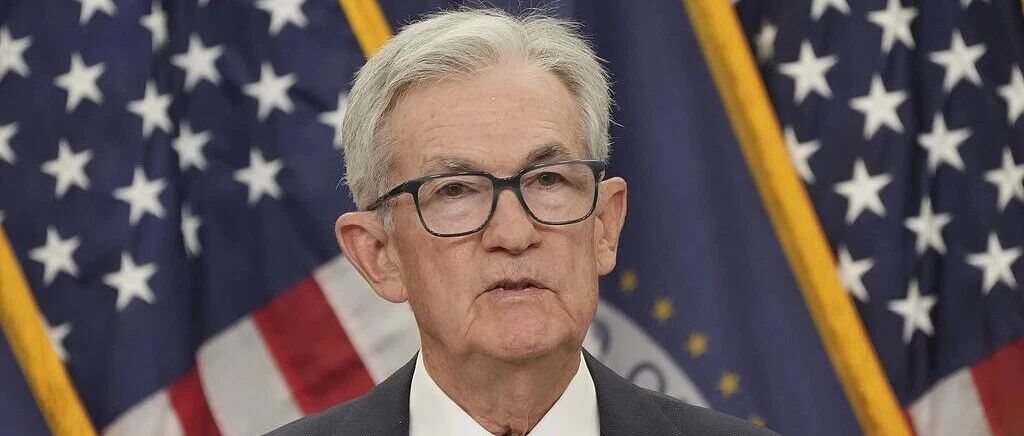
'UNCHANGED': Fed drops decision on interest rates, make predictions on cuts
Youtube· 2026-03-18 18:31
Group 1 - The Federal Reserve has left interest rates unchanged, with one dissenting member advocating for a 25 basis point rate cut [1] - The Fed's dot plot indicates one rate cut is forecasted for this year and another for next year, with no further cuts anticipated thereafter [1] - Economic projections show GDP growth at 2.4% for this year, 2.3% for next year, and 2.1% by 2028 [2] Group 2 - The unemployment rate is expected to remain steady at 4.4% this year, decreasing to 4.3% next year and 4.2% by 2028 [2] - PCE inflation is projected to be 2.7% in December, falling to 2.2% and 2% in subsequent years, reaching the target by 2028 [3] - The Fed has acknowledged elevated uncertainty in the economic outlook, particularly regarding developments in the Middle East [4] Group 3 - The Fed's statement reflects a change in language regarding the unemployment rate, indicating it is "little changed" rather than showing "some stabilization" [3] - The committee will continue to monitor incoming data and is prepared to adjust monetary policy if necessary [5] - There is a divergence in views regarding inflation, with the Fed projecting a decline next year, contrasting with President Trump's belief that it will decrease this year [6]