出口结构多元化

Search documents
再论年内人民币升破7的概率
2025-12-12 02:19
Summary of Key Points from the Conference Call Industry Overview - The focus is on the Chinese Yuan (RMB) exchange rate, particularly its movement around the psychological level of "7" against the US Dollar (USD) [1][2][3][4]. Core Insights and Arguments - The RMB's effective return to the "6" range requires four core conditions: robust domestic economic fundamentals, a structurally weak US Dollar index, sustained net inflows of cross-border capital, and stable, flexible policy adjustments [1][6][13]. - The probability of the RMB breaking "7" in 2026 is considered feasible due to the narrowing of the China-US interest rate differential, the recovery of domestic asset attractiveness, and significant changes in the international balance of payments [1][11][12][13]. - Historical instances of the RMB breaking "7" and returning to "6" occurred between 2019 and 2022, lasting 3 to 5 months, indicating resilience and self-regulation in the foreign exchange market [5][7]. - The current conditions for the RMB to effectively break "7" include a narrowing of the China-US interest rate differential, increased attractiveness of domestic assets, diversification of export structures, and policy guidance forming a positive feedback loop [13]. Important but Overlooked Content - The RMB has remained above "7" due to weak domestic economic recovery post-pandemic and a significant inversion of the China-US interest rate differential, leading to depreciation pressures [10]. - Geopolitical risks, such as the US midterm elections and fluctuating China-US trade relations, could impact the RMB's exchange rate trajectory in 2026 [14]. - The anticipated RMB appreciation in the second half of 2025 is driven by systemic factors rather than short-term market sentiment, suggesting a sustainable upward trend [11][12]. - The forecast for 2026 indicates a likely range of 7.0 to 7.25 for the USD/RMB exchange rate, with potential for a temporary break below "7" but not a sustainable break unless economic conditions improve significantly [16].
布米普特拉北京投资基金管理有限公司:韩国的贸易出口出现分化
Sou Hu Cai Jing· 2025-12-09 11:59
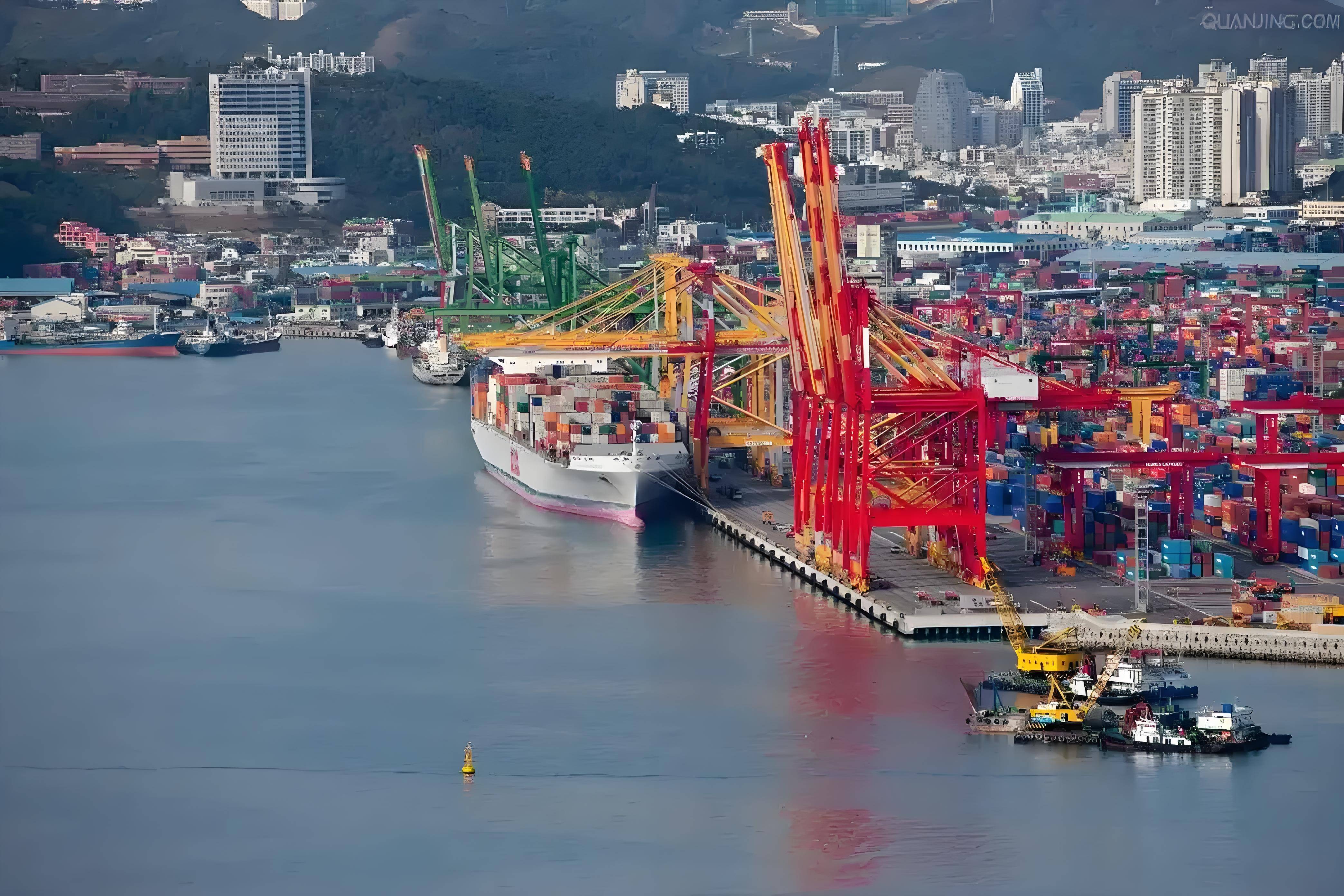
Core Viewpoint - South Korea's export economy is projected to reach a historic high of over $700 billion in 2025, primarily driven by a "super cycle" in the semiconductor industry, while overall export performance reveals concerning weaknesses in other sectors [1][4]. Group 1: Export Performance - In the first eleven months of this year, South Korea's total exports reached $640.2 billion, a year-on-year increase of 2.9%, surpassing the total for 2022 and setting a record for the same period [4]. - The semiconductor industry is the main driver of this growth, benefiting from strong demand fueled by global AI investment expansion [4]. - In November alone, semiconductor exports accounted for 28.3% of South Korea's total exports, marking a new high for the year, compared to around 10% in the first decade of this century [4]. Group 2: Structural Weakness - Excluding semiconductors, South Korea's export value from January to November was $787.6 billion, reflecting a year-on-year decline of 1.5%, highlighting the vulnerability of the export structure [6]. - Several key industries are experiencing negative growth, including petrochemical products (-11.7%), petroleum products (-11.1%), steel (-8.8%), and machinery (-8.9%) [6]. - Exports of displays, home appliances, and secondary batteries also saw declines exceeding 9% [6]. Group 3: Economic Concerns - The heavy reliance on a single industry for growth raises significant concerns among economic experts regarding the health of South Korea's export structure [9]. - The semiconductor sector is characterized by high volatility, influenced by global technology cycles, geopolitical risks, and supply chain changes, posing a risk to the overall economy if demand cools [9]. - Challenges for South Korea's export outlook include global economic slowdown, ongoing trade uncertainties, and tariff policies from major trading partners, necessitating a long-term strategy to diversify and balance the export structure [9].