
分红决策

Search documents
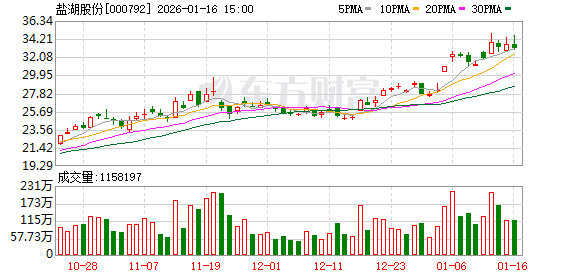
盐湖股份:公司目前暂不满足分红条件
Zheng Quan Ri Bao· 2026-01-16 09:13
Core Viewpoint - Salt Lake Co. currently does not meet the conditions for dividend distribution, but is focused on improving operational performance and reducing undistributed profits [2] Group 1: Company Performance - Since resuming trading, the company has been enhancing its operational performance, leading to a continuous reduction in undistributed profits [2] - The company is actively monitoring policy trends and prioritizing the enhancement of its value [2] Group 2: Future Plans - The company plans to conduct a comprehensive and prudent assessment of its operational status, strategic layout, and industry development trends regarding future decisions [2] - Any future plans related to dividend distribution will strictly adhere to relevant laws and regulations, ensuring timely and accurate information disclosure [2]


山东路桥20151223
2025-12-24 12:57
Summary of Shandong Road and Bridge's Conference Call Company Overview - **Company**: Shandong Road and Bridge - **Industry**: Infrastructure and Construction Key Points Dividend Strategy - Shandong Road and Bridge plans to increase its dividend payouts to attract institutional investors and encourage the conversion of convertible bonds into stocks. The decision on dividends is influenced by performance, the State-owned Assets Supervision and Administration Commission (SASAC) assessment (2026), and cash flow conditions [2][4] - The company aims to enhance dividends based on stable and increasing performance, while also considering the SASAC's upcoming assessment criteria, which may include stock price, dividends, and market value management [4][8] Financial Performance and Cash Flow - The company is currently facing negative cash flow, which impacts its ability to pay dividends. To address this, it plans to strengthen receivables collection, resolve overdue payments, and utilize low-interest special loans [2][8] - National special bonds positively affect Shandong Road and Bridge by providing stable funding for infrastructure projects, although improvements in payment speed and timeliness are not yet evident [5] Future Performance Expectations - The company's performance over the next one to two years is contingent on the national and Shandong Province's 14th Five-Year Plan, with key indicators being the target for operational and under-construction mileage, expected to reach 12,000 to 15,000 kilometers [6] - The gross profit margin for projects within Shandong Province remains stable at 8% to 13.5%, while margins for projects outside the province are slightly lower. Maintenance projects yield the highest margins, followed by mature road and bridge projects [7] SASAC Assessment and Market Management - The SASAC is expected to release formal assessment documents in 2026, focusing on market value management and stock price assessments, which may include various metrics such as dividends and ESG factors [2][9] - The specific weight and format of these assessments are yet to be determined, but they will likely include a professional evaluation of stock price-related indicators [9]

近10000名临时工撑起一个IPO?证监会九问巴奴国际
Sou Hu Cai Jing· 2025-10-13 07:35
Core Viewpoint - Banu International is facing significant regulatory scrutiny regarding its IPO process, with the China Securities Regulatory Commission (CSRC) raising nine key questions about its corporate governance, employee compliance, and dividend distribution practices [2][10]. Group 1: Corporate Governance and Control - The ownership structure reveals that the founder and his spouse control 83.38% of the voting rights through offshore entities, but the company has not recognized the spouse as a co-controlling person, raising concerns about governance and potential future conflicts [4][5]. - The CSRC has requested clarification on the reasons for the ownership structure, the compliance of offshore investments, and the rationale behind not recognizing the spouse as a co-controlling person [4][5]. Group 2: Employee Compliance Issues - As of March 2025, Banu International employs 1,789 full-time employees, supplemented by 3,168 part-time and 6,124 outsourced workers, totaling 9,292 non-formal workers, which raises questions about labor compliance [7]. - The company has accumulated unpaid social insurance and housing fund contributions amounting to 3.6 million yuan over the years, indicating potential risks in employee rights protection [7][8]. Group 3: Dividend Distribution Concerns - Despite ongoing issues with unpaid social insurance, Banu International distributed 70 million yuan in dividends to shareholders just five months before its IPO, with the controlling family receiving over 58 million yuan [8][9]. - This dividend payout represents 56.9% of the company's net profit for 2024, raising questions about the appropriateness of such a distribution given the company's financial situation, including a significant amount of current liabilities [9][10].
事关分红、零售业务平安银行高管最新回应
Xin Lang Cai Jing· 2025-08-26 09:09
Core Viewpoint - Ping An Bank held a mid-year performance conference on August 25, 2025, addressing key market concerns such as dividends and retail business performance [1][2] Dividend Distribution - For the first half of 2025, Ping An Bank announced a cash dividend of RMB 2.36 per share (including tax), totaling RMB 4.58 billion, maintaining the same level as last year [1] - The management indicated that the year-end dividend will depend on business performance and capital conditions, emphasizing a cautious approach to decision-making while considering future economic recovery [1] Retail Business Performance - In the first half of 2025, the retail financial business accounted for 44.8% of total revenue, a decrease from 50.7% in the same period of 2024 [2] - As of June 30, 2025, the personal loan balance was approximately RMB 17.3 trillion, down 2.3% from the end of the previous year, with credit card receivables and consumer loans contributing to this decline [2] - The management noted that over 95% of the decline in retail loan scale was attributed to credit card business, which is currently stabilizing and showing signs of recovery amid a transforming macro consumption market [2]
