剩余价值

Search documents
资本“利益实质”的数字重构——从“剩余价值独占”到“γ系数争夺”
Jing Ji Guan Cha Bao· 2026-01-21 06:20
Core Insights - The article discusses the transformation of value sources and the restructuring of wealth distribution in the digital age, emphasizing the shift from traditional surplus value (M) to the control of data contribution coefficient (γ) as the new focal point of capital interests [1][11]. Theoretical Foundation - Marx's analysis of capital's profit essence provides a complete system from abstraction to specifics, covering production to distribution [2]. Digital Leap - The digital economy introduces data (D) as a crucial production factor, necessitating an expansion of classical economic formulas to include data's role in value creation and distribution [3]. Evolution of Surplus Value Formula - The surplus value formula evolves to M = α·K + β·L + γ·D, reflecting the significant role of data in enhancing production efficiency and resource allocation [4][6]. Reality of Competition - In the context of platform capitalism, there is a monopolization of the γ coefficient, leading to severe imbalances in profit distribution [7]. Deep-rooted Contradictions - The struggle for the γ coefficient represents a deeper conflict regarding the development path of digital civilization, highlighting economic interests at stake [8]. China's Practical Exploration - China is exploring ways to reconstruct data distribution relationships and promote shared benefits through innovative data property rights systems, such as the "three rights separation" model in Shenzhen [9][10]. Platform Private Ownership and Data Enclosure - Platforms utilize user agreements to claim ownership of user-generated data, leading to a "data enclosure movement" that undermines the rights of data producers [10]. Algorithmic Opacity and Value Transfer - The use of complex algorithms creates a lack of transparency in measuring the contribution of data, allowing platforms to obscure the true value derived from data [10]. Labor Identity Ambiguity - The digital economy blurs the lines between users as laborers and data producers, often resulting in users receiving compensation only for their labor while platforms monopolize data value [10]. Socialization of Production vs. Private Data Ownership - The contradiction between the social nature of data production and its private ownership by platforms leads to wealth concentration and social injustice [10]. Value Creation and Distribution Discrepancy - There is an increasing divergence between value creation (data production by users) and value distribution (platforms monopolizing profits), exacerbating social inequality [10]. Global "γ Colonialism" Risk - Developed countries exploit data resources from developing nations, creating a new center-periphery relationship characterized by "smart colonialism" [10]. Conclusion - The restructuring of capital profit essence in the digital age revolves around the pricing and distribution rights of data, with the struggle for the γ coefficient being central to understanding contemporary digital economic contradictions [11]. Technological Empowerment for Transparent Distribution - Utilizing blockchain and smart contract technologies can create traceable and measurable data value distribution mechanisms, ensuring fair sharing of data contributions [12]. Macro Governance to Guide Benefit Flow - Governments can use tax and industrial policies to redirect data revenue towards public services, promoting a virtuous cycle of development [12].
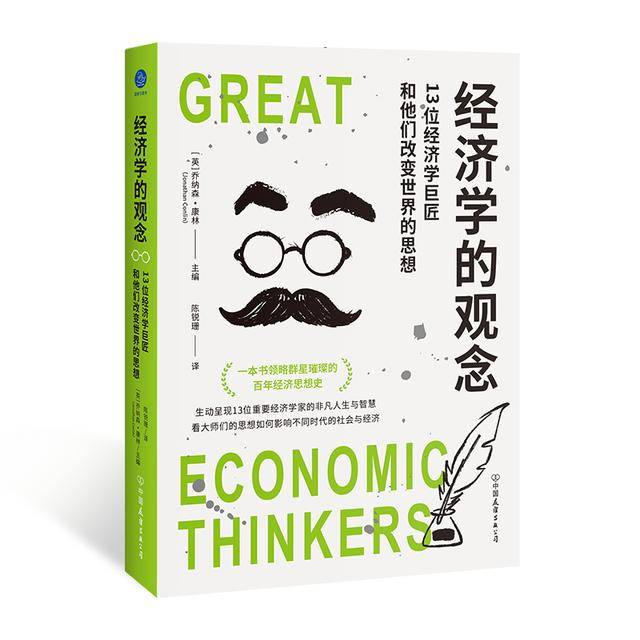
读创今日荐书丨这13位经济学家的思想如何影响世界?
Sou Hu Cai Jing· 2025-07-10 14:31
Core Insights - The book "The Ideas of Economics" focuses on the evolution of economic thought over the past 200 years, presenting a collective biography of influential economists [1][4] - It features 13 prominent economists, including Adam Smith, David Ricardo, Karl Marx, and Joseph Stiglitz, highlighting their contributions to modern economic theory [1][5] Summary by Sections - **Historical Context**: The book emphasizes the need for a comprehensive historical understanding of economic theories to appreciate their relevance and application in contemporary contexts [4] - **Influential Theories**: Key theories discussed include labor division, comparative advantage, marginal utility, and Nash equilibrium, which have shaped discussions on market intervention, taxation, and monetary policy [4] - **Selection Criteria**: The selection of the 13 economists is based on their significant contributions to modern economic thought rather than their radical ideas, acknowledging the challenge of choosing from numerous influential figures [5]

北大学霸创业,494名员工年入百万
盐财经· 2025-03-03 08:55
Core Viewpoint - Anker Innovation, a Shenzhen-based consumer electronics company, has demonstrated resilience in a challenging market by implementing a generous employee incentive system, resulting in significant bonuses and a growing number of high-income earners within the company [1][3][12]. Group 1: Employee Incentive System - Anker Innovation has a three-part employee incentive system that includes salaries and bonuses, operational results sharing, and long-term equity incentives [6][13]. - The operational results sharing has seen explosive growth, with total bonuses increasing from 250 million yuan in 2022 to 800 million yuan in 2024, and projections suggest it will exceed 1 billion yuan by 2025 [9][11][12]. - The long-term equity incentives allow employees to share in the company's success, with significant returns possible from profitable projects [13]. Group 2: Financial Performance - Anker Innovation reported a revenue of approximately 6.8 billion yuan for the current reporting period, reflecting a year-on-year increase of 44.05% [14]. - The net profit attributable to shareholders was approximately 599 million yuan, a 52.44% increase compared to the previous year [14]. - The company has seen a significant increase in cash flow from operating activities, with a net cash flow of approximately 1.65 billion yuan, up 78.06% [14]. Group 3: Market Position and Strategy - Anker Innovation has successfully positioned itself as a leading brand in the mobile charging market, even being featured with high-profile users like former U.S. President Donald Trump [2][20]. - The company has expanded its product offerings beyond charging devices, venturing into areas like energy storage and smart hardware, with a focus on innovation and quality over price competition [20][26]. - Despite facing challenges in maintaining high growth rates post-2018, Anker is committed to focusing on core business areas and has seen substantial growth in its energy storage segment, achieving over 2 billion yuan in revenue in 2024 [27]. Group 4: Future Outlook - Anker Innovation aims to enhance its "remaining value" to reach a target of 30%, aligning with top-tier companies in the industry [15][16]. - The company is actively investing in new product development and infrastructure, particularly in portable and household energy storage solutions, with expected annual revenues of approximately 2.35 billion yuan from these initiatives [27]. - Anker's approach emphasizes the importance of creativity and innovation in navigating market challenges, positioning itself as a model for modern enterprise success [29].