比较优势

Search documents
深挖比较优势蕴含的变革力量
Xin Lang Cai Jing· 2026-02-24 22:23
Group 1 - The core viewpoint emphasizes the importance of leveraging comparative advantages in sectors such as minerals, ecology, cultural tourism, digital intelligence, and human resources for Guizhou's high-quality development [1] - Comparative advantages evolve with changes in regional resource endowments, particularly influenced by technological innovation and industrial transformation, leading to new competitive highlights in the industry [1] - The implementation of the "rich mineral and refined extraction" strategy in mineral resource development has opened new growth spaces for resource-based industries, particularly in lithium batteries, electric vehicles, and photovoltaic glass products, creating new export growth points for Guizhou [1] Group 2 - Guizhou's early start in the big data industry has allowed it to cultivate new comparative advantages through the development of intelligent computing scale and data standards [1] - In the context of intense regional and industrial competition, it is crucial to recognize the unique value of "Guizhou ecology" and stimulate the coupling and linking effects of the ecological economy [1] - The need to seize new consumer policy opportunities and trends in consumption upgrades is highlighted, along with the innovation of "Guizhou cultural" expressions and experience models to boost demand in the cultural economy sector [1][2]
华银基金胡健强:化工行业迎三重利好 行业盈利有望回升
Zhong Zheng Wang· 2026-01-29 13:17
Group 1 - The core investment logic in the chemical industry includes the impact of the US interest rate cut cycle and three additional optimistic factors [1] - The capacity expansion cycle that began in 2021 has ended, but overall demand in the chemical sector continues to grow, leading to an expected improvement in supply-demand dynamics and industry profitability [1] - China's complete industrial system, along with the associated capabilities of upstream and downstream industries and industrial agglomeration effects, enhances the global competitive advantage of the chemical industry, with many overseas capacities expected to shut down [1] - Policies tightening the approval of new chemical projects in terms of approval levels, energy-saving reviews, and carbon emission evaluations contribute to a reduction in industry competition [1]
“十五五”经济前瞻:立足比较优势 激活增长动能——对话北京大学国家发展研究院名誉院长、北京大学新结构经济学研究院院长林毅夫
Shang Hai Zheng Quan Bao· 2026-01-28 18:44
Core Viewpoint - The "14th Five-Year Plan" period is crucial for China to achieve its goal of basic socialist modernization by 2035, with a target of maintaining an average economic growth rate of around 5% during this period, despite global economic challenges [1][2][3]. Economic Goals and Challenges - The primary economic goal for the "14th Five-Year Plan" is to sustain an average growth rate of around 5% to lay a solid foundation for achieving a per capita GDP level comparable to that of moderately developed countries by 2035 [2][3]. - The global economic environment remains challenging, with developed countries experiencing prolonged low growth rates since the 2008 financial crisis, impacting China's external demand, particularly for its private sector exports [2][3]. Opportunities Amidst Challenges - Despite existing challenges, there are significant opportunities in emerging industries such as solar panels, drones, and lithium batteries, which can leverage China's large market and complete industrial supply chains [3][4]. - Traditional industries can also benefit from digitalization, intelligence, and green technologies to enhance efficiency and reduce costs, allowing them to expand their market share [3][4]. Role of New Quality Productivity - New quality productivity is essential for upgrading industries, and companies should identify their comparative advantages to thrive in both emerging and traditional sectors [4][5]. - The development of new quality productivity relies on effective market mechanisms and proactive government support to guide investments in industries with comparative advantages [6][7]. Measures to Boost Market Confidence - To address insufficient domestic demand, three key measures are proposed: investing in infrastructure for emerging industries, enhancing workforce skills through training, and implementing targeted demand-creation strategies [6][7][8][9]. - These measures aim to alleviate excess capacity and improve market expectations regarding future income and employment, thereby boosting consumer confidence [10]. Long-term Economic Outlook - The expectation is that China can maintain a growth rate of around 5% even in a challenging international economic environment, continuing to contribute significantly to global economic growth [11][12][13][14].
“十五五”经济前瞻:立足比较优势,激活增长动能——对话北京大学国家发展研究院名誉院长、北京大学新结构经济学研究院院长林毅夫
Shang Hai Zheng Quan Bao· 2026-01-28 18:38
Group 1 - The "15th Five-Year Plan" is a critical period for China to achieve its goal of basic socialist modernization by 2035, with a key economic target of maintaining an average growth rate of around 5% [3][4] - Despite global economic challenges, including weak demand and geopolitical tensions, China has significant opportunities, particularly in emerging industries such as solar panels, drones, and lithium batteries [4][5] - Traditional industries can also benefit from new productivity methods like digitalization and green technology, allowing them to enhance efficiency and expand market share [4][5] Group 2 - Companies should identify their comparative advantages in specific industries to effectively leverage new productivity and drive growth [5][6] - The government plays a crucial role in guiding industries based on local comparative advantages to avoid redundant construction and resource misallocation [6] - To boost domestic demand, the government should invest in infrastructure for emerging industries, enhance workforce skills, and implement targeted measures to create demand [8][9][10] Group 3 - Confidence in economic growth is essential for both entrepreneurs and consumers, as it drives investment and consumption, which are vital for economic vitality [12] - China must balance technological self-sufficiency with global cooperation, particularly in high-tech sectors, to maintain its competitive edge [13] - The expectation is that China can sustain a growth rate of around 5% even in a challenging international environment, contributing significantly to global economic growth [14]

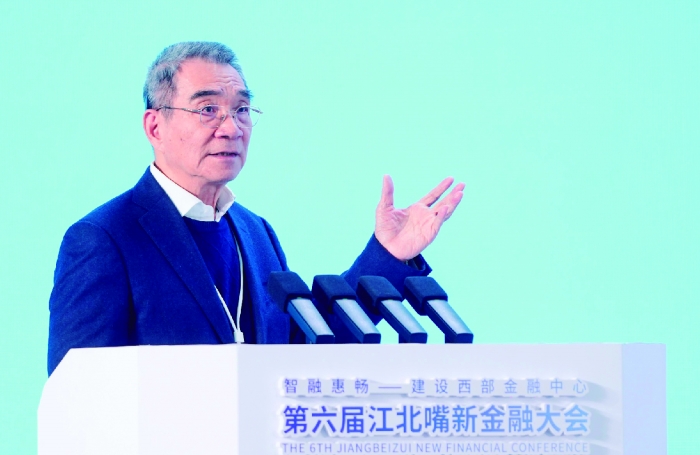
贵州省委党校教授魏志龙:比较优势就是高质量发展的“动力系统”
Xin Lang Cai Jing· 2026-01-24 07:16
Core Viewpoint - Guizhou Province's "14th Five-Year Plan" emphasizes the need for high-quality development through the implementation of a strategy to strengthen comparative advantages, focusing on the protection and development of ecological resources to transform ecological advantages into economic benefits [1]. Group 1: Ecological Advantages - Guizhou's ecological advantages can be understood through three aspects: foundational advantages, cultural advantages, and policy advantages [3]. - The foundational advantage refers to Guizhou's rich natural resources, with a forest coverage rate consistently above 60%, reaching 63.3% in 2024, and an air quality excellent rate of 98% [3]. - Cultural advantages stem from Guizhou's unique geographical environment and rich ethnic culture, which contribute to ecological balance and sustainable land use practices [3]. - Policy advantages include Guizhou's designation as a pilot area for ecological civilization construction, allowing for innovative ecological policies and projects, such as ecological compensation in the Chishui River basin [4]. Group 2: Development Pathways - Over the past five years, Guizhou has seen significant improvements in forest coverage and water quality, triggering a chain reaction in ecological economy and social development [5]. - The province aims to promote the industrialization of ecological resources and the marketization of ecological products, exploring new paths for the value compensation of ecological products during the "14th Five-Year Plan" [5]. - Collaborative research and practical efforts will be undertaken with relevant institutions and universities to address urgent projects and contribute to the development of ecological civilization [5].
AI正在重构比较优势和市场主导格局,中国在数据、资本与产业协同上占优
Xin Lang Cai Jing· 2026-01-24 03:08
Group 1 - The core viewpoint is that AI is reshaping comparative advantages and market dominance, with China excelling in data, capital, and industrial synergy [2] - Without international coordination, the technological competition may intensify protectionism and instability, highlighting the urgent need for cooperative governance [2]

樊纲:市场是最稀缺的资源,要将消费作为战略基点丨财金先生
Sou Hu Cai Jing· 2026-01-22 09:05
Core Viewpoint - The current global economic landscape is characterized by multiple interwoven factors, with China's economic resilience being a focal point amidst external pressures and internal structural challenges [2][4]. Group 1: Global Economic Dynamics - The West's attempts to contain China focus on hindering its latecomer advantages, misinterpreting the learning and technology diffusion process as "theft" [2]. - China's traditional comparative advantages are shifting as labor-intensive industries lose cost advantages to lower-income countries like India and Southeast Asia [2]. - Despite a 30% year-on-year decline in exports to the U.S., China's exports to ASEAN and the EU grew by 14.6% and 8.9% respectively in the first 11 months of 2025, indicating strong resilience and the vitality of global cooperation [3]. Group 2: Domestic Economic Challenges - The real estate bubble is a significant challenge, with historical precedents suggesting that adjustments can take 5 to 20 years [4]. - The current economic downturn is exacerbated by a "liquidity trap," where businesses are reluctant to invest despite increased money supply, leading to limited effectiveness of monetary policy [4]. - Consumer spending is a critical shortfall, with household consumption accounting for only 40% of GDP, significantly below the global average [4]. Group 3: Paths to Economic Resilience - The first path is to continuously activate latecomer advantages by balancing learning and independent research in key technology sectors [5]. - The second path involves promoting industrial restructuring and upgrading through mergers and acquisitions in overcapacity industries, drawing on historical experiences from market economies [5]. - The third path emphasizes accelerating the globalization of Chinese enterprises, leveraging foreign investments to assist industrialization in developing countries, which can alleviate international pressure from trade surpluses [5]. Group 4: Policy Recommendations and Growth Potential - The market is identified as the most scarce resource, with a call to prioritize consumption as a strategic foundation by improving social security systems and increasing incomes for low-income groups [5]. - China's urbanization rate of 64% still lags behind developed countries, presenting opportunities for growth, alongside a strong talent pool and a complete industrial chain [5]. - The transformative potential of artificial intelligence is highlighted as a crucial driver for future economic growth, with China positioned in the leading tier of AI development [5][6].
陶哲轩儿子变性了?本人现身回应,全网吵翻
猿大侠· 2026-01-08 04:11
Group 1 - The core discussion revolves around the collaboration between AI and human scientists to accelerate scientific progress, as highlighted in the conversation between Terence Tao and his child Riley Tao [1][24]. - Riley Tao, who identifies as non-binary and has changed their name from William, is actively involved in promoting the SAIR project, which aims to enhance the synergy between science and AI [11][27]. - Terence Tao emphasizes that while AI can significantly assist in research, it cannot replace human mathematicians, as AI lacks the ability to make final judgments [37][44]. Group 2 - The SAIR project, founded by prominent scientists including Terence Tao, was established partly due to cuts in federal research budgets, aiming to foster collaboration between science and AI [27][28]. - Terence Tao compares AI to a jet engine, powerful but requiring careful integration into research processes to ensure reliability and safety [31][34]. - The conversation highlights a new paradigm where AI is used for rapid exploration of possibilities, while humans are responsible for the final validation of results [38][46]. Group 3 - Terence Tao discusses the limitations of AI, stating that it excels in exploration but cannot autonomously prove theorems, which remains a task for human mathematicians [40][44]. - He introduces the concept of a filtering system to validate AI outputs, which can be applied across various scientific fields, ensuring that errors are eliminated [49][51]. - The future of scientific breakthroughs may rely on a combination of human intelligence, AI capabilities, and large-scale collaboration rather than individual genius [56][65].

进口牛肉保障措施: 权衡自由贸易与国内产业
Sou Hu Cai Jing· 2026-01-04 17:31
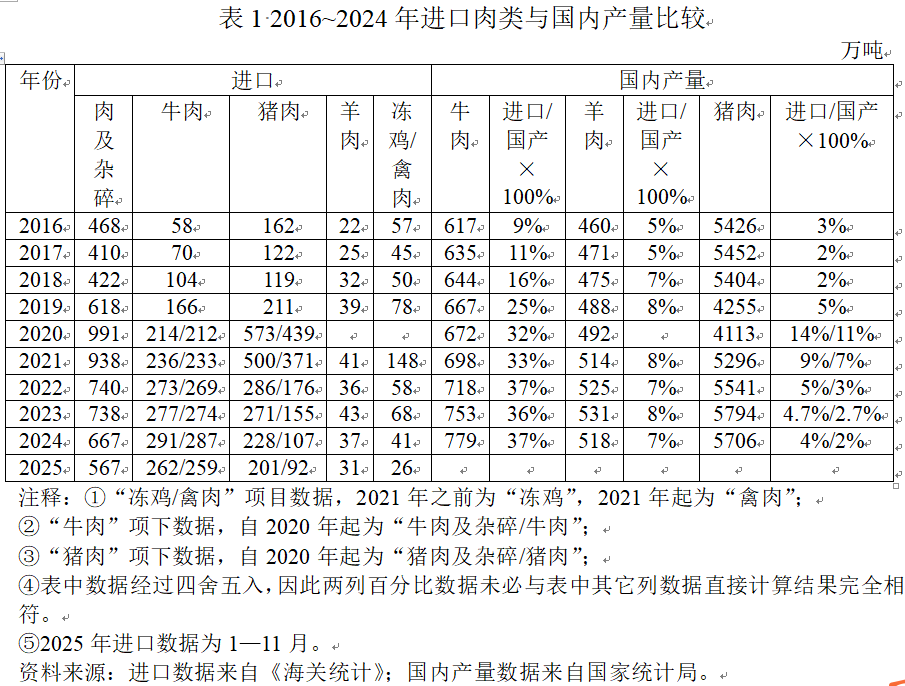
Core Viewpoint - China's meat production, particularly pork, has a comparative advantage, while beef and lamb production lacks this advantage, necessitating adjustments in domestic livestock farming structures and the development of related industries like prepared foods for export to balance trade and domestic needs [1][2][8]. Group 1: Trade Measures and Investigations - In 2024, the Ministry of Commerce initiated trade remedy investigations on imported pork and beef, with final rulings released in December 2025 confirming dumping and substantial damage to domestic industries [1][2]. - The Ministry of Commerce announced safeguard measures for imported beef in December 2024, recognizing that increased imports severely harmed domestic industries, leading to a three-year quota and tariff system starting January 2026 [2]. Group 2: Meat Production Trends - From 1996 to 2024, China's population grew from 1.22389 billion to 1.40828 billion, while meat production increased from 45.84 million tons to 97.799 million tons, reflecting a long-term growth trend despite setbacks from events like the African swine fever [3]. - In 2024, China imported 6.67 million tons of meat while exporting only 630,000 tons, indicating a significant trade imbalance in the meat sector [4]. Group 3: Import and Export Dynamics - In 2024, China imported 2.91 million tons of beef, with 2.87 million tons being beef alone, while sheep meat imports fluctuated significantly [5]. - The import of beef surpassed pork in 2023, with beef imports accounting for 37% of domestic production by 2024, compared to pork's much lower import ratio [9][10]. Group 4: Economic and Agricultural Implications - Maintaining a balance between domestic production and imports is crucial for economic security, with a focus on ensuring food security while expanding import capabilities [6][7]. - The comparative advantage of pork production supports a higher self-sufficiency rate, while beef and lamb production face challenges, suggesting a need for strategic adjustments in livestock production [10][11]. Group 5: Future Strategies - To enhance trade balance, it is recommended to reduce beef and lamb production while increasing pork production, alongside developing the prepared food industry to meet both domestic and international demands [11][12].
进口牛肉保障措施:权衡自由贸易与国内产业
Di Yi Cai Jing· 2026-01-04 13:15
Core Viewpoint - China's livestock industry needs to adjust its production structure based on comparative advantages, with pork production having a comparative advantage while beef and lamb production lacks it [1][3][10]. Group 1: Trade Measures and Investigations - In 2024, China's Ministry of Commerce initiated trade remedy investigations on imported pork and beef, with final rulings expected by December 2025 [2]. - The Ministry of Commerce found that imported pork and related products from the EU were being dumped, causing substantial harm to the domestic industry, with a final ruling confirming this in December 2025 [2][3]. - A safeguard investigation on imported beef was announced in December 2024, leading to a ruling in December 2025 that recognized serious damage to the domestic industry due to increased imports [2]. Group 2: Production and Import Trends - China is both a major meat producer and importer, with meat production increasing from 45.84 million tons in 1996 to 97.8 million tons in 2024, despite challenges like the African swine fever [4][5]. - In 2024, China imported 6.67 million tons of meat while only exporting 0.63 million tons, indicating a significant trade imbalance [5][8]. - The import of beef and lamb has been rising, with beef imports reaching 2.91 million tons in 2024, while lamb imports fluctuated significantly [8][11]. Group 3: Comparative Advantage and Future Outlook - The lack of comparative advantage in beef and lamb production suggests that import levels will remain high in the foreseeable future, while pork production benefits from a strong comparative advantage [10][12]. - The domestic supply of beef and lamb is heavily reliant on imports, with the import ratio for beef reaching 37% of domestic production by 2024, compared to only 2-4% for pork [11][12]. - The focus on pork production aligns with sustainable agricultural practices, as pig manure is more beneficial for soil health compared to that of cattle and sheep [12][13]. Group 4: Strategic Recommendations - To balance free trade and domestic industry needs, adjustments should be made to reduce beef and lamb production while increasing pork production [14]. - Developing the prepared food industry can enhance import demand for agricultural products and meet the growing overseas market for convenient food options, serving as a cultural export as well [14].