
平台经济

Search documents
银泰证券鑫新闻:研究所日报-20260331
Yintai Securities· 2026-03-31 03:05
Regulatory Environment - The Market Regulation Administration has issued a notice to combat "involution" competition in key industries such as platform economy, photovoltaic, lithium batteries, and new energy vehicles[2] - The Ministry of Finance has announced plans to accelerate the development of local additional tax laws for 2026, marking the first official mention of such legislation[2] Market Performance - On Monday, A-shares experienced a slight decline, with the CSI 300 index down 0.24%, while small-cap indices like the CSI 2000 and CSI 1000 rose by 0.37% and 0.28% respectively[3] - The total market turnover was approximately 1.93 trillion yuan, an increase of 637 billion yuan from the previous trading day[3] Sector Analysis - The leading sectors included non-ferrous metals (+1.84%), building materials (+1.67%), and telecommunications (+1.31%), while utilities (-2.97%) and household appliances also saw significant declines[3] - The A-share market's total market capitalization reached 109.73 trillion yuan, with a year-to-date increase of 0.98 trillion yuan[15] Global Market Context - Major global indices showed mixed results, with European markets rising and the UK FTSE 100 gaining 1.61%, while the US markets, including the Nasdaq and S&P 500, experienced declines of 0.36% and 0.39% respectively[3] - The US dollar index rose by 0.33% to 100.51, and the offshore RMB appreciated slightly to 6.9164 against the dollar[12] Economic Outlook - Goldman Sachs has slightly downgraded the fair value of Chinese stocks by approximately 5% due to the impact of high energy prices and geopolitical risks, while maintaining an overweight view on the market[7] - The forecast for China's GDP growth in 2026 has been adjusted down by 20 basis points, reflecting a more resilient position compared to the US and other emerging markets[7] Investment Trends - There is a growing interest in sectors with high cash/dividend returns and earnings realization during uncertain market conditions, with expectations for A/H share profit growth to reach low double digits in 2026[9] - Signs indicate that international capital may be flowing into Hong Kong, as evidenced by a drop in interbank rates and increased trading volumes post-conflict[8]
西湖区探索“顾问式”服务,建设一流创新生态
Hang Zhou Ri Bao· 2026-02-28 02:05
Core Insights - The West Lake District aims to establish a first-class innovation ecosystem through "consultative" services, providing a model for a competitive business environment in the province [1] - The "consultative" service model integrates resources from leading enterprises, industry experts, and government departments to address personalized challenges faced by businesses [1][2] - The focus on five key industries—artificial intelligence, commercial aerospace, life sciences, platform economy, and cultural creativity—reflects the district's strategic ambition and existing strengths [2] Group 1 - The "consultative" service framework includes the formation of advisory groups and service teams to support businesses throughout their lifecycle [1] - By 2025, the artificial intelligence sector in West Lake District is projected to generate revenue of 140.6 billion yuan, leading the city [2] - The commercial aerospace industry is experiencing explosive growth, with the launch of the first commercial satellite supply chain "supermarket" in the country [2] Group 2 - The life sciences sector is accelerating its development through top-tier innovation platforms [2] - The platform economy has attracted 82 leading enterprises, becoming a core support for modern services [2] - The cultural sector has seen successful projects like "Black Myth: Wukong" and "Taiping Year," showcasing the district's creative potential [2] Group 3 - The West Lake District has evolved its service approach from merely solving problems to creating opportunities for businesses [2] - The district is transitioning from attracting and nurturing enterprises to a deeper engagement with research, application, and collaboration [2] - Future initiatives will continue to explore "consultative" services to drive high-quality development and support the construction of a common prosperity demonstration zone [3]
更好形成管网治网用网“一盘棋”
Xin Lang Cai Jing· 2026-02-27 07:05
Group 1 - The meeting emphasized the importance of strengthening the governance of the online ecosystem and gathering positive energy online, while maintaining the correct political direction and enhancing ideological guidance [2][3] - The focus is on promoting technological innovation in the internet sector, advancing key core technology breakthroughs, and enhancing the development of the internet industry [2][3] - The meeting highlighted the need to balance development and security, improving the capability of network security and modernizing the network security system [2][3] Group 2 - The meeting reviewed the work situation of Shanghai's internet and information work for 2025 and discussed key points for 2026, including the approval of relevant plans and measures for strengthening online ecosystem governance [3][4]
网信事业服务支撑保障“十五五”开局 市委网络安全和信息化委员会会议举行
Jie Fang Ri Bao· 2026-02-27 01:33
Group 1 - The meeting emphasized the importance of strengthening the network security defense and promoting high-quality development in the internet and information sector to support the successful start of the "14th Five-Year Plan" [1][2] - The meeting highlighted the need for a coordinated approach to internet governance, focusing on the integration of management, governance, and utilization of the internet [2] - There is a strong emphasis on enhancing the governance of the online ecosystem and promoting positive online content, while ensuring the correct political direction and ideological guidance [2][3] Group 2 - The meeting called for deepening the application of information technology to promote new productive forces and emphasized the importance of technological innovation in the internet sector [3] - It was noted that the development of the internet industry should be prioritized, particularly in strengthening the software and information services sector [3] - The meeting underscored the need to balance development and security, enhancing the capabilities for network security and modernizing the network security system [3]
以网信事业高质量发展新成效助力实现“十五五”良好开局!上海市委网信委会议举行
Di Yi Cai Jing· 2026-02-26 11:57
Group 1 - The meeting emphasized the need to strengthen the long-term mechanism for network ecological governance and enhance the role of information technology in driving development, aiming to solidify the network security defense [1][2] - It was highlighted that the network information sector must support and ensure a good start for the "14th Five-Year Plan," with a focus on leadership from the Party and a coordinated approach to governance [1][2] - The meeting called for the promotion of online positive energy, correct political direction, and the enhancement of quality content supply in the internet space to foster a prosperous new public culture [2] Group 2 - The meeting stressed the importance of deepening the application of information technology to promote new productive forces, emphasizing technological innovation and the development of key core technologies [2] - It was noted that the network security defense must be prioritized, with a focus on improving protective capabilities and modernizing the network security system [2] - The meeting reviewed the work situation for Shanghai's network information sector for 2025 and discussed key points for 2026, including the approval of measures to strengthen network ecological governance [3]
规则失范伤公平,多方调研探治理——平台规则制定权滥用与规制调研纪实
Jiang Nan Shi Bao· 2026-02-24 02:28
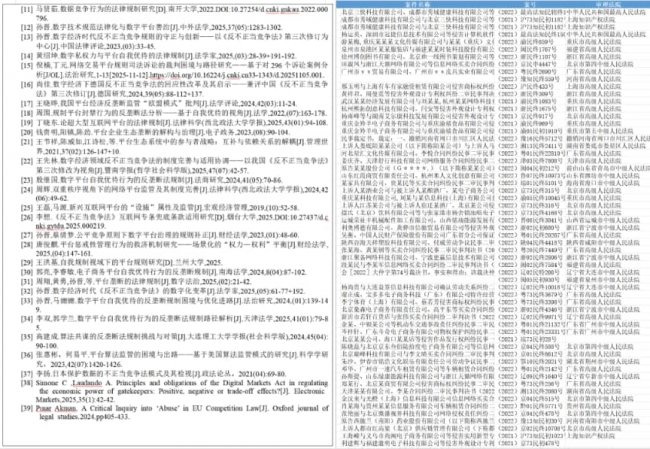
Group 1 - The core issue of platform rule-making authority has become a key topic affecting fair competition and the high-quality development of the digital economy, especially with the upcoming amendments to the Anti-Unfair Competition Law in 2025 [1] - The amendments will include provisions against the "abuse of platform rules," introducing new articles that raise questions about the effective implementation of these principles in law enforcement and judicial practices [1][2] - The research team from Nanjing Normal University Law School aims to explore the current state of platform rule-making authority and the governance challenges through a comprehensive survey [1][4] Group 2 - The research team has systematically reviewed 39 core documents and established a case database of 284 judicial cases, highlighting the intent of national management over platform rules while noting existing academic disagreements on their legal attributes [2] - The study identifies practical challenges in platform rule governance, such as inconsistent standards for recognition and difficulties in evidence collection, which will guide future field research [2][4] Group 3 - Interviews with lawyers revealed that the new amendments address emerging unfair competition issues related to new platform types, but there are still gaps in defining abuse and quantifying losses, leading to unclear paths for rights protection [4][5] - Insights from law enforcement personnel emphasized the need for procedural justice and substantive fairness in platform rule governance, pointing out operational challenges like jurisdictional definitions and evidence integrity [4][5] Group 4 - A survey conducted by the research team highlighted consumer experiences and rights concerns, indicating a need for improved transparency and governance in platform rules, as users reported issues with rule changes and data misuse [5][14] - The team has initiated a series of reports focusing on platform rule governance, aiming to raise public awareness and propose legislative and regulatory improvements based on the findings [14][15] Group 5 - The research team has engaged in public education efforts to enhance awareness of platform rule abuses, utilizing various outreach methods to inform the public about their rights and the legal avenues available for dispute resolution [15][16] - The ongoing exploration of platform rule-making authority and governance challenges reflects a commitment to ensuring fair competition in the digital age, with plans for continued advocacy and legal education [16]

成都市重点产业链图谱
Xin Lang Cai Jing· 2026-02-23 20:39
Core Insights - Chengdu has established 13 trillion-level industrial chains, with a target of achieving double-digit revenue growth in 10 chains by 2025, solidifying its position as a national advanced manufacturing base [1] - The modernization of industrial chains is crucial for high-quality development and urban modernization, with a goal to form more trillion-level and trillion-level industrial clusters by 2025 [1] Artificial Intelligence - The core industry scale of artificial intelligence in Chengdu is expected to exceed 150 billion yuan by 2025, with a year-on-year growth of over 39% and an average growth rate of 35% over the past three years [2] Integrated Circuits - Chengdu aims to build a national integrated circuit industry strategic backup base, with over 400 companies in the sector, including major players like BYD Semiconductor [2] New Display Technology - The display industry in Chengdu is projected to generate revenue of 107.9 billion yuan in 2025, with a year-on-year growth of 17.2% [3] Software and Information Services - Chengdu's software and information services sector is expected to achieve a revenue of 840.18 billion yuan by 2025, reflecting a year-on-year growth of 10.2% [3] Low-altitude Economy - The low-altitude equipment manufacturing sector has over 200 companies, with a total industry scale exceeding 33 billion yuan [3] Aerospace - Chengdu is recognized as a key city for aerospace industry development, with multiple national-level designations and a focus on building a modern aerospace industry cluster [4] Rail Transit - Chengdu is the only city in China with rail transit as its leading industry, with over 300 companies in the full industry chain and an annual production capacity of 1,500 vehicles [4] Intelligent Connected Vehicles - The automotive industry is the second-largest pillar in Chengdu, with a projected production of 932,000 vehicles and a revenue of 161.67 billion yuan by 2025, including a significant increase in new energy vehicles [5] Biomedicine - The biomedicine sector is expected to achieve a revenue of 76.37 billion yuan by 2025, with the addition of new top pharmaceutical companies and "little giant" enterprises [5] Advanced Energy - The advanced energy industry is projected to generate 188.42 billion yuan in revenue by 2025, with a year-on-year growth of 11.2% [6] New Materials - The new materials industry is expected to achieve a revenue of 247.66 billion yuan by 2025, reflecting a year-on-year growth of 10.9% [6] Cultural Tourism (Digital Cultural Creation) - The digital cultural creation sector is projected to generate a total revenue of 413.97 billion yuan by 2025, with a year-on-year growth of 8.3% [6] Platform Economy - The platform economy aims to exceed 770 billion yuan in online retail sales by 2026, with a growth rate of over 5% [7] Modern Logistics - The modern logistics sector is targeting a scale of 152.9 billion yuan by 2026, with a year-on-year growth of 5.5% [7] Green Food Processing - Chengdu's green food industry is expected to exceed 160 billion yuan in scale by 2025, ranking fourth among sub-provincial cities [7] Communication and Quantum Technology - By 2025, Chengdu will have 94 companies in communication and quantum technology, generating a revenue of 75.08 billion yuan, focusing on key areas such as next-generation communication and quantum computing [8]
节后A股开盘必看!三大主线已明牌,这个变数不得不防
Sou Hu Cai Jing· 2026-02-22 04:30
Domestic Policy - Domestic consumption has been elevated to unprecedented importance, with a focus on boosting consumption through special actions and expanding the supply of quality goods [1] - Key sectors benefiting from this policy include home appliances, cultural tourism, municipal infrastructure, and new infrastructure [1] - Visa exemptions for Canada and the UK starting February 17 are expected to boost inbound tourism and duty-free shopping in the short term, with long-term trends favoring service trade openness [1] Platform Economy - The State Administration for Market Regulation has engaged with major platforms like Alibaba and Douyin, emphasizing the need to avoid cutthroat competition and adhere to promotional regulations, which is a long-term benefit for compliant leading companies [2] - ByteDance's Doubao model 2.0 Pro has been released, directly competing with GPT-5.2, significantly reducing reasoning costs, indicating that domestic AI models are entering a practical phase [2] Industrial Upgrades - Humanoid robots gained popularity due to a Spring Festival performance, with Tesla's third-generation robot set to launch in Q1, and domestic companies like Yushutech and UBTECH making breakthroughs in control algorithms and motor performance [2] - The global data center investment boom is projected to reach $320 billion by 2025, a 74% increase, driven by demand for AI and cloud computing, benefiting data center construction and related energy and cooling equipment [2] International Developments - The U.S. tariff policy has shifted, with the Supreme Court rejecting comprehensive tariffs but Trump proposing a 10% global baseline tariff and threatening an additional 15%-30% on automobiles, impacting sectors heavily reliant on exports to the U.S. [2] - The deterioration of U.S.-Iran relations has heightened geopolitical tensions, igniting safe-haven demand for precious metals, with gold surpassing $5,100 per ounce and silver rising over 7% [3] Market Sentiment and Capital Flow - The market anticipates that the Federal Reserve may tolerate higher inflation, leading to a bearish sentiment on the dollar, which enhances the attractiveness of RMB assets, as evidenced by a net inflow of 13.28 billion yuan from northbound funds before the Spring Festival [3] - The M2 money supply grew by 9.0% in January, with social financing stock growth at 8.2%, and the central bank injecting 600 billion yuan before the holiday, indicating healthy liquidity [3] - Historical data shows a 75% probability of the Shanghai Composite Index rising in the first five trading days after the Spring Festival, with an average increase of 1.2% [3] Investment Focus - Key investment directions post-holiday include technology growth sectors such as AI models, humanoid robots, and data centers, driven by both policy and technological advancements [3] - Policy beneficiaries include domestic demand stimulation, infrastructure investment, and leading companies in the platform economy [3] - Safe-haven assets like gold and silver, along with undervalued high-dividend stocks, are recommended to hedge against geopolitical risks [3]
广东织密新业态维权网 “一站式”破解维权痛点
Xin Lang Cai Jing· 2026-02-22 00:25
Core Insights - The article discusses the rapid development of the platform economy in Guangdong, highlighting the growth of new employment forms such as delivery riders, ride-hailing drivers, and couriers, which have led to various labor rights disputes that need urgent resolution [1][2] Group 1: System Development - Guangdong has established a diversified dispute resolution system for new employment forms, creating a one-stop service to address the pain points of rights protection for millions of new economy workers [1] - The collaborative governance framework includes "human resources and social security-led, multi-party participation, mediation-arbitration-court connection, and one-stop resolution" [1][3] Group 2: Achievements and Data - As of now, Guangdong has built 119 one-stop mediation centers for labor disputes, handling 6,828 cases and achieving a successful mediation rate of 81.2% [2] - The data reflects Guangdong's practical exploration in addressing the challenges of rights protection for new economy workers, showcasing the effectiveness of its labor rights safeguarding efforts [2] Group 3: Mechanism Innovation - Guangdong has implemented an integrated work model for labor disputes, connecting mediation, legal aid, arbitration, litigation, and enforcement to enhance the authority and enforceability of mediation results [3] - Innovative mechanisms such as the "court + human resources + labor union" joint mediation and the establishment of industry mediation workstations have been introduced to resolve conflicts at the grassroots level [3] Group 4: Case Studies and Future Plans - Successful case examples include a rapid resolution of disputes involving over 200 ride-hailing drivers within three days through the one-stop joint mediation mechanism [4] - Guangdong plans to expand and improve the one-stop mediation network, aiming to establish over 30 platforms for labor dispute mediation by 2026, while enhancing digital capabilities and supporting measures for occupational injury protection [4]
“便宜饭”退场 “安心饭”上桌
Xin Lang Cai Jing· 2026-02-15 23:22
Group 1 - The core viewpoint of the articles indicates a systemic shift in China's platform economy from an "efficiency-first" model to a "human-centered" approach, marking the end of the era where low prices were achieved at the expense of laborers' rights [1][2] - The recent administrative guidance from the Ministry of Human Resources and Social Security and other departments emphasizes the need for platform companies to take responsibility for labor practices, manage algorithms, and ensure the basic rights of new employment forms [1] - The increase in delivery fees by platforms like Sam's Club and Hema, with price hikes of 3 to 6 yuan per order in some regions, reflects the rising operational costs associated with compliance and labor protections [1][2] Group 2 - The regulatory push for "who benefits, who bears responsibility" aims to internalize the long-ignored social costs into the platform operation systems, leading to an industry consensus on rising costs [2] - The transition away from unsustainable promotional practices, such as heavily subsidized pricing, indicates that the platform economy is moving towards a phase where compliance becomes a cost factor [2] - The shift from "cheap meals" to "assured meals" is seen as a necessary step for China's economy towards high-quality development, fostering a new ecosystem of shared responsibility and risk management [3]