浅海战略

Search documents
加码储能,赴港IPO的安克创新会越扩张越乏力吗?
Nan Fang Du Shi Bao· 2026-02-26 13:10
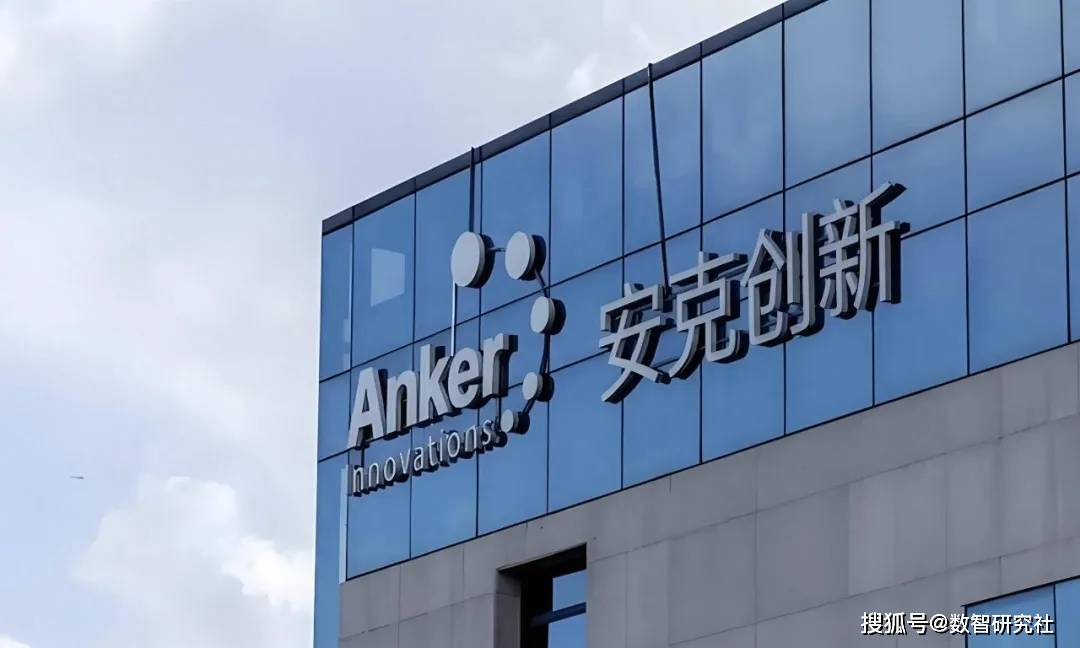
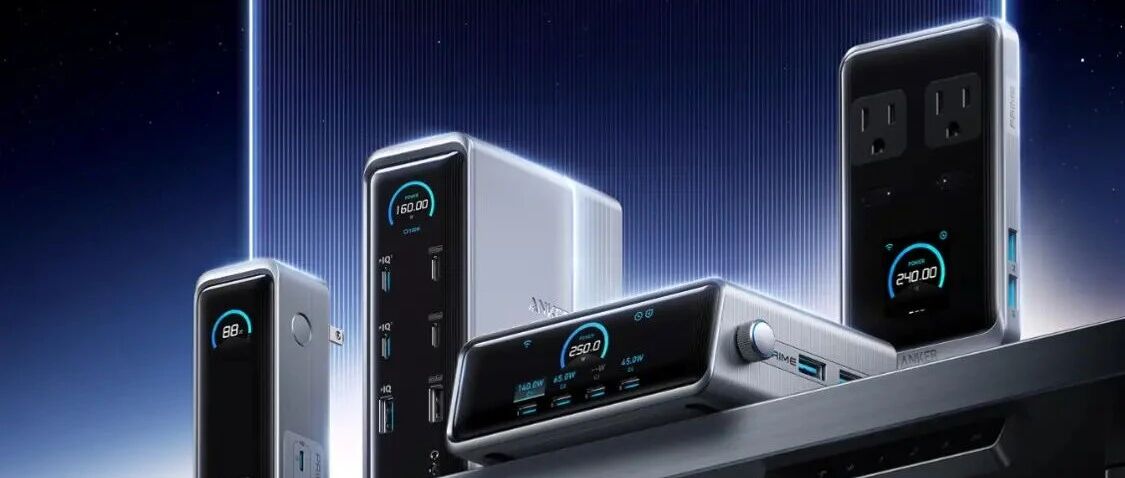
Core Insights - Anker Innovations is undergoing significant strategic adjustments as it aims to enhance its energy storage business and expand its product offerings, while facing increasing uncertainties in the external operating environment [2][3] Group 1: Business Strategy and Developments - Anker Innovations announced its plans for a Hong Kong IPO in November 2025 and revealed its latest developments in energy storage technology on February 13, 2026, focusing on a comprehensive self-developed platform for power management and energy optimization [2] - The company, which generates over 96% of its revenue from overseas, is at a critical juncture in its strategic transformation, coinciding with a collective challenge faced by Chinese cross-border brands [2] Group 2: Historical Context and Growth Drivers - Anker's rise is attributed to its ability to capitalize on the cross-border e-commerce boom, particularly by addressing market pain points with high-quality products at competitive prices [5] - The company leveraged a mature supply chain and Amazon's early evaluation system to build its core competitive advantage, leading to significant brand recognition and market presence [6] Group 3: Challenges and Strategic Missteps - Anker's early business model was largely dependent on existing device ecosystems, lacking pricing power and standard-setting authority, which has become a vulnerability as competition increases [7] - The "shallow sea strategy" aimed at diversifying product lines has led to organizational mismatches, with many new product lines failing to gain traction, resulting in a reduction from 27 to 17 core product lines [8][9] Group 4: Organizational and Innovation Issues - The company's talent acquisition strategy has not aligned with its strategic needs, leading to a lack of entrepreneurial leadership necessary for successful product category expansion [9][10] - Anker's research and development efforts have been diluted across multiple categories, hindering its ability to innovate and respond to market demands effectively [11][12] Group 5: Market Position and Future Outlook - Anker's challenges in maintaining competitive advantages and its struggle with innovation have raised concerns about its long-term growth potential as it navigates a post-redemption era [13]

安克创新回应“裁员30%”:员工多为外包
Xin Lang Cai Jing· 2025-12-31 09:57
Core Viewpoint - Anker Innovations is rumored to be undergoing a significant workforce reduction of 30%, which the company denies, stating that any adjustments are part of a strategic upgrade and efficiency improvement [1]. Group 1: Workforce Adjustments - Anker Innovations has not confirmed the exact percentage of layoffs, but an employee indicated that the layoffs are real, primarily affecting outsourced staff and some underperforming full-time employees, with opportunities for internal transfers [1]. - The company is preparing for a secondary listing on the Hong Kong Stock Exchange, aiming to enhance its global strategy and competitiveness [1]. Group 2: Business Challenges - Anker faced a major recall of over 1.158 million power banks due to safety hazards, leading to a trust crisis in the charging industry [2]. - Despite challenges in the power bank segment, Anker's energy storage business is rapidly growing, with projected annual revenue of 6 billion yuan, nearly doubling year-on-year [4]. Group 3: Financial Performance - Anker's revenue for the first three quarters exceeded 21 billion yuan, with a net profit nearing 2 billion yuan, reflecting a year-on-year growth of 31.34% [4]. - However, the company is experiencing increased inventory levels, leading to negative operating cash flow, indicating short-term liquidity pressures [4]. Group 4: Strategic Direction - Anker's CEO has indicated a more cautious approach to new product categories, limiting expansions to 2-3 new categories per year, contrasting with previous aggressive strategies [5][6]. - The company is also focusing on establishing a global direct sales network to reduce reliance on Amazon, which has contributed over 50% of its revenue in recent years [7].
那个教科书级的出海标杆,如今自己先倒下了
Tai Mei Ti A P P· 2025-12-30 00:50
Core Insights - Anker Innovations is facing significant challenges, including rumors of layoffs, declining profits, and strategic misalignment, amidst a broader downturn in the cross-border e-commerce industry [1][2][3] Group 1: Company Challenges - Anker Innovations reportedly plans to lay off nearly 30% of its workforce, which has raised concerns in the industry, especially as the company recently submitted a listing application to the Hong Kong Stock Exchange [1] - The company's Q3 financial report showed a revenue growth slowdown to 19.88%, the lowest since Q1 2023, with a non-GAAP net profit decline of 2.92% year-on-year and a net cash flow from operating activities dropping to -8.65 billion yuan, a 152.38% year-on-year decrease [1] - Anker's market position is threatened by rising competition from local brands like Ugreen and Baseus, as well as pressure from original equipment manufacturers (OEMs) like Apple and Samsung [2][3] Group 2: Market Environment - The global consumer electronics market is experiencing a slowdown, with growth rates projected between 2.8% and 6% for 2025, significantly lower than the double-digit growth seen during the pandemic [3] - Anker's core business, which relies heavily on the sales of charging devices and accessories, is directly impacted by the declining sales of smartphones and laptops, with global smartphone shipments expected to grow only 6.4% in 2024 [3][4] Group 3: Competitive Landscape - The competitive landscape for accessories is shifting, with OEMs capturing a larger market share in the charging accessories segment, now accounting for 41% of the market compared to Anker and other third-party brands' combined share of 38.6% [4] - Anker's market share in TWS earphones is only 7%, despite a 95% year-on-year increase in shipments, indicating a struggle to compete against leading brands [4] Group 4: Cost Pressures - Rising costs in advertising and compliance are squeezing Anker's profit margins, with advertising costs on Amazon increasing from $1.2 to $2.8 per click, and new tax policies in the U.S. adding significant financial burdens [5][6] - The logistics sector is also facing challenges, with increased customs clearance times and costs, further impacting operational efficiency [6] Group 5: Strategic Misalignment - Anker's shift from its original "shallow sea strategy" to a more diversified product line has led to resource wastage and a dilution of core competencies, resulting in a cycle of high investment with low returns [9][10] - The company's aggressive expansion into new categories has not aligned with its technical capabilities, leading to significant operational failures and the closure of multiple product teams [11][12] Group 6: Organizational Issues - Anker's rapid personnel expansion has resulted in a "high salary, low efficiency" structure, with employee numbers increasing by over 50% in a few years, but without corresponding productivity gains [14][15] - The organizational structure has become cumbersome, leading to slow decision-making and high communication costs, exacerbated by frequent changes in leadership [15][16] Group 7: Future Outlook - The company must refocus on its core competencies and streamline operations to regain market competitiveness, as evidenced by the successful launch of its Anker SOLIX Solarbank 3 Pro product [18] - Anker's experience highlights the need for cross-border e-commerce companies to adapt to a new phase of brand-focused, refined, and globalized strategies, moving away from reliance on low-cost models [18][19]
去年给员工分了8亿奖金,这家“神仙公司”冲击二次上市
创业邦· 2025-12-25 03:08
Core Viewpoint - Anker Innovations is accelerating its "A+H" dual capital platform strategy by submitting an IPO application to the Hong Kong Stock Exchange, aiming to address financial pressures and reposition itself for the next decade of growth [5][23]. Financial Performance - Anker Innovations' revenue is projected to grow from 14.25 billion yuan in 2022 to 24.71 billion yuan in 2024, with a compound annual growth rate (CAGR) of 31.7% [5][16]. - Net profit is expected to increase from 1.14 billion yuan in 2022 to 2.11 billion yuan in 2024, with a CAGR of 36.6%, indicating improved profitability [16]. - For the first three quarters of 2025, revenue and net profit grew by 29.79% and 28.76% year-on-year, respectively, continuing the growth momentum [16]. Business Model and Strategy - Anker Innovations has transitioned from a single-category champion in charging products to a diversified technology company with a multi-brand ecosystem, including Anker, eufy, and soundcore [12][14]. - The company employs a "shallow sea strategy," focusing on less competitive categories like smart home devices and entertainment, while avoiding the fiercely competitive smartphone and computer markets [13]. R&D and Talent Culture - The company has significantly increased its R&D investment, with R&D expenses rising from 1.08 billion yuan in 2022 to 2.11 billion yuan in 2024, and R&D personnel constituting 52.78% of total employees [14]. - Anker Innovations is recognized for its employee-centric culture, with substantial bonuses and a high percentage of employees earning over one million yuan annually [14]. Market Challenges - Anker Innovations faces challenges such as product recalls, inventory surges, and heavy reliance on the North American market and Amazon platform, which add uncertainty to its growth narrative [7][20]. - The company has experienced multiple product recalls due to safety issues, which could lead to significant financial losses and damage to brand reputation [18][20]. Supply Chain and Financial Health - As of Q3 2025, Anker Innovations' total liabilities reached 99.13 billion yuan, with a debt-to-asset ratio of 49.52%, indicating increasing financial pressure [23]. - The company's inventory value surged from 3.23 billion yuan at the end of 2024 to 6.15 billion yuan, raising concerns about cash flow and potential write-down risks [20][21]. IPO and Future Outlook - The IPO aims to alleviate cash flow issues and optimize the balance sheet by raising funds for working capital and repaying high-interest debt [23]. - Anker Innovations plans to address supply chain weaknesses, cultivate new growth areas, and reduce dependence on the North American market through its IPO and strategic initiatives [25].

从出海标杆到信任危机:安克创新赴港融资能否破局?
Sou Hu Cai Jing· 2025-12-11 09:27
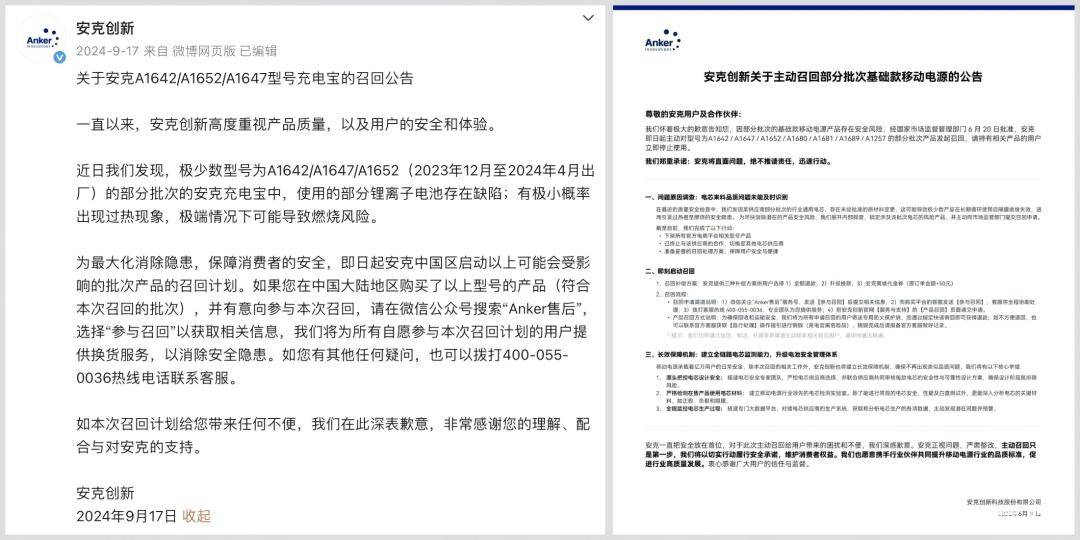
Core Viewpoint - Anker Innovations, once a leader in the mobile power sector, faces multiple challenges including product recalls, overseas tariff impacts, and cash flow pressures, raising questions about its quality control and risk resilience as it pursues a Hong Kong listing amid ongoing operational difficulties [3][19]. Company Background - Founded in 2011 by former Google engineer Yang Meng, Anker Innovations started by addressing high prices of original laptop batteries through a private label distribution model [4]. - The company quickly rose to prominence on Amazon, becoming the top-selling charging brand globally, and later transitioned to self-research and development, establishing a strong brand presence [5]. - Anker went public on the Shenzhen Stock Exchange in 2020, focusing on "shallow sea" strategies to avoid highly competitive markets, leading to rapid product line expansion [5]. Recent Developments - In November 2025, Anker's board approved a plan for a Hong Kong listing, aiming to raise funds for product innovation, R&D, supply chain upgrades, and global market expansion [6]. - The company has faced significant product recalls due to quality control issues, including a major recall of 325,300 power banks in June 2025 due to overheating risks linked to battery suppliers [8][12]. Financial Performance - Anker's cash flow has deteriorated over several quarters, with a net cash flow from operating activities of -288 million yuan in Q1 2025, worsening to -1.132 billion yuan in Q2 [14]. - The company reported a net profit margin of 9.37% in the first three quarters of 2025, indicating profitability but still lagging behind industry leaders [16]. Market Challenges - Anker faces intensified competition from brands like Ugreen and Baseus in the domestic market, as the advantages of its "shallow sea" strategy diminish [17]. - The company's reliance on a "light manufacturing" model has led to quality control vulnerabilities, as production is fully outsourced, which has been highlighted in its ESG reports [12]. Future Outlook - The upcoming Hong Kong listing is seen as a potential lifeline for Anker, but investor confidence may be hindered by ongoing quality issues and cash flow challenges [19]. - The company's brand reputation has been significantly impacted by recent recalls, and its ability to manage supply chain risks will be crucial for future success [19].
召回、新规、负债、存货缠身,安克创新赴港IPO难掩“中年焦虑”
Sou Hu Cai Jing· 2025-12-09 00:25
Core Viewpoint - Anker Innovations is facing significant challenges due to a large-scale product recall crisis, regulatory pressures, and internal financial difficulties, which are impacting its upcoming IPO plans and overall business strategy [3][5][6]. Group 1: Product Recall and Financial Impact - The product recall crisis has led to an estimated direct recovery cost of between 432 million to 557 million yuan, with the company also setting aside 130 million yuan for product quality guarantees and recording a 238 million yuan inventory impairment [5][6]. - Since the beginning of 2025, Anker has recalled over 2.38 million products globally, including more than 1 million in the U.S. and 713,000 in China, due to safety hazards related to battery cells [5][6]. - The recall has severely damaged the company's brand reputation, which was previously associated with high quality, exposing vulnerabilities in its supply chain management [5][6]. Group 2: Regulatory and Market Challenges - The upcoming "strictest" safety regulations for mobile power supplies will increase industry entry barriers and production costs, requiring Anker to invest heavily in quality control and supply chain restructuring [6]. - Anker's reliance on international markets, particularly North America, which accounts for nearly 50% of its revenue, makes it sensitive to changes in international trade policies [6][7]. Group 3: Financial Performance and Strategic Dilemmas - As of the end of Q3, Anker reported a negative operating cash flow of 865 million yuan, a significant decline from a positive cash flow of 1.65 billion yuan in the same period last year [8]. - The company's inventory surged to 6.147 billion yuan, nearly doubling from the end of 2024, and its total liabilities reached 9.913 billion yuan, resulting in a debt ratio of 49.52%, up from less than 22% at the time of its IPO in 2020 [8][9]. - Despite financial pressures, Anker's board plans to distribute 375 million yuan in cash dividends, raising concerns about its sustainability amid cash flow challenges [10]. Group 4: Strategic Shifts and Future Directions - Anker's initial strategy of rapid expansion into various product lines has faced setbacks, leading to the closure of 10 teams and highlighting management difficulties [9]. - The company is now pivoting towards the robotics sector, which involves high technical barriers and significant investment, contrasting sharply with its previous rapid market entry approach [9].
安克创新不愿被亚马逊“扼喉”?
Hua Er Jie Jian Wen· 2025-12-08 12:19
Core Viewpoint - Anker Innovations has been a benchmark for Chinese consumer electronics companies going global, with significant revenue generated from overseas markets, particularly through Amazon, but faces challenges due to product recalls and reliance on a single sales channel [1][5][8]. Financial Performance - In 2024, Anker Innovations is projected to achieve revenues of 24.71 billion yuan and a net profit of 2.211 billion yuan, reflecting year-on-year growth rates exceeding 40% and 30% respectively [2]. - However, by the third quarter of 2025, revenue growth slowed to 19.88%, returning to the growth levels seen in 2022 due to product recalls [3]. Product Recalls and Challenges - Starting June 2025, Anker Innovations faced product recalls in multiple countries due to safety incidents with certain power bank models, impacting revenue growth [3]. - The company’s heavy reliance on Amazon, which contributed over 50% of its revenue in the past three years, poses a risk if Amazon's e-commerce traffic declines [5][8]. Strategic Initiatives - To counteract slowing growth, Anker Innovations is pursuing further financing, including an IPO and the issuance of convertible bonds, to establish a direct sales network and reduce dependence on Amazon [4][8]. - The company plans to open flagship stores and experience centers in major global cities, enhancing its online and offline sales integration [9]. Market Position and Strategy - Anker Innovations has successfully captured market opportunities in the charging product sector, becoming the second-largest player globally since 2020, with a gross margin of 43.3% [6][7]. - The company aims to diversify its product offerings beyond charging devices, exploring high-value categories such as smart home products, while adhering to its "shallow sea" strategy to target niche markets with high growth potential [10][11]. Competitive Landscape - Anker Innovations is entering the competitive landscape of smart home robotics, with plans to develop a range of intelligent household robots, reflecting a shift towards deeper market engagement [12].
安克创新为何赴港上市
Sou Hu Cai Jing· 2025-12-01 12:14
Core Viewpoint - Anker Innovations, once a leader in the portable charger market, is facing a significant trust crisis due to multiple product recalls and cash flow issues, prompting the company to consider a dual listing on the Hong Kong Stock Exchange to raise funds amidst ongoing quality control challenges [1][3][10]. Group 1: Product Recalls and Financial Impact - Anker has experienced a rare wave of product recalls, with over 2.38 million units affected, leading to direct recovery costs estimated between 432 million to 557 million yuan [2][3]. - The company recalled 1.15 million portable chargers in June and 480,000 in September in the U.S., followed by a large-scale recall in Japan [1][2]. - The recalls have resulted in both economic and reputational losses, causing a trust crisis among consumers who previously valued "Anker quality" [3][4]. Group 2: Business Model and Strategic Challenges - Anker's business model, which emphasizes "light manufacturing" and relies heavily on outsourcing production, has exposed vulnerabilities in quality control and supply chain management [9][10]. - The company's "shallow sea strategy," aimed at rapid market penetration across various consumer electronics segments, has led to overextension without establishing strong technical barriers [10][13]. - Despite significant revenue growth, Anker's reliance on its core charging products remains high, with 52.97% of sales in the first half of 2025 coming from charging and storage products [14][21]. Group 3: Financial Performance and Market Position - Anker reported a revenue of 21.02 billion yuan for the first three quarters of 2025, a 27.79% increase year-on-year, but with a notable slowdown in growth [16][18]. - The company's operating cash flow turned negative at -865 million yuan, a drastic decline from a positive cash flow of 1.65 billion yuan in the previous year [18][19]. - Anker's overseas revenue dependency exceeds 96%, indicating a vulnerability to international market fluctuations and trade policies [24][26]. Group 4: Future Directions and Strategic Shifts - Anker is exploring new product categories, including robotics and AI, as part of a long-term strategic shift, but this contrasts sharply with its previous rapid expansion approach [28][29]. - The company faces a critical juncture, needing to transition from a fast-paced, cost-driven model to one that emphasizes technology, brand strength, and sustainable governance [29][30].
特朗普带火的安克冲刺港股:“充电宝一哥”陷召回门与现金流之困
凤凰网财经· 2025-11-21 13:05
Core Viewpoint - Anker Innovations is facing significant challenges, including a product quality crisis and a reliance on overseas markets, as it prepares for a dual listing in Hong Kong while navigating a series of recalls and financial pressures [2][20][26]. Group 1: Company Overview - Anker Innovations, founded in 2011, has successfully expanded from a single product focus to a brand matrix, leveraging e-commerce platforms like Amazon to sell various electronic accessories [6][12]. - The company gained notoriety for its generous employee compensation, with a reported 8 billion yuan allocated for bonuses in 2024, leading to its reputation as a desirable employer [10][11]. Group 2: Product Quality Crisis - Anker is currently embroiled in a major product recall, with over 238 million units recalled globally since 2025 due to safety concerns, particularly regarding battery risks [5][15][18]. - The recall incidents have highlighted significant weaknesses in Anker's supply chain management and quality control processes, raising concerns about its operational capabilities [18][19]. Group 3: Financial Performance - Despite the ongoing challenges, Anker reported a revenue of 21.02 billion yuan and a net profit of 1.93 billion yuan for the first three quarters of 2025, reflecting year-on-year growth of 27.79% and 31.34%, respectively [20][21]. - However, the company experienced a drastic decline in cash flow, with a net cash flow from operating activities of -864.87 million yuan, a 152.38% decrease compared to the previous year [23][24]. Group 4: Market Position and Future Outlook - Anker's heavy reliance on overseas markets, with over 96% of its revenue coming from international sales, poses structural risks, especially in light of changing global trade conditions [23][26]. - The upcoming IPO in Hong Kong is seen as a strategic move to diversify funding sources and mitigate trade risks, although the effectiveness of this strategy remains uncertain [26][27].
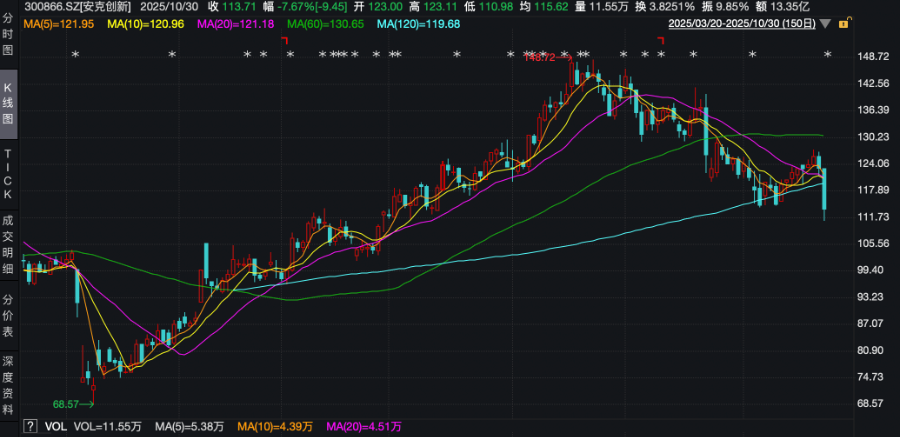
安克创新增长放缓 电子“杂货铺”市值近600亿
2 1 Shi Ji Jing Ji Bao Dao· 2025-10-30 07:33
Core Viewpoint - Anker Innovations reported a third-quarter revenue of 8.152 billion yuan, marking a year-on-year growth of 19.88%, which is the first time in two years that the growth rate has fallen below 30% [1] Financial Performance - The net profit attributable to the parent company reached 766 million yuan, a year-on-year increase of 27.76%, while the net profit excluding non-recurring items was 521 million yuan, a decrease of 2.92% compared to the previous year [2] - Research and development expenses for the third quarter amounted to 751 million yuan, reflecting a year-on-year increase of 24.72%, while sales expenses rose to 1.872 billion yuan, up 25.13% year-on-year [3] Strategic Insights - The company's diversification strategy, referred to as the "Shallow Sea Strategy," focuses on smaller-scale product categories, avoiding complex categories like smartphones and electric vehicles [2][6] - The "Shallow Sea" concept is defined as product categories with sales scales below 50 billion USD, with R&D investments around 100 million USD or less [7] Market Position and Challenges - Anker's market capitalization is nearing 60 billion yuan, and despite external market volatility, the company has achieved double-digit growth in revenue and profit [2] - The company has increased its inventory significantly, with a year-on-year growth rate exceeding 90%, attributed to increased business volume and proactive stocking due to seasonal demand and tariffs [5] Product Development - Anker has launched multiple new products across its three core categories: charging and energy storage, smart innovation, and smart audio-visual [5] - The company has introduced new products such as high-power chargers, portable power banks, and various smart home devices, expanding its product diversity [5] Recent Developments - Anker's eufyMake launched a consumer-grade 3D texture UV printer, which raised over 46.76 million USD on Kickstarter, setting a record for the platform [7] - However, quality control issues were identified prior to shipment, with 5%-10% of units experiencing potential leakage problems [8][9]