动态调仓

Search documents
“9·24”一周年,基民收益如何?近2000份问卷揭秘
Zheng Quan Shi Bao Wang· 2025-09-23 11:01
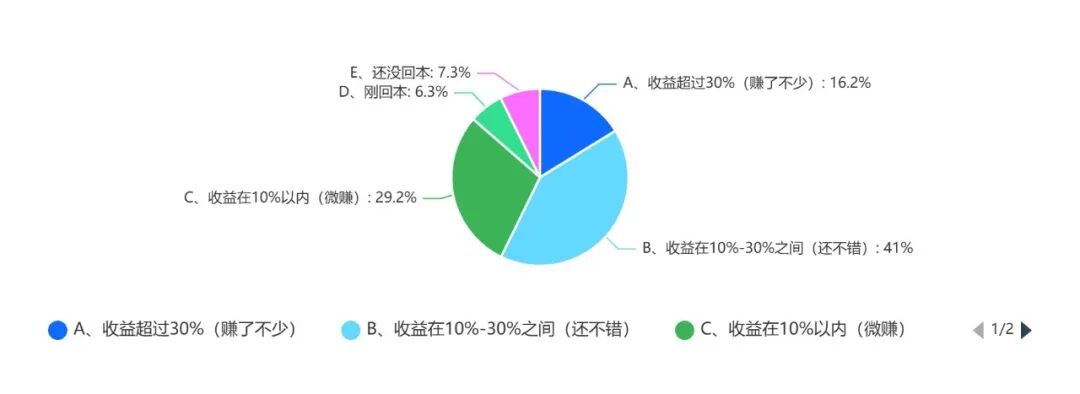
Core Insights - The A-share market has shown significant positive signals since the implementation of a comprehensive financial policy on September 24, 2024, with the Shanghai Composite Index reaching a ten-year high and crossing the 3800-point mark twice [1] - A survey conducted by the Securities Times Fund Research Institute and Ant Fund revealed that over 92% of active equity fund investors achieved positive returns in the past year, indicating strong investor sentiment [2] Market Performance - As of September 20, 2025, 40 funds have doubled their net value this year, and 887 funds have increased by over 50%, with more than 12,000 funds reporting positive returns [1] - The active equity fund sector has seen a concentration in areas supported by policy, technological innovation, and clear demand growth, particularly in sectors like technology manufacturing, innovative pharmaceuticals, humanoid robots, semiconductors, AI computing, and the new energy industry [4] Investor Behavior - Over 80% of investors have shifted from passive holding to active management, employing strategies such as buying on dips, regular investments, and adjusting portfolios in response to market dynamics [6][9] - Key strategies include a combination of "buying on dips" (35.3%) and "regular investment" (41.7%), reflecting a more rational approach to market fluctuations [8] Investor Confidence - More than 66% of investors are optimistic about the A-share market's performance over the next 1-2 years, with 28.8% expressing strong optimism [10][12] - The recovery in investor confidence is attributed to favorable policies implemented since September 2024, which have transformed the market from a financing-oriented to an investment-oriented environment [12]

没想到“雪球三分法”这么好用~
雪球· 2025-06-17 08:30
Core Viewpoint - The article introduces the "Xueqiu Three-Point Method," which enhances traditional asset allocation by incorporating global asset allocation and dynamic rebalancing strategies [2][42]. Group 1: Asset Allocation - The "Three-Point" method consists of asset diversification across stocks, bonds, and commodities [3][42]. - It emphasizes market diversification by investing in different regions such as A-shares, Hong Kong stocks, and US stocks [3][42]. - The method also includes timing diversification through regular investment (dollar-cost averaging) [3][42]. Group 2: User Experience - The tool is designed to be user-friendly, allowing investors with limited knowledge to create a portfolio that outperforms benchmarks [4][5]. - Users can manually adjust asset allocation based on their preferences after an initial questionnaire [9][11]. - The platform offers a curated selection of high-quality funds, simplifying the selection process for users [12][25]. Group 3: Fund Selection Process - Users can choose from a pool of recommended funds or opt for a pre-assembled portfolio [12][13]. - The platform provides detailed information and tags for each fund, making it easier for users to understand their investment options [24][25]. - The tool allows for the selection of various fund types, including index funds and overseas investments [16][18]. Group 4: Rebalancing and Performance Tracking - The "Three-Point Dashboard" provides weekly updates on asset valuations and market sentiment, aiding in rebalancing decisions [30][39]. - The dashboard tracks multiple key indicators to inform users about market conditions and potential adjustments [41][42]. - The article highlights a successful reallocation based on the dashboard's recommendations, demonstrating its effectiveness [32][37].