勤俭持家

Search documents
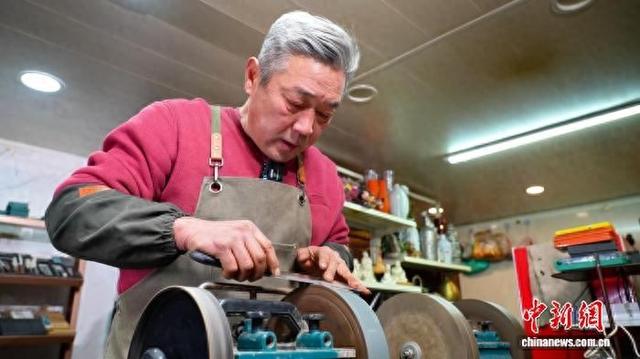
(新春见闻)磨剪子戗菜刀 天津手艺人守护新年“团圆味儿”
Xin Lang Cai Jing· 2026-02-10 13:52
Core Viewpoint - The article highlights the cultural significance and revival of traditional craftsmanship in Tianjin, particularly focusing on the knife grinder Li Bo, who embodies the spirit of preserving culinary traditions during the Chinese New Year [1][2]. Group 1: Cultural Significance - The unique call of knife grinders, "磨剪子嘞......戗菜刀......", is a nostalgic sound for many Chinese people, representing a historical survival story of artisans [2]. - The tradition of knife grinding is rooted in the scarcity of arable land in Hebei, where the craft originated, and has been passed down through generations [2]. Group 2: Modern Relevance - Li Bo has sharpened over 2,000 knives in the past year, indicating a resurgence of interest in traditional skills among younger generations [5]. - The practice of knife grinding is not just about maintenance but also reflects a broader cultural value of frugality and resourcefulness in Chinese households [5]. Group 3: Community Engagement - Li Bo's interactions with customers have evolved into a community experience, where he shares cooking tips and engages in friendly conversations, enhancing the sense of connection during the festive season [5]. - The act of sharpening knives is tied to family gatherings and celebrations, symbolizing preparation for reunion dinners during the New Year [1][5].

纪念章里的时光记忆
Ren Min Wang· 2025-05-15 03:32
Core Viewpoint - The article reflects on the life and values of a 92-year-old veteran, emphasizing themes of loyalty, hard work, and the importance of passing down wisdom and traditions to future generations [5]. Group 1: Personal History and Values - The veteran served as an artillery loader during the Korean War at the age of 17, demonstrating resilience and a strong sense of duty to defend his country [1]. - He instills values of loyalty to the party and the importance of contributing to society rather than seeking personal wealth or power [2]. - The veteran's craftsmanship and creativity are highlighted through his ability to repair and repurpose items, showcasing a philosophy of frugality and resourcefulness [3]. Group 2: Adaptation and Modernity - Despite his age, the veteran embraces modern technology, showing curiosity and a willingness to learn about smart home devices, reflecting a commitment to staying current with societal advancements [4]. - He believes that true aging occurs when one stops learning and updating their knowledge, emphasizing the importance of continuous growth and adaptation [4]. - The juxtaposition of his past as a young soldier and his present self illustrates the enduring spirit and values that transcend time [4].
灯火里的夫妻店(文化中国行)
Ren Min Ri Bao· 2025-05-01 21:51
Core Viewpoint - The article highlights the resilience and dedication of family-run businesses in China, showcasing their integral role in local communities and the labor-intensive nature of their operations [6][21]. Group 1: Business Operations - Family-run stores, such as convenience stores and bookshops, are characterized by hard work and a commitment to quality, with owners often engaging in physically demanding tasks [7][9]. - The daily routines of these businesses involve early mornings and late nights, reflecting a lifestyle of continuous labor and dedication to customer service [8][17]. - The article emphasizes the emotional connection between these businesses and their customers, with owners often knowing their regulars' preferences and needs [16][20]. Group 2: Community Impact - Family businesses serve as a vital link in neighborhood relationships, fostering a sense of community and mutual support among residents [12][19]. - The article illustrates how these businesses adapt to customer needs, such as extending hours to accommodate demand, thereby becoming integral parts of their communities [17][18]. - The warmth and familiarity of family-run stores create a unique atmosphere that contrasts with larger commercial enterprises, emphasizing personal connections over transactional relationships [12][21]. Group 3: Personal Stories - The narrative includes personal anecdotes from business owners, highlighting their sacrifices and the emotional bonds formed through shared labor and commitment to their craft [13][15]. - The article features couples who have built their businesses together, showcasing their teamwork and mutual support as key factors in their success [14][16]. - The stories reflect a broader cultural ethos of hard work and perseverance, with family businesses embodying the values of diligence and community spirit [11][21].