半导体产业转型

Search documents
全球磷化铟争夺战!中国手握8成原料,高端磷化铟却仍需依赖进口
Sou Hu Cai Jing· 2026-02-26 11:40
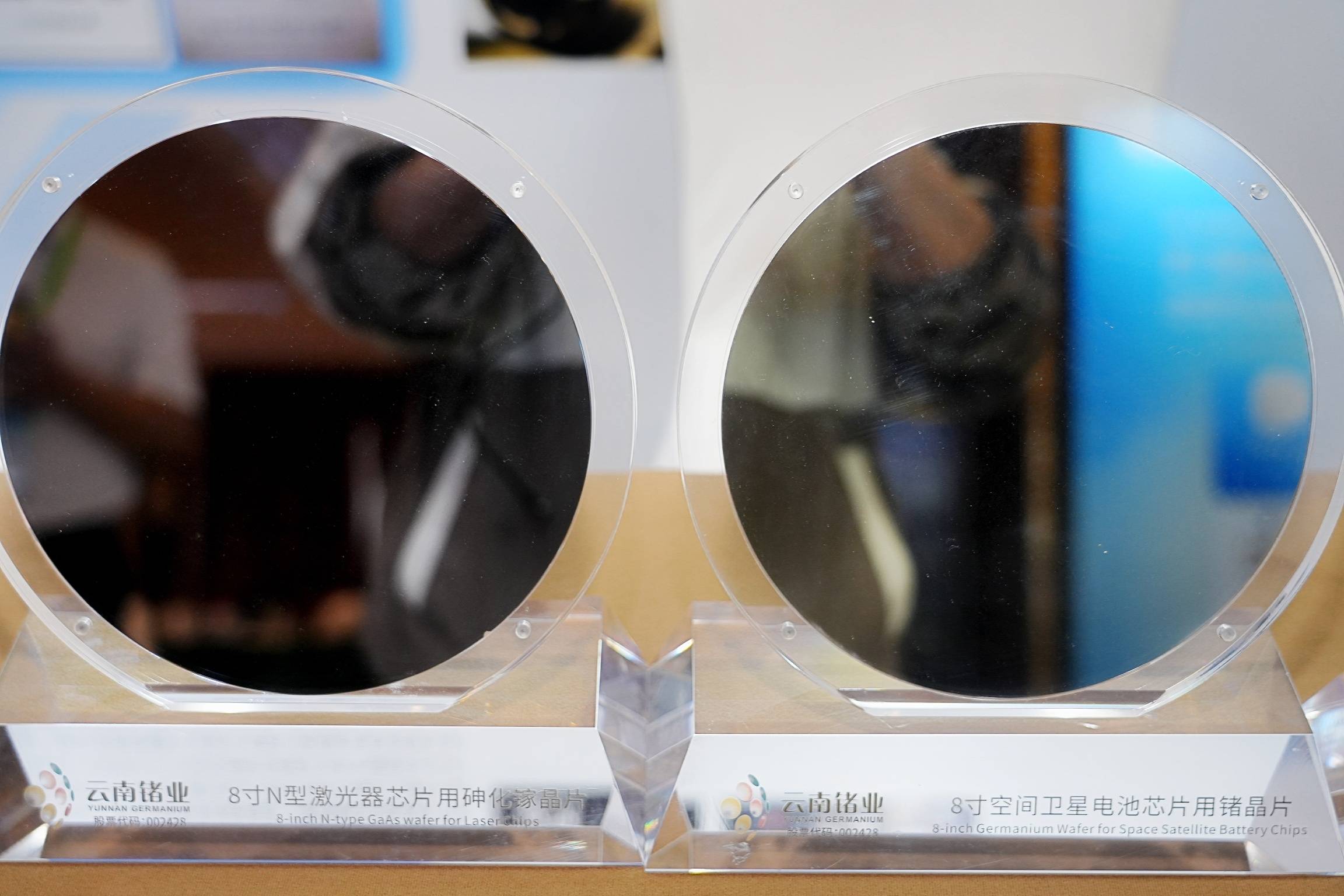
Core Insights - The article highlights the explosive growth of AI computing power by 2026, with indium phosphide emerging as a critical semiconductor material in global technology competition [1][6] - Despite China monopolizing 85% of refined indium production and over 73% of global indium reserves, it remains dependent on imports for high-end indium phosphide, indicating a significant gap in technological capabilities [3][15] Industry Overview - Indium phosphide's rise is attributed to the upgrade in AI computing power and industrial transformation, showcasing its unique performance advantages over traditional silicon materials [6] - The demand for indium phosphide devices is projected to soar to 2 million units by 2025, while global stable production capacity is only 600,000 units, resulting in a supply-demand gap of 1.4 million units [10] Market Dynamics - The shortage of indium phosphide is driving significant revenue growth for companies like AXT in the U.S., with a backlog of orders reaching $50 million, reflecting its strategic value across civilian and military applications [13] - China's dominance in indium resources does not translate to a competitive edge in the indium phosphide industry, primarily due to technological barriers and U.S. export restrictions [15][20] Technological Challenges - High-end indium phosphide production requires ultra-pure indium and advanced crystal growth technologies, areas where China currently lacks expertise [17][19] - The production of high-end indium phosphide substrates is still in the developmental stage, with significant technological breakthroughs expected by 2028 [19] Strategic Responses - In response to global supply-demand imbalances and U.S. restrictions, China is focusing on domestic resource advantages and accelerating the localization of the indium phosphide industry [21][35] - Policies and funding are being implemented to support the development of indium phosphide, including tax incentives and research subsidies [23] Industry Collaboration - Chinese companies are working to create an integrated ecosystem from resource extraction to material production and chip manufacturing, addressing upstream and downstream disconnects [28][30] - Collaborations between resource companies and downstream manufacturers are being established to ensure a stable supply of core materials [31] Future Outlook - If China can overcome the technological bottlenecks in high-end indium phosphide production, it could leverage its 85% refined indium capacity to reshape the global indium phosphide market [33] - The ongoing transition from resource dependency to technological leadership in the semiconductor industry is seen as a critical step for China's future competitiveness [37]

AI热潮带飞马桶厂?不起眼的日企,控制了芯片命脉
3 6 Ke· 2026-02-02 04:05
Group 1 - The article highlights the unexpected rise of TOTO, a Japanese toilet manufacturer, whose stock surged by 11% due to its involvement in the semiconductor industry, particularly through its production of specialized ceramics used in semiconductor manufacturing [3][21]. - TOTO's new business in precision ceramics now accounts for 42% of its revenue, with a profit margin of 40%, significantly higher than the average of 7% across all departments [21]. - The company has leveraged its long-standing expertise in ceramics to develop electrostatic chucks, which are crucial for maintaining the precision required in semiconductor manufacturing [11][19]. Group 2 - The article discusses the broader trend of traditional Japanese companies successfully transitioning into the semiconductor industry, citing examples like Ajinomoto, which developed a specialized film for high-performance CPUs from its food production waste [26][28]. - Other companies, such as Kao and Fujifilm, have also found niches in the semiconductor supply chain, with Kao producing cleaning agents for wafers and Fujifilm supplying photoresists and chemicals necessary for semiconductor production [32][38]. - The narrative emphasizes that Japan's historical industrial strength and technological reserves have allowed these companies to adapt and thrive in the high-tech semiconductor market, despite their origins in seemingly unrelated industries [40][42]. Group 3 - The article suggests that China's semiconductor industry is on a similar path, with emerging companies developing high-purity materials and specialized products that could fill gaps in the supply chain, akin to Japan's historical industrial evolution [46][54]. - Companies like Xingfa Group and Huitian New Materials are highlighted for their successful transitions from traditional industries to high-tech sectors, indicating a growing trend of innovation and adaptation within China's industrial landscape [48][51]. - The overall message conveys optimism for China's future in the semiconductor industry, suggesting that with time and continued development, the country can achieve significant advancements [56].
郭台铭携46台光刻机回归大陆布局半导体转型
Xin Lang Cai Jing· 2025-12-08 05:24
Core Viewpoint - Foxconn's return to mainland China with 46 lithography machines aims to stabilize its business foundation and seek transformation, driven by challenges in overseas expansion due to setbacks in investments in India and the United States [2] Group 1: Business Strategy - The return to China is motivated by the complete industrial chain, market potential, and favorable semiconductor policies that provide a stable development environment [2] - Foxconn intends to tap into the chip demand from companies like Huawei, facilitating its upgrade from contract manufacturing to high-end manufacturing [2] Group 2: Market Context - The decision reflects a strategic shift in response to the evolving landscape of the semiconductor industry, particularly in light of recent challenges faced in international markets [2] - The move is positioned to leverage the opportunities presented by the growth of China's semiconductor industry [2]
绿通科技(301322) - 2025年09月19日投资者关系活动记录表
2025-09-19 09:42
Group 1: Strategic Decisions - The acquisition of Jiangsu Damo Semiconductor Technology Co., Ltd. is a strategic decision aimed at long-term development and industry transformation, enhancing asset quality and financial stability [2] - The company plans to explore opportunities for integrating the semiconductor industry chain, considering technological trends and business needs [4] Group 2: Financial Performance and Reporting - The company will disclose its Q3 report in accordance with regulations, with updates available through official announcements [3] - The total amount of shares repurchased in the first two phases is 115,569,086.55 yuan, with all repurchased shares canceled to reduce registered capital [4] Group 3: Market Impact and Risk Management - The company’s overseas sales are primarily settled in USD, and fluctuations in exchange rates have a controllable impact on performance [3] - The company is committed to monitoring international market changes and enhancing its risk management mechanisms to mitigate exchange rate risks [3] Group 4: Shareholder Engagement - The company emphasizes shareholder returns and is evaluating the potential for a new round of share buybacks based on market conditions [4] - The company values investor feedback and is open to suggestions regarding its operations and strategies [3]
上任四年后,英特尔中国区董事长王锐将退休
Sou Hu Cai Jing· 2025-09-16 06:27
Core Insights - Intel's China Chairman Wang Rui is set to retire, marking a planned leadership transition as the company celebrates its 40th anniversary in the Chinese market [3][6] - Wang Zichong has been appointed as the new Vice Chairman of Intel China, taking over responsibilities for business operations [3][8] - Under Wang Rui's leadership, Intel China has maintained a revenue contribution of 26%-30% to Intel's total revenue over the past four years [6] Leadership Changes - Wang Rui has been with Intel for 30 years, holding various key positions and contributing to the company's strategic initiatives in China [3][5] - Wang Zichong, with over 20 years of experience at Intel, will now lead the company's operations in China [8][10] Financial Performance - For FY2024, Intel's global revenue is projected at $53.1 billion, a 2% decline year-over-year, with a net loss of $18.8 billion [6][12] - Intel China generated $15.532 billion in revenue for FY2024, a 4.6% increase from $14.854 billion in FY2023, representing 29.2% of Intel's total revenue [6][12] Strategic Initiatives - The leadership transition coincides with Intel's ongoing efforts to strengthen its business in China and enhance collaboration with industry partners [3][5] - Recent strategic adjustments by new CEO Lip-Bu Tan include divesting non-core assets and focusing on core products in data centers and PCs [10][11] Market Context - Intel has faced challenges in recent years, missing opportunities in the smartphone and AI sectors, leading to financial difficulties [10][11] - The company has received a $2 billion investment from SoftBank and is navigating potential risks associated with the U.S. government's stake in the company [12]


东南亚半导体也要崛起了?马来西亚发布首款边缘 AI 芯片
3 6 Ke· 2025-08-27 02:08
Core Insights - SkyeChip has launched Malaysia's first self-developed edge AI chip, MARS1000, marking the country's entry into the AI chip race [1][2] - The MARS1000 chip is based on 7nm process technology and is designed for smart IoT applications, showcasing potential in various sectors such as smart agriculture, Industry 4.0, and smart cities [1][3] Industry Overview - The development of the MARS1000 chip is a result of Malaysia's strategic upgrade in the semiconductor industry, with the government planning to invest 25 billion MYR and attract at least 500 billion MYR in local and foreign investments [3][4] - Malaysia's semiconductor industry has evolved from traditional backend manufacturing to high-value segments, contributing 13% of global semiconductor packaging and testing capacity [5][6] Economic Impact - In 2023, Malaysia's semiconductor exports exceeded 120 billion USD, accounting for 62% of its electrical and electronic product exports and contributing to a quarter of the national GDP [5] - Malaysia holds a strategic position in the global semiconductor trade, producing about 20% of the chips for the United States [5][6] Investment and Development - The semiconductor industry in Malaysia has attracted significant foreign direct investment, with Penang alone drawing 13 billion USD in 2023, surpassing the total of the previous seven years [8] - The government has signed a 10-year, 250 million USD technology licensing agreement with Arm to support local chip design [8] Competitive Landscape - Despite the emergence of local companies like SkyeChip, the semiconductor industry in Malaysia is still dominated by international giants such as Intel and Infineon, which control core technologies and market shares [8][9] - The potential impact of the MARS1000 chip's launch on the market will depend on the reactions of major chip companies [10]
康达新材(002669) - 2025年7月22日投资者关系活动记录表
2025-07-23 09:02
Group 1: Market Development and Competitive Advantage - The company has established a comprehensive supply system for wind turbine blade materials, including structural adhesives and various resin products, with a sales volume of nearly 10,000 tons expected in 2024 [2][3]. - The company maintains a leading market share in wind structural adhesives, benefiting from early certification by the German Lloyd's Register (GL) and advanced production technology [2][3]. Group 2: Research and Development Focus - The company focuses on three core R&D areas: adhesive and specialty resin materials, electronic information materials, and electronic technology, with a 2024 R&D expenditure of 204 million yuan, accounting for 6.56% of revenue [3]. - The R&D team consists of 376 members, representing 22.97% of the total workforce, emphasizing the company's commitment to innovation and product quality [3]. Group 3: Acquisition Plans - The company is in the process of acquiring Chengdu Zhongke Huami Electronics, a high-tech enterprise specializing in reliable integrated circuit products, with ongoing audits and evaluations [4][5]. Group 4: Semiconductor Materials Strategy - The company aims to accelerate its strategic transformation towards the semiconductor industry, leveraging existing materials like CMP polishing liquids and sputtering targets to build a comprehensive industrial chain [6].

联合化学20250613
2025-07-14 00:36
Summary of the Conference Call for 联合化学 Company and Industry Overview - **Company**: 联合化学 (Union Chemical) - **Industry**: Semiconductor materials, specifically focusing on photolithography materials and equipment Key Points and Arguments 1. **Strategic Investment in Semiconductor Materials**: 联合化学 is expanding into the semiconductor materials sector through its subsidiary 启辰半导体, focusing on the development and production of styrene-based photolithography monomers, UV monomers, OLED semiconductor chemicals, and electronic-grade solvents [2][5][11] 2. **Investment in 卓光瑞科技**: The company has invested 120 million yuan in 卓光瑞科技, acquiring a 19.35% stake, with plans for an additional investment of up to 120 million yuan within six months to enhance competitiveness in the precision optics and semiconductor exposure equipment sectors [2][6][10] 3. **卓光瑞科技's Business Focus**: 卓光瑞科技 specializes in front-end semiconductor exposure equipment, with its subsidiary 冈井化学 engaged in the development and production of large-diameter optical systems. The expected revenue for 卓光瑞科技 in 2024 is approximately 26 million yuan, with a projected doubling in 2025 [2][4][8] 4. **Financial Performance**: In 2024, 联合化学 reported revenues of 530 million yuan, a year-on-year increase of 24.8%, and a net profit of over 56 million yuan, up 66.81%. For Q1 2025, revenues were 130 million yuan, a 0.5% increase, with a net profit of 16 million yuan, up 17% [4][16] 5. **Funding Allocation**: The 190 million yuan investment in 卓光瑞科技 will be allocated for the development of exposure machine prototypes and optical component research, with a strong financial backing and potential for future financing to ensure ongoing development [9][10] 6. **Market Positioning and Growth**: 联合化学 aims to leverage its expertise in organic pigments to transition into the semiconductor materials market, recognizing the demand for high-end semiconductor materials and the strategic importance of this sector [11][12] 7. **Competitive Landscape**: 卓光瑞科技 faces competition from several domestic companies, but its advantages lie in its strong technical team and supply chain management capabilities, which allow for self-research and development without heavy reliance on external partners [18] 8. **Future Directions**: The collaboration between 联合化学 and 卓光瑞科技 is expected to evolve, with potential for further investments and operational involvement from 联合化学 to maximize the partnership's effectiveness [21][22] Additional Important Insights - **Challenges in the Semiconductor Industry**: The domestic semiconductor industry faces engineering challenges rather than scientific ones, with certain supply chain bottlenecks that are expected to be resolved over time [24][25] - **Technological Advancements**: 卓光瑞科技 has made significant progress in optical lens technology, achieving resolutions of 110 nm and 350 nm for different applications, and has secured substantial orders from leading manufacturers [4][14] - **R&D Focus**: 联合化学 is also developing electronic-grade antifreeze and other electronic materials, indicating a broader strategy to diversify its product offerings in the semiconductor space [19] This summary encapsulates the key discussions and insights from the conference call, highlighting the strategic direction and financial performance of 联合化学 as it ventures into the semiconductor materials industry.
康达新材,大涨197.33%
DT新材料· 2025-07-13 13:34
Core Viewpoint - The company, 康达新材, is expected to achieve significant profit growth in the first half of 2025, with net profit projected to increase by 165.71% to 174.12% year-on-year, driven by strong demand in the wind power sector and improved operational efficiency [2][3]. Group 1: Financial Performance - The company forecasts a net profit of 39.1 million to 44.1 million yuan, excluding non-recurring gains, and a profit attributable to shareholders of 50 million to 55 million yuan, reflecting a year-on-year growth of 188.48% to 197.33% [2][3]. - Non-recurring gains are expected to be around 11 million yuan, primarily from the disposal of subsidiary equity, government subsidies, and dividends from associated companies [3]. Group 2: Business Development - The adhesive and specialty resin materials segment has seen steady sales growth, particularly in wind turbine blade products, which are a key driver of business growth due to increased demand in the wind power industry [3]. - The company has maintained its leading market share in the domestic wind turbine blade structural adhesive sector and has established a comprehensive supply system for core products [3]. Group 3: Strategic Initiatives - The company is pursuing external acquisitions to enhance its electronic technology segment and transition towards the semiconductor industry [4]. - An acquisition agreement has been signed to acquire at least 51% of 成都中科华微电子有限公司, which specializes in high-reliability integrated circuit products [4][5]. Group 4: Product Development - The company’s subsidiary has completed small batch verification of aluminum oxide target materials for integrated circuit manufacturing, and is currently testing cerium oxide CMP polishing liquids [5].