
统一战线

Search documents
新四军第五师孤悬敌后的统战智慧
Xin Lang Cai Jing· 2026-02-25 16:55
Core Viewpoint - The article highlights the significant role of the New Fourth Army's Fifth Division in the anti-Japanese war, emphasizing its strategic use of the "united front" approach to gather support from various social classes and effectively resist Japanese aggression [1][3]. Group 1: Historical Context and Development - The Fifth Division was established in the context of the anti-Japanese war after the fall of Wuhan in 1938, evolving from a guerrilla force into a structured military unit [1]. - The "Three-Three System" principle was implemented in the governance of the anti-Japanese base, ensuring representation from Communist Party members, progressive non-Party individuals, and neutral figures [2][3]. - By 1945, the Fifth Division had grown from a small guerrilla group of over 160 individuals in 1939 to a formidable force of 50,000 regular troops and 300,000 militia, covering an area of over 90,000 square kilometers [8]. Group 2: Political Strategy and Governance - The Fifth Division's governance included the establishment of democratic institutions, such as the Anti-Japanese People's Congress and the temporary consultative assembly, which reflected a broad representation of various social groups [2]. - The division's leadership actively engaged with local elites and progressive forces, breaking down class barriers and fostering a collaborative governance model [1][2]. Group 3: Military Strategy and Achievements - The Fifth Division successfully integrated various military forces, including persuading over 2,500 troops from other factions to join their ranks, significantly enhancing their combat capabilities [3][4]. - The division's strategic communications, such as the "letter to local puppet soldiers," effectively undermined enemy morale and encouraged defections [4][5]. Group 4: Community Engagement and Support - The Fifth Division prioritized addressing the needs of the local population, implementing policies to alleviate suffering during natural disasters and promoting agricultural production [6][7]. - Community organizations, such as farmers' and women's associations, played a crucial role in supporting the division through resource contributions and morale-boosting activities [7]. Group 5: Impact on the War Effort - The Fifth Division's actions contributed significantly to the broader anti-Japanese war effort, successfully repelling multiple enemy offensives and launching counterattacks that disrupted Japanese operations [8]. - The division's ability to mobilize local populations for military service exemplified the deep connection between the military and civilian sectors in the anti-Japanese struggle [6][8].
中国的“团结型政治”
Xin Lang Cai Jing· 2026-02-25 00:30
Group 1 - The core concept of "Chinese governance" is a significant research topic in contemporary Chinese social sciences, contributing to the construction of an independent knowledge system [1] - The concept of "political unity" is essential for the development of Chinese political science, emphasizing the historical experiences and institutional practices of political unity in China [1] - The system of multi-party cooperation and political consultation, particularly through the People's Political Consultative Conference (PPCC), reflects the various aspects of China's "unity-oriented politics" [1] Group 2 - The People's Political Consultative Conference (PPCC) exemplifies the institutional arrangement of the united front, incorporating diverse political parties, social groups, and non-party individuals to maximize political participation [2] - The PPCC's unique organizational structure includes 34 categories, promoting institutionalized political participation and coordination among different political entities [2] Group 3 - The new type of political party system in China, led by the Communist Party, ensures a unified political direction and maintains social order and governance [3] - Unlike the adversarial nature of Western political systems, the PPCC fosters cooperative relationships among political parties, providing oversight and support rather than obstruction [3] Group 4 - Consultative democracy has become a crucial method for resolving internal conflicts among the populace, emphasizing dialogue and consensus-building [5] - The practice of consultative democracy spans various levels of governance, from central planning to grassroots community discussions, integrating multiple channels for political participation [5] Group 5 - The combination of the united front, new type of political party system, and consultative democracy forms a "unity-oriented politics" model, addressing key issues of leadership and organization [6] - This model is seen as a strategic approach for the Communist Party to unite the nation in advancing socialist modernization [6]
春晚舞台蕴藏着哪些“同心密码”?
Xin Lang Cai Jing· 2026-02-17 13:15
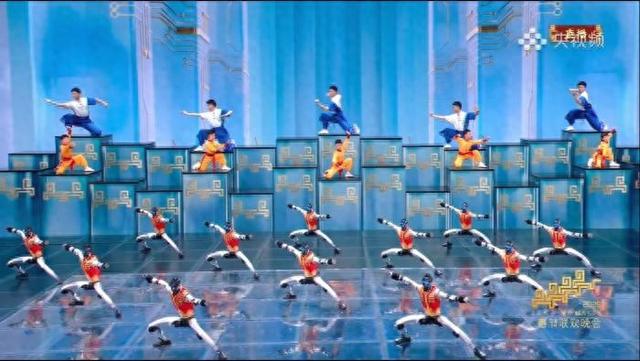
Core Viewpoint - The Zhejiang province showcases its economic resilience and cultural richness through its participation in the Spring Festival Gala, highlighting the integration of traditional elements with modern innovation [1][2]. Economic Resilience - Yiwu, a city in Zhejiang, symbolizes the resilience of the private economy, transitioning from barter trade to global digital payments, reflecting high-quality development [1]. - By 2025, Zhejiang is expected to shine even brighter, having ranked first in four key business environment indicators in a national survey, and achieving a "grand slam" in five major rankings, including the "Top 500 Private Enterprises in China" [1]. Innovation and Technology - The integration of technology and culture is evident in the performances, with robots from Yushutech showcasing advanced capabilities, emphasizing the importance of technological innovation for future success [4]. - The province is fostering a collaborative environment between scientists and entrepreneurs, promoting initiatives like the "Innovation Zhejiang" campaign to enhance the synergy between technological and industrial innovation [4]. Cultural Heritage - The performance by Zhang Lin, a member of the Democratic League, exemplifies the cultural richness of Zhejiang, blending traditional opera with contemporary themes, and showcasing the role of culture in uniting people [5]. - Zhang Lin's dedication to promoting traditional arts and engaging with the community reflects a commitment to cultural transmission and education, reinforcing the cultural identity of the region [5].

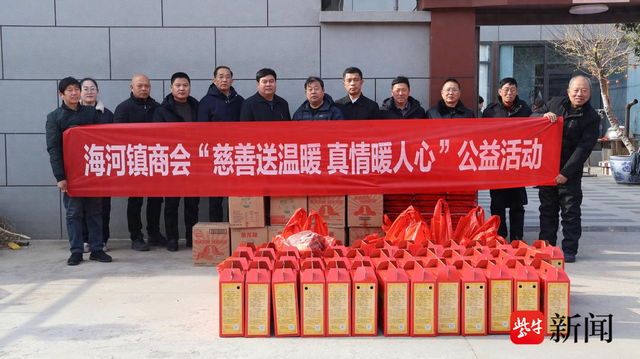
盐城射阳县海河镇统战办联合海河商会开展走访慰问活动
Xin Lang Cai Jing· 2026-02-13 03:53
Core Viewpoint - The article highlights a charitable initiative organized by the United Front Work Department of Haihe Town and the Haihe Chamber of Commerce, aimed at providing support and warmth to families in need during the upcoming Spring Festival [1] Group 1 - The initiative involved visiting several households facing difficulties, where representatives engaged in conversations to understand their health, living conditions, and specific challenges [3] - Essential supplies such as rice, cooking oil, and meat, along with monetary assistance, were provided to help alleviate the hardships faced by these families [3] - The participating families expressed gratitude, feeling the care and warmth from the Party, government, and the broader social community [3] Group 2 - The event is seen as a practical implementation of resource integration and service to the community by the United Front Work Department [4] - Future plans include deepening connections with social forces, establishing a regular visiting and caring mechanism, and creating platforms for effective resource matching [4] - The goal is to enhance the sense of gain, happiness, and security among the residents of Haihe Town, while gathering broader and stronger united front forces [4]
为推进中国式现代化江苏新实践凝心聚力
Xin Hua Ri Bao· 2026-02-10 22:08
Core Viewpoint - The article emphasizes the significant role of the united front in promoting the modernization of Jiangsu, highlighting the alignment with the central government's strategies and the importance of collective efforts in achieving common goals [1][4]. Group 1: Ideological Foundation - The provincial United Front Work Department has reinforced the leadership of the Party in all areas of united front work, ensuring high standards in operational mechanisms and grassroots foundations [2]. - A focus on Xi Jinping's thoughts has been established to unify political ideologies and strengthen the political consensus among various sectors [2]. - Various educational initiatives have been implemented to deepen the understanding of the Party's policies among non-Party members, including seminars and thematic educational activities [2]. Group 2: Service to the Overall Situation - The united front work is closely integrated with the province's overall development strategy, supporting major national initiatives and local reforms [4]. - Non-Party members have contributed significantly to discussions on modern industrial systems and common prosperity, with 18 reports submitted to the provincial leadership [4]. - A proactive approach has been taken to foster relationships between the government and private enterprises, addressing 530 requests from 288 private companies and facilitating significant investment projects [4]. Group 3: High-Quality Development - The united front has effectively promoted ethnic unity and religious integration, with initiatives aimed at fostering a sense of community among diverse groups [7]. - The development of the private economy has been prioritized, with specific plans to enhance communication and support for private enterprises [8]. - Efforts have been made to engage overseas Chinese and promote cooperation with Hong Kong and Taiwan, enhancing national awareness and patriotic spirit among these communities [8].
聚统战同心 兴高原发展
Xin Lang Cai Jing· 2026-02-10 20:04
Core Insights - The report highlights significant achievements in Qinghai's united front work over the past year, focusing on ecological restoration, ethnic unity, and economic development initiatives [1][2][4]. Group 1: Achievements in United Front Work - Over 20 substantial research cooperation results were achieved in areas such as ecological restoration and renewable energy development [1]. - 98% of counties successfully established national ethnic unity and progress demonstration zones, with 53 typical brands cultivated [1]. - The integration of the 330 kV "dual circuit" into the main power grid has benefited 47,500 herders, eliminating the "power island" issue [1]. Group 2: Educational and Cultural Initiatives - The publication of the bilingual edition of the "Modern Chinese Dictionary" marks a significant cultural achievement after 13 years of effort [1]. - Educational initiatives, such as the establishment of schools in high-altitude areas, have improved access to quality education for local students [5]. Group 3: Economic Development and Investment - The "New Spring First Meeting" focused on promoting employment, development, and investment, emphasizing the commitment to high-quality economic growth [7]. - The provincial united front department has optimized the business environment, responding to private enterprises' concerns and facilitating investment projects worth over 3.5 billion [8]. Group 4: Community and Social Engagement - Activities promoting ethnic unity and cultural exchange have been implemented, enhancing community cohesion and mutual understanding among different ethnic groups [4][5]. - The establishment of "Overseas Chinese Homes" has provided support services for overseas Chinese, fostering a sense of belonging [9]. Group 5: Political and Social Responsibility - The provincial united front department has strengthened its coordination with various organizations, enhancing the effectiveness of its work and contributing to high-quality development [6]. - Continuous efforts in democratic supervision and social service initiatives have expanded the influence of democratic parties, benefiting remote areas through medical and educational support [8].
“团结型政治”:为中国之治奠定制度基础
Xin Lang Cai Jing· 2026-02-08 21:39
Group 1 - The core concept of "Chinese governance" is a significant research topic in contemporary Chinese social sciences, contributing to the construction of an independent knowledge system [1] - The concept of "political unity" is essential for the development of Chinese political science, emphasizing the historical experiences and institutional practices of political unity in China [1] - The "united front" tradition has been a fundamental approach for the Communist Party of China (CPC) in mobilizing various forces for socialist modernization since the reform and opening up [1] Group 2 - The People's Political Consultative Conference (PPCC) exemplifies the institutional arrangement of the united front, incorporating diverse political parties and social groups to facilitate political participation [2] - The new type of political system in China, characterized by multi-party cooperation and political consultation led by the CPC, is crucial for maintaining social order and governance [2] Group 3 - Unlike the adversarial nature of Western political systems, the PPCC fosters cooperative relationships based on shared political goals, providing supervision and policy advice [3] - The majority of seats in the PPCC are held by non-Communist members, highlighting the collaborative nature of political consultation in policy-making processes [3] Group 4 - Consultative democracy has become a vital mechanism for resolving internal conflicts among the populace, emphasizing dialogue and consensus-building [5] - The practice of consultative democracy spans various levels of governance, from central planning to grassroots community meetings, integrating multiple channels for political participation [6] Group 5 - The combination of the united front, new type of political system, and consultative democracy forms a "unity-based political" model, addressing key governance issues [7] - The CPC's strategy involves leveraging this model to unite the nation in advancing socialist modernization, ensuring political stability and order [7]
省委常委会召开会议学习习近平总书记重要讲话精神 部署科技创新统一战线和为基层减负等工作
Shan Xi Ri Bao· 2026-02-06 23:24
Group 1 - The meeting emphasized the importance of implementing Xi Jinping's recent important speech and the national science and technology work conference spirit, focusing on leveraging Shaanxi's scientific and educational advantages to foster future industries and accelerate the development of new productivity [1] - There is a call to enhance high-quality technological supply and deepen the integration of education and technology talent system reforms, while promoting the construction of the Xi'an regional science and technology innovation center [1] - The meeting highlighted the need to optimize the "Qin Chuang Yuan" innovation-driven platform and promote the transformation of scientific and technological achievements through various reforms and mechanisms to enhance the synergy between technological and industrial innovation [1] Group 2 - The meeting stressed the importance of adhering to the spirit of the national united front ministerial meeting, reinforcing the leadership of the party, and developing a broad patriotic united front [2] - There is a focus on reducing burdens on grassroots levels by addressing formalism and implementing a mechanism for regular checks and reports to ensure substantial progress in the rectification work [2] - The meeting also discussed the need to establish a correct view of performance and improve differentiated assessment systems to guide party members and cadres to focus more on serving the public, enterprises, and grassroots [2]
胡忠雄慰问统一战线代表人士
Xin Lang Cai Jing· 2026-02-03 19:47
Group 1 - The core message of the article emphasizes the importance of the United Front in contributing to the economic and social development of Guiyang and Guian, as highlighted by the city's leadership during a recent meeting [1][2]. - Hu Zhongxiong, the Secretary of the Guiyang Municipal Committee, expressed gratitude to the representatives of the United Front for their active roles in supporting the government's initiatives over the past year [2]. - The meeting underscored the need for unity and political alignment with the central government, encouraging representatives to maintain a consistent stance with the Communist Party of China [2]. Group 2 - Hu Zhongxiong called for representatives to set an example in five key areas: virtue, capability, diligence, performance, and integrity, thereby enhancing the image of the United Front [2]. - The city government aims to provide favorable conditions for United Front members to fulfill their responsibilities effectively [2].
凝聚统战合力 共建廉洁文化
Xin Lang Cai Jing· 2026-02-02 21:08
Group 1 - The core viewpoint emphasizes the importance of cultivating a clean governance culture as a fundamental aspect of the anti-corruption strategy, which is essential for achieving modernization in China [1][2] - The construction of a clean culture is a systematic project that requires the participation of the entire society, leveraging the unique advantages of the united front to spread the values of integrity widely across various sectors and demographics [1][2][3] Group 2 - The clean culture inherits and promotes the essence of traditional Chinese culture, evolving from moral self-discipline in traditional society to a modern system that balances legal and moral standards [2][3] - The united front plays a crucial role in addressing challenges in clean culture construction by effectively disseminating clean values to a broader audience, thus enhancing the overall awareness and participation in integrity [3][4] Group 3 - The united front's democratic supervision is highlighted as a vital component of the supervision system, providing a unique perspective on power oversight and complementing internal supervision mechanisms [5][6] - Encouraging self-discipline among business entities, particularly private enterprises, is essential for fostering a clean and transparent relationship between government and business [6][7] Group 4 - The mission of clean culture construction is to strengthen the ideological foundation of national governance modernization, ensuring that clean values are integrated into all aspects of governance [7][8] - A systematic approach to clean culture construction aims to create a clear social environment, promoting integrity across various sectors and enhancing the overall societal atmosphere [7][8]