
印俄战略伙伴关系

Search documents
普京即将访印,美加关税企图阻止印俄峰会,印度却在俄开新领事馆
Sou Hu Cai Jing· 2025-11-20 13:34
Core Points - The meeting between Russian Foreign Minister Lavrov and Indian Foreign Minister Jaishankar is significant as it prepares for President Putin's upcoming visit to India in early December, marking his first visit since the Ukraine conflict began [1][3] - The summit is expected to face external pressures, particularly from the U.S., which has been attempting to dissuade India from purchasing Russian oil [3][5] - Both Russia and India have reaffirmed their strategic partnership despite U.S. interventions, with plans to enhance trade and economic relations [3][4] Group 1: Diplomatic Engagements - Jaishankar's visit to Moscow serves dual purposes: attending the Shanghai Cooperation Organization (SCO) meeting and preparing for the upcoming India-Russia summit [1][3] - The Kremlin has indicated that preparations for Putin's visit are underway, with expectations of fruitful discussions on trade and economic cooperation [3][4] - The upcoming "Russia-India Forum" scheduled for December 4-5, 2025, in New Delhi will focus on expanding industrial cooperation and increasing Indian products in the Russian market [4] Group 2: Economic Cooperation - The summit is anticipated to result in an agreement on labor mobility, significantly increasing the number of Indian citizens working in Russia [5][6] - Discussions will include enhancing Russian imports of Indian pharmaceuticals and labor resources, as well as boosting tourism and people-to-people exchanges [4][5] - India is negotiating an immigration agreement to protect the rights of Indian workers in Russia, with a notable increase in the number of Indian students and workers expected to move to Russia in the coming years [13] Group 3: External Pressures and Responses - The U.S. has imposed tariffs and sanctions on Indian imports of Russian oil, creating challenges for Indian refiners and prompting them to seek alternative sources [6][9] - The potential losses for India if it complies with U.S. sanctions could be substantial, estimated between $9 billion to $10 billion [9] - Despite U.S. pressures, India continues to pursue its bilateral relationship with Russia, as evidenced by the establishment of new consulates and ongoing diplomatic engagements [11][13]

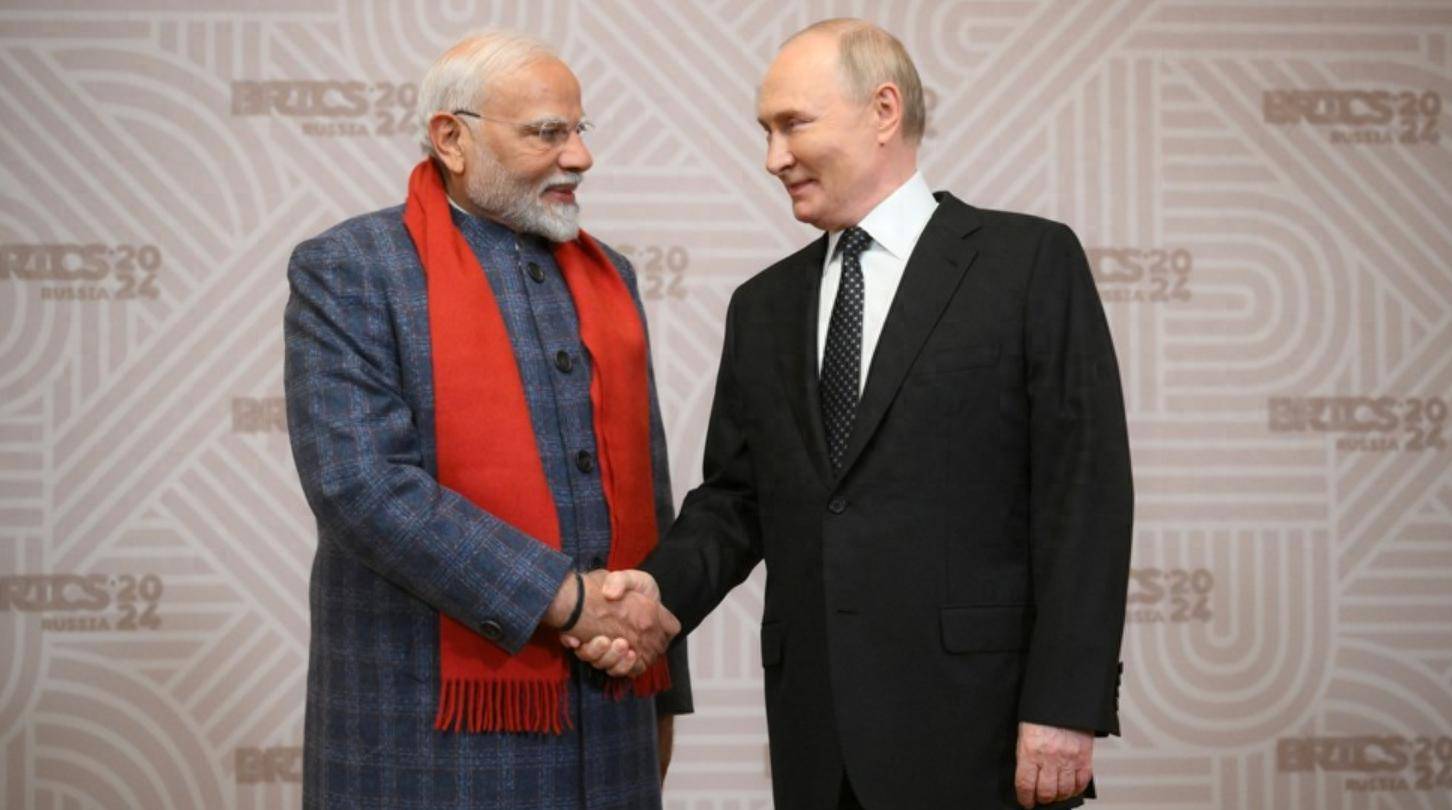
特朗普关税“大棒”挥向印度,新德里反手出招,美印关系要变天?
Sou Hu Cai Jing· 2025-08-13 12:02
Core Viewpoint - The article discusses the escalating trade tensions between the United States and India, particularly focusing on President Trump's announcement of a 25% tariff on Indian goods, citing India's import of Russian oil as a justification for this action [1][3]. Group 1: Trade Relations - Trump has previously imposed a 25% retaliatory tariff on Indian goods, and with the new import tax set to take effect, some tariffs on Indian exports to the U.S. have surged to 50%, one of the highest rates imposed by the U.S. on any trading partner [3]. - The trade war has significantly impacted U.S.-India relations, with reports indicating that India has paused plans to procure new weapons and aircraft from the U.S., although the Indian Defense Ministry has officially denied this [4]. Group 2: Diplomatic Responses - In response to the tariffs, India has taken a firm stance, with the Indian Ministry of External Affairs issuing a strong statement condemning the U.S. actions as "unfair, unjustified, and unreasonable," and asserting that India will take all necessary measures to protect its national interests [3][4]. - Following the tariff announcement, India's National Security Advisor Ajit Doval met with Russian President Putin to prepare for an upcoming visit, emphasizing the strategic partnership between India and Russia [7]. Group 3: Strategic Positioning - India is positioning itself as a significant player in global politics, adept at forming strategic multilateral alliances to achieve national objectives. The current situation presents India with a critical moment to make strategic choices that do not compromise its national interests [9]. - The meeting between Indian Prime Minister Modi and Japanese Prime Minister Kishida signals India's intent to maintain stable bilateral relations with Japan amidst the rising tensions with the U.S. [7].
被特朗普征50%关税,印度怒了:暂停购买美国新武器和飞机,防长取消访美!莫迪将访华,中方:欢迎
Mei Ri Jing Ji Xin Wen· 2025-08-09 06:58
Group 1 - Recent trade negotiations between India and the US have stalled due to disagreements over tariffs and non-tariff barriers, with the US imposing an additional 25% tariff on Indian imports, raising the total tariff rate to 50% [1][7] - The Indian government has expressed that the US's actions are "unfair, unjust, and unreasonable," and has indicated it will take necessary actions to protect national interests [1] - In response to the high tariffs, India has decided to suspend its plans to purchase US military equipment, including "Striker" armored vehicles and "Javelin" anti-tank missiles [2][5] Group 2 - The US had a trade deficit of approximately $45 billion with India last year, importing $87 billion worth of goods from India while exporting $42 billion worth of goods to India [7] - Indian Prime Minister Modi emphasized the importance of supporting local manufacturing, stating that India must remain vigilant regarding its economic interests [7] - Indian businesses in the US are struggling due to the increased tariffs, with reports of significant declines in sales and profitability, particularly in the jewelry and grocery sectors [8][10] Group 3 - Modi held a phone conversation with Russian President Putin, reaffirming India's commitment to deepening strategic ties and inviting Putin to visit India later this year [11] - Discussions between India and Russia included cooperation in various sectors such as rare earth mining, industrial infrastructure, and aerospace technology [12] - Modi is expected to visit China for the Shanghai Cooperation Organization summit, which may influence India's diplomatic stance amid rising tensions with the US [14]
