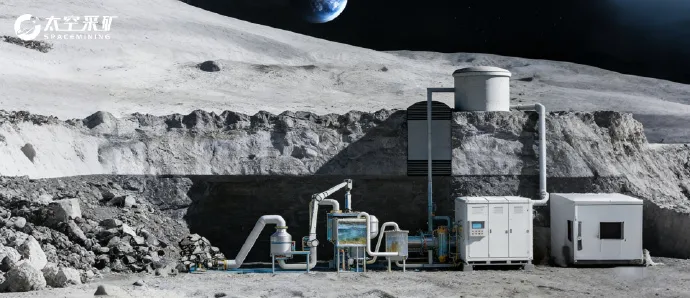
原位资源利用

Search documents
太空采矿,中国凭什么?
Ren Min Ri Bao· 2026-02-25 02:38
Core Viewpoint - The China Aerospace Science and Technology Corporation has announced the "Tian Gong Kai Wu" major project during the 14th Five-Year Plan period, focusing on the development of a comprehensive experimental and ground support system for space resource exploration and mining, marking a significant step towards the realization of space mining, which was once a concept in science fiction [1][3]. Group 1: Space Mining Concept - Space mining refers to the extraction of resources from celestial bodies outside the Earth's atmosphere, encompassing not just mining but also the utilization of materials, energy, environment, and information available in space [3]. - The "Tian Gong Kai Wu" project aims to establish a complete development system for space resources, including detection, mining, transportation, and in-orbit processing, transitioning from research exploration to engineering implementation [3][5]. Group 2: Resource Potential and Challenges - The solar system contains rich resources, such as platinum and palladium in asteroids, helium-3 in lunar regolith, and water ice, which can be converted into hydrogen and oxygen for rocket fuel [5]. - The high cost of transporting materials from space to Earth presents a significant challenge, making "in-situ resource utilization" a crucial strategy for space resource development, allowing for local extraction and processing to reduce costs [5]. Group 3: Technological Advancements - China's confidence in pursuing space mining stems from its technological advancements, including successful lunar sample returns from Chang'e 5 and 6, and upcoming missions like Tianwen-2 targeting asteroids and Chang'e 7 and 8 for lunar resource utilization [6]. - The establishment of the Interstellar Navigation Institute at the University of Chinese Academy of Sciences signifies a commitment to building a comprehensive capability network for deep space exploration, covering various scientific and engineering disciplines [6]. Group 4: Strategic Planning for Future Industries - The emphasis on future industries with characteristics such as foresight, strategic importance, and disruptive potential highlights the need for careful planning and coordination, as stated by President Xi Jinping [6][7]. - The current technological revolution and industrial transformation require not only speed but also foresight and early positioning in emerging industry sectors to seize strategic opportunities and maintain a competitive edge [7].


太空采矿,渐行渐近(新知)
Ren Min Ri Bao· 2026-02-25 01:17
Group 1 - The core focus of the "Tian Gong Kai Wu" major project is to establish a comprehensive experimental and ground support system for space resource development, emphasizing key technologies such as small celestial body resource exploration, intelligent autonomous mining, low-cost transportation, and in-orbit processing [1] - Space mining, defined as the extraction of resources from celestial bodies outside Earth's atmosphere, aims to create a full-chain development system encompassing detection, mining, transportation, and in-orbit processing [1] - The project is driven by the recognition that space is a rich resource, with celestial bodies containing valuable materials such as platinum and palladium, as well as helium-3 for nuclear fusion fuel and water ice for rocket propellant [1] Group 2 - The current high transportation costs of bringing materials from space to Earth necessitate the concept of "in-situ resource utilization," which aims to reduce costs by utilizing resources directly from celestial bodies [2] - China's advancements in space technology, including successful lunar sample returns and upcoming missions to asteroids and the Moon's south pole, demonstrate a solid foundation for future space mining endeavors [2] - The extreme environmental conditions of space, such as temperature fluctuations and communication delays, present significant challenges for space mining, but overcoming these obstacles could lead to breakthroughs in various fields [2] Group 3 - The emphasis on future industries in China's 14th Five-Year Plan highlights the need for strategic planning and foresight in sectors such as quantum technology, biomanufacturing, and nuclear fusion energy [3] - The competitive landscape of future industries will not only depend on speed but also on early strategic positioning and comprehensive planning to seize development opportunities [3] - A proactive approach in developing future industries is essential for maintaining strategic advantages and ensuring sustainable growth [3]
太空采矿 渐行渐近(新知)
Ren Min Ri Bao· 2026-02-24 23:13
Group 1 - The core focus of the "Tian Gong Kai Wu" major project is to establish a comprehensive experimental and ground support system for space resource development, emphasizing key technologies such as small celestial body resource exploration, intelligent autonomous mining, low-cost transfer and transportation, and in-orbit processing [1] - Space mining, defined as the extraction of resources from celestial bodies outside Earth's atmosphere, encompasses not only mining but also the utilization of materials, energy, environment, and information available in space [1] - The project aims to create a full-chain development system for space resources, transitioning from scientific exploration to engineering implementation, highlighting the potential of space as a rich resource [1] Group 2 - The current challenge in space resource development is the high transportation cost of bringing materials back to Earth, which often exceeds the value of the resources themselves, leading to the importance of in-situ resource utilization [2] - In-situ resource utilization allows for the extraction and processing of materials directly on celestial bodies like the Moon and asteroids, reducing reliance on Earth supplies and making space exploration more sustainable [2] - China's advancements in space technology, including successful lunar sample returns and upcoming missions to asteroids and the Moon, demonstrate a solid foundation for future space mining endeavors [2] Group 3 - The emphasis on future industries in China's 14th Five-Year Plan highlights the need for strategic planning and foresight in sectors such as quantum technology, bio-manufacturing, embodied intelligence, and nuclear fusion energy [3] - The competitive landscape of future industries will not only depend on speed but also on the ability to foresee trends and make early strategic moves [3] - By focusing on long-term vision and solid actions, the industry can seize strategic opportunities and gain a competitive edge in emerging sectors [3]
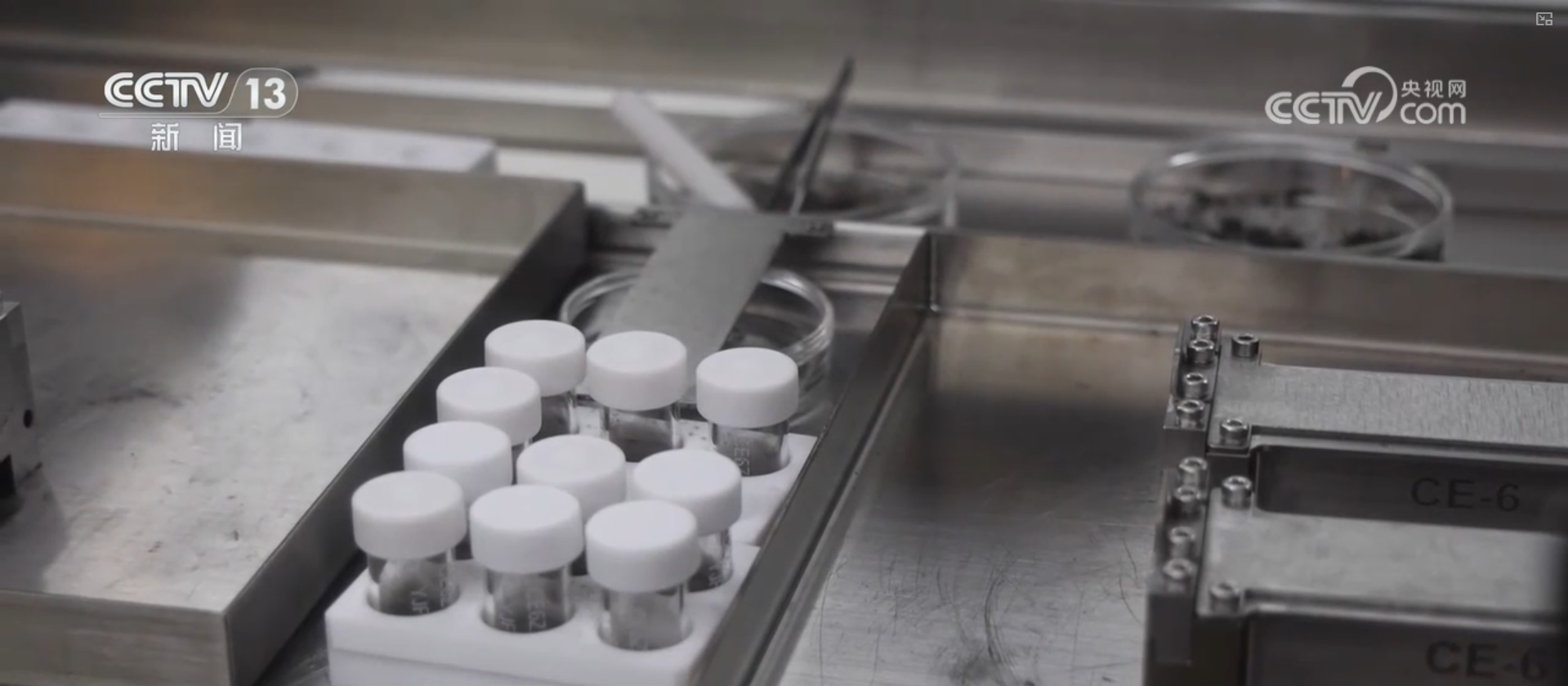
“新发现”重塑月球认知 我国科研团队在月球样品研究中再迎重大突破
Yang Shi Wang· 2026-01-21 02:33
Core Insights - The Chang'e 6 mission has made a significant discovery by identifying naturally formed single-walled carbon nanotubes and graphite carbon from lunar soil samples, indicating more active geological processes on the far side of the Moon than previously thought [1][3]. Group 1: Research Findings - The research utilized various microscopy and spectroscopy techniques to systematically characterize the lunar samples, marking the first identification of graphite carbon and confirming the existence of naturally formed single-walled carbon nanotubes without human intervention [3]. - The carbon structures in the Chang'e 6 samples exhibit more pronounced defect characteristics compared to those from the Chang'e 5 mission, suggesting a history of more intense micrometeorite impacts on the Moon's far side [5]. Group 2: Material Properties and Applications - Single-walled carbon nanotubes are hollow tubular nanomaterials made of a single layer of carbon atoms, known for their high strength, excellent electrical and thermal conductivity, and potential applications in high-performance materials, electronic devices, and energy storage [10]. - Graphite carbon, a crystalline form of carbon, has good electrical conductivity, lubricating properties, and chemical stability, making it widely used in electrode materials, lubricants, and composite materials [12]. Group 3: Future Implications - The discovery of these carbon materials suggests the potential for in-situ resource utilization on the Moon, which could be used for constructing lunar bases, manufacturing lightweight high-strength components, and energy devices [14]. - The ability of nature to synthesize complex nanostructures under extreme conditions may inspire new methods for artificial synthesis of novel carbon materials, showcasing the capabilities of China's research teams in deep space exploration and scientific discovery [14].