
原创新药

Search documents
60万丁肝患者有药了,完全由中国科学家研制
Jing Ji Guan Cha Wang· 2026-01-23 13:34
Core Viewpoint - Huahui Anjian's HH-003 monoclonal antibody has received conditional approval for treating chronic hepatitis D virus (HDV) infection in adults, marking a significant milestone in China's drug innovation and addressing a critical health need for patients previously lacking effective treatments [1][2]. Group 1: Drug Approval and Significance - HH-003 is the first drug for HDV treatment in China and the first monoclonal antibody in the global viral hepatitis field, representing a fully original innovation from China [1][2]. - The approval of HH-003 signifies a breakthrough in addressing chronic HBV and HDV co-infection, which is associated with severe liver-related mortality and progression to liver cancer [2]. Group 2: Research and Development Process - The development of HH-003 was led by a team from Beijing Life Sciences Institute, which conducted the entire process from target discovery to clinical trials, a rare achievement globally [2]. - The clinical research for HH-003 began in 2018, with key data presented at the 2025 American Association for the Study of Liver Diseases meeting, demonstrating significant efficacy and safety compared to control groups [3]. Group 3: Clinical Efficacy - In a phase IIb clinical trial, HH-003 showed a composite endpoint response rate of 44.1%, with a 60% virological suppression rate and a 70% normalization rate of alanine aminotransferase (ALT) after 48 weeks of treatment [3]. - The drug significantly improved liver stiffness in patients with HBV and HDV co-infection, particularly benefiting those with difficult-to-treat liver cirrhosis [3].
华鲁集团新华制药:破解脑疾病密码 为产业创新聚能
Da Zhong Ri Bao· 2026-01-04 09:27
Core Viewpoint - Shandong Xinhua Pharmaceutical Co., Ltd. is accelerating its transformation towards innovation-driven development by leveraging its strong technological foundation and research capabilities, contributing to the treatment of major diseases, particularly neurodegenerative diseases like Alzheimer's [1][3]. Group 1: Company Overview - Xinhua Pharmaceutical, as the first chemical synthesis pharmaceutical enterprise in New China, has become a significant global production and export base for antipyretic and analgesic drugs, with a deep focus on cardiovascular, anti-infection, and nervous system treatment areas [3]. - The company has established 26 products that hold the number one market share or are exclusive, with its products sold globally [3]. Group 2: Research and Development Initiatives - Xinhua Pharmaceutical has led the formation of the "Shandong Provincial Neurodegenerative Drug Research and Innovation Consortium" in collaboration with eight top institutions, targeting global medical challenges such as Alzheimer's disease [3]. - The consortium aims to create a comprehensive platform from disease mechanism research to clinical translation, focusing on the development of the first multi-target small molecule drug aimed at Aβ clearance for Alzheimer's disease [3]. - The drug OAB-14, currently in the clinical trial phase, has completed Phase I trials with good safety results, and Phase II trials are underway, marking a significant step in original drug development [3]. Group 3: Innovation and Talent Development - The company has built a closed-loop ecosystem driven by "talent-led innovation, innovation-driven industry, and industry feedback to education," supported by a high-end talent team led by 10 academicians and over 500 master's and doctoral graduates [4]. - Xinhua Pharmaceutical has established a national industry-education integration community with 110 institutions, training over 10,000 various talents in the past three years [4]. Group 4: Financial and Operational Achievements - Since the 14th Five-Year Plan, Xinhua Pharmaceutical has invested a total of 2 billion yuan in R&D, achieving 129 drug approvals, which is 5.4 times that of the 13th Five-Year Plan period [4]. - The company has set 71 national pharmaceutical industry standards and obtained 236 authorized patents, with the initial formation of three world-class bases for pharmaceutical intermediates, raw materials, and formulations [4]. - Xinhua Pharmaceutical has seen nearly 400 million USD in annual export revenue, with over 30 products passing international high-end certifications, enhancing the "International Xinhua" brand [4].


微芯生物管理层调整,20年老将黎建勋掌舵经营接棒总经理,董事长鲁先平退居战略层
Mei Ri Jing Ji Xin Wen· 2025-12-24 12:53
Core Viewpoint - Micron Biomedical announced the appointment of Li Jianxun as General Manager, while Chairman Lu Xianping will focus on strategic planning and international business expansion, coinciding with the company's new drug sales and profitability turnaround [1][2] Management Changes - Li Jianxun has been with Micron Biomedical for over 20 years and has held various positions, indicating the company's recognition of his management capabilities [2] - Lu Xianping will remain as Chairman and will not affect the company's normal operations despite resigning as General Manager [2][3] Share Buyback and Financial Performance - The company completed a share buyback of 15 million yuan, reaching the plan's upper limit, intended for employee stock ownership plans or equity incentives [1] - For the first three quarters of 2025, Micron Biomedical reported revenue of 674 million yuan, a year-on-year increase of 40.12%, and a net profit of 70.77 million yuan, marking a turnaround from losses [3] Product Sales and Market Expansion - The sales of core products, Xidabena and Xiglitazone, have significantly contributed to revenue growth, with Xiglitazone's sales increasing by 136.13% year-on-year [3][5] - Xidabena has become the only oral innovative drug for DLBCL under national medical insurance, enhancing its market position [5] Strategic Focus - The management restructuring aims to optimize the management hierarchy and enhance focus on R&D and international market opportunities [3] - The company is actively pursuing global development for its innovative drugs and expanding its business team to attract interest from overseas enterprises [5]

微芯生物:新品放量加速,前三季度盈利7077万元
Zheng Quan Shi Bao Wang· 2025-10-30 12:36
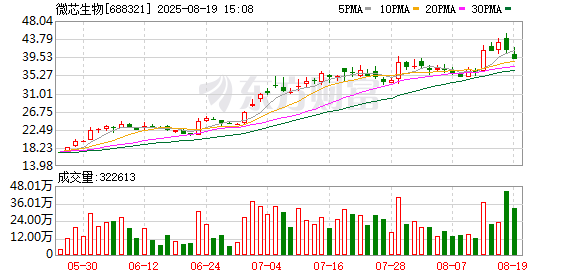
Core Viewpoint - Microchip Biotech (688321.SH) reported a significant increase in revenue and profit for Q3 2025, driven by strong sales of its innovative drugs, particularly Sidabone and Siglitazone [1] Financial Performance - For the first three quarters of 2025, the company achieved a revenue of 674 million yuan, representing a year-on-year growth of 40.12% [1] - In Q3 2025, the company generated a revenue of 268 million yuan, showing a year-on-year increase of 50% and a quarter-on-quarter growth of 10% [1] - The quarterly profit expanded to 41.18 million yuan, with total profit for the first three quarters reaching 70.77 million yuan [1] Product Performance - The growth in revenue is primarily attributed to the sales of Sidabone, which saw a year-on-year revenue increase of 18.76%, and Siglitazone, which experienced a remarkable year-on-year revenue growth of 136.13% [1] - Microchip Biotech has successfully launched two first-in-class innovative drugs, Sidabone (Aipusha®) and Siglitazone (Shuangluoping®), in multiple markets including mainland China, Japan, and Taiwan [1] Industry Recognition - The company has been recognized as a leading biotech firm at the 2025 China Pharmaceutical Decision-Makers Summit and received an award for Siglitazone as an industry-leading innovative drug [1]
倚锋资本朱湃:静待创新药花开成树
Shang Hai Zheng Quan Bao· 2025-10-29 17:57
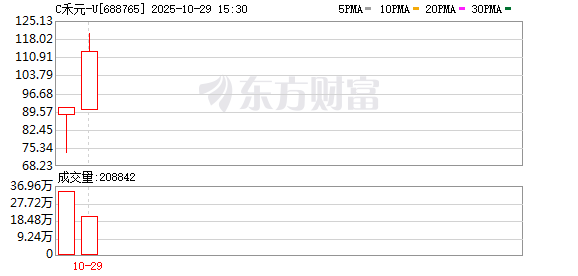
Core Insights - He Yuan Bio became the first project to be approved after the resumption of the fifth set of standards on the Sci-Tech Innovation Board, officially listing on October 28 [1] - The investment firm Yifeng Capital has been supporting He Yuan Bio for over nine years since its investment in 2016, focusing on the development of innovative drugs in the medical health sector [1][2] - Yifeng Capital's CEO, Zhu Pai, emphasizes the importance of value investment and patience in supporting companies through various cycles, particularly in the context of China's pharmaceutical industry [1][6] Company Development - He Yuan Bio has developed a recombinant human serum albumin extraction technology from rice, successfully transitioning from pilot production to commercialization [2][3] - The company faced significant challenges during its industrialization phase, including financial pressure and sales difficulties, which are common in the "valley of death" for tech startups [2][3] - After nine years of support, He Yuan Bio achieved significant milestones, including the approval of its core product in July 2025 and its listing on the Sci-Tech Innovation Board in October [3] Investment Strategy - Yifeng Capital has invested in over a hundred projects, focusing on innovative drugs and high-end medical devices, avoiding investments in heavy asset hospitals and ordinary consumables [4][5] - The firm employs a professional team with extensive experience in the medical field, enabling it to identify trends and assess project value effectively [4] - Zhu Pai outlines three key dimensions for selecting investment projects: technological and clinical progress, innovation in drug formulation, and sustained R&D capabilities [5] Industry Trends - The Chinese pharmaceutical industry is experiencing a surge in collaboration with major global pharmaceutical companies, leading to explosive growth in overseas licensing deals [6] - Chinese pharmaceutical companies are increasingly recognized in the global market, enhancing their competitiveness and profitability through international expansion [6] - Yifeng Capital remains optimistic about the long-term development opportunities in the Chinese pharmaceutical sector, focusing on value investment and supporting companies in their R&D breakthroughs [6]

微芯生物2025年上半年扭亏为盈 营业收入同比增长近35%
Zheng Quan Shi Bao Wang· 2025-08-25 11:52
Core Viewpoint - Microchip Biotech (688321) reported significant growth in revenue and profitability for the first half of 2025, indicating a strong performance in the innovative drug sector [1] Financial Performance - The company achieved a revenue of 407 million yuan, representing a year-on-year increase of 34.56% [1] - Net profit attributable to shareholders was 29.59 million yuan, marking a substantial turnaround from losses [1] - Net cash flow from operating activities reached 62.06 million yuan, an increase of 299.15% compared to the end of the previous year [1] Product Portfolio and Market Presence - Microchip Biotech has two innovative drugs with multiple indications globally marketed, focusing on oncology, metabolic diseases, autoimmune diseases, central nervous system diseases, and antiviral fields [1] - The sales revenue for the drug Sidabamine grew by 15.14%, while the drug Siglitazone saw a remarkable increase of 125.7% [2] - Sidabamine has been included in the national medical insurance catalog for eight consecutive years and has received approvals for various indications in China, Japan, and Taiwan [1] - Siglitazone is also included in the national medical insurance catalog and has shown efficacy and safety in treating type 2 diabetes and fatty liver disease [1][2] Production Capacity and Expansion - The company is actively expanding its production capacity to meet growing market demand, with its subsidiary Chengdu Microchip Pharmaceutical passing GMP compliance checks for the production line of Siglitazone [2] - The construction of the Pengzhou Microchip Innovative Drug Manufacturing Base is progressing as planned, with a new capacity of 1.2 billion tablets for Siglitazone expected [2] Future Growth Catalysts - Future revenue growth is anticipated from the continuous launch of new indications for Sidabamine, increased sales of Siglitazone, and the approval of the drug Xioloni for pancreatic cancer [3] - Key catalysts include the market expansion of Siglitazone, data from Xioloni for pancreatic cancer, and presentation of Sidabamine data at ESMO [3]
微芯生物2025年上半年净利润2959.22万元 药物研发管线丰富
Zheng Quan Ri Bao Wang· 2025-08-25 10:45
Core Insights - Shenzhen Micron Biotechnology Co., Ltd. reported a revenue of 407 million yuan for the first half of 2025, representing a year-on-year growth of 34.56% and a net profit of 29.59 million yuan, marking a turnaround from losses [1] - The growth in performance is primarily attributed to increased sales of its innovative drugs, namely Sidabenan and Siglecatin [1] Company Overview - Micron Biotechnology is a pioneer in China's original innovative drug sector, focusing on creating globally competitive product lines driven by core technologies [1] - The company adheres to the philosophy of "original, safe, effective, and Chinese," aiming to provide revolutionary therapeutic drugs that meet clinical needs [1] - It has established a complete industrial chain from early exploratory discovery to commercialization, offering original innovative drugs to global patients [1] Product Pipeline - The company has developed two innovative drugs that are globally marketed, with multiple indications in areas such as malignant tumors, metabolic diseases, autoimmune diseases, central nervous system diseases, and antiviral treatments [1] - Sidabenan is the world's first subtype-selective histone deacetylase (HDAC) inhibitor, approved for multiple indications in China and Japan, and is undergoing clinical trials for additional indications globally [2] - Siglecatin is the first PPAR full agonist globally, included in the national medical insurance catalog, and shows efficacy in treating type 2 diabetes and fatty liver disease [2] Sales Performance - Sales revenue for Sidabenan and Siglecatin increased by 15.14% and 125.7% year-on-year, respectively [3] - Sidabenan has achieved coverage in major cities and hospitals across the country, while Siglecatin is available in over 5,300 hospitals and 6,700 pharmacies nationwide [3] - The company is accelerating its online channel presence through platforms like JD, Alibaba, and Meituan in response to changes in the pharmaceutical industry [3] Research and Development - Micron Biotechnology has multiple original innovative drug product lines, including several in clinical development and preclinical research stages, covering various disease areas with global first-in-class or differentiated advantages [3]
微芯生物2025创新峰会召开 AI+核心技术整合式平台助力原创新药开发
Zheng Quan Ri Bao· 2025-08-19 07:08
Core Insights - Micron Biotechnology focuses on developing innovative molecular entities for major diseases with global patent protection and unique clinical effects [1][3] - The company has successfully launched two First-in-Class drugs, Sidaben and Siglitazone, targeting oncology and metabolic diseases, while also addressing unmet clinical needs in neurodegenerative and autoimmune diseases [1][2] Drug Development and Technology - The company utilizes an AI-assisted design and chemical genomics integrated technology platform to enhance drug development processes, improving success rates, accelerating research, and reducing costs [1][3] - Micron Biotechnology has a diverse portfolio of treatment options for complex tumor characteristics, including new generation immune-activating antibody-drug conjugates and small molecule PD-L1 inhibitors [2][4] Clinical Research and Market Potential - The company is conducting clinical studies for its drug Westoroni, which selectively inhibits key proteins related to tumor development, in combination with AG therapy for advanced pancreatic ductal adenocarcinoma [2][4] - The global pancreatic cancer mortality rate is significant, with nearly 470,000 deaths annually, highlighting the urgent need for effective treatments [2] Metabolic Disease Focus - Siglitazone, the world's first PPAR pan-agonist, shows promise in treating diabetes and metabolic-associated fatty liver disease, positioning it as a cornerstone drug for metabolic diseases [4] - The company is also developing First-in-Class small molecules for weight management that do not affect appetite, addressing unmet needs in the obesity treatment landscape [4]
微芯生物(688321):中国原创新药先驱者 业绩+突破性创新进入加速兑现期
Xin Lang Cai Jing· 2025-08-17 12:34
Core Viewpoint - The company is experiencing a turning point in performance due to the significant sales growth of innovative drugs, including Sidabenan (Aipush) and Siglitazone (Shuangluoping), which are addressing clinical needs and differentiating in the market [1][2]. Group 1: Financial Performance - The company achieved a revenue of 660 million yuan in 2024, representing a 26% year-on-year increase, driven by the substantial sales growth of Sidabenan and Siglitazone [1]. - The company's expenses amounted to 640 million yuan, with the expense-to-revenue ratio decreasing by 28% [1]. - Operating cash flow turned positive with a net inflow of 76.13 million yuan, marking a 148% year-on-year increase [1]. - As of the end of the period, the company had cash and cash equivalents totaling 470 million yuan and net assets of 1.58 billion yuan [1]. - For the first half of 2025, the company anticipates revenue of approximately 410 million yuan, an increase of 110 million yuan (+35%) compared to the same period last year [1]. Group 2: Product Pipeline and Market Potential - The company has a comprehensive oncology portfolio, with Sidabenan approved for multiple indications, including MYC/BCL2 double-expressing diffuse large B-cell lymphoma (DLBCL), peripheral T-cell lymphoma (PTCL), and breast cancer, with several other indications under research [2]. - Sidabenan is expected to activate cold tumors and has the potential to achieve peak sales exceeding 3 billion yuan, with ongoing Phase III clinical trials for colorectal cancer and melanoma [2]. - Siglitazone is projected to surpass 4 billion yuan in peak sales, as it improves metabolic diseases through various mechanisms, including blood sugar reduction and anti-inflammatory effects [3]. - The company forecasts continued revenue growth driven by the launch of new indications for Sidabenan, increased sales of Siglitazone, and potential approval of the pancreatic cancer treatment, Xioroni [3]. - Revenue projections for 2025-2027 are estimated at 907 million yuan, 1.447 billion yuan, and 2.507 billion yuan, with growth rates of 37.87%, 59.5%, and 73.25% respectively [3].
深圳微芯生物科技股份有限公司2024年年度报告摘要
Shang Hai Zheng Quan Bao· 2025-04-26 03:15
Company Overview - Microchip Biotech is a pioneer in original innovative drugs in China, focusing on providing clinically needed revolutionary mechanism drugs for patients [7][38] - The company has established a complete industrial chain layout from early exploratory discovery to commercialization, offering original innovative drugs globally [38] Financial Performance - For the fiscal year 2024, the company reported a net profit attributable to shareholders of -114.57 million yuan, with the parent company achieving a net profit of -88.42 million yuan [5] - The board decided not to distribute cash dividends or issue bonus shares for the fiscal year 2024, despite having positive undistributed profits [5] Product Pipeline - The company has developed two innovative drugs, with multiple indications approved for sale globally, including in the fields of malignant tumors, metabolic diseases, autoimmune diseases, central nervous system diseases, and antiviral treatments [7][39] - Key products include: - **Sida Benamide (西达本胺)**: A first-in-class HDAC inhibitor with multiple indications approved in China and Japan, including for peripheral T-cell lymphoma and breast cancer [8][9][39] - **Siglitazone (西格列他钠)**: A first-in-class PPAR agonist approved for type 2 diabetes and recently for combination therapy with metformin [12][13][40] Research and Development - The company employs a team of experienced scientists to drive drug development, focusing on understanding disease mechanisms and optimizing drug design [22] - The R&D pipeline includes several promising candidates targeting various cancers and metabolic diseases, with ongoing clinical trials demonstrating significant efficacy [17][21][40] Industry Context - The biopharmaceutical industry in China is rapidly evolving, with increasing participation in global biotech innovation and a focus on meeting domestic healthcare needs [26][30] - Despite a low-risk appetite in global financing, Chinese companies are becoming significant players in licensing transactions, with a notable increase in outbound licensing activities [29][41] - The market for innovative drugs in China is projected to grow significantly, with a forecasted market size of approximately $197 billion by 2025 [30]