
原材料成本上升

Search documents
PC硬件全线告急!电源与散热器也扛不住了?装机成本再增
猿大侠· 2026-01-16 04:11
Core Viewpoint - The budget threshold for assembling a computer is expected to rise significantly in the coming months due to price increases in various components, including power supplies and coolers, which were previously considered stable [1][14]. Price Increases in Components - Recent market dynamics indicate that power supplies and coolers are about to experience a significant price surge, following previous increases in memory, hard drives, and graphics cards [1][2]. - A notice from Guangzhou Xinhongzheng Electronics Technology has circulated, stating that core raw material prices for power supplies and coolers have risen sharply due to global market influences [3][5]. Raw Material Price Trends - The core raw materials for power supplies and coolers include copper, silver, tin, and aluminum, all of which have seen substantial price increases since 2025 [5]. - Copper prices have led the surge with an annual increase exceeding 37%, while aluminum prices surpassed 22,000 yuan per ton by the end of 2025, marking the highest level since 2022 [6]. Impact on Various Industries - The rising prices of metal raw materials have been transmitted to multiple industries closely related to daily life, with nearly 20 lighting companies recently announcing price hikes attributed to the soaring costs of base metals like gold, silver, and copper [9]. - Electronic component manufacturers, such as Sunlord Electronics and Fenghua Advanced Technology, have also announced price increases for certain products due to rising raw material costs [9]. Specific Price Adjustments - A price adjustment notice from Delixi Electric indicates a range of price increases for various product categories, with adjustments ranging from 3% to 30% depending on the product type [11]. - The expected cost increases for power supplies are projected to be between 6% and 10%, while coolers may see increases of 6% to 8% [16]. Consumer Implications - The final retail prices may rise more than the cost increases due to the situation with distributors, potentially leading to shortages or the need for consumers to pay higher prices [17][19]. - Starting February 1, all promotional activities will be canceled, and prices may increase further, suggesting that consumers should consider purchasing now to avoid higher costs later [20].

股价跌跌不休,“瓜子大王”一季度净利跌超六成,公司回应
2 1 Shi Ji Jing Ji Bao Dao· 2025-04-24 09:40
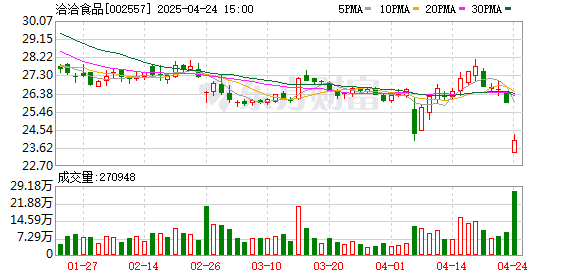
Group 1 - The core viewpoint of the article highlights the contrasting performance of Qiaqia Foods, which reported a revenue of 7.131 billion yuan and a net profit of 849 million yuan for 2024, showing year-on-year growth of 4.79% and 5.82% respectively, but faced a significant decline in Q1 2025 with a revenue drop of 13.76% to 1.571 billion yuan and a net profit decrease of 67.88% to 77.24 million yuan [2] - The decline in Q1 2025 performance is attributed to the impact of the Spring Festival timing and rising raw material costs, particularly due to adverse weather conditions in Inner Mongolia in September of the previous year [2] - The early timing of the 2025 Spring Festival led to a concentration of orders being shipped in December 2024, resulting in a significant year-on-year decline for Q1 2025 compared to the same period in 2024 [2] Group 2 - In terms of raw material costs, Inner Mongolia, a major sunflower seed production area, experienced severe flooding in August 2024, which affected the supply chain [3] - In 2023, the sunflower planting area in Bayannur City exceeded 4.2 million mu, with a total output of 938,500 tons, accounting for 43.5% of the national total [3] - Since 2025, Qiaqia Foods' stock price has been on a downward trend, closing at 23.99 yuan on April 24, with a daily drop of 7.37% and a year-to-date decline of over 16% [3] - The company has implemented measures to stabilize its stock price, including announcing a mid-term dividend and a buyback plan, with the combined dividend and buyback for 2024 exceeding 90% of net profit [3]

子公司计提近4000万元商誉,山河药辅去年净利润下滑
Bei Ke Cai Jing· 2025-04-24 00:47
Core Viewpoint - The company reported a revenue of 883 million yuan in 2024, a year-on-year increase of 5.16%, but the net profit attributable to shareholders decreased by 26.07% due to goodwill impairment from its subsidiary [1][2]. Group 1: Financial Performance - In 2024, the company achieved a revenue of 883 million yuan, marking a 5.16% increase year-on-year, while the net profit attributable to shareholders was 119 million yuan, down 26.07% [1][2]. - The first quarter of 2024 saw a revenue increase of 4.28% year-on-year, but the net profit attributable to shareholders declined by 5.3% [1]. - The company’s revenue growth rate in 2024 was the lowest in ten years, with a year-on-year increase of only 5.16% [5]. Group 2: Subsidiary Performance - The subsidiary Qufu Tianli faced challenges due to policy factors like drug procurement and a weakened product competitiveness, leading to declines in both revenue and profit [2]. - The company recognized a goodwill impairment of 39.12 million yuan related to the subsidiary, significantly impacting the overall financial performance [2]. Group 3: Product Performance - Revenue from cellulose and its derivatives grew by 22.19% year-on-year, reaching 474 million yuan, becoming a key driver for overall revenue [3]. - Other product categories, including starch and its derivatives, inorganic salts, and rental income, experienced declines in revenue, with decreases of 9.24%, 7.47%, and 5.6% respectively [3]. Group 4: Market Dynamics - The company operates in a competitive landscape where both foreign and domestic manufacturers coexist, with foreign firms dominating the high-end market due to advanced technology and patents [6]. - The domestic market for pharmaceutical excipients is rapidly evolving, which has pressured local companies like the company to enhance their competitiveness [6]. Group 5: Strategic Initiatives - The company is focusing on improving product quality and service to enhance pricing power, while also managing raw material costs through strategic procurement and inventory management [4]. - The company plans to continue its efforts in import substitution, aiming to align the quality of domestic products with imported ones [6][7]. - In 2024, the company invested 40.95 million yuan in R&D, with plans to register 3-4 new products with the National Medical Products Administration by 2025 [7].
