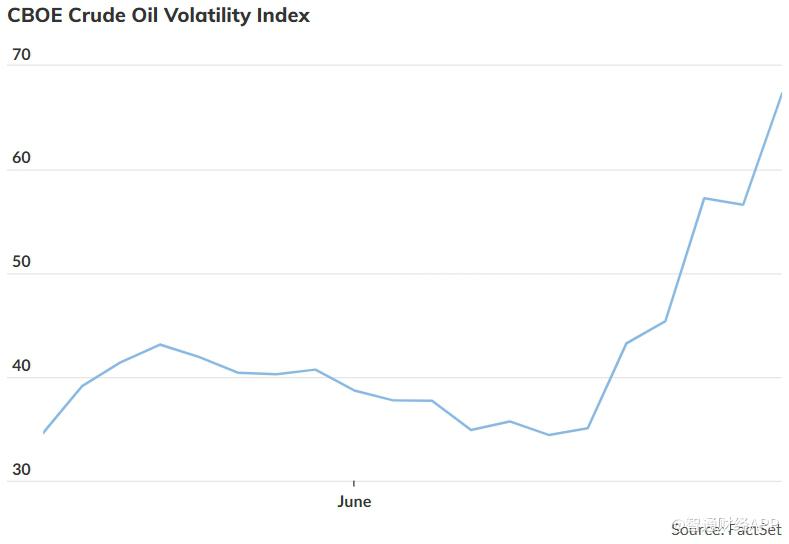
原油市场波动率

Search documents
原油市场风向生变!伊朗风险引爆“上行保险”抢购潮,布油看涨期权交易量创纪录
Zhi Tong Cai Jing· 2026-01-13 01:31
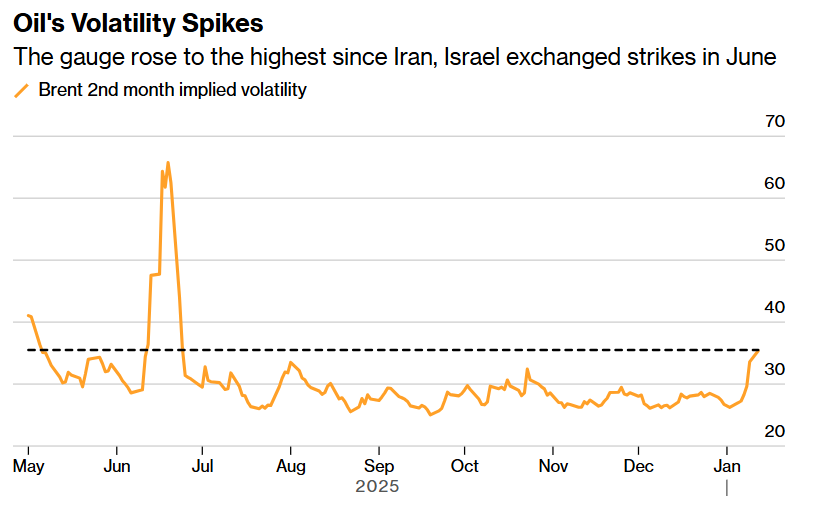
Core Viewpoint - The oil futures market is experiencing unprecedented demand for hedging tools due to escalating concerns over domestic protests in Iran and potential military actions by the U.S., leading to a surge in call option trading volumes and implied volatility [1][4][5]. Group 1: Market Reactions - Call option trading volumes for Brent crude oil surged to a record high, with over 556,000 contracts traded in a single day, indicating a strong demand for upward price protection [1][4]. - The implied volatility and premiums for call options have risen to their highest levels since June of the previous year, reflecting increased market anxiety over potential supply disruptions [1][4]. - Brent crude oil prices have increased by over 6% since last Wednesday, driven by fears of supply threats from Iran amid ongoing protests and potential U.S. military actions [4][7]. Group 2: Geopolitical Factors - The Iranian government claims to have quelled protests, but unrest appears to persist, raising concerns about the stability of oil supply [5][7]. - U.S. President Trump is reportedly inclined to initiate a new round of strikes against Iran, further complicating the geopolitical landscape and impacting oil prices [5][7]. - The potential for a 25% tariff on goods from countries doing business with Iran has also contributed to rising oil prices, as it may affect major buyers like China [7][8]. Group 3: Supply Dynamics - Iran's oil exports, which account for approximately 2% of global demand, face significant risks of interruption, alleviating previous concerns about a global oversupply of oil [7][8]. - A major Iranian export terminal has seen a reduction in oil inventory by about 20% since the beginning of the year, suggesting either a strategic move to avoid losses or damage to energy infrastructure due to protests [10].

中东局势引爆市场担忧 CBOE原油波动率指数创三年新高
智通财经网· 2025-06-17 22:24
Core Viewpoint - The recent escalation of conflict between Israel and Iran has led to significant volatility in global oil prices, with the CBOE Crude Oil ETF Volatility Index (OVX) becoming a key indicator of market uncertainty [1][4]. Group 1: Market Volatility - The OVX index surged by 26% to 71.56, marking its highest closing level since March 2022, and has increased by 104% over the past five trading days [1]. - Historical data shows that the OVX has reacted sharply to geopolitical events, such as an 11.7% increase following the Hamas attack on Israel on October 7, 2023 [4]. Group 2: Oil Price Movements - WTI crude oil for July delivery rose by 4.3% to $74.84 per barrel, reaching the highest closing price for the front-month contract this year, while Brent crude increased by 4.4% to $76.45 per barrel, the highest since February [5]. - Concerns over potential disruptions to global oil supply are central to the market's volatility, with Iran currently exporting approximately 1.5 million barrels of oil per day [5]. Group 3: Market Positioning - Data from the Commodity Futures Trading Commission (CFTC) indicates that speculative long positions in crude oil are consistent with the average levels of the past three years, suggesting room for further bullish sentiment [7]. - The number of open contracts for WTI crude futures has significantly decreased, indicating that short positions are being covered [7]. Group 4: Future Outlook - If the conflict remains confined to Israel and Iran, the current price increases may have already priced in the primary risks, especially considering the spare capacity of Saudi Arabia and the UAE [7]. - However, if the situation escalates into a broader regional conflict affecting critical infrastructure, there could be significant upward pressure on oil prices [7].