
原油供应中断

Search documents
原油供应可能中断担忧加剧,韩国多地现垃圾袋“抢购潮”
中国能源报· 2026-03-27 04:33
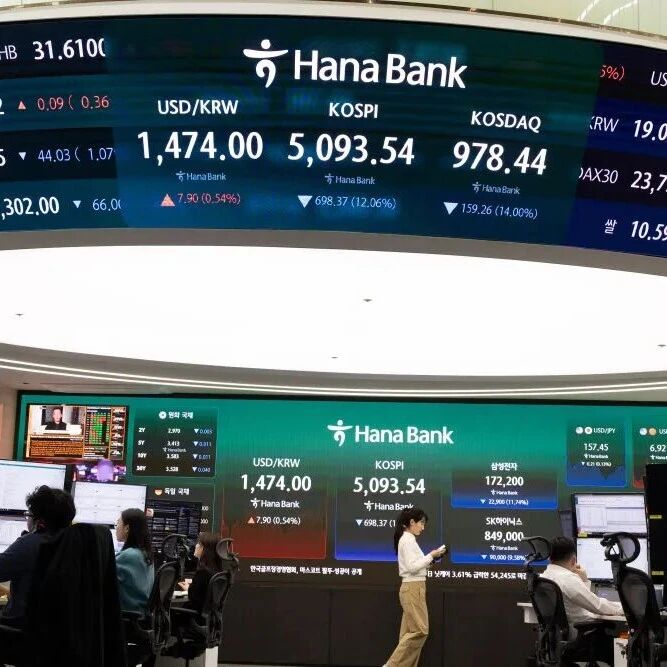
Core Viewpoint - The ongoing tensions in the Middle East have led to a surge in demand for garbage bags in South Korea, prompting concerns over the supply of polyethylene, a key raw material derived from crude oil [1][2][3]. Group 1: Supply and Demand Dynamics - South Korean citizens are experiencing a "panic buying" trend for garbage bags due to fears of a potential shortage of polyethylene, which is processed from naphtha extracted from crude oil [2][3]. - The South Korean government has stated that the current inventory of garbage bags is sufficient, with an average supply that can last over three months across 228 local governments, and some having reserves that can last more than six months [2][3]. - The government plans to classify garbage bags as a "core controlled item" and will form a joint task force with local governments to monitor supply and demand [3]. Group 2: Production Capacity and Future Outlook - The production capacity for recycled materials can produce approximately 1.83 billion garbage bags, exceeding the 1.78 billion bags sold nationwide last year, indicating that production can continue for over a year even if raw material supply is completely interrupted [3]. - Currently, about 55% of South Korea's naphtha demand is produced domestically, while 45% is imported, raising concerns for companies heavily reliant on imported naphtha due to potential supply disruptions from the Middle East [3]. - The South Korean government announced a restriction on naphtha exports starting from the 27th, aiming to safeguard domestic supply amid the ongoing geopolitical tensions [3].

原油评论:供应中断持续时间延长将推高油价-Oil Comment_ Longer Disruption Means Higher Prices
2026-03-12 09:08
Summary of Key Points from the Conference Call Industry Overview - The report focuses on the oil industry, specifically the impact of disruptions in the Strait of Hormuz on oil prices and supply dynamics. Core Insights and Arguments - **Longer Disruption Assumption**: The price forecast has been upgraded due to an assumption of 21 days of low oil flows from the Strait of Hormuz at 10% of normal levels, followed by a 30-day gradual recovery [2][5] - **Estimated Impact on Exports**: The estimated hit to Persian Gulf oil exports is 16.2 million barrels per day (mb/d) based on a 4-day moving average [7] - **Price Forecasts**: The forecast for Brent and WTI prices in Q4 2026 has been adjusted to $71 and $67 respectively, up from $66 and $62 [10][24] - **Risk Premium**: A large risk premium is expected due to uncertainty surrounding the duration of the supply shock, which is the largest on record [12][28] - **Policy Response**: Global policy measures, including Strategic Petroleum Reserve (SPR) releases, are estimated to reduce the impact on global oil inventories by nearly 50%, from 617 million barrels (mb) to 332 mb [18] - **Price Scenarios**: In a 30-day disruption scenario, Brent and WTI prices could average $76 and $72, respectively, while in a 60-day scenario, prices could rise to $93 and $89 [3][22] Additional Important Insights - **Two-Sided Risks**: The risks to the price forecast are two-sided but skewed to the upside, with potential for prices to exceed the 2008 peak if disruptions persist [28] - **Market Dynamics**: The market may require demand destruction to hedge against falling inventories, which could temporarily lift prices above $100 during disruptions [22] - **Geopolitical Factors**: The U.S. Administration's military actions could significantly influence the risk premium in oil prices, with a potential sharp reduction if military actions cease [28] This summary encapsulates the critical insights and forecasts regarding the oil industry as discussed in the conference call, highlighting the implications of geopolitical disruptions on oil prices and supply.

地缘释放缓和信号,烯烃大幅回落
Hua Tai Qi Huo· 2026-03-11 05:04
Report Industry Investment Rating - Not provided in the content Core Viewpoints - Trump signaled that "the war will end soon", and the G7 group discussed releasing strategic reserves, causing market sentiment to cool rapidly, leading to a significant correction in international oil prices and a collective pullback in chemical sector varieties. However, the blockage of the Strait of Hormuz remains unresolved, and the risk of raw material supply interruption still exists. Supply - side contraction expectations and cost - side support remain. If the Middle East situation does not cool down, more domestic olefin enterprises may reduce their loads [2] - Currently, the supply of raw material propane for propylene is tight, and the losses of PDH device profits are deepening, increasing the expectation of PDH shutdown. The demand from downstream industries is picking up. In the short term, with the Strait of Hormuz not clearly unobstructed, cost increases, and a tight supply - demand pattern, there is a risk of market fluctuations [2] Summary by Directory 1. Propylene Basis Structure - The closing price of the propylene main contract is 7473 yuan/ton (- 225), the East China spot price of propylene is 8875 yuan/ton (- 825), the North China spot price is 8800 yuan/ton (- 950), the East China basis of propylene is 1402 yuan/ton (- 600), and the Shandong basis is 1327 yuan/ton (- 725) [1] 2. Propylene Production Profit and Capacity Utilization - Propylene capacity utilization is 73% (+ 1%), the difference between propylene CFR in China and naphtha CFR in Japan is 229 US dollars/ton (+ 20), the difference between propylene CFR and 1.2 propane CFR is 98 US dollars/ton (+ 49), and the import profit is - 363 yuan/ton (+ 46) [1] 3. Propylene Downstream Profit and Capacity Utilization - PP powder capacity utilization is 27% (+ 3.67%), production profit is - 550 yuan/ton (- 350); propylene oxide capacity utilization is 80% (+ 0%), production profit is - 580 yuan/ton (- 25); n - butanol capacity utilization is 86% (+ 1%), production profit is 1732 yuan/ton (+ 139); octanol capacity utilization is 95% (- 2%), production profit is 656 yuan/ton (+ 684); acrylic acid capacity utilization is 79% (- 1%), production profit is 4199 yuan/ton (+ 586); acrylonitrile capacity utilization is 75% (- 1%), production profit is - 86 yuan/ton (+ 924); phenol - acetone capacity utilization is 88% (+ 0%), production profit is 2500 yuan/ton (+ 1790) [1] 4. Propylene Inventory - The in - plant inventory of propylene is 44640 tons (- 330) [1] Strategy - Unilateral: Cautiously go long on hedging at low prices - Inter - period: None - Inter - variety: None [3]
原油成品油早报-20260310
Yong An Qi Huo· 2026-03-10 06:50
Report Summary 1. Industry Investment Rating - No investment rating provided in the report. 2. Core View - This week, the conflict between the US and Iran has significantly escalated, and the situation has deteriorated more rapidly than market expectations, having a substantial impact on crude oil supply. The key issue is the long - term interruption of passage through the Strait of Hormuz, leading to preventive production cuts in Middle Eastern oil fields, with an unpredictable duration. If the current situation persists for two weeks, the scope of oil production interruptions in Gulf countries will expand significantly. If the passage through the Strait of Hormuz does not improve next week, the oil price will break through the upper limit, with the target price rising to $100 - $120 per barrel [5]. 3. Summary by Directory a. Oil Price Data - From March 2 to March 6, 2026, WTI crude oil rose from $71.23 to $90.90, an increase of $9.89; BRENT crude oil rose from $77.74 to $92.69, an increase of $7.28; DUBAI crude oil rose from $76.53 to $99.14, an increase of $9.83. Other oil - related products also showed varying degrees of price changes [2]. b. Daily News - Israeli Defense Minister Katz claimed that the Israeli military killed Iranian Supreme Leader's military secretary Abu - Kasim Babaiyan, but the Iranian side has not confirmed this [2]. - The US has cancelled the navigation warning for commercial ships to avoid the Strait of Hormuz and the Persian Gulf, and another maritime warning against Iran has expired [3]. - US media reported that Trump's options for striking Iran include sending special forces to destroy Iranian nuclear facilities [3]. - Iraq's current daily oil production is about 1.7 - 1.8 million barrels, down from about 4.3 million barrels per day before the conflict [3]. - The Israeli Energy Minister said they might bomb Iranian refineries and power stations [3]. - The Iranian Revolutionary Guard and the Iranian military said they would expand the scale and intensity of retaliatory attacks in the next few hours and days [3]. - The US government has discussed the possibility of seizing Iran's strategic oil export terminal, Kharg Island, which accounts for about 90% of Iran's crude oil exports [4]. - The New York Times reported that Iran still retains 50% of its missile program's strength, and Iran is prepared for at least six more months of war [4]. - Trump said there is currently no plan to deploy ground troops in Iran but might increase the military budget to $1.5 trillion and consider expanding the scope of strikes [5]. - The Israeli Defense Forces have attacked Iranian oil infrastructure, launching air strikes on 30 Iranian oil tanks [5]. - Kuwait Petroleum Corporation has implemented preventive measures, reducing crude oil production and refining scale due to Iranian attacks [5]. - Saudi Arabia has warned Iran that it will take retaliatory measures if attacked again [5]. - The Iranian Revolutionary Guard claimed to have hit a Marshall Islands - flagged oil tanker in the Strait of Hormuz [5]. c. Inventory - In the week of February 27, US crude oil exports decreased by 316,000 barrels per day to 3.997 million barrels per day [5]. - US domestic crude oil production decreased by 600 barrels to 13.696 million barrels per day [5]. - Commercial crude oil inventories (excluding strategic reserves) increased by 3.475 million barrels to 439 million barrels, a 0.8% increase [5]. - The four - week average supply of US crude oil products was 21.02 million barrels per day, a 4.24% increase compared to the same period last year [5]. - The US Strategic Petroleum Reserve (SPR) inventory remained unchanged at 415.4 million barrels [5]. - US imports of commercial crude oil (excluding strategic reserves) were 6.324 million barrels per day, a decrease of 335,000 barrels per day compared to the previous week [5].
燃油期货日报-20260305
Guo Jin Qi Huo· 2026-03-05 01:13
1. Report Industry Investment Rating No relevant content provided. 2. Core View of the Report - The fuel oil futures price is expected to maintain a strong and volatile pattern in the short term. Technically, the price breaks through the key resistance level and opens up upward space, with 3,186 yuan/ton becoming a new important support level. Fundamentally, the Middle - East geopolitical situation remains the main factor affecting the price. If the conflict further escalates, it may push the price higher [7]. 3. Summary by Relevant Catalogs 3.1 Futures Market - Contract行情 - On March 2, the main fuel oil contract (FU.SHF) on the Shanghai Futures Exchange showed a strong upward trend. It opened at 3,024 yuan/ton, with the lowest price at 3,024 yuan/ton and the highest at 3,186 yuan/ton, closing at the daily limit of 3,186 yuan/ton, up 9% from the previous trading day. The trading volume significantly increased to 1,046,282 lots, and the open interest was 300,245 lots [2]. 3.2 Influencing Factors - Middle - East geopolitical conflict escalates: The U.S. military and Israel launched large - scale air strikes on Iran, and Iran announced a ban on any ships passing through the Strait of Hormuz, leading to a halt in international tanker navigation and triggering market concerns about crude oil supply disruptions [4][5]. - International oil prices rise sharply: Affected by the geopolitical situation, ICE Brent crude oil opened with a 13% surge to $82 per barrel, and WTI crude oil futures rose more than 10% to $75 per barrel, providing strong cost support for domestic fuel oil prices [5]. - Thailand suspends fuel oil exports: Thailand plans to suspend fuel oil exports due to concerns about supply disruptions and sets up an energy emergency monitoring center, intensifying the market's expectation of global fuel oil supply shortages [5]. - S&P Global Platts suspends the price assessment of Middle - East refined oil: Due to the obstruction of transportation in the Strait of Hormuz, S&P Global Platts suspends the price assessment of Middle - East refined oil transported through the strait, increasing market uncertainty [5]. 3.3 Market Outlook and Key Points - The fuel oil futures price is expected to maintain a strong and volatile pattern in the short term. Technically, the price breaks through the key resistance level and opens up upward space, with 3,186 yuan/ton becoming a new important support level. Fundamentally, the Middle - East geopolitical situation remains the main factor affecting the price. If the conflict further escalates, it may push the price higher [7].
地缘战火“点燃”油价
Guo Tou Qi Huo· 2026-03-03 13:39
Report Industry Investment Rating - Not provided Core Viewpoint - The core logic of the crude oil market revolves around the supply hard gap caused by the transportation bottleneck triggered by the geopolitical situation. Geopolitical risks will continuously support crude oil prices until the military confrontation between the US, Israel and Iran ends and the Strait of Hormuz resumes normal navigation [7]. Summary by Relevant Catalogs Oil Price Surge and Geopolitical Trigger - On Monday, oil futures opened higher. The Brent crude oil price soared nearly 13% to $82 per barrel and then had an 8% increase. The domestic SC crude oil futures closed at the daily limit. The direct cause was the military conflict between the US, Israel and Iran over the weekend after the Israel - Iran conflict in June 2025 [3]. Impact of Strait of Hormuz Closure - Iran's announcement to ban ships from passing through the Strait of Hormuz has led to a sharp rise in market panic about the interruption of crude oil supply from Middle - Eastern oil - producing countries. The Strait of Hormuz, which accounts for over a quarter of the world's seaborne oil trade, has seen shipping come to a halt, with about 2000000 barrels per day of crude oil and condensate passing through it in 2025 [4]. Supply Dilemma - Iran has rich oil and gas resources. In 2025, its crude oil production was about 3300000 barrels per day, accounting for 3% of global supply, and exports were 1500000 - 1800000 barrels per day, accounting for 1.4% - 1.6%. Although Iran's export share is not high, its ability to block the Strait of Hormuz is crucial. OPEC +'s planned production increase and OPEC's idle capacity are ineffective due to the blocked transportation channels [5]. Future Oil Price Trends - If the Strait of Hormuz is only "temporarily interrupted" (a few days to a week), the Brent oil price will fluctuate in the range of $76 - $82 per barrel. If the blockade is extended, the market logic will shift from "actual interruption" to "deteriorating expectations", and the Brent oil price may break through $90 per barrel or higher [7].
中东战争爆发,能化溢价增强
Bao Cheng Qi Huo· 2026-03-02 03:22
Report Industry Investment Rating - Not provided in the report Core Viewpoint - In late February 2026, a full - scale military conflict between the US and Iran broke out. Iran closed the Strait of Hormuz, and the Houthi armed forces in Yemen blocked the Bab el - Mandeb Strait. This led to a double impact of physical energy supply interruption and global shipping system paralysis. The conflict may expand the supply gap of crude oil, causing oil prices to rise beyond expectations. High oil prices will push up global inflation, causing central banks to tighten monetary policies and suppressing demand for crude oil and energy - chemical products. In the short term, geopolitical risks will keep the prices of crude oil and high - elasticity energy - chemical products high. In the medium and long term, the market will gradually return to the supply - demand fundamentals, but prices are unlikely to return to pre - conflict lows [4][5][6]. Summary by Directory 1. Introduction: US - Iran War and Closure of the Strait of Hormuz - In late February 2026, the US - Iran military conflict fully erupted. Iran closed the Strait of Hormuz, and the Houthi armed forces blocked the Bab el - Mandeb Strait. These two key global energy transportation channels were interrupted, causing a double impact on energy supply and the shipping system. The report analyzes the comprehensive impact of this extreme geopolitical event on crude oil and energy - chemical commodities from five dimensions [9]. 2. Supply Shortage and Increased Premiums of Domestic and Foreign Crude Oil - With the rapid increase in geopolitical risks in the Middle East and the closure of the two straits, the energy supply shortage led to a sharp rise in the prices of domestic crude oil futures and downstream energy - chemical commodity futures on Monday. The domestic crude oil 2605 contract opened at the daily limit, and most other energy - chemical commodity futures also had large increases [10]. 3. Geopolitical Conflict Background and Strategic Status of the Two Straits - **US - Iran Conflict and Strait Blockade Process**: The US - Iran conflict originated from the breakdown of nuclear negotiations. On February 28, 2026, the US and Israel launched large - scale air strikes on Iran's core military and political targets. Iran's Islamic Revolutionary Guard Corps announced a full - scale ban on ships passing through the Strait of Hormuz, and the Houthi armed forces blocked the Bab el - Mandeb Strait. The core contradictions of the conflict focus on regional dominance, nuclear issues, and energy interests [22]. - **Strait of Hormuz**: It is the only maritime passage for crude oil exports from Persian Gulf oil - producing countries, with a daily crude oil transportation volume of 21 million barrels, accounting for 30% of global seaborne crude oil trade and 25% of global crude oil consumption. It is also crucial for Asian economies, such as China, Japan, and South Korea [23]. - **Bab el - Mandeb Strait**: It is a key node in the Mediterranean - Red Sea - Indian Ocean route, handling 12% of global seaborne trade volume. Its blockade forces the adjustment of the Asia - Europe route, increasing shipping costs and causing a re - allocation of global shipping capacity. It forms a "double - lock effect" with the Strait of Hormuz, paralyzing the global energy transportation network [24]. 4. Core Impact on the Crude Oil Market: Triple Impact on Supply, Price, and Shipping - **Supply Side**: The blockade of the two straits causes a substantial supply interruption in the global crude oil market. The daily supply gap is about 18 - 20 million barrels, accounting for about 20% of global crude oil demand. Land - based pipeline alternatives are limited, and OPEC +'s idle capacity cannot be quickly released to alleviate the supply shortage [27][28]. - **Price Side**: The impact on crude oil prices is a triple resonance of geopolitical risk premium, supply gap, and market panic. In different scenarios, oil prices show significant differences. In the benchmark scenario, Brent crude may reach $120 - 150 per barrel; in the extreme scenario, it may exceed $150 per barrel; in the缓和 scenario, it may fall to $80 - 100 per barrel but not return to pre - conflict lows [30]. - **Shipping Side**: The blockade leads to a sharp increase in freight rates and insurance costs, and a re - configuration of shipping capacity. The daily rent of VLCCs has increased by over 130%, and the war - risk insurance rate has soared by 300% - 500%. The global shipping capacity is re - allocated, affecting non - energy commodity transportation [32]. 5. Energy - Chemical Commodity Industry Chain Conduction: Cost - Driven with Significant Variety Differentiation - **High - Elasticity Varieties (Fuel Oil, Asphalt)**: The cost of crude oil accounts for over 75% of their production costs. Fuel oil prices will rise sharply due to cost resonance and supply shocks, and asphalt will follow crude oil prices with a slightly lower increase [34][35]. - **Medium - Elasticity Varieties (Methanol, Polyolefins, PX/PTA)**: The crude oil cost accounts for 50% - 75%. They are affected by cost conduction and supply shortages. Methanol prices are expected to rise by 20% - 30%, polyolefins will follow crude oil prices, PX will have a large increase, and PTA's increase will be limited [36][37]. - **Low - Elasticity Varieties (Pure Benzene, Styrene, Ethylene Glycol)**: The crude oil cost accounts for less than 50%, and they have diversified raw material paths. Their prices will follow crude oil with limited increases [38][39]. 6. Regional Market Impact: Specificity and Response of the Chinese Energy - Chemical Market - **Crude Oil Import**: China's diversified import sources and strategic oil reserves can alleviate the impact of supply shortages to some extent [40]. - **Energy - Chemical Production**: China's coal - based energy - chemical products have cost advantages, reducing the industry's dependence on crude oil and suppressing excessive price increases [40]. - **Market Trend**: The domestic energy - chemical futures market shows that the domestic market is stronger than the international market, and near - term contracts have higher increases than far - term contracts [41]. 7. Conclusion - The US - Iran conflict may further expand the supply gap of crude oil, causing oil prices to rise beyond expectations. High oil prices will suppress demand, and long - term strait blockades may lead to industrial chain disruptions. In the short term, geopolitical risks will keep prices high, and in the medium and long term, prices will gradually return to the supply - demand fundamentals but not reach pre - conflict lows [42].
沙特或近五个月来首次上调4月对亚原油官价,阿拉伯轻质原油预计上涨约1美元/桶
Sou Hu Cai Jing· 2026-02-27 07:55
Group 1 - Saudi Arabia is expected to raise the official selling price of crude oil to Asia for April, marking the first price increase in five months, with Arab Light crude oil's price anticipated to rise by approximately $1 per barrel, returning to levels seen in December of the previous year [1] - The price adjustment is driven by two main factors: increased Indian demand for Middle Eastern crude to replace some Russian supply due to disruptions in Russian energy infrastructure, and escalating military tensions between the US and Iran, raising concerns over potential oil supply interruptions [1] - Saudi Arabia is preparing for possible supply disruptions by increasing oil production and export levels, with data showing that the average daily crude oil transport volume reached 7.3 million barrels in the first 24 days of February, the highest level since April 2023, and up by over 400,000 barrels from January [1] Group 2 - As a key supplier in the global oil market, Saudi Arabia's pricing decisions directly impact the procurement costs for Asian refiners, and the upcoming price increase indicates a shift in Saudi Arabia's outlook on Asian oil demand [2] - The OPEC+ meeting scheduled for this Sunday will further clarify the production policies for April, providing more insight into the arrangements of oil-producing countries [2]
波兰总理呼吁在伊朗公民尽快离开 “福特”号航母正赶往中东 俄罗斯、伊朗联合军演 国际油价上涨 欧股跌幅扩大
Mei Ri Jing Ji Xin Wen· 2026-02-19 14:08
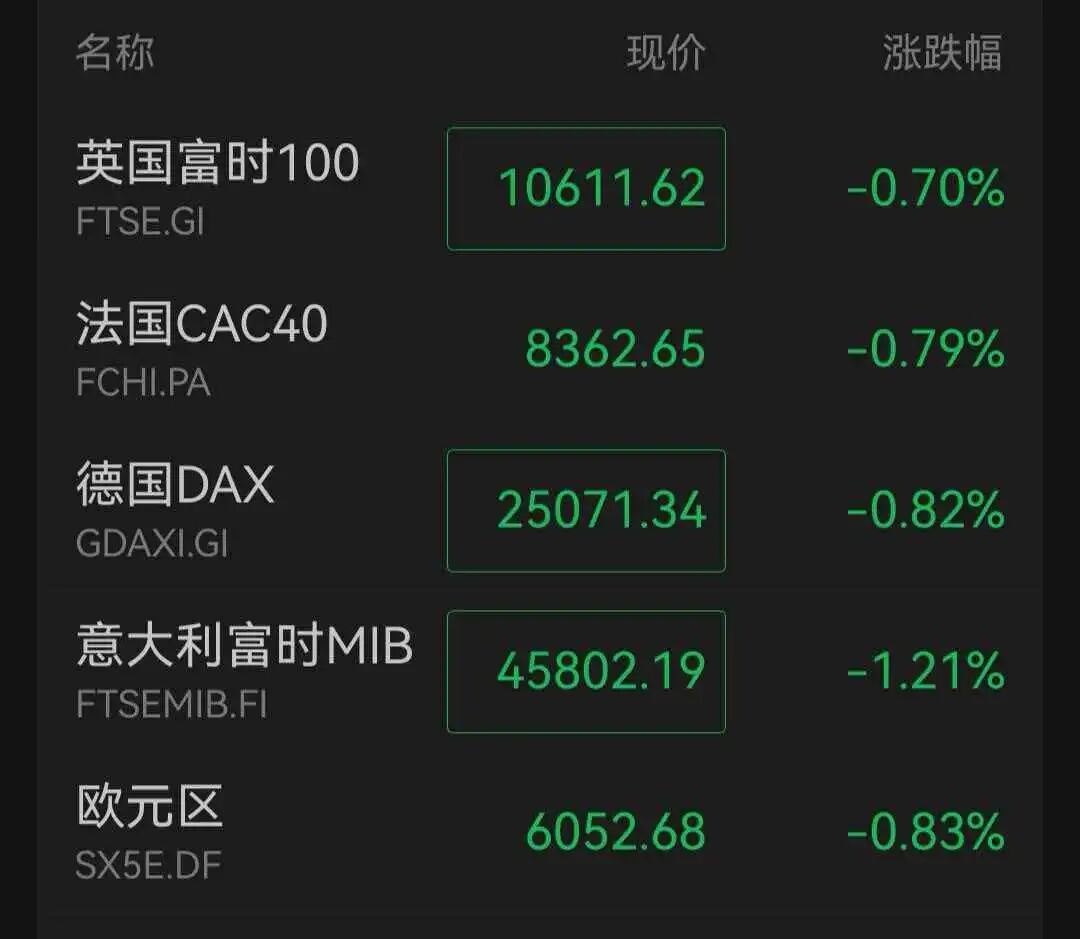
Market Overview - European stock markets experienced declines, with the UK FTSE 100 down by 0.7%, France's CAC 40 down by 0.79%, Germany's DAX 30 down by 0.82%, and Italy's FTSE MIB down by 1.21% [1][2] - In contrast, crude oil prices saw an increase, with WTI crude rising by 1.15% to $65.80 and Brent crude increasing by 1.08% to $71.11 [2] Geopolitical Developments - Poland's Prime Minister Tusk urged Polish citizens in Iran to leave the country and advised against travel to Iran [2] - Iran's government announced that its defense forces are on full alert, indicating heightened military readiness [5][15] - The U.S. is significantly increasing its military presence in the Middle East, deploying the USS Ford aircraft carrier and a large number of fighter jets, marking the largest air force buildup in the region since the 2003 Iraq War [3][11] Military Actions and Implications - The U.S. military is preparing for potential large-scale bombing operations against Iran, with over 50 fighter jets, including F-35s and F-16s, deployed to the region [7][4] - Analysts suggest that these fighter jets will likely be used to suppress Iranian air defenses, paving the way for heavy bombers to conduct strikes [9] - The potential for a sustained military campaign against Iran could last several weeks, targeting not only nuclear-related sites but also broader military objectives [11][15] Oil Supply Scenarios - Market analysts are evaluating four main scenarios regarding potential disruptions to oil supply due to escalating tensions: 1. U.S. or Israeli blockade of Iranian oil exports could disrupt up to 1.6 million barrels per day, potentially raising global oil prices by $10 to $12 [16] 2. Iranian interference with oil transport in the Arabian Gulf could affect up to 18 million barrels per day, leading to significant price increases [16] 3. Direct attacks on Iranian oil facilities could result in oil prices exceeding $100 per barrel due to infrastructure damage [17] 4. Iranian attacks on Gulf oil facilities could lead to historic price surges, potentially surpassing $130 per barrel [18]
原油市场风向生变! 伊朗风险引爆“上行保险”抢购潮 布油看涨期权交易量创纪录
Zhi Tong Cai Jing· 2026-01-13 01:57
Core Viewpoint - The oil market is experiencing a significant shift due to rising geopolitical risks in Iran, leading to a record surge in bullish oil options trading as traders seek to hedge against potential supply disruptions [1][3][6]. Group 1: Market Dynamics - Brent crude oil futures prices have increased by over 6% since last Wednesday, driven by concerns over supply threats from escalating protests in Iran and potential military actions by the U.S. government [2][6]. - On Monday, over 556,000 bullish options contracts were traded, marking a historic high, with a focus on near-term contracts [1][3]. - The implied volatility and premiums for bullish oil bets have risen to their highest levels since June of the previous year, indicating increased demand for upward protection [1][3]. Group 2: Geopolitical Factors - The situation in Iran remains volatile despite claims from Tehran that protests have been quelled, with reports suggesting that U.S. President Trump is inclined to initiate new strikes against Iran [3][6]. - The geopolitical tensions have led to a significant shift in market sentiment, with traders moving from bearish to bullish positions in response to potential supply disruptions [4][6]. Group 3: Supply Concerns - Iran's daily oil exports account for approximately 2% of global demand, and any disruption could alleviate concerns about an impending oversupply in the global oil market [6][7]. - Reports indicate that oil inventories at a major Iranian export terminal have decreased by about 20% since the beginning of the year, suggesting either a strategic transfer of oil or damage to energy infrastructure due to protests [7].