去标签化

Search documents
揭穿“陈小群”神话,龙虎榜“标签化”可休矣
Mei Ri Jing Ji Xin Wen· 2026-01-26 14:39
Group 1 - The article highlights the controversy surrounding the mysterious figure "Chen Xiaoqun" in the A-share market, which has been linked to speculative trading practices that exploit retail investors [1] - A recent report by "Daily Economic News" exposed the profit chain behind the speculation of "Chen Xiaoqun" concept stocks, leading to a self-purification of information dissemination in the A-share market [1] - Following the report, several brokerage firms and third-party platforms quickly removed the "Chen Xiaoqun" label from their trading boards, indicating a shift towards more responsible trading practices [1] Group 2 - The labeling practices associated with the trading board have been criticized for contradicting the regulatory goal of investor protection, as they mislead investors with unverified "top-tier capital" tags [2] - The article discusses the negative impact of these labels, citing examples of retail investors suffering losses due to blind faith in these tags, which highlights a failure in investor education and protection [2] - The recent cleanup of labels is seen as a necessary corrective measure to realign with the fundamental duty of not misleading investors [2] Group 3 - The article argues that removing misleading labels from trading data is essential for paving the way for value investing and reducing market volatility caused by short-term speculation [3] - It emphasizes the need for stricter information verification mechanisms by third-party platforms and brokerages to ensure compliance in disclosing capital seat information [3] - The regulatory body is urged to establish clear industry standards for information processing and to intensify oversight against practices that create "capital myths" and mislead investors [3] Group 4 - The article concludes that a combination of industry self-discipline and regulatory guidance is necessary to strengthen investor protection and foster a stable and fair capital market [4]


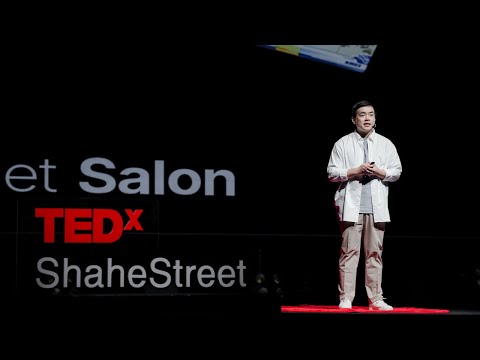
桌面游戏:去标签化的“社交乌托邦” | Yuxiang Tong | TEDxShahe Street Salon
TEDx Talks· 2025-10-30 16:08
Social Interaction & De-labeling - Tabletop games facilitate genuine interaction by removing social identities [1] - Tabletop games offer a "de-labeled" social utopia through role resets and fair rules [1] - Tabletop games enable rediscovering oneself and others, fostering pure and authentic communication [1] Industry Focus - The tabletop game industry, exemplified by companies like 盒拍桌游工作室 (He Pai Tabletop Game Studio), promotes authentic social experiences [1] - The tabletop game industry, exemplified by companies like Wydr Studios, promotes authentic social experiences [1]
中国美妆数字营销之变:一场与消费者共舞的“浪漫进化”
Sou Hu Cai Jing· 2025-07-09 02:32
Core Insights - The article emphasizes the evolution of digital marketing in the Chinese cosmetics market, highlighting the shift from impulsive buying to rational experientialism among consumers [1][14] - It discusses the unique digital marketing ecosystem in China, driven by e-commerce platforms and social media, which allows international brands to replicate successful strategies globally [2][14] Trend Analysis Trend 1: Sample Economy - The "sample economy" is emerging as a significant trend in the Chinese beauty market, with e-commerce platforms and beauty stores selling samples as formal products, catering to Gen Z's desire for new experiences [5] - Market research indicates that mini perfume sales in Europe and the U.S. are expected to triple by 2024, with brands launching small sample sets to meet social sharing needs [5] Trend 2: Rise of Male Beauty Market - The male beauty market is expanding beyond basic grooming to include personalized hair care needs, with a notable increase in searches for products like texturizing powder [6] - Brands are innovating around "hair care rituals," offering products that cater to the complete styling process, reflecting a growing interest among male consumers [6] Trend 3: Packaging as Social Content - Beauty packaging is evolving into a content production tool, with visually appealing designs driving user engagement and sharing on social media [7][8] - Brands like Drunk Elephant and HuazhiXiao are leveraging unique packaging to enhance brand recognition and emotional connection with consumers [7][8] Trend 4: Integrated Digital Marketing Strategies - Douyin (TikTok) is becoming a key platform for brands to drive sales through scripted short dramas and live streaming, creating a closed-loop marketing strategy [10][11] - Xiaohongshu (Little Red Book) focuses on in-depth product education and community engagement, facilitating a transition from impulse to informed purchasing [12] - Tmall is transitioning from a mere e-commerce platform to a long-term growth engine for brands, emphasizing product education and consumer engagement [13] Future Directions - The cosmetics industry is expected to focus on four key trends: opportunities in the male beauty segment, cross-platform marketing strategies, scenario-based content targeting specific demographics, and authentic storytelling to deepen emotional connections with consumers [14][15][16][17]