
去App化

Search documents
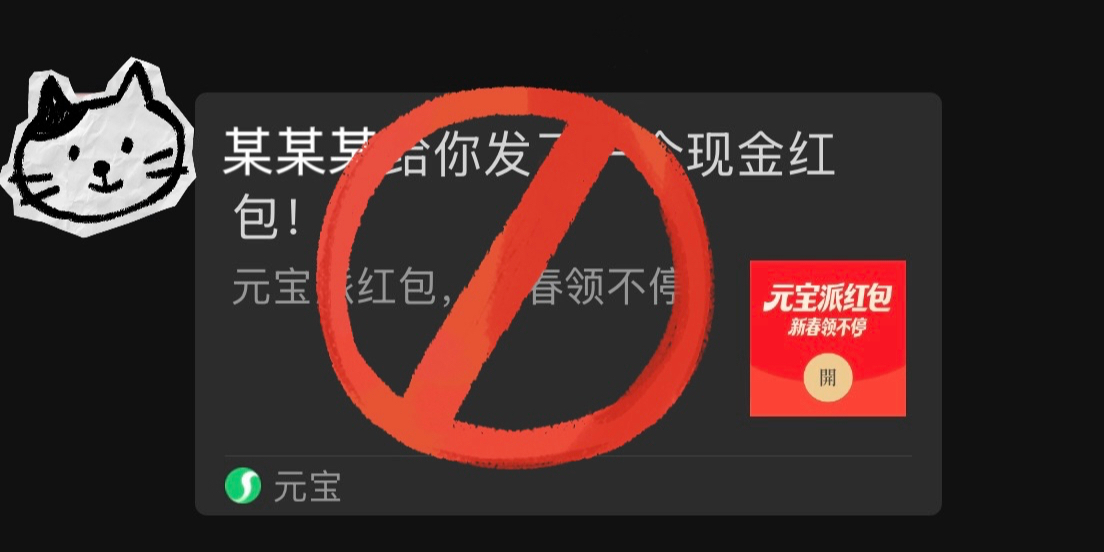
元宝入侵微信这片自留地,是万不得已
Jing Ji Guan Cha Wang· 2026-02-04 05:18
Core Viewpoint - Tencent's WeChat has implemented a ban on Yuanbao red envelope links, which has received positive feedback from users, highlighting the platform's commitment to user experience and privacy [2] Group 1: Market Competition and User Engagement - Tencent's Yuanbao is attempting to replicate the success of WeChat red envelopes from 2015, investing 1 billion yuan to attract users during the critical Chinese New Year period [2] - Despite a peak in download numbers, Yuanbao's monthly active users (MAU) stand at approximately 41 million, significantly lower than competitors like Doubao and DeepSeek, which have MAUs of over 200 million and 150 million respectively [3] - The introduction of Yuanbao has disrupted WeChat's long-standing philosophy of minimal user disturbance, leading to user backlash against intrusive marketing tactics [2][3] Group 2: Strategic Positioning and AI Integration - The current landscape shows that traditional app user acquisition costs are high, and user retention rates are low, prompting companies to seek new growth engines, with AI being a key focus [4] - Competitors like ByteDance are integrating AI deeply into their ecosystems, creating specialized agents that enhance user experience, which poses a threat to Tencent's market position if Yuanbao does not quickly gain traction [4] - Tencent's strategy involves leveraging Yuanbao to enhance user retention by encouraging sharing within WeChat, contrasting with Alibaba's approach of streamlining user experience across its ecosystem [5] Group 3: User Retention Challenges - Historical data indicates that while red envelope marketing can drive initial user acquisition, it often fails to ensure long-term retention, leading to high uninstall rates [5] - For Yuanbao to succeed, it must address genuine user needs and provide unique value during the promotional period to avoid a decline in user engagement post-campaign [5]


豆包手机:野心很大,阻力也很大
3 6 Ke· 2025-12-03 09:20
Core Insights - ByteDance and Nubia have collaborated on a smartphone prototype, the Nubia M153, which was launched on December 1 at a price of 3499 yuan, and has already sold out on official platforms, with resale prices exceeding 1000 yuan on second-hand markets [1] - The Nubia M153 features the Qualcomm Snapdragon 8 Gen 2 mobile platform, aimed at supporting AI operations and multitasking [1] - A key highlight of the device is the Doubao mobile assistant, which has system-level permissions to automate tasks across multiple applications [1] - However, users reported issues with WeChat crashing and login failures when using the Doubao assistant, indicating potential conflicts with WeChat's security protocols [1][4] Industry Reactions - The collaboration has sparked varied reactions from app, AI, and smartphone companies, raising concerns about user security and fairness in access to services [1] - Experts suggest that the Doubao assistant's capabilities could disrupt traditional app usage, leading to a shift towards a more integrated AI-driven user experience [2] - The competition among major tech companies to control AI assistant functionalities is intensifying, with a focus on who will emerge as the leading "smart assistant operator" [2] Doubao's Strategic Positioning - The Doubao assistant aims to redefine user interaction by minimizing the need for traditional app usage, potentially leading to a future where fewer apps are necessary [2] - The assistant's approach contrasts with existing models, such as Xiaomi's Xiao Ai, which operates within its ecosystem but does not extend to third-party platforms like Taobao [3] - The incident with WeChat highlights the ongoing struggle for dominance in the AI assistant space, with companies vying for control over user interactions and data [4] Technical Features and Issues - The Nubia M153's Doubao assistant can read chat context in WeChat to generate replies, allowing users to confirm and send messages without leaving the chat interface [4] - The assistant's deep integration into the system and its simulation of human actions triggered WeChat's security measures, leading to user complaints [4] - Industry experts emphasize the need for transparency regarding user permissions and rights in the deployment of such AI assistants [3][4]
