
水星西大距

Search documents
水星来拜年! 20日上演东大距
Xin Hua She· 2026-02-18 09:10
Core Viewpoint - The first Mercury eastern elongation of 2026 will occur on February 20, providing a rare opportunity for the public to observe the planet with the naked eye or small telescopes, given favorable weather conditions [1][3]. Group 1: Mercury's Characteristics - Mercury is the fastest planet in the solar system, completing its orbit around the Sun in just 88 days, making it the planet with the shortest orbital period among the eight planets [3]. - The phenomenon of eastern and western elongations occurs 3 to 4 times a year due to Mercury's rapid orbit, with 2026 featuring three eastern elongations (February 20, June 16, and October 12) and three western elongations (April 4, August 2, and November 21) [3]. Group 2: Observational Conditions - The upcoming eastern elongation on February 20 will have favorable observational conditions, with Mercury reaching a horizon height of 16 degrees and a brightness of approximately -0.5 magnitude, making it easier to spot [3]. - Observers are advised to wait until after sunset to view Mercury, as it will set about an hour after sunset, and caution is advised to avoid looking at the Sun through telescopes to prevent eye damage [3]. Group 3: Additional Observational Opportunities - On the same day as the Mercury eastern elongation, observers can also witness a conjunction of Saturn and a crescent moon, creating a visually appealing "star and moon fairy tale" in the western sky after sunset [5].

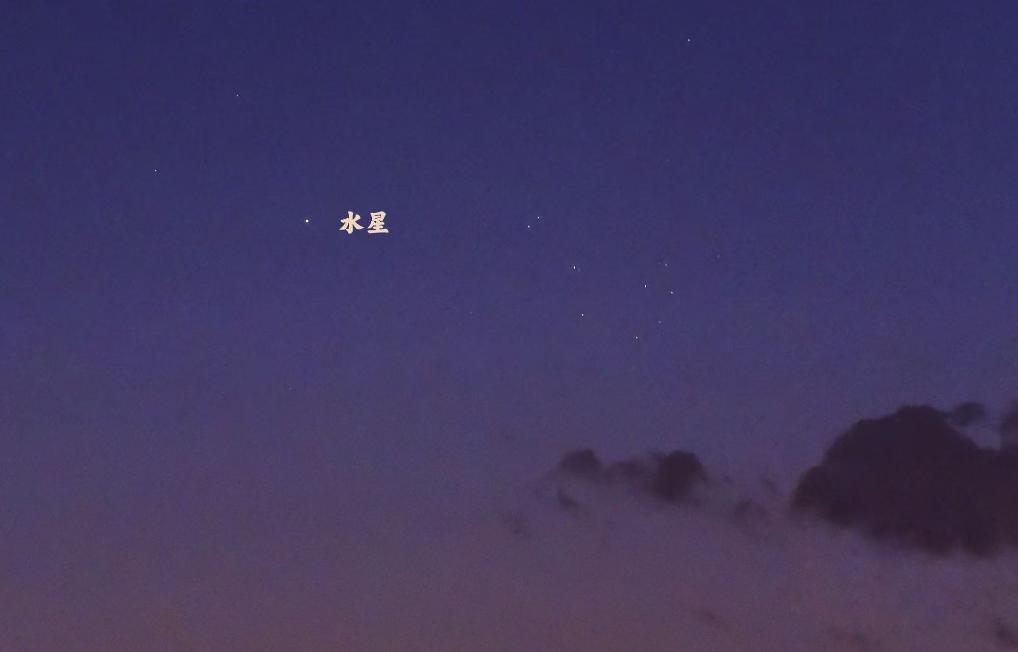
别错过!这是今年最后一次观测水星的窗口期
Xin Hua She· 2025-12-06 04:29
Core Points - Mercury will reach its western elongation on December 8, providing a rare opportunity for astronomy enthusiasts to observe and photograph the planet in the southeastern sky before dawn [1][3] - Mercury is the hardest planet to observe due to its proximity to the Sun, which often obscures it in sunlight [3][4] - The term "greatest elongation" refers to the maximum angular distance of an inferior planet (Mercury and Venus) from the Sun as viewed from Earth, with western elongation occurring when the planet is positioned west of the Sun [3] Observation Conditions - This year, Mercury has three western elongations, with favorable observation conditions in August and December [4] - Around December 8, Mercury will be approximately 17 degrees above the horizon at sunrise, with a brightness of about magnitude 0, marking the last opportunity to observe it until February 2026 [4] - Ideal observation conditions include selecting locations away from obstructions like buildings and trees, preferably in open areas or elevated sites [4] - The best time for observation is about one hour before sunrise during the week surrounding December 8, when the sky is beginning to brighten but Mercury remains visible [4] - While Mercury is visible to the naked eye, using binoculars can significantly enhance the chances of successful observation [4]

别错过!今年最后一次“超级月亮” 12月4日晚观测更佳
Yang Shi Wang· 2025-12-01 03:39
Core Viewpoint - The article discusses significant astronomical events occurring in December, including the last supermoon of the year and the peak of the Geminid meteor shower, providing details on optimal viewing times and conditions [1]. Group 1: Supermoon and Lunar Observations - The last supermoon of the year will occur on December 5, with optimal viewing on the night of December 4 [1]. - The distance between the moon and Earth varies between approximately 360,000 to 400,000 kilometers, resulting in a size difference of about 14% between the largest and smallest full moons [1]. Group 2: Mercury and Meteor Showers - Mercury will reach its western elongation on December 8, marking the last opportunity to observe the planet this year, with the next chance not until February [1]. - The peak of the Geminid meteor shower will occur on the morning of December 14, with the best viewing time from the night of December 13 to the early hours of December 14, featuring a zenithal hourly rate of about 150 meteors [1]. Group 3: Year-End Celestial Events - On December 31, the moon will pass by the Pleiades star cluster between 21:00 and 22:00, although the bright moonlight may obscure the visibility of the stars [1].
星空有约|水星又要“露脸”了,机会难得
Xin Hua She· 2025-08-17 02:26
Core Points - Mercury will have its best observation opportunity during the western elongation on August 19, 2023, with favorable conditions for the public to view the planet if the weather permits [1][4] - Mercury is the hardest planet to observe due to its proximity to the Sun, often being obscured by sunlight [2] - The best time to observe Mercury is during its greatest angular distance from the Sun, known as "greatest elongation," which occurs approximately every 116 days [2][4] Observation Conditions - This western elongation will allow Mercury to be seen in the eastern low sky during dawn, with a horizon height of about 18 degrees and a brightness of 0 magnitude [4] - Observers using telescopes may also see Mercury in a crescent shape, with approximately 40% of its surface illuminated by the Sun [4] - The observation opportunity is not limited to August 19; several days before and after also provide chances to view Mercury due to minimal height variation [7]
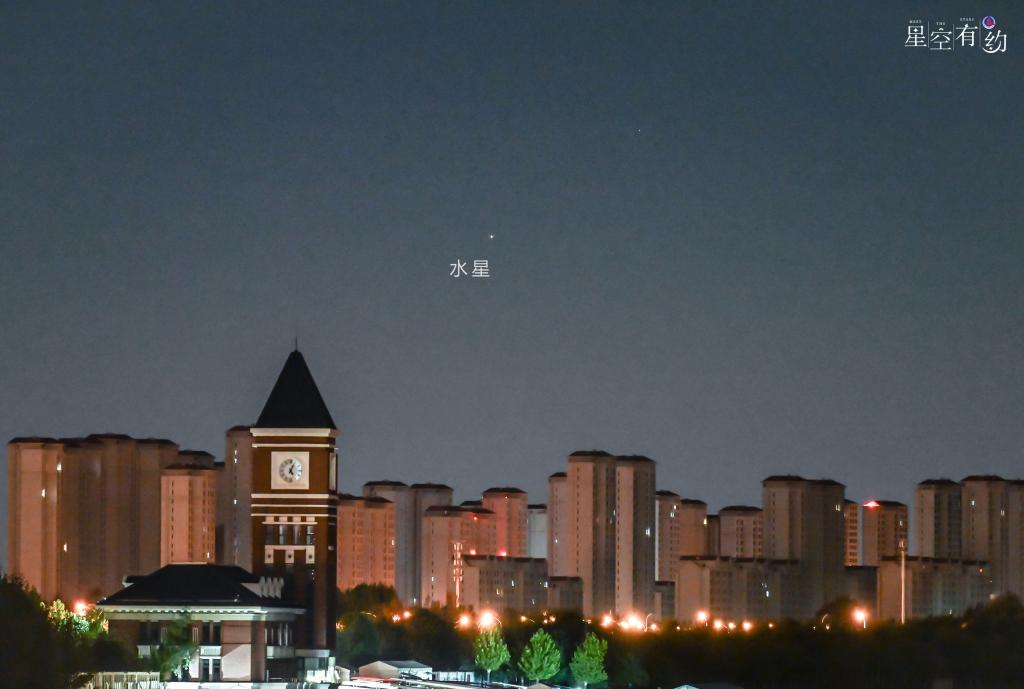
星空有约|水星19日迎西大距,黎明时分显露真容
Xin Hua She· 2025-08-17 02:19
Core Viewpoint - The article discusses the upcoming western elongation of Mercury on August 19, which presents the best observation conditions for the planet this year, allowing the public to potentially view it in the early morning sky if weather permits [1][2]. Group 1: Observation Conditions - Mercury will be at a horizontal height of approximately 18 degrees at sunrise, with a brightness of 0 magnitude, making it visible to the public [2]. - The observation of Mercury is not limited to August 19; the days surrounding this date also provide good opportunities for viewing due to minimal changes in the planet's height [3]. Group 2: Characteristics of Mercury - Mercury is the most challenging planet to observe in the solar system due to its proximity to the Sun, often being obscured by sunlight [1]. - The planet completes its orbit around the Sun in just 88 days, resulting in 3 to 4 occurrences of both eastern and western elongations each year, with varying observation conditions based on its position relative to the Sun [1].
星空有约|水星4日迎来年度第二次东大距,观测条件不错
Xin Hua She· 2025-07-03 01:16
Core Points - Mercury will have its eastern elongation on July 4, 2023, providing good observation conditions for the public if the weather is clear [1][2] - Mercury is the closest planet to the Sun and is difficult to observe due to its proximity to the Sun's glare [1] - The best time to observe Mercury is during its eastern elongation when it appears in the western sky after sunset [1] Observation Conditions - This year, Mercury will have three eastern elongations, occurring on March 8, July 4, and October 30, with the first two having favorable observation conditions [2] - On July 4, Mercury's altitude will be approximately 18 degrees at sunset, with a brightness of about 0.4 magnitude [2] - Observers are encouraged to look for Mercury a few days before and after July 4, as the altitude will be higher in the days leading up to the event [2]