双母港模式

Search documents
邮轮业集体返贫
投资界· 2026-01-25 08:11
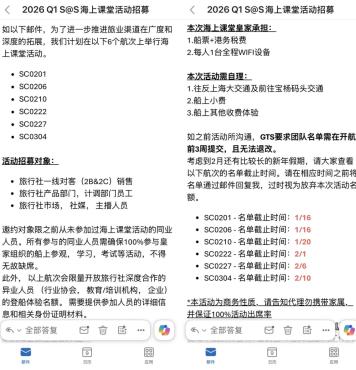
Core Viewpoint - The cruise industry in China is facing a potential price war in 2026, driven by the cancellation of Japanese port routes and a shift towards Korean ports, leading to increased competition and pressure on pricing [4][12][18]. Group 1: Market Dynamics - The cancellation of Japanese routes has forced cruise companies to focus on Korean ports, which has resulted in a significant drop in sales and increased competition among major players [5][12]. - The price of cruise tickets has plummeted, with examples such as Royal Caribbean's Spectrum of the Seas offering tickets as low as 1,831 yuan, indicating a return to a low-price era [9][11]. - The market is experiencing extreme product homogeneity, where cruise offerings are similar, leading consumers to choose based solely on price [18]. Group 2: Industry Challenges - Companies like Aida Cruises are facing dual pressures of internal restructuring and declining sales after the cancellation of Japanese routes [5][12]. - The industry is witnessing aggressive marketing tactics, such as free cruise experiences for travel agents, to maintain market interest amid declining sales [6][8]. - The historical context of the industry shows that past geopolitical events, like the THAAD incident, have had immediate and severe impacts on cruise operations, suggesting that current challenges may be similarly disruptive [14][17]. Group 3: Strategic Opportunities - The introduction of a dual homeport model by MSC Cruises, allowing for both Chinese and Korean passengers, represents a potential shift in the operational model of the cruise industry in China [19][21]. - This new model could transform cruise ships from mere transportation to platforms for international tourism and local economic stimulation, aligning with national policies aimed at expanding service industry openness [24]. - The shift in perspective regarding the role of ports and cruise lines could provide a pathway for recovery and growth in the face of ongoing price competition [24].


跌破1800元,中国邮轮业正在集体返贫
3 6 Ke· 2026-01-21 03:52
Core Insights - The cruise industry is experiencing anxiety over the potential return of price wars in 2026, primarily due to the cancellation of Japanese port routes and a shift in focus to South Korea as an alternative destination [1][14]. Group 1: Market Dynamics - The demand for South Korean ports has surged, with foreign cruise companies struggling to secure docking schedules as domestic companies have already locked in prime slots [2][3]. - Sales progress for South Korean routes is significantly lagging compared to the previous year, indicating a challenging market environment [5][6]. - The price of cruise tickets has plummeted, with some companies offering promotions such as "buy 2 get 2 free," leading to prices as low as 1,831 yuan for certain routes [10][12]. Group 2: Competitive Landscape - The competition among major players like MSC, Aida, and Royal Caribbean has intensified, with aggressive marketing strategies being employed to attract customers [7][19]. - The market is witnessing a trend of product homogenization, where cruise offerings are becoming increasingly similar, leading to price competition as the primary differentiator [19][20]. Group 3: Strategic Shifts - The introduction of a dual homeport model by MSC, allowing both Chinese and South Korean tourists to board from either location, represents a significant strategic shift in the industry [22][29]. - This model aims to transform the cruise experience from a one-way outbound journey to a more integrated inbound and outbound tourism platform, potentially enhancing the value proposition of cruise travel [28][30]. Group 4: Regulatory Environment - Recent government initiatives to expand service industry openings in cities like Dalian and Shenzhen may provide new opportunities for the cruise sector, emphasizing the importance of destination value [33][36]. - The evolving perception of ports as not just docking points but as integral parts of the tourism ecosystem aligns with broader economic policies aimed at enhancing service sector growth [37][38].