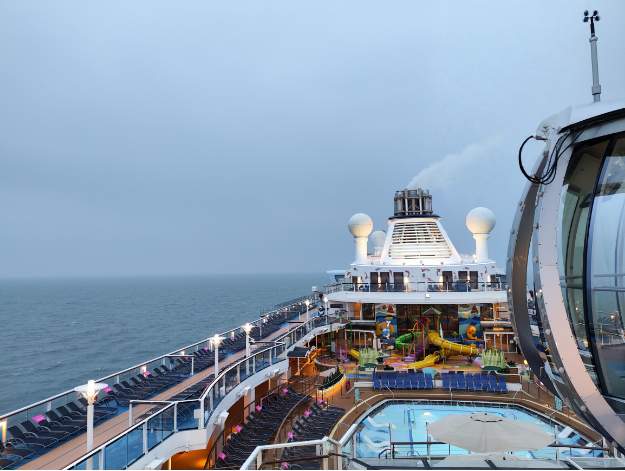
皇家加勒比海洋光谱号

Search documents
跌破1800元,中国邮轮业正在集体返贫
36氪· 2026-01-22 13:46
Core Viewpoint - The cruise industry is facing a potential price war due to the cancellation of Japanese port routes and the resulting shift in focus to South Korea, leading to increased competition and declining ticket prices [4][12][22]. Group 1: Market Dynamics - Since late last year, cruise companies have significantly reduced or canceled routes to Japan, making South Korea a critical alternative for many operators [4][6]. - A foreign cruise company's executive noted that the demand for South Korean ports has surged, but securing docking schedules has become competitive, with many slots already booked by domestic companies [5][6]. - Sales for South Korean routes are lagging compared to the previous year, indicating a challenging market environment [8][9]. Group 2: Pricing Trends - The return of low ticket prices has been observed, with Royal Caribbean's Spectrum of the Seas offering interior cabins at prices as low as 1,831 yuan, marking a significant drop [13]. - MSC Mediterranean's Glory has introduced promotions such as "buy 1 get 3 free" for family bookings, reflecting the aggressive pricing strategies being employed [15]. - The overall decline in ticket prices is attributed to increased competition among major players like MSC, Aida, and Royal Caribbean, despite a perceived reduction in the number of competitors [16][17]. Group 3: Market Structure and Consumer Behavior - The Chinese cruise market differs fundamentally from overseas markets, where the cruise itself is often the destination; in China, the destination primarily drives pricing [18][20]. - The cancellation of Japanese routes has led to a homogenization of cruise offerings, forcing consumers to choose based on price rather than unique experiences [32][34]. - The reliance on low prices for survival indicates a shift in the market, where differentiation is crucial for maintaining profitability [35][36]. Group 4: Strategic Innovations - The introduction of a dual homeport model by MSC, allowing both Chinese and Korean tourists to board in either country, represents a significant shift in operational strategy [40][49]. - This model could enhance the value of cruise offerings by attracting international tourists to Chinese ports, thereby transforming the cruise experience into a more integrated travel platform [52][53]. - The recent policy initiatives from the Ministry of Commerce to promote service industry expansion in various cities align with the need for the cruise industry to adapt and innovate [55][61].


跌破1800元,中国邮轮业正在集体返贫
3 6 Ke· 2026-01-21 03:52
Core Insights - The cruise industry is experiencing anxiety over the potential return of price wars in 2026, primarily due to the cancellation of Japanese port routes and a shift in focus to South Korea as an alternative destination [1][14]. Group 1: Market Dynamics - The demand for South Korean ports has surged, with foreign cruise companies struggling to secure docking schedules as domestic companies have already locked in prime slots [2][3]. - Sales progress for South Korean routes is significantly lagging compared to the previous year, indicating a challenging market environment [5][6]. - The price of cruise tickets has plummeted, with some companies offering promotions such as "buy 2 get 2 free," leading to prices as low as 1,831 yuan for certain routes [10][12]. Group 2: Competitive Landscape - The competition among major players like MSC, Aida, and Royal Caribbean has intensified, with aggressive marketing strategies being employed to attract customers [7][19]. - The market is witnessing a trend of product homogenization, where cruise offerings are becoming increasingly similar, leading to price competition as the primary differentiator [19][20]. Group 3: Strategic Shifts - The introduction of a dual homeport model by MSC, allowing both Chinese and South Korean tourists to board from either location, represents a significant strategic shift in the industry [22][29]. - This model aims to transform the cruise experience from a one-way outbound journey to a more integrated inbound and outbound tourism platform, potentially enhancing the value proposition of cruise travel [28][30]. Group 4: Regulatory Environment - Recent government initiatives to expand service industry openings in cities like Dalian and Shenzhen may provide new opportunities for the cruise sector, emphasizing the importance of destination value [33][36]. - The evolving perception of ports as not just docking points but as integral parts of the tourism ecosystem aligns with broader economic policies aimed at enhancing service sector growth [37][38].
“客从海上来”趋势明显,我国邮轮经济乘风破浪
Bei Jing Ri Bao Ke Hu Duan· 2025-06-11 03:47
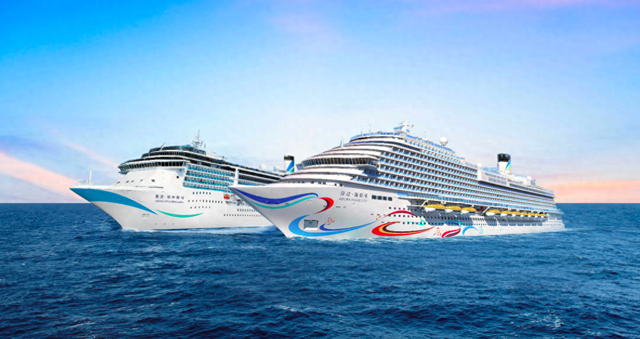
Core Viewpoint - The Chinese cruise market is experiencing a significant recovery, with the introduction of domestic large cruise ships like the "Aida·Modu" set to operate in Tianjin from April to October 2027, indicating a strategic expansion into the northern market [1][2]. Group 1: Market Expansion and New Developments - Aida Cruises announced the deployment of its first domestic large cruise ship, "Aida·Modu," in Tianjin, marking a long-term operational strategy outside of Shanghai [2]. - The Tianjin International Cruise Home Port is recognized as the largest cruise home port in northern China, aiming to attract more tourists from surrounding provinces [2]. - The "Aida·Modu" will offer new experiences, including a summer theme season featuring immersive Chinese animation interactions and a special long cruise to Hokkaido in 2025 [1][2]. Group 2: Growth in Cruise Tourism - The cruise tourism sector is witnessing a surge, with a 67.8% year-on-year increase in international cruise passengers in Q1, reaching 328,000 [5]. - The implementation of visa-free policies for foreign tourists arriving by cruise has contributed to the growing trend of "arriving by sea" [5]. - Major cruise lines are expanding their offerings in China, with multiple ships scheduled to operate from various ports during the summer season [6]. Group 3: Economic Impact and Industry Development - The cruise economy is becoming a new highlight in cultural tourism, with expectations for a second golden decade of development in the Chinese cruise market [1][6]. - The cruise industry is not just a transient business; it stimulates a full chain of consumption, including food supply, port services, and onshore activities [6]. - The Chinese cruise industry is evolving into a comprehensive ecosystem centered around culture, art, and technology, with a focus on brand and operational development [7].
五一邮轮生意火爆,这波“海上旅行热”能持续多久?
Hu Xiu· 2025-05-05 08:28
Core Insights - The "May Day" holiday has significantly boosted the cruise market in China, with a notable increase in bookings and interest from middle-class consumers [1][2][3] Group 1: Market Performance - The number of cruises departing from domestic ports during the "May Day" holiday reached 8, accommodating nearly 30,000 tourists [2] - Guangzhou Kanghui International Travel Agency reported a 30.2% year-on-year increase in cruise tourism participants as of April 25 [15] - The cruise market is showing signs of recovery, with many ships operating at near full capacity as of April [12][13] Group 2: Pricing Trends - Cruise prices have increased significantly, with some interior cabins priced over 10,000 yuan per person, more than double the early booking prices [7][8] - The demand for cruises during peak holiday periods has led to a more stable pricing environment compared to previous years [8][21] Group 3: Consumer Behavior - Young consumers are increasingly looking for shared accommodations to reduce costs, with many seeking roommates for cabins [10] - There is a growing interest in less crowded cruise experiences, with middle-class consumers favoring cruises for their limited passenger capacity and onboard amenities [8][10] Group 4: Industry Adjustments - Cruise companies have learned from past market fluctuations and are adopting more flexible pricing and booking strategies to avoid overcapacity and price drops [20][21] - The industry is seeing a shift in focus from traditional ports like Shanghai to a more diversified approach, with cruises departing from cities like Tianjin, Qingdao, and Guangzhou [6][23] Group 5: Future Outlook - Despite the current surge in demand, industry professionals remain cautious about the summer market, anticipating potential price drops if sales do not meet expectations [24][25]