
双通道政策

Search documents
十五五-新征途-2026年医药产业政策展望
2026-03-18 02:31
Summary of Key Points from the Conference Call Industry Overview - The conference call discusses the **biomedical industry** in China, highlighting its elevation as a new pillar industry in the national development plan, particularly focusing on **biomanufacturing, brain-computer interfaces, high-end medical devices, and innovative drug development** [1][2]. Core Insights and Arguments - **Policy Direction**: The top-level design of the biomedical industry policy emphasizes two core directions: "strong innovation" and "benefiting people's livelihood." The industry is recognized for its economic importance and social function, with a focus on improving the healthcare system [2][3]. - **Medicare Adjustments**: In 2026, the per capita financial subsidy for Medicare is planned to increase by **24 yuan**, a slight decrease from the **30 yuan** increase in 2025, indicating a continued trend of increasing government subsidies despite a slight adjustment in growth rate [2]. - **Support for Innovative Drugs**: The 2025 Medicare drug list adjustment reflects strong support for "true innovation," with **40%** of the newly added **114 drugs** being first-class new drugs, and **50%** of these being biological products [5][6]. - **Renewal Rules**: The renewal rules for drugs in the Medicare directory show a stable support attitude towards high-value mature products, with **92%** of drugs renewing without price reductions [6]. - **Commercial Insurance Directory**: The first commercial insurance directory introduced in 2025 included **19 out of 141** reported drugs, focusing on high-innovation products and offering significant policy benefits [7][8]. - **Accelerating Domestic Drug Access**: Measures have been taken to accelerate the access of domestic innovative drugs to hospitals, including a requirement for medical institutions to hold drug committee meetings within **three months** of the Medicare directory release [9]. Additional Important Content - **Consolidation in Retail Pharmacy**: The retail pharmacy industry is expected to enter a phase of high-quality development and horizontal mergers starting in 2026, with policies encouraging pharmacies to execute equal outpatient insurance treatment as grassroots medical institutions [11]. - **IVD Sector Developments**: The IVD sector is seeing significant changes, including a focus on reducing the number of chargeable items and ensuring that AI-assisted diagnostics do not incur additional fees [17][18]. - **Medical Device Industry Trends**: The medical device industry is experiencing a slowdown in bidding procurement growth, with an expansion of centralized procurement covering about **30%** of the industry, particularly in county-level medical communities [19][20]. - **Medicare Payment Reform**: The upcoming **DRG/DIP 3.0** version is expected to provide more specific support for innovation, while a nationwide pilot for traditional Chinese medicine payment by disease will also be initiated [20][21]. - **Regulatory Changes**: New regulatory measures are being implemented to enhance the efficiency of Medicare fund clearing and to apply AI technology in regulatory processes [22]. This summary encapsulates the key points discussed in the conference call, providing insights into the current state and future direction of the biomedical industry in China.
1月1日起执行的新版医保药品目录有什么新变化?如何更好满足群众用药需求?
Xin Lang Cai Jing· 2026-01-05 11:45
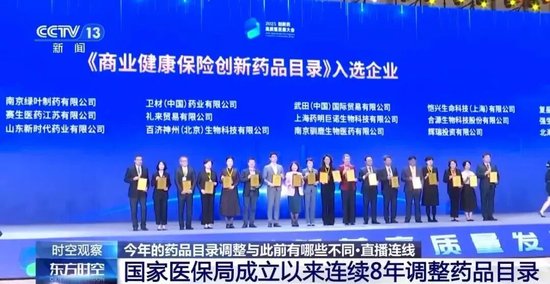
Core Viewpoint - The National Healthcare Security Administration (NHSA) announced the 2025 version of the National Basic Medical Insurance Drug List and the first Commercial Health Insurance Innovative Drug List, which includes significant updates to enhance drug accessibility for patients [1][2][3]. Group 1: Drug List Adjustments - The new drug list adds 114 new drugs, including 50 innovative drugs, while removing 29 drugs that are either unavailable or can be replaced by others [1][2][3]. - The total number of drugs in the list now stands at 3,253, comprising 1,857 Western medicines and 1,396 traditional Chinese medicines, with improved coverage for critical areas such as cancer, chronic diseases, mental health, rare diseases, and pediatric medications [1][2][3]. Group 2: Financial Implications - The NHSA has assessed the budget impact of new drugs on the medical insurance fund, concluding that the overall financial burden remains manageable within the national budget [3][4][12]. - The introduction of new drugs may lead to increased costs, but many are expected to replace older medications, mitigating the financial impact [3][4][12]. Group 3: Challenges in Hospital Implementation - Despite being included in the insurance list, many "nationally negotiated drugs" face challenges in being adopted by hospitals due to limited capacity in hospital drug lists, which typically accommodate only 1,500 to 2,000 drugs [4][6][8]. - The approval process for new drugs in hospitals can be lengthy, often taking from one to twelve months, which complicates timely access for patients [8][12][44]. Group 4: Dual-Channel Policy - To address the issue of drug availability, the government introduced a "dual-channel" policy, allowing patients to access "nationally negotiated drugs" through designated hospitals and retail pharmacies, ensuring equal reimbursement [14][16][50]. - As of now, 402 nationally negotiated drugs have been integrated into this dual-channel system, significantly increasing sales from under 4 billion yuan in 2020 to nearly 15 billion yuan in 2024 [16][50]. Group 5: Commercial Health Insurance Innovations - The newly established Commercial Health Insurance Innovative Drug List includes 19 drugs, selected from 121 candidates, aimed at covering high-value drugs not included in the basic insurance [27][30][67]. - This list is designed to complement the basic medical insurance system, addressing the gap for high-cost innovative treatments that are crucial for patients with severe conditions [30][32][67]. Group 6: Future Implications - The introduction of the Commercial Health Insurance Innovative Drug List is expected to enhance patient access to high-value treatments, encouraging insurance companies to cover these drugs and potentially increasing patient enrollment in commercial health plans [30][66][73]. - The dual-directory approach aims to create a more robust healthcare financing system, ensuring that patients can access necessary medications while maintaining the sustainability of the insurance funds [30][66][73].

“救命药”进医院,最后一公里咋破
Qi Lu Wan Bao· 2025-12-08 21:48
Core Insights - The 2025 version of the National Basic Medical Insurance, Maternity Insurance, and Work Injury Insurance Drug Directory has been officially released, adding 114 new drugs, including 50 innovative drugs, while removing 29 drugs that are either not clinically available or can be replaced by better alternatives [1][2] - The total number of drugs in the directory has increased to 3,253, with significant improvements in coverage for key areas such as cancer, chronic diseases, mental health, rare diseases, and pediatric medications [1] - The new directory will be implemented nationwide starting January 1, 2026 [1] Group 1: Drug Inclusion and Economic Impact - The adjustment of the drug directory is a response to public health needs, with the inclusion of innovative and life-saving drugs for conditions like non-small cell lung cancer and cervical cancer [2] - Experts have assessed the budget impact of the new drugs on the medical insurance fund, suggesting that the overall effect will not be significantly detrimental [2] Group 2: Challenges in Hospital Access - Despite the inclusion of "nationally negotiated drugs" in the insurance directory, there are challenges in their availability in hospitals due to limited capacity in hospital drug lists, which typically accommodate only 1,500 to 2,000 drugs [3] - The rapid increase in the number of "nationally negotiated drugs" complicates decisions for hospitals regarding which drugs to include, especially when alternatives already exist [3][4] Group 3: Financial Management and Policy Recommendations - The current budget control system for hospitals means that higher sales of expensive innovative drugs could lead to reduced surpluses or even budget overruns, making hospitals cautious about purchasing "nationally negotiated drugs" [4] - Experts recommend improving incentive mechanisms for the use of "nationally negotiated drugs" and increasing investment in healthcare resources to alleviate financial pressures on hospitals [4] Group 4: Dual-Channel Policy and Payment Innovations - To address the issue of "drugs available in insurance but hard to find in hospitals," a "dual-channel" policy was introduced, allowing patients to access "nationally negotiated drugs" through designated hospitals and retail pharmacies with equal insurance reimbursement [6] - The sales of "nationally negotiated drugs" have significantly increased, from less than 4 billion yuan in 2020 to nearly 15 billion yuan in 2024 [6] - Sichuan Province has implemented a "single payment" policy for high-cost, clinically necessary "nationally negotiated drugs," allowing direct settlement by the insurance fund without affecting hospital budget assessments, thus reducing cost control pressures on hospitals [6]