
反家庭暴力

Search documents
人民法院坚定保障妇女儿童合法权益
Xin Lang Cai Jing· 2026-02-27 22:32
Core Viewpoint - The article discusses the 10th anniversary of the Anti-Domestic Violence Law in China, highlighting the increasing attention on issues related to women's and children's rights, particularly in the context of domestic violence and family disputes [1]. Group 1: Characteristics of Domestic Violence - Domestic violence is characterized by its concealment, occurring within family members and often going unnoticed by third parties, making evidence collection difficult for victims [2]. - The types of domestic violence have diversified, with an increase in cases involving psychological abuse such as verbal insults and threats [2]. - The scope of domestic violence has expanded to include not only family members but also individuals in romantic relationships or those who have recently ended such relationships [2]. Group 2: Judicial Measures Against Domestic Violence - The Supreme People's Court opposes all forms of domestic violence and has implemented measures such as the prompt issuance of personal safety protection orders for eligible cases [3]. - In 2022, the Supreme Court established regulations to clarify evidence requirements for personal safety protection orders, thereby enhancing their effectiveness [3]. - A collaborative mechanism among various departments has been initiated to strengthen the enforcement of personal safety protection orders, with training programs planned for 2025 [3]. Group 3: Challenges in Domestic Violence Cases - Challenges include vague standards for recognizing psychological domestic violence, traditional beliefs deterring victims from seeking legal help, and limited enforcement measures for protection orders [4]. - The Supreme People's Court plans to conduct extensive research to address these challenges and unify judicial standards [4]. Group 4: Handling of Divorce Cases Involving Domestic Violence - Courts adhere to a principle of decisive judgment in divorce cases involving domestic violence, ensuring timely protection of victims' rights [5]. - The court prioritizes the welfare of children in custody decisions, favoring the non-offending parent for custody in cases of domestic violence [5][6]. Group 5: Household Labor Compensation in Divorce Cases - The value of household labor is recognized, and compensation is determined based on various factors, including the time and effort invested by each party [7]. - Courts aim to balance the interests of both parties when determining compensation for household labor, acknowledging the diverse economic conditions across regions [7]. Group 6: Standardization of Bride Price Disputes - The Supreme People's Court has standardized the adjudication of bride price disputes, addressing the complexities arising from diverse forms of bride price payments [8][9]. - Judicial interpretations have been issued to clarify contentious issues related to bride price, and typical cases have been published to guide courts [9]. Group 7: Child Custody in Divorce Cases - Courts emphasize the best interests of children in divorce proceedings, advising parents to prioritize their children's well-being during marital disputes [10]. - The Supreme People's Court has issued guidelines to enhance awareness of parental responsibilities towards children post-divorce [10]. Group 8: Measures Against Juvenile Crime - The court has implemented a balanced approach to juvenile crime, combining punishment with educational measures to rehabilitate offenders [11]. - Efforts are being made to improve the professional handling of juvenile cases and to address issues related to parental neglect [12]. Group 9: Prevention of Sexual Offenses Against Minors - The court maintains a strict stance against sexual offenses involving minors, ensuring severe penalties for serious offenders [14]. - A comprehensive system is being developed to address and prevent such crimes, focusing on collaboration with relevant departments [14].
《辽宁省反家庭暴力条例》明年2月1日起施行
Xin Lang Cai Jing· 2025-12-20 00:32
Core Viewpoint - The "Liaoning Province Anti-Domestic Violence Regulation" will take effect on February 1, 2026, providing a comprehensive legal framework to address domestic violence issues in the province [1] Group 1: Definition and Scope - The regulation specifies six categories of domestic violence: physical harm, mental harm, sexual harm, economic harm, and others, making legal identification clearer and enforcement easier [2] - The protection scope is expanded to include "cohabiting individuals," covering partners and caregivers, thus broadening the reach of the law [2] Group 2: Practical Measures - A first-contact system is established, requiring the initial unit receiving a help request to respond promptly and follow up throughout the process, addressing the issue of victims feeling they have no place to turn [2] - Legal aid is made available for qualifying victims, and judicial appraisal institutions are encouraged to waive fees for economically disadvantaged victims, lowering the barriers to seeking justice [2] Group 3: Collaborative Mechanisms - The regulation establishes a collaborative mechanism led by the government, involving various departments and organizations to create a comprehensive system for prevention, detection, handling, and assistance [3] - This approach aims to resolve the previous issues of fragmented efforts in combating domestic violence, fostering a coordinated response [3] Group 4: Implementation Strategies - Law enforcement will integrate multiple sources of information to enhance the management of domestic violence cases, ensuring effective follow-up and monitoring [4] - Courts will adopt specialized adjudication practices, recognizing specific types of evidence to facilitate the protection of victims [4] - The prosecution will maintain a zero-tolerance policy towards domestic violence, ensuring swift legal action against offenders [4] Group 5: Prevention and Awareness - Prevention is emphasized as the first line of defense, with the regulation incorporating anti-domestic violence education into the broader legal education framework [5] - Ongoing efforts will be made to promote awareness of the regulation through various outreach activities, aiming to enhance societal understanding of domestic violence issues [5]
未婚不是家暴的免罪牌
Jing Ji Guan Cha Bao· 2025-11-27 13:37
Core Viewpoint - The recent cases highlighted by the Supreme People's Procuratorate and the Supreme People's Court signify a shift in the legal interpretation of "family members" in domestic violence cases, recognizing stable cohabiting partners as family members under the law, thus expanding protections against domestic violence beyond marriage [1][2][3] Legal Framework and Implications - The cases of Ma and Miao demonstrate the effective integration of criminal law with anti-domestic violence laws and women's rights protection laws, indicating that stable cohabitation qualifies individuals as family members without the necessity of a marriage certificate [2][3] - Article 260 of the Criminal Law defines "abuse" as actions between family members living together, traditionally limited to those in marriage or blood relations, but now includes stable cohabiting partners, reflecting the evolving social dynamics [2][3] - The Anti-Domestic Violence Law and the Women's Rights Protection Law broaden the scope of protection against domestic violence, emphasizing the need for legal recognition of non-marital intimate relationships [3][4] Social Perception and Misunderstandings - There is a common misconception that recognizing cohabiting partners as family members may lead to leniency in punishment for domestic violence; however, the definition of domestic violence encompasses a wide range of abusive behaviors, ensuring that all forms of violence are addressed [4][5] - Some individuals question the emphasis on "family members" in the context of domestic violence, arguing that violence should be treated uniformly regardless of the relationship; however, the concept of domestic violence is crucial for protecting women's rights and allowing legal intervention in private matters [4][5] Ongoing Challenges and Future Directions - The term "family" in the context of domestic violence does not imply leniency from the state; rather, it highlights the hidden and controlling nature of such violence, which can lead to ongoing harm and societal instability [5][6] - Addressing domestic violence requires more than just legal repercussions; it necessitates fostering equitable gender relations and societal consensus that violence is unacceptable in any form [6]
“婚前同居认定属于家庭成员”:网民担心什么?反家暴司法实践有何困境?
Di Yi Cai Jing· 2025-11-27 11:22
Core Viewpoint - The recent statement by the Supreme People's Procuratorate recognizing cohabitation before marriage as a family relationship has sparked intense public discussion regarding its implications for domestic violence cases and legal interpretations [1][2][3] Group 1: Legal Interpretation and Implications - The Supreme People's Procuratorate's announcement aims to enhance the protection of domestic violence victims by recognizing stable cohabitation as a family relationship under the law [1][3] - The case of Ma Moumou, which involved mental abuse within a stable cohabitation context, exemplifies the application of this new interpretation, allowing for a more comprehensive legal approach to domestic violence [1][3] - The recognition of cohabitation as a family relationship is specifically targeted at domestic violence issues and does not extend to other legal areas, alleviating concerns about potential impacts on property rights [4][5] Group 2: Public Misunderstandings and Concerns - Many public concerns stem from a misunderstanding of the legal implications, with some fearing that intentional harm could be downgraded to domestic violence, leading to lighter penalties [5][6] - The perception that domestic violence is treated less severely than other forms of violence is a significant issue, as many believe that minor acts of domestic violence are not taken seriously enough by the judicial system [5][7] - Experts emphasize the need for improved public understanding of domestic violence, which can encompass a range of behaviors, including severe cases that may lead to more serious charges [5][9] Group 3: Judicial Practice and Recommendations - There is a recognized need for reform in judicial practices regarding domestic violence cases, as some judges may not fully grasp the severity of such cases, leading to lenient sentencing [7][8] - The current legal framework lacks a specific "domestic violence crime," which complicates the prosecution of such cases, necessitating a better integration of laws to ensure appropriate penalties [6][8] - Experts advocate for increased training and awareness among law enforcement and judicial personnel to ensure that domestic violence is treated with the seriousness it deserves [8][9]
最高检:2021年以来家暴类犯罪案件数量总体呈下降趋势
Xin Hua She· 2025-11-25 11:29
Core Points - The number of domestic violence-related arrests and prosecutions has decreased significantly since 2021, with over 2,800 arrests and more than 3,400 prosecutions reported [1] - The average annual prosecution of domestic violence suspects has dropped to below 1,000 since 2022, indicating a substantial decline in domestic violence cases [1] - Over the past five years, more than 500 defendants in domestic violence cases have received life sentences or harsher penalties [1] Group 1 - The Supreme People's Procuratorate emphasizes the importance of addressing domestic violence as it infringes on legal rights and societal norms [1] - The procuratorial authorities are actively involved in the entire process of domestic violence cases, ensuring legal compliance and correcting illegal practices [1] - Five typical cases of prosecutorial efforts against domestic violence were released, showcasing the commitment to promoting harmonious family relationships through legal means [1] Group 2 - Future efforts will focus on enhancing the handling of women's rights protection cases and punishing crimes that infringe upon women's rights [2] - The procuratorial authorities will strengthen legal supervision and facilitate the transition from private prosecution to public prosecution [2] - Ongoing actions will target issues such as human trafficking, sexual assault, and domestic violence, while also providing civil support and judicial assistance in criminal cases [2]
“打老婆”恐涉多宗罪
2 1 Shi Ji Jing Ji Bao Dao· 2025-11-25 10:07
Core Points - The report highlights the efforts of the Supreme People's Procuratorate in combating domestic violence and maintaining social harmony, particularly in the context of the International Day for the Elimination of Violence Against Women [2] Group 1: Trends in Domestic Violence Crimes - Overall, domestic violence crimes have shown a downward trend, with over 2,800 arrests and more than 3,400 prosecutions since 2021 [3][4] - The proportion of intentional injury and homicide cases has decreased from over 90% in 2021 to less than 60% in recent years, indicating a diversification in the types of charges applied [3][4] Group 2: Legal Framework and Support Mechanisms - A more comprehensive legal framework for combating domestic violence has been established, including the introduction of less common charges such as abuse, abandonment, and refusal to comply with protective orders [5][6] - Victims of domestic violence can seek help through various channels, including law enforcement, community organizations, and legal protections such as personal safety protection orders [6][7] Group 3: Role of the Procuratorate - The procuratorate plays a crucial role in not only prosecuting domestic violence crimes but also in supporting victims through legal avenues such as claiming alimony or guardianship revocation [7] - Emphasis is placed on the importance of victims using legal means to protect their rights rather than resorting to self-help that may lead to criminal charges [7]


最高检发布“依法惩治家庭暴力犯罪 促进家庭和谐社会稳定”典型案例
Zhong Guo Xin Wen Wang· 2025-11-25 08:57
Core Viewpoint - The Supreme People's Procuratorate of China has released typical cases to emphasize the legal measures against domestic violence crimes, aiming to promote family harmony and social stability. Group 1: Case Summaries - Case 1: The abandonment case of Chang, where the husband was prosecuted for abandoning his disabled wife after transferring marital assets worth over 1 million yuan [1][2][3] - Case 2: The abuse case of Ma, where the boyfriend was convicted of emotional abuse leading to the girlfriend's suicide, highlighting the recognition of pre-marital cohabitation as a family relationship under the law [4][5][6] - Case 3: The intentional injury case of Fu, where the perpetrator violated a personal safety protection order, resulting in a conviction for intentional injury and refusal to execute a ruling [10][11][12] - Case 4: The intentional injury case of Yang, where the husband was sentenced to life imprisonment for killing his wife after a history of domestic violence, emphasizing the importance of technical evidence in establishing causation [14][15][16] - Case 5: The murder and injury case of Feng, where the husband was sentenced for attempted murder and injury, with the court supporting the revocation of his parental rights due to domestic violence [19][20][21] Group 2: Legal and Social Implications - The cases illustrate the importance of legal supervision in domestic violence cases, where the procuratorate plays a crucial role in ensuring that victims receive justice and support [4][10][19] - The recognition of emotional abuse and pre-marital cohabitation as valid grounds for prosecution reflects evolving legal interpretations in response to societal changes [6][9] - The establishment of a multi-channel support system for victims, including legal aid and psychological counseling, demonstrates a comprehensive approach to addressing domestic violence [3][23][24]
精神暴力也是家暴,最高法典型案例释放明确信号
Nan Fang Du Shi Bao· 2025-11-22 12:14
Core Viewpoint - The Supreme People's Court has released eight typical domestic violence cases from the past three years to highlight the legal application, evidence recognition, and handling measures in such cases, drawing significant attention from various sectors [1][2]. Group 1: Legislative and Judicial Developments - The Anti-Domestic Violence Law, effective from March 1, 2016, is China's first specialized legislation in this area, focusing on prevention, handling of domestic violence, personal safety protection orders, and legal responsibilities [1]. - The release of typical cases aims to enhance public understanding of the law and emphasize that violence has no place in family relationships, reinforcing the need to adhere to legal boundaries [3]. Group 2: Case Characteristics and Judicial Trends - The recognition of domestic violence has been expanded to include psychological abuse, as seen in the case of Mou's abuse, where mental torment is now considered a form of domestic violence [2]. - The judicial approach has shifted to center around the victim's testimony, as demonstrated in the case of Ren's sexual assault, where detailed victim accounts are prioritized, enhancing the protection of victims [2]. - The principle of maximizing the interests of minors is emphasized, with courts generally ruling that perpetrators should not directly raise minor children to prevent psychological trauma and the intergenerational transmission of violence [2]. Group 3: Impact of Typical Cases - The publication of typical cases serves multiple purposes: educating the public about legal knowledge, revealing issues through specific cases to improve judicial thinking, and deterring potential offenders by showcasing the serious consequences of domestic violence [3]. - Continuous efforts are needed to combat domestic violence, from legislative initiatives to strict case handling and the release of typical cases, creating a more robust legal framework to protect victims and deter offenders [3].
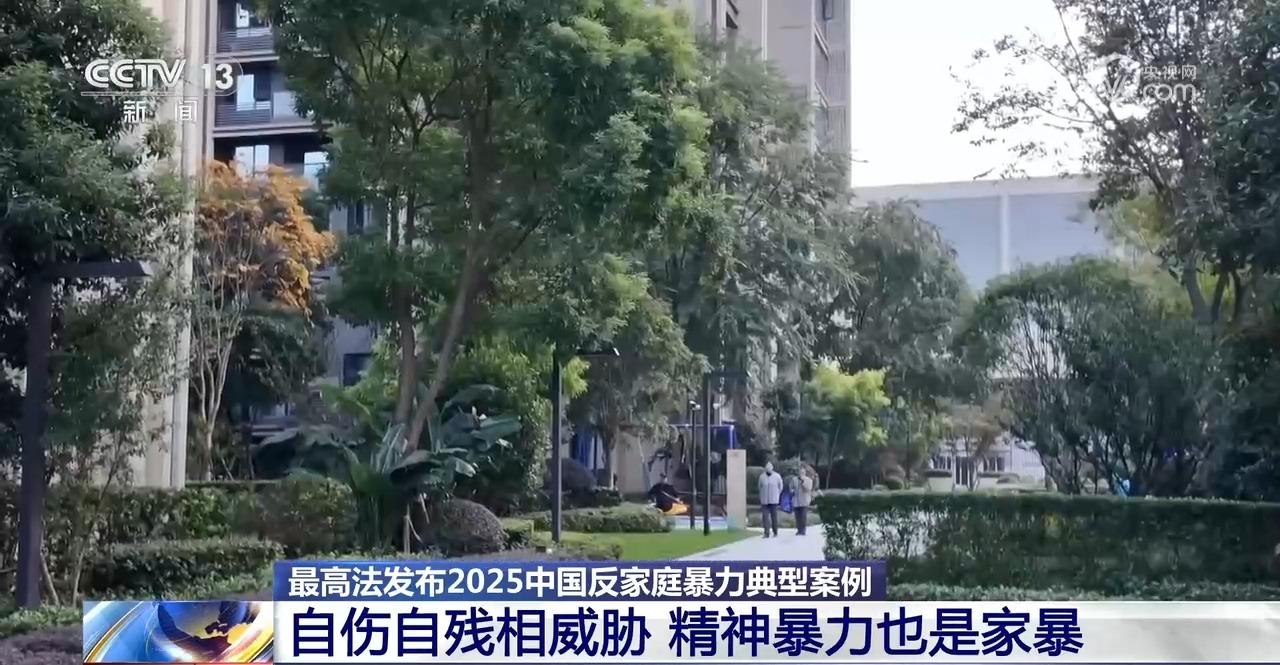
精神暴力也是家暴 最高法发布2025中国反家庭暴力典型案例
Yang Shi Wang· 2025-11-21 22:56
Core Points - The Supreme Court of China released typical cases of domestic violence for 2025, highlighting eight cases selected from the past three years [1] - One case specifically recognized self-harm or threats of self-harm as a form of domestic violence, establishing that such actions can instill fear and serve as a means of control [1] Summary by Sections - **Case Details**: In a domestic dispute in Chongqing, a husband threatened self-harm with a knife, escalating the situation when his wife attempted to leave with their child [3][5] - **Legal Action**: The wife reported the incident to the police and applied for a personal safety protection order, providing evidence of the threat [5] - **Court Response**: The court issued the protection order online within 20 minutes, prohibiting any form of domestic violence and outlining the legal consequences for violations [7] - **Resolution**: Following ongoing education and mediation from the court, women's federation, and community, the husband agreed to divorce and resolve issues related to child custody and property division [7]
最高法发布2025年中国反家暴典型案例
Zhong Guo Xin Wen Wang· 2025-11-21 02:04
Core Viewpoint - The Supreme People's Court of China has released eight typical cases related to domestic violence to enhance the implementation of the Anti-Domestic Violence Law and provide guidance on legal application, evidence recognition, and handling measures [1][3]. Group 1: Characteristics of Domestic Violence Cases - Domestic violence is not merely a family dispute; it includes psychological abuse, which is also considered domestic violence [1][2]. - Courts are encouraged to comprehensively assess the characteristics of domestic violence cases and may allow experts to provide assistance when necessary [2][3]. - Special attention is given to the judicial protection of vulnerable groups, particularly minors, emphasizing the principle of maximizing the interests of minors [2][3]. Group 2: Judicial Attitude and Responsibilities - The release of these cases demonstrates the court's commitment to safeguarding the rights of women and children and its zero-tolerance stance towards domestic violence [3]. - The courts play a crucial role in protecting victims, punishing perpetrators, and restoring social relationships [3]. Group 3: Typical Cases Overview - Case 1: Psychological abuse through continuous humiliation and degradation constitutes severe abuse, leading to a conviction for abuse [5][6]. - Case 2: The court recognized the influence of domestic violence on the victim's behavior and allowed expert testimony to clarify the psychological aspects of the case [10][11]. - Case 3: The court emphasized the need to accurately characterize the perpetrator's actions in light of domestic violence characteristics [14][15]. - Case 4: The victim's statements, which included non-knowable details, were deemed credible, leading to a conviction for sexual offenses [18][19]. - Case 5: The issuance of a protection order was facilitated through a one-stop collaborative intervention mechanism, highlighting the importance of community involvement [22][23]. - Case 6: The court ruled that violent discipline should be recognized as domestic violence, impacting custody decisions [27][28]. - Case 7: The court supported compensation for domestic labor and damages in divorce proceedings, ensuring financial protection for victims [32][33]. - Case 8: The court ruled that perpetrators of domestic violence should generally not have custody of minors, reflecting a protective stance towards children [37].