
反洗钱和反恐怖融资

Search documents
欧盟将俄罗斯列入高风险洗钱区域
制裁名单· 2025-12-09 08:35
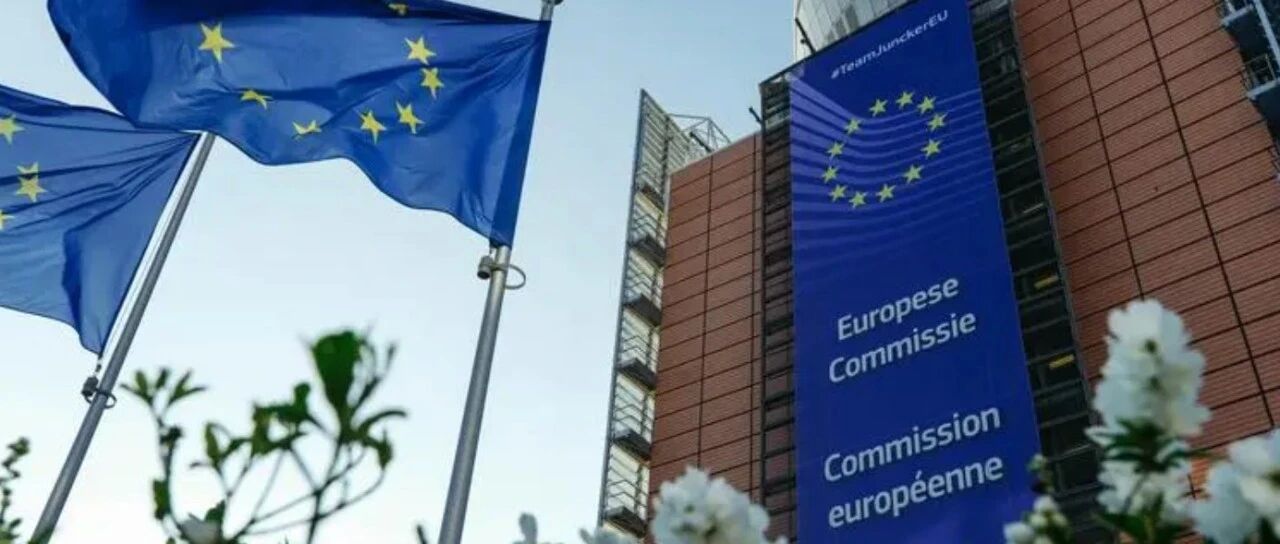
Core Viewpoint - The European Commission has officially listed Russia as a high-risk third country for anti-money laundering and counter-terrorist financing (AML/CFT), citing strategic deficiencies in Russia's AML/CFT system, which will significantly impact financial interactions between EU financial institutions and Russia [1]. Regulatory Background - The decision stems from a divergence between the EU and the Financial Action Task Force (FATF), which suspended Russia's membership in February 2023 due to the Ukraine conflict. However, FATF did not blacklist Russia due to opposition from BRICS countries. The European Parliament urged the EU Commission to act independently, leading to this decision as a fulfillment of that commitment [2]. - The new EU Anti-Money Laundering Authority (AMLA) will begin drafting blacklists from July 2025, marking this decision as a demonstration of the EU's independent regulatory capability before AMLA's full operation [2]. Legal Basis and Effective Date - The decision is based on Article 9 of the Fourth Anti-Money Laundering Directive (AMLD IV) and will take effect one month after review by the European Parliament and Council, with a possible extension of one month, likely making it effective in early 2026 [3]. Core Requirements for Financial Institutions - Financial institutions and non-financial entities in the EU must implement Enhanced Due Diligence (EDD) for transactions involving Russia, including: 1. Mandatory EDD requiring additional customer background information, beneficial ownership verification, and more frequent transaction monitoring [4]. 2. Strict scrutiny of correspondent banking relationships with Russian financial institutions, leading many European banks to potentially terminate these relationships to avoid compliance costs and reputational risks [4]. Impact on Financial Institutions - Financial institutions must update sanction lists within 72 hours to include Russia and entities with over 50% ownership, requiring adjustments in customer relationship management and transaction monitoring systems [7]. - All Russian-related clients must undergo risk re-evaluation, with additional documentation required, such as tax residency proof and transaction purpose statements [8]. - The implementation of EDD for Russia is estimated to increase AML compliance costs for financial institutions by 15%-20%, covering costs for manual reviews, third-party data services, and regulatory technology tools [9]. Impact on the Russian Financial System - The blacklisting will further isolate the Russian financial system, compounding existing sanctions since the Ukraine conflict, leading to reduced cross-border payment channels and higher compliance barriers for Russian enterprises in the EU [10]. - Russia is facing long-term economic isolation from future investment plans and global economic integration [10]. Indirect Impact on Chinese Financial Institutions - Chinese banks with branches in the EU or engaged in cross-border business will face compliance challenges, including dual regulatory pressures and potential disruptions in trade settlement paths if European correspondent banks sever ties with Russian banks [11].

三部门发文规范金融机构客户尽职调查
Xin Hua Wang· 2025-11-28 12:03
Core Points - The People's Bank of China, along with two other regulatory bodies, has issued a new management measure aimed at standardizing customer due diligence and transaction record-keeping for financial institutions, effective from January 1, 2026 [1] - The management measure emphasizes the principle of "Know Your Customer" (KYC), requiring financial institutions to identify and verify the identities of customers and their beneficial owners based on the nature of customer characteristics and transaction activities [1] - Financial institutions are required to implement enhanced due diligence measures for customers with higher risks of money laundering and terrorist financing, while simplified due diligence measures can be applied for lower-risk customers [1] - The management measure mandates that financial institutions retain customer identity information, beneficial owner information, and various records reflecting the due diligence efforts undertaken [1] - Additionally, financial institutions must maintain transaction records that include data on each transaction, business vouchers, ledgers, and other documentation that reflects the true nature of the transactions [2]
央行发布关于《关于落实〈金融机构反洗钱和反恐怖融资监督管理办法〉有关事项的通知》公开征求意见的反馈
Di Yi Cai Jing· 2025-10-24 09:17
Core Viewpoint - The central bank has released feedback on the public consultation regarding the implementation of the "Supervision and Administration Measures for Anti-Money Laundering and Anti-Terrorist Financing by Financial Institutions," indicating that most of the 17 opinions received during the consultation period have been adopted [1] Group 1 - The suggestion to remove the reporting obligation regarding penalties or sanctions imposed by local anti-money laundering regulatory authorities on independent foreign legal entities within the same group has been adopted, and the relevant provisions have been deleted [1] - The recommendation to change the signatory authority for the annual anti-money laundering work report from the institution's main responsible person to "responsible person" has been accepted, with the term "main responsible person" modified to "responsible person" [1] - The difficulty in submitting the annual anti-money laundering work report by the end of January of the following year has led to the adoption of a revised deadline, which has been changed to the end of March [1]
人民银行发布关于《中国人民银行发布关于修改和废止部分规章的决定(征求意见稿)》公开征求意见的反馈
Xin Hua Cai Jing· 2025-10-11 10:07
Core Points - The People's Bank of China (PBOC) has released a draft decision to modify and abolish certain regulations, which will be open for public consultation from July 15 to August 14, 2025 [1] - A total of 28 valid opinions were received during the consultation period, with most suggestions being adopted after thorough research and analysis [1] Group 1: Suggestions and Adoption - The suggestion to add supplementary requirements for institutions reporting large transactions has been adopted, with relevant requirements included in Article 9(4) of the "Management Measures for Reporting Large Transactions and Suspicious Transactions by Financial Institutions" [1] - The recommendation to further clarify the requirements for monitoring lists has been accepted, with details to be specified in the management measures related to anti-money laundering [1] - The proposal to clarify the responsibilities of the leading department and related business departments in financial institutions regarding anti-money laundering has been adopted, with modifications made to Articles 4 and 10 of the "Supervision Management Measures" [1] - The suggestion to supplement the circumstances under which financial institutions should conduct irregular special assessments has been accepted, with the term "regular" removed from Article 4 of the "Supervision Management Measures" [1] - The recommendation to retain the original wording of Article 8(2) of the "Supervision Management Measures" has been adopted, adding a requirement for institutions to take necessary legal measures for money laundering risk management when needed [1]
聊城市市场监管局开展贵金属和宝石从业机构反洗钱和反恐怖融资政策宣讲活动
Sou Hu Cai Jing· 2025-09-01 08:40
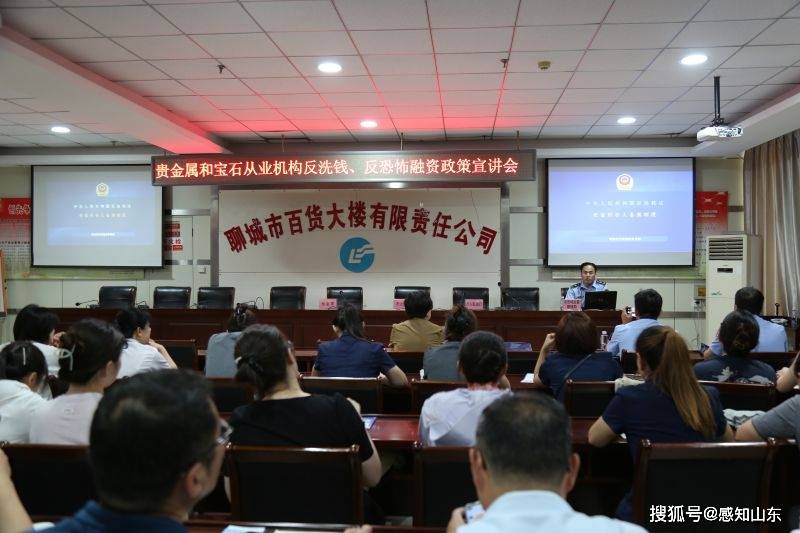
Group 1 - The event aimed to enhance the awareness of anti-money laundering among precious metal operators and effectively prevent money laundering risks [1][3] - The market supervision bureau provided interpretations of the legal basis and significance of the "Beneficial Owner Information Filing System" under the Anti-Money Laundering Law of the People's Republic of China [3] - The bureau emphasized the importance of timely completion of beneficial owner information filing and the social responsibility of market entities in anti-money laundering efforts [3] Group 2 - The market supervision bureau plans to strengthen risk investigation and crackdown on money laundering and terrorist financing in key sectors and industries [3] - There will be continuous innovation in promotional methods to expand the coverage of anti-money laundering awareness [3] - The initiative aims to mobilize various parties to contribute to safeguarding the public's financial interests [3]
中国人民银行与巴西央行续签双边本币互换协议
Zheng Quan Ri Bao· 2025-08-08 07:24
Core Points - The People's Bank of China (PBOC) and the Central Bank of Brazil signed a Financial Strategic Cooperation Memorandum and a bilateral currency swap agreement, aiming to enhance cooperation between the two central banks [1][2] - The bilateral currency swap agreement is valued at 190 billion RMB / 157 billion Brazilian Reais, effective for five years, with the possibility of extension, facilitating the use of local currencies in trade and investment [1] - The agreements signify a new phase of mutually beneficial and efficient cooperation, providing better financial services for enterprises and strengthening the comprehensive strategic partnership between China and Brazil [2] Group 1 - The Financial Strategic Cooperation Memorandum aims to improve the investment environment, enhance financial market infrastructure, and support cross-border payment systems [1] - The currency swap agreement will help stabilize financial markets and promote trade and investment facilitation between China and Brazil [1] - The PBOC and the Central Bank of Brazil will collaborate on anti-money laundering and counter-terrorism financing efforts, sharing intelligence to combat cross-border financial crimes [2] Group 2 - The PBOC will also sign a Financial Strategic Cooperation Memorandum with the Brazilian Ministry of Finance to coordinate on financial markets and international monetary policy [2] - The cooperation includes exploring sustainable development financing mechanisms and promoting reforms in the international monetary system [2] - The agreements are expected to provide financial support for the alignment of development strategies between China and Brazil [2]
明天起,现金买黄金超10万元需上报!
Sou Hu Cai Jing· 2025-07-31 12:36
Core Points - The People's Bank of China has issued the "Management Measures for Anti-Money Laundering and Anti-Terrorist Financing for Precious Metals and Gemstone Practitioners" to implement the Anti-Money Laundering Law of the People's Republic of China [1][2] - The measures require practitioners to fulfill anti-money laundering obligations for cash transactions of 100,000 RMB or more, or equivalent foreign currency [2][3] - The new regulations will take effect on August 1, 2025, and practitioners must submit large transaction reports to the Anti-Money Laundering Monitoring and Analysis Center within five working days of the transaction [3] Summary by Category Regulatory Framework - The issuance of the management measures is part of the effort to enhance compliance with anti-money laundering laws in the precious metals and gemstone sectors [1][2] - The measures outline specific obligations for practitioners regarding cash transactions above the threshold of 100,000 RMB [2][3] Compliance Requirements - Practitioners are required to conduct customer due diligence based on the "Know Your Customer" principle for transactions that meet the specified cash threshold [2][3] - A large transaction report must be submitted within five working days for qualifying transactions [3] Implementation Timeline - The new management measures will come into effect on August 1, 2025, providing a timeline for practitioners to prepare for compliance [3]
央行:明日起,现金买金超10万元需上报
Zheng Quan Shi Bao· 2025-07-31 09:05
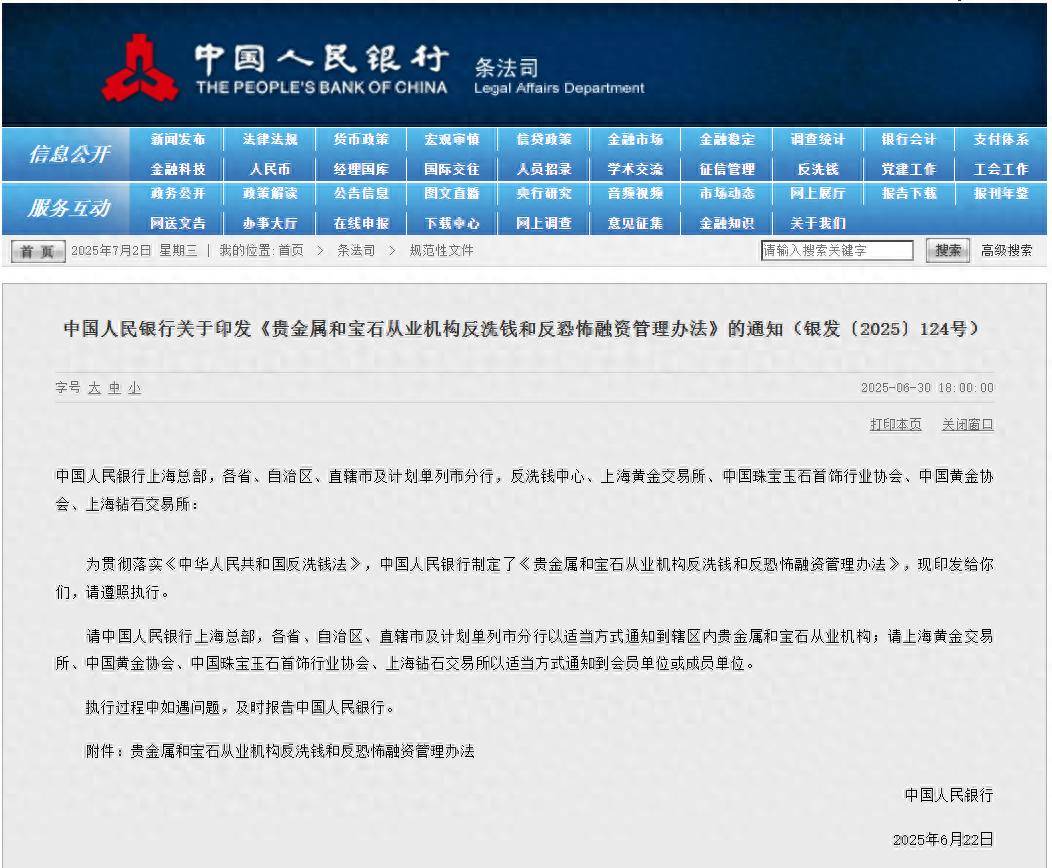
Core Points - The People's Bank of China has issued a notice regarding the implementation of anti-money laundering and counter-terrorism financing management measures for precious metals and gemstone industry practitioners, effective from August 1, 2025 [1][3] Group 1: Regulatory Framework - The new regulations require institutions to fulfill anti-money laundering obligations for cash transactions of 100,000 RMB or more, or equivalent foreign currency [3] - Institutions must conduct customer due diligence based on the "Know Your Customer" principle for transactions meeting the specified threshold [3] - A large transaction report must be submitted to the Anti-Money Laundering Monitoring and Analysis Center within five working days of the transaction [3]
央行重磅通知!8月1日起使用现金买黄金、钻石超10万元或等值外币将需上报
Sou Hu Cai Jing· 2025-07-31 07:26
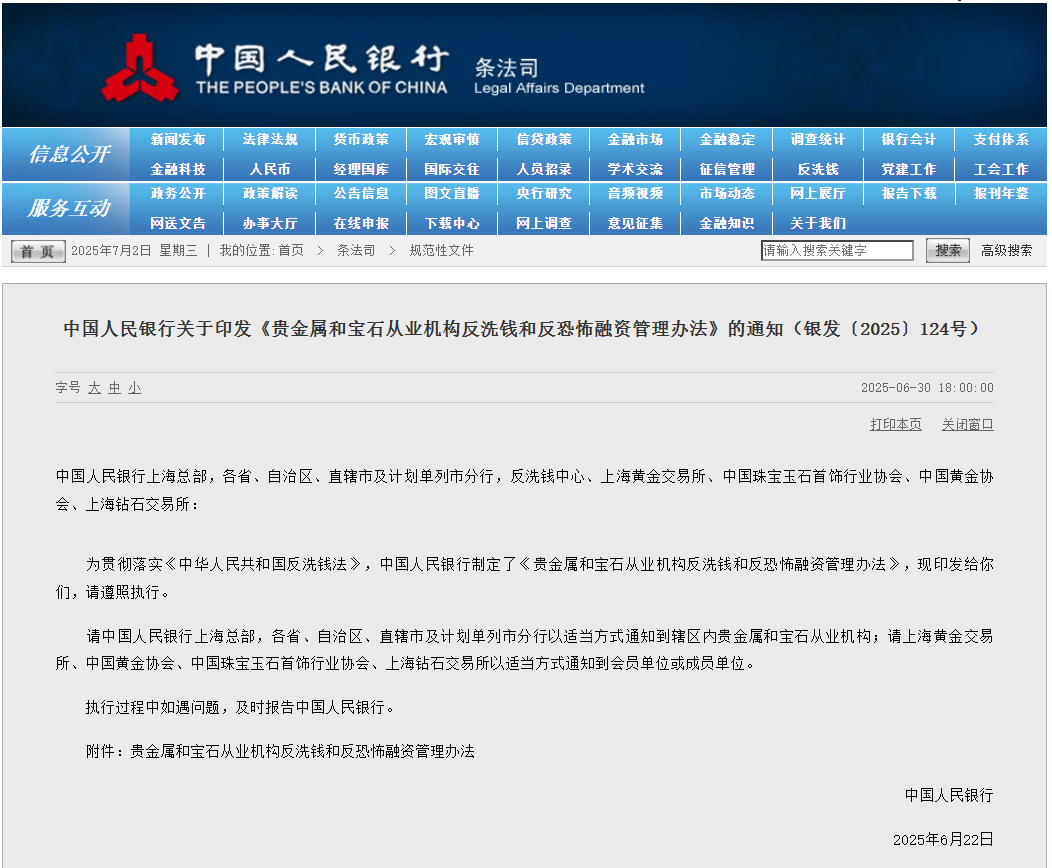
Core Points - The People's Bank of China has issued a notice regarding the implementation of the "Management Measures for Anti-Money Laundering and Counter-Terrorist Financing for Precious Metals and Gemstone Practitioners" [1] - The measures will take effect from August 1, 2025 [3] Summary by Sections Regulatory Framework - Institutions engaging in cash transactions of 100,000 RMB or more (including 100,000 RMB) or equivalent foreign currency must fulfill anti-money laundering obligations as per the new measures [3] - Institutions are required to conduct customer due diligence based on the "Know Your Customer" principle, considering customer characteristics and the nature of transaction activities [3] Reporting Requirements - For cash transactions of 100,000 RMB or more (including 100,000 RMB) or equivalent foreign currency, institutions must submit a large transaction report to the Anti-Money Laundering Monitoring and Analysis Center within five working days of the transaction [3]
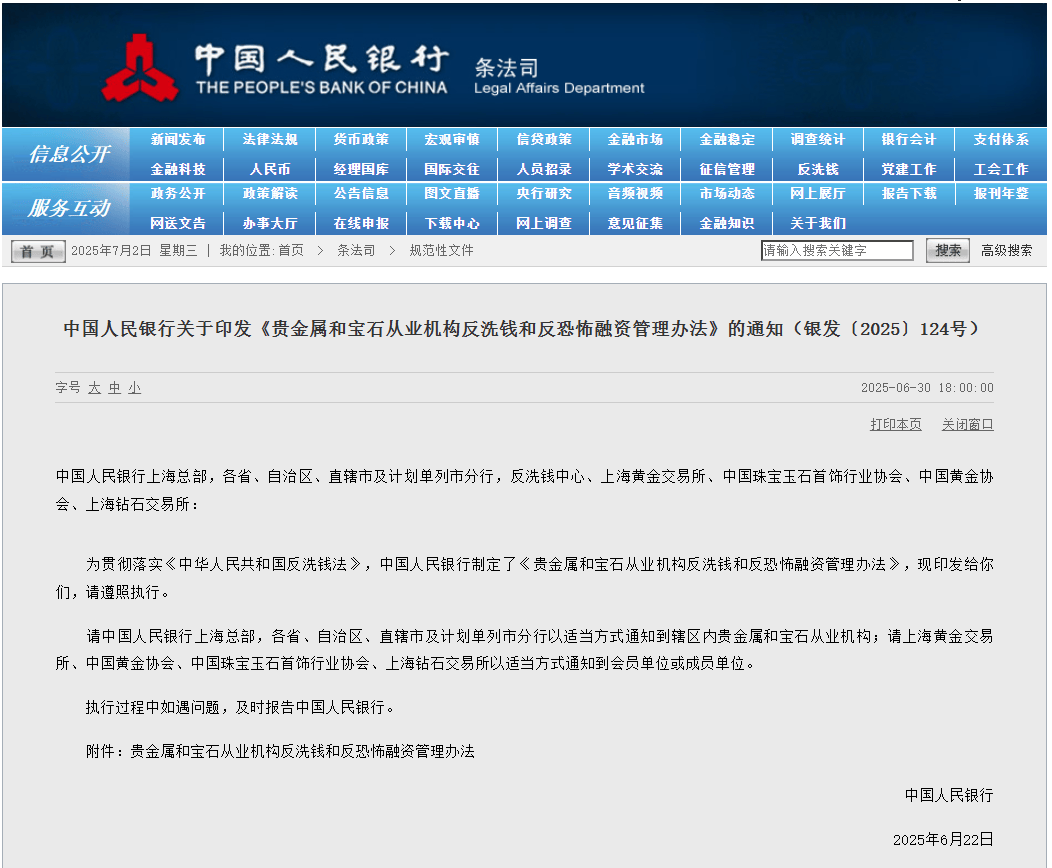
8月1日起,现金买黄金超10万元将需上报
Sou Hu Cai Jing· 2025-07-31 04:13
Group 1 - The People's Bank of China has issued a notice regarding the implementation of anti-money laundering and anti-terrorist financing management measures for precious metals and gemstone industry practitioners [1] - Institutions are required to fulfill anti-money laundering obligations for cash transactions of 100,000 RMB or more, or equivalent foreign currency [1] - Institutions must conduct customer due diligence based on the "Know Your Customer" principle for transactions meeting the specified threshold [1] Group 2 - Institutions are mandated to submit large transaction reports to the Anti-Money Laundering Monitoring and Analysis Center within five working days of the transaction [1] - The new measures will take effect on August 1, 2025 [1]