禽类

Search documents
下一个资源品-农产品-怎么选-油脂专场
2026-02-03 02:05
Summary of Key Points from Conference Call on Agricultural Products and Oilseeds Market Industry Overview - The focus is on the agricultural products sector, particularly oilseeds, in the context of inflation relief and potential investment opportunities in 2026-2027 [1][2]. Core Insights and Arguments - **Investment Opportunities**: The agricultural sector, especially in the planting chain (agricultural inputs, seeds, and planting), is expected to experience a dual boost in valuation and profitability in 2026-2027 due to its close relation to food security [2]. - **Livestock Chain**: Within the livestock sector, beef cattle are favored over pig farming, raw milk, and poultry, indicating a shift in investment focus [2]. - **Global Oilseed Production**: A decrease in global soybean and sunflower seed production is anticipated for 2026, while canola production is expected to increase. The U.S. is reducing soybean planting area, leading to tighter supplies of soybeans and sunflower seeds, while canola supply remains ample [1][5]. - **Oil Consumption Trends**: In 2026, industrial consumption of canola oil is expected to recover, while palm oil growth will slow down. Soymeal consumption is projected to increase the most, with palm oil maintaining a strong supply-demand balance [1][6]. Market Dynamics - **Oil Market Volatility**: The oilseed market has been volatile, influenced by U.S. crude oil prices and geopolitical factors. Palm oil is leading the market due to its high production and trade volume, particularly in biodiesel applications [3][5]. - **Palm Oil Production and Exports**: Malaysia's palm oil production in January was below expectations, but exports increased, leading to a stockpile of 3.05 million tons. The market did not react negatively due to prior pricing adjustments [4][8]. - **Geopolitical Impact**: The U.S.-Iran conflict has strengthened crude oil prices, positively affecting oilseed prices. The U.S. biodiesel policy has also contributed to the rebound in soybean oil prices [5][6]. Supply and Demand Analysis - **Global Supply Adjustments**: The global supply of soybeans and sunflower seeds is tightening, while canola supply is more relaxed. The overall consumption of palm oil, soybean oil, and sunflower oil is expected to grow significantly in 2026 [5][6][7]. - **Price Trends**: As of late January, palm oil prices have risen significantly, with sunflower oil prices remaining strong at approximately $1,300 per ton. The price gap between Malaysian and Indonesian palm oil is around $44, indicating less supply pressure in Malaysia [9][10]. Regional Insights - **China's Import Dynamics**: China's soybean import demand is expected to meet current needs, but there is a projected shortfall in May. The first quarter saw lower import volumes, but the second quarter is expected to be historically high [11][12]. - **India's Oil Demand**: India's palm oil imports are recovering, with significant increases in January and February compared to December [10]. Additional Considerations - **Biodiesel Market**: The U.S. biodiesel processing margins have worsened, while the EU has seen improvements due to lower canola oil prices [15]. - **Domestic Demand Fluctuations**: In China, domestic oil demand has increased due to pre-holiday stocking, but consumption is expected to decline as the holiday approaches [16][22]. - **Market Correlations**: The relationship between oilseed products and crude oil prices is significant, influenced by production costs and macroeconomic factors [23]. Conclusion - The agricultural products and oilseeds market is poised for significant changes in the coming years, with investment opportunities emerging in specific sectors. The interplay of geopolitical factors, domestic demand, and global supply dynamics will be crucial in shaping market trends moving forward [24][25].

【县区信息】浔阳区局:开展雪后市场检查守护民生安全
Sou Hu Cai Jing· 2026-01-20 10:44
Group 1 - The core viewpoint emphasizes the importance of maintaining market order and ensuring the stability of essential goods prices during the snowy weather and upcoming Spring Festival [1][2] - The market regulatory authority in Xunyang District has initiated comprehensive inspections across various sectors to prevent price fluctuations and ensure food safety [1][4] Group 2 - Regulatory personnel conducted price checks in local markets, focusing on essential consumer goods such as vegetables, meat, and dairy products, finding only minor price increases within a reasonable range [4] - The inspections revealed no illegal price gouging, and the supply of essential goods remained sufficient [4] - Officials stressed the importance of adhering to pricing policies and preventing the spread of false price increase information [4] Group 3 - With the drop in temperatures, down jackets have become popular among consumers, prompting targeted inspections of down jacket quality in retail stores [6] - Inspections focused on verifying business qualifications, product labeling, and compliance with national safety standards, particularly for children's clothing [6] - A mechanism for ongoing supervision and a complaint channel has been established to ensure consumer safety in winter clothing purchases [6] Group 4 - Regulatory personnel conducted thorough checks on market safety, including measuring instruments, poultry sales, and the traceability of pork products [9] - Efforts included calibrating scales to prevent consumer fraud and ensuring the legality of poultry and wild animal sales [9] - The inspections aimed to educate merchants on legal regulations and ensure safe shopping conditions by addressing snow and ice hazards in market areas [9]

筑牢冬日食安防线-裕民县农村市场监管所开展冬季食品安全专项检查
Zhong Guo Shi Pin Wang· 2025-11-26 04:25
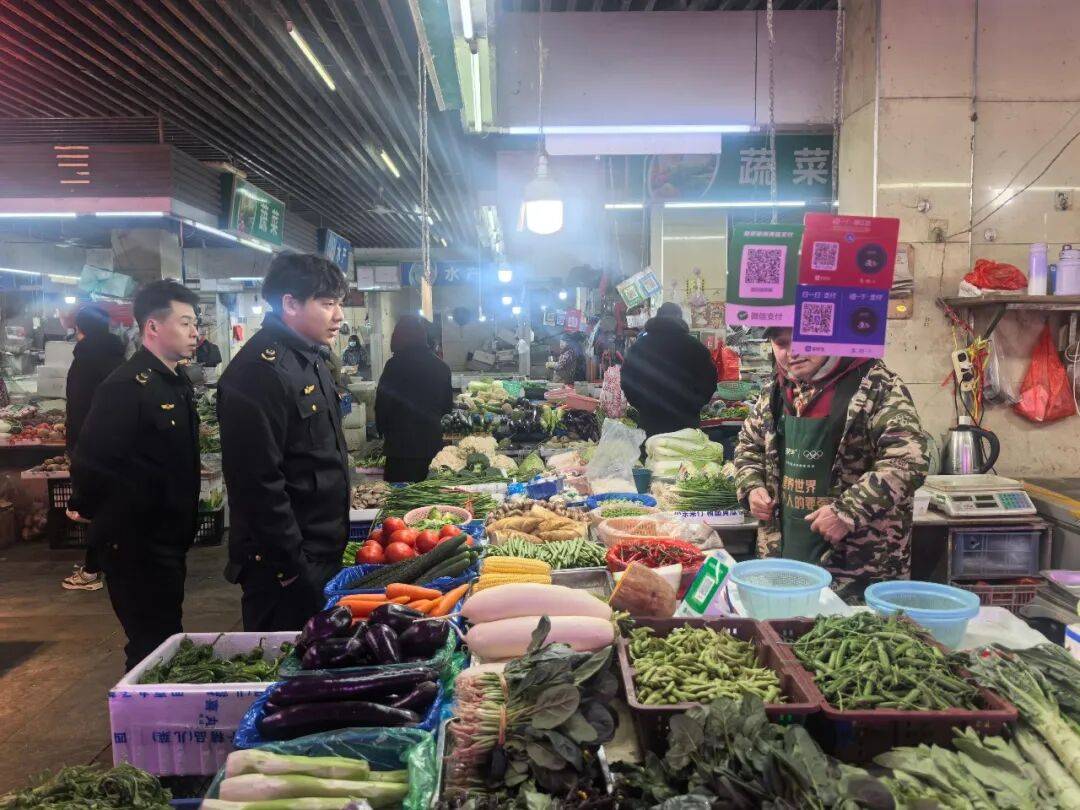
Core Points - The article emphasizes the importance of ensuring food safety in rural areas during winter, particularly focusing on the risks associated with foodborne diseases in low-temperature environments [1][2] - The regulatory body in Yumin County is conducting special inspections targeting key aspects of rural food consumption, including fresh meat, cold chain products, and dining establishments [1] Group 1: Inspection Focus - The inspections are based on principles of "full coverage, key focus, and hazard identification," concentrating on high-frequency rural consumption scenarios [1] - Specific areas of inspection include mobile stalls during market days, supermarkets, convenience stores, and rural dining units, ensuring compliance with food safety regulations [1][2] Group 2: Enforcement and Education - Enforcement personnel prioritize education over punishment, guiding vendors on proper record-keeping and addressing minor issues on-site [2] - Serious violations, such as selling expired food or uninspected meat, are subject to legal action, creating a deterrent effect [2] Group 3: Future Actions - The regulatory body plans to enhance its monitoring mechanisms through a combination of regular patrols, surprise checks, and follow-up inspections [2] - There is an emphasis on community involvement in food safety oversight, encouraging public reporting and creating a collaborative governance model among regulators, vendors, and consumers [2]
德国禽流感疫情加剧 将再扑杀上万只禽类
Xin Hua She· 2025-10-24 07:28
Core Points - The poultry farm in Baden-Württemberg, Germany, will cull approximately 15,000 birds following the confirmation of an avian influenza outbreak [1] - The state government has established a 3-kilometer protection zone and a 10-kilometer monitoring zone around the affected farm [1] - The Friedrich-Loeffler Institute has raised the risk level for poultry farms in Germany from "low" to "high" due to the detection of the H5N1 avian influenza virus in crane samples [1] - The mortality rate among crane populations in eastern Germany has been notably high, with the virus spreading to other wild waterfowl, including ducks and geese, as well as domestic poultry like chickens and turkeys [1] - The scale of crane infections in Germany has reached unprecedented levels, with at least 2,000 cranes reported dead from avian influenza during their migration [1]
受台风暴雨影响 厦门主要食品价格9月稳中有升
Sou Hu Cai Jing· 2025-10-12 00:33
Core Insights - Xiamen's food prices showed a slight increase in September, with an overall rise of 0.87% month-on-month due to the impact of typhoons and heavy rain [1] Group 1: Food Price Trends in September - The average price of grains was 2.74 yuan (per 500 grams), showing a slight decrease of 0.63% month-on-month [1] - The average price of cooking oil (5 liters) was 73.05 yuan, with a minor decrease of 0.49% month-on-month [1] - Vegetable prices increased significantly, averaging 4.37 yuan, which is a rise of 6.33% month-on-month [1] - Pork prices showed a stable upward trend, averaging 17.11 yuan, with a month-on-month increase of 0.65% [1] - Other food items also experienced price increases, including: - Fruits: average price 5.64 yuan, up 0.62% month-on-month [1] - Poultry: average price 15.06 yuan, up 1.28% month-on-month [1] - Beef and lamb: average price 39.87 yuan, up 0.81% month-on-month [1] - Seafood: average price 20.98 yuan, up 1.21% month-on-month [1] - Eggs: average price 5.47 yuan, unchanged month-on-month [1] - Dairy: average price 2.89 yuan, unchanged month-on-month [1] Group 2: October Price Forecast - The overall market in Xiamen is expected to remain stable in October, with food prices anticipated to rise slightly month-on-month due to the influence of the National Day and Mid-Autumn Festival [2] - Grain and oil prices are expected to remain stable, while vegetable prices may continue to rise [2] - Prices for pork, seafood, beef and lamb, fruits, and poultry are expected to fluctuate [2]
商务发布|齐鲁大地消费市场活力涌动,节日市场供应充足价格平稳
Qi Lu Wan Bao· 2025-10-09 08:50
Core Insights - The consumption market in Shandong Province showed vitality and stability during the 2025 National Day and Mid-Autumn Festival holidays, supported by proactive measures from the provincial government and the Ministry of Commerce [1] Group 1: Consumer Activities - Various promotional activities were organized across Shandong to stimulate market potential, including over 30 events in Jinan and food festivals in Qingdao, contributing to a vibrant consumer experience [3] - Cities like Zibo and Zaozhuang launched specific campaigns such as appliance subsidies and automotive exhibitions, enhancing the overall consumer engagement [3] - Other cities also participated with unique local events, including shopping seasons and food festivals, covering multiple sectors like retail, dining, and tourism [3] Group 2: Price Stability and Supply Assurance - A reporting system for market supply fluctuations was initiated, with daily monitoring of essential goods' wholesale prices, showing a general price stability for key items like eggs, seafood, and pork [4] - The provincial government ensured that major retail enterprises maintained sufficient inventory levels to meet consumer demand during the holidays, indicating a solid supply foundation [4] Group 3: Sales Growth - The combined effect of promotional policies and active marketing by enterprises led to a significant increase in sales during the National Day holiday, with 500 key retail enterprises reporting higher sales compared to the previous year [5] - Both product sales and restaurant revenues showed positive growth, reflecting the robust demand in the holiday consumption market [5]

中国农业主题发酵_追踪生猪供应管控- China Ag theme in play_ Tracking hog supply discipline
2025-09-23 02:37
Summary of China Agriculture Sector Quarterly Conference Call Industry Overview - **Industry Focus**: China Agriculture Sector, specifically hog supply discipline and pricing trends for various proteins [1][11] - **Key Players Discussed**: Major hog producers, sow feed producers, hog industry consultants, and hog vaccine producers [11][12] Core Insights Hog Supply and Pricing - **Hog Supply Control**: Industry feedback indicates that control of unit hog weight and the removal of secondary fattening practices are progressing according to policy guidance. However, the reduction of the sow herd is lagging [1][12] - **2026 Supply Forecast**: Expected hog supply to decline by 5% year-over-year, resulting in a 2% supply deficit. This is anticipated to improve industry hog farming margins by Rmb0.9/kg [1][13] - **Benchmark Hog Price**: Revised benchmark hog price for 2026E is Rmb14.8/kg, which is 14% higher than current levels [1][14] Other Proteins Pricing Trends - **Mixed Pricing Trends**: Domestic pricing trends for major proteins are mixed, with recovery noted in poultry and beef prices due to lower imports, while aqua and egg prices remain flat [2][7] - **Consumption Trends**: Downstream consumption has softened, leading to a contracting crush margin and weaker pricing for methionine and API index [2] Company Ratings and Recommendations - **Buy Ratings**: - Dabeinong (DBN) for improved biotech seeds earning visibility [3] - Haid for aqua feed growth and potential recovery in poultry feed [3] - **Neutral Ratings**: Wens and New Hope due to lower expected earnings [26] Additional Important Insights - **Sow Herd Trends**: The domestic sow herd size was flat month-over-month in July 2025, remaining 5% above the target set by the Ministry of Agriculture (MoA) [4][41] - **Secondary Fattening**: The practice of secondary fattening has decreased significantly, accounting for only 1% of total hog sales in August 2025, down from a peak of 6% in April [14][19] - **Cost Trends**: Total unit hog cost is projected to range from Rmb12.0-13.0/kg in 3Q25E, down from Rmb14.5-15.5/kg in 1Q24A [20] - **Profitability Spread**: The spread between hog pricing and unit feed cost has narrowed due to soft hog prices, while unit feed costs remain flat [55] Earnings Revisions - **Earnings Estimates**: Revised down by 1-12% for 2025E, 6-24% for 2026E, and 2-7% for 2027E for hog-related stocks, reflecting lower unit net hog profit and market output [26] Risks and Challenges - **Key Risks**: Include uncertainties in hog prices, execution risks in new project expansions, operational risks related to bio-security and disease control, and potential impacts from ASF infection on hog business [29][30] Conclusion - The China agriculture sector, particularly the hog industry, is undergoing significant changes with a focus on supply discipline and pricing recovery. While there are positive trends in hog pricing and supply management, challenges remain in herd reduction and overall profitability. The outlook for major companies varies, with some maintaining buy ratings while others are neutral due to expected earnings declines.
供应链赋能打造品牌竞争优势——武汉市世纪民生商贸有限公司创始人王静
Sou Hu Cai Jing· 2025-09-11 08:32
Industry Overview - The food industry in China is entering a new golden development period, characterized by a layered consumer market with both affordable and high-end segments focusing on quality, health, and emotional value [1][3] - The snack sector, particularly in the wholesale supply chain, is becoming a battleground for numerous entrepreneurs and companies, driven by rapid channel changes, evolving consumer habits, and product diversification [1][3] Market Resilience - The food industry exhibits strong resilience, with food consumption maintaining rigid demand regardless of economic fluctuations, especially in the snack and agricultural product sectors [3] - Companies that can grasp consumer trends while balancing efficiency and quality are more likely to gain long-term market recognition [3] Supply Chain Importance - The value of the supply chain is increasingly recognized, with consumers now aware of the complexities behind transportation, storage, turnover, and quality control [3] - Stability and transparency in the supply chain have become core competitive advantages, particularly in the deep processing of agricultural products [3] Company Profile: Century Minsheng - Founded by Wang Jing in 2016, Wuhan Century Minsheng Trading Co., Ltd. has emerged as a key player in the food industry, focusing on supply chain and brand development [5][17] - The company emphasizes a dual development path of "supply chain + brand," injecting new vitality into the local economy [3][17] Brand Development - Century Minsheng operates two brands: "Panling," which focuses on agricultural products, and "Jianqian," which targets baked snacks, both reflecting the founder's commitment to quality and emotional connection with consumers [9][11] - "Panling" aims to create a closed-loop system from farming to processing to sales, enhancing product value while supporting rural revitalization [9][11] Operational Strategy - The company adopts a light asset operation model, prioritizing supply chain efficiency and strict quality control to maintain competitiveness in a crowded market [11][13] - Century Minsheng employs a multi-channel strategy, integrating e-commerce, community group buying, and offline wholesale to build a robust market network [13] Future Outlook - Century Minsheng plans to deepen its focus on the snack supply chain and increase investment in its own brands while promoting deep processing of agricultural products [17] - The company aims to explore international markets while ensuring that each expansion is grounded in responsibility and commitment to quality [17]

激发百亿市场新活力 共探高质量发展新路径 2025年成都绿色食品精深加工产业链融合对接采购大会在蓉成功举办
Xin Lang Cai Jing· 2025-09-04 13:19
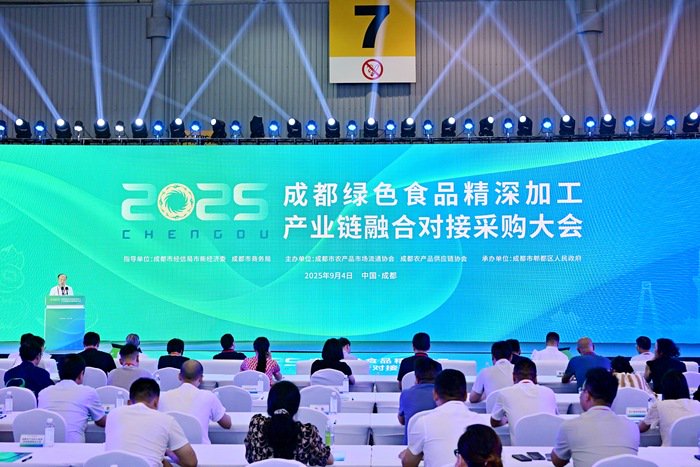
Core Insights - The 2025 Chengdu Green Food Deep Processing Industry Chain Integration Procurement Conference was successfully held, focusing on high-quality development and chain collaboration in the food processing sector [1][3] - The event attracted over 300 representatives from the food deep processing industry, including major enterprises and procurement merchants, to explore industry cooperation opportunities [4][6] Group 1: Event Overview - The conference was part of Sichuan Province's "1+1+8" strategy aimed at strengthening the agricultural product deep processing industry chain [3] - It was organized by various governmental and industry associations, highlighting the importance of collaboration among agricultural stakeholders [3] Group 2: Participation and Engagement - Major companies such as COFCO, Yihai Kerry, New Hope, and others participated, along with local agricultural enterprises and e-commerce platforms [4][6] - The event featured a dual exhibition and sales approach, showcasing nearly 20 leading enterprises and promoting green food products [6] Group 3: Procurement Opportunities - A procurement list worth 2.95 billion yuan was released, covering 15 categories of products, including vegetables, meat, and dairy [8] - The procurement scale included 220,000 tons of vegetables and 30,000 tons of pork, indicating significant market demand [8] Group 4: Strategic Partnerships - 15 leading enterprises signed agreements during the conference, with a total procurement amount nearing 200 million yuan, focusing on green ecological products [9] - The partnerships aim to enhance supply chain collaboration and brand development within the industry [9] Group 5: Future Directions - The conference aims to enhance the "Tianfu Granary" brand and promote the integration of resources and innovation in the green food industry [9] - Future efforts will focus on creating a nationally influential "Chuan" food industry cluster and expanding market reach [9]
欧盟“两手准备”应对美国关税:一边加紧谈判,一边筹划反击
智通财经网· 2025-07-21 09:14
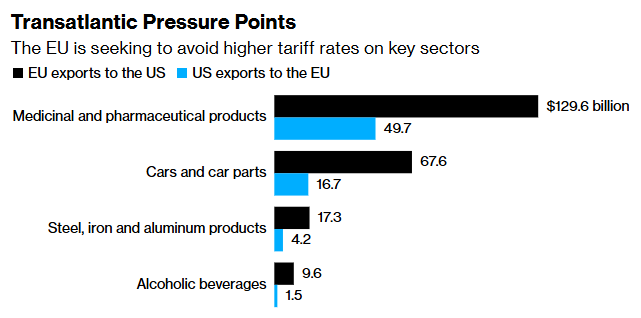
Core Points - The EU and US are entering another round of intensive trade negotiations, aiming to reach an agreement before the August 1 deadline, amidst increasing tensions over tariffs [1][6] - The US is reportedly seeking to implement nearly comprehensive high tariffs on EU goods, with rates exceeding 10%, while exemptions are becoming increasingly limited [2] - The EU is preparing for potential retaliatory measures if negotiations fail, including tariffs on US goods valued at €21 billion and an additional list targeting €72 billion worth of products [11][12] Group 1: Trade Negotiations - The EU and US representatives are set to engage in negotiations to break the deadlock before the August 1 deadline, with US Commerce Secretary expressing confidence in reaching an agreement [1][5] - The discussions include potential limits on certain industries, quotas on steel and aluminum, and the separation of supply chains from surplus metal sources [5][10] - The EU had previously been optimistic about nearing a preliminary framework for discussions on a unified tax rate of 10% on most exports [7] Group 2: Tariff Policies - Trump has warned that if no agreement is reached, a 30% tariff on EU imports will take effect on August 1, along with additional tariffs on cars, steel, aluminum, and other products [6][11] - The EU estimates that US tariffs currently cover €380 billion (approximately $442 billion) of its exports, accounting for about 70% of its total exports to the US [6] Group 3: Retaliatory Measures - The EU is considering rapid action plans for retaliatory tariffs if negotiations do not yield positive results, which could escalate into a broader transatlantic trade conflict [11][13] - The EU has already approved potential tariffs on US goods worth €21 billion in response to US metal tariffs, targeting politically sensitive products [11] - The EU is also exploring measures beyond tariffs, such as export controls and restrictions on public procurement contracts [12][14]