反腐倡廉

Search documents
整治高额彩礼、 反“四风”、吃饭“光盘”
Xin Lang Cai Jing· 2026-02-09 17:12
Group 1 - The article discusses the promotion of a civilized celebration for the Spring Festival, focusing on the reduction of high bride prices, vulgar wedding customs, and food waste through initiatives like the "Light Plate Action" [2][6] - Various regions are implementing measures to reform wedding customs, emphasizing simplicity and happiness over extravagant celebrations, with local governments actively promoting these changes [2][3] - The Central Government has issued guidelines to strengthen rural customs and promote a correct view of marriage and family, aiming to cultivate a more civilized wedding culture [2] Group 2 - The article highlights the importance of anti-corruption efforts during the festive season, with local governments conducting educational sessions for officials to prevent corruption and uphold integrity [4][5] - There is a focus on innovative supervision methods to combat corruption, including data sharing among agencies to identify irregularities in public spending during holidays [5] - The article notes that the promotion of a clean and honest festive atmosphere is essential for improving public trust and governance [5] Group 3 - The "Light Plate Action" encourages consumers to plan their dining needs responsibly, promoting practices such as ordering according to actual needs and avoiding food waste [6][7] - Environmental awareness is being integrated into traditional customs, with communities organizing activities that promote recycling and sustainable practices during the New Year celebrations [7] - The article emphasizes that the combination of frugality and environmental consciousness enhances the festive spirit while fostering healthier, sustainable lifestyles [7]
搞特权谋求特殊待遇,利用信贷权力敛财,中纪委连打四“虎”
Nan Fang Du Shi Bao· 2026-02-06 17:22
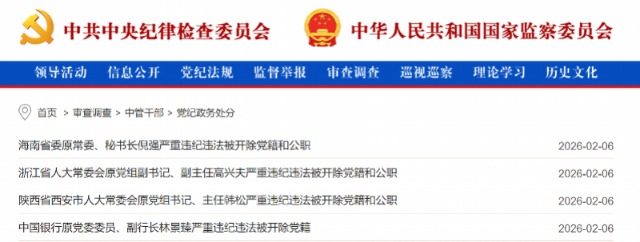
Core Viewpoint - The Central Commission for Discipline Inspection (CCDI) has announced the expulsion of four senior officials for serious violations of party discipline and law, reflecting the government's ongoing commitment to anti-corruption efforts [1][3]. Group 1: Disciplinary Actions - Four senior officials were expelled from the Communist Party and public office for serious violations, including Ni Qiang, Gao Xingfu, Han Song, and Lin Jingzhen [1][3]. - All four officials were found to have committed serious job-related violations and are suspected of bribery, with their cases being transferred to the judicial authorities for prosecution [3][7][12]. Group 2: Individual Cases - Ni Qiang, former Secretary-General of Hainan Province, was expelled for serious violations including abusing power for personal gain and allowing his spouse to receive salary without actual work [5][7]. - Gao Xingfu, former Deputy Director of the Zhejiang Provincial People's Congress, was expelled for associating with political fraudsters and pursuing low-level pleasures [9][12]. - Han Song, former Director of the Xi'an Municipal People's Congress, was expelled for long-term unauthorized use of vehicles belonging to management and service objects [14][15]. - Lin Jingzhen, former Vice President of the Bank of China, was expelled for engaging in power-for-money transactions using his credit authority [17][18].

涉嫌严重违纪违法,成都市人大常委会原党组书记、主任包惠被查
Xin Lang Cai Jing· 2026-01-28 19:57
Group 1 - The Central Commission for Discipline Inspection and the National Supervisory Commission reported that Bao Hui, former Secretary of the Party Leadership Group and Director of the Chengdu Municipal People's Congress, is under investigation for serious violations of discipline and law [1] - Bao Hui, born in August 1963, has held various significant positions including Secretary and Mayor of Dazhou City, and Deputy Director of the Sichuan Provincial People's Congress [1] - In 2022, Bao Hui became the Director of the Chengdu Municipal People's Congress and is noted as the first female central management cadre investigated by the Central Commission this year [1] Group 2 - In 2022, the national disciplinary inspection and supervision agencies filed 1.012 million cases, including 115 cases involving provincial-level and above officials, and imposed penalties on 983,000 individuals, with 69 being provincial-level and above officials [1] - The State Council held its fourth anti-corruption work meeting, where key officials from various departments emphasized the importance of integrity and accountability [3] - The Central Commission for Discipline Inspection and the National Supervisory Commission reported that 65 central management cadres were investigated over the past year, with a focus on vice-provincial level officials [3]

“年底过了再喝”,这种幻想得彻底打消
Xin Lang Cai Jing· 2026-01-18 19:30
Core Viewpoint - The article emphasizes the ongoing issue of improper dining and drinking practices among local officials, highlighting the need for continued vigilance and enforcement of anti-corruption measures despite previous successes in curbing such behaviors [1][2][3][4]. Group 1: Current Situation - Local officials are still engaging in improper dining practices, often using phrases like "let's drink after the year-end" as a euphemism for postponing accountability [1][2]. - Despite significant progress in addressing these issues since the implementation of the "Eight Regulations," violations persist, indicating a need for ongoing efforts to combat these behaviors [1][3]. Group 2: Tactics Used by Officials - Some officials attempt to evade scrutiny by timing their gatherings around periods of increased oversight, such as meetings or holidays, believing they can avoid detection [2]. - Others change the location of their gatherings to private venues or neighboring areas to escape local monitoring, disguising their activities as work-related events [2]. - There are also attempts to mask the nature of these gatherings by using alternative formats, such as small-scale meetings or informal gatherings, to circumvent regulations [2][3]. Group 3: Misconceptions and Attitudes - There exists a dangerous mindset among some officials who believe that the anti-corruption efforts will eventually wane, leading them to engage in improper practices without fear of consequences [3][4]. - Some officials rationalize their actions by claiming that social drinking is necessary for building relationships and facilitating business, which reflects a misunderstanding of the implications of such behaviors [3]. Group 4: Call to Action - The article calls for a stronger commitment to maintaining a clean political environment, emphasizing that personal relationships should not serve as a cover for corrupt practices [4]. - It stresses the importance of a proactive approach to anti-corruption, urging officials to reject the notion that improper dining can be justified or overlooked [4].
创新笔谈丨做实深入细致的思想政治工作
Zhong Yang Ji Wei Guo Jia Jian Wei Wang Zhan· 2026-01-12 08:29
Group 1 - The core idea emphasizes the transformation from external constraints to internal self-discipline among party members and officials in Yunnan Province, aiming to eliminate corruption motives from the source [1] - The approach includes solidifying ideological foundations through the continuous application of Xi Jinping's Thought on Socialism with Chinese Characteristics for a New Era, guiding party members to convert innovative theoretical achievements into firm ideals and moral integrity [1] - The strategy involves integrating warning education with case investigations, ensuring that educational materials are developed and utilized from the outset of any investigation, tailored to different levels, fields, and groups [1] Group 2 - The cultivation of a clean culture is highlighted as a means to foster value pursuits, integrating resources to create a multi-dimensional communication framework that promotes integrity and discourages corruption [2] - Efforts are made to explore and incorporate elements of integrity from ethnic traditions, folklore, and family values, utilizing both online and offline methods to deeply instill the concept of cleanliness in society [2]
北京大学原副校长任羽中,“靠校吃校”,搞权钱交易,利用职务便利为他人在教育培训、升学就业等方面谋利
Zhong Guo Ji Jin Bao· 2025-12-08 12:07
Core Viewpoint - Ren Yuzhong, former Vice President of Peking University, was expelled from the Party and public office for serious violations of discipline and law, including corruption and abuse of power [1][2]. Group 1: Violations and Consequences - Ren Yuzhong was found to have lost his ideals and beliefs, violated the spirit of the Central Eight Regulations, and accepted gifts and money in violation of regulations [1][2]. - He was involved in using his position to benefit others in education and employment, engaging in power-for-money transactions, and illegally accepting large sums of money [1][2]. - The Central Commission for Discipline Inspection decided to expel him from the Party and public office, confiscate his illegal gains, and transfer his criminal issues to the prosecution [2]. Group 2: Background and Career - Ren Yuzhong was born in January 1980 in Ziyang, Sichuan, and graduated from Peking University with a doctorate in law [2][4]. - He held various positions at Peking University, including Director of the Policy and Regulation Research Office and Minister of the Human Resources Department, before becoming the first "post-80s" Vice President in March 2024 [4][5]. - He was under investigation for serious violations of discipline and law as of September 17, 2023, and voluntarily surrendered to the authorities [5][6]. Group 3: Institutional Response - Peking University expressed strong support for the decisions made by the Central Committee and the Central Commission for Discipline Inspection, emphasizing the importance of aligning with the Party's directives [5][6]. - The university called for all party organizations and members to unify their thoughts and actions with the Central Committee, reinforcing the commitment to strict governance and anti-corruption measures [6].
中纪委连打三虎
第一财经· 2025-12-08 08:50
Group 1 - The article reports on the expulsion of three high-ranking officials from the Communist Party of China due to serious violations of party discipline and law [1][5][8] - Bi Jingquan, former member of the National Committee of the Chinese People's Political Consultative Conference, was found to have engaged in corrupt practices, including accepting bribes and misusing public power for personal gain [3][4] - Peng Xiaochun, former vice chairman of the Guangxi Zhuang Autonomous Region Political Consultative Conference, was also expelled for similar violations, including accepting gifts and engaging in power-for-money transactions [7][4] - Ren Yu, former vice president of Peking University, faced expulsion for serious breaches of discipline, including using his position to benefit others in educational matters and accepting illegal financial gains [10][4] Group 2 - All three officials were found to have lost their ideals and beliefs, deviating from their original mission, and resisting organizational scrutiny [3][7][10] - The investigations revealed violations of the Central Eight Regulations, including accepting gifts, engaging in improper social activities, and failing to report personal matters as required [3][7][10] - The disciplinary actions taken against these officials included expulsion from the party, removal from public office, confiscation of illegal gains, and referral of their cases to judicial authorities for prosecution [4][8][10]

五部反腐倡廉历史文献即将出版
Xin Hua She· 2025-12-01 12:51
Core Viewpoint - The "Seventh Seminar on the Development History of Anti-Corruption and Integrity in China" was held, with over 180 guests and experts attending, highlighting the importance of compiling historical documents related to anti-corruption and integrity in China [1] Group 1 - The China Anti-Corruption and Integrity Development History Compilation Committee plans to release five major historical documents, including "History of Anti-Corruption and Integrity in China" and "History of Corruption in China" [1] - The committee aims to extract cultural nutrients from the history of anti-corruption and integrity to strengthen the construction of integrity culture in the new era [1] - The seminar involved in-depth discussions among experts regarding the editing and publication of these significant historical documents, aiming to create high-quality works that combine thoughtfulness, artistry, and visual appeal [1] Group 2 - The seminar was co-hosted by the China Anti-Corruption and Integrity Development History Compilation Committee and the Research Association of Dong Biwu's Legal Thought, with support from other legal and consulting organizations [2]
中国石化:统筹开展反腐倡廉教育月活动
Zhong Yang Ji Wei Guo Jia Jian Wei Wang Zhan· 2025-08-27 04:25
Core Viewpoint - The article discusses the comprehensive anti-corruption and integrity education initiative launched by Sinopec, focusing on enhancing party discipline and promoting a clean political environment within the organization [1][2][3][4][5] Group 1: Education and Training - Sinopec is implementing a month-long anti-corruption education campaign, emphasizing five key tasks: enhancing learning discussions, warning education, integrity reminders, inspection and rectification, and cultural guidance [1] - Various activities such as "Party Secretary on Stage" and "Integrity Education in Party Schools" are being conducted to ensure effective learning and internalization of regulations among party members [1] Group 2: Warning and Case Studies - A system-wide warning education meeting has been held, where typical cases of violations of the Central Eight Regulations were reported, and over 1,200 warning education sessions have been conducted [2] - The disciplinary committee has distributed a warning record of serious violations to party leaders, encouraging self-reflection and accountability among key personnel [2] Group 3: Risk Prevention and Supervision - The focus is on key individuals and areas, with strict reminders and supervision to prevent integrity risks, particularly among senior leaders and newly promoted staff [3] - A clear list of 75 permissible actions and 124 prohibitive actions has been established to delineate policy boundaries for party members [3] Group 4: Rectification and Accountability - The organization is addressing specific issues through self-examination and strict rectification measures, including a focused review of business hospitality practices across 130 subsidiaries [4] - Recommendations have been issued to improve management practices, and discussions have been held with financial department heads of 14 key enterprises to ensure immediate corrective actions [4] Group 5: Cultural Development - The integrity culture is being promoted as a foundational project, with a focus on developing a shared understanding of integrity values and behaviors among employees [5] - Innovative methods for disseminating integrity culture, such as an online exhibition hall, are being implemented to enhance the influence and appeal of integrity initiatives [5]

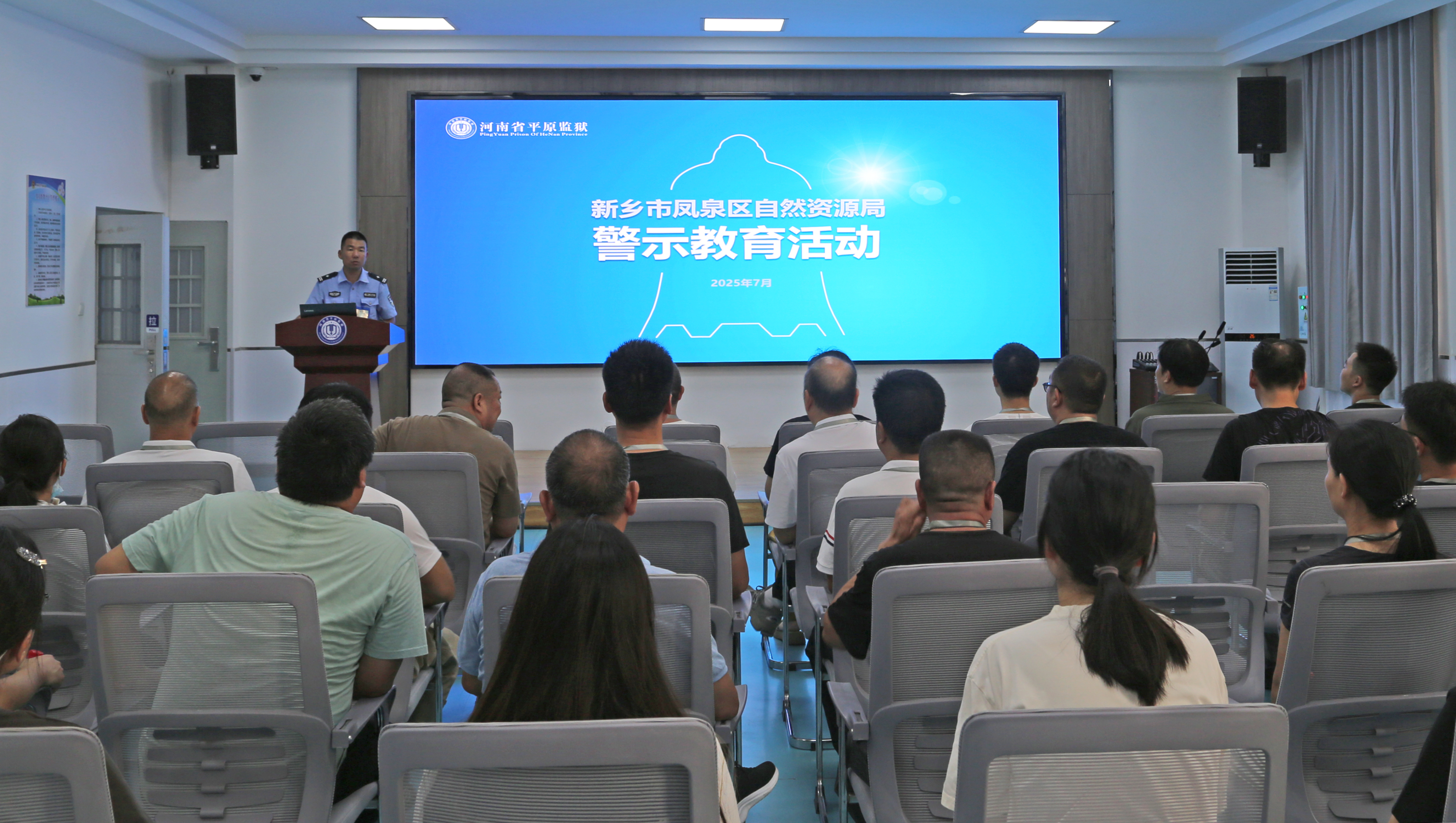
河南新乡凤泉区局开展警示教育活动
Zhong Guo Zi Ran Zi Yuan Bao· 2025-08-22 02:12
Core Viewpoint - The article emphasizes the importance of enhancing the awareness of integrity and self-discipline among party members and officials through a warning education activity organized by the Natural Resources Bureau of Fengquan District, Xinxiang City, Henan Province [3]. Group 1 - The activity involved listening to the testimonies of inmates, highlighting how a moment of greed led them to commit crimes and the resulting harm to their families and society [3]. - Participants visited various areas of the prison, including living and labor reform zones, to understand the daily rehabilitation of inmates and the heavy price of criminal behavior [3]. - The event had a profound impact on the attendees, prompting them to commit to maintaining a clear mind, enhancing their party spirit, and resisting temptations in their future work [3].