可再生能源+储能

Search documents
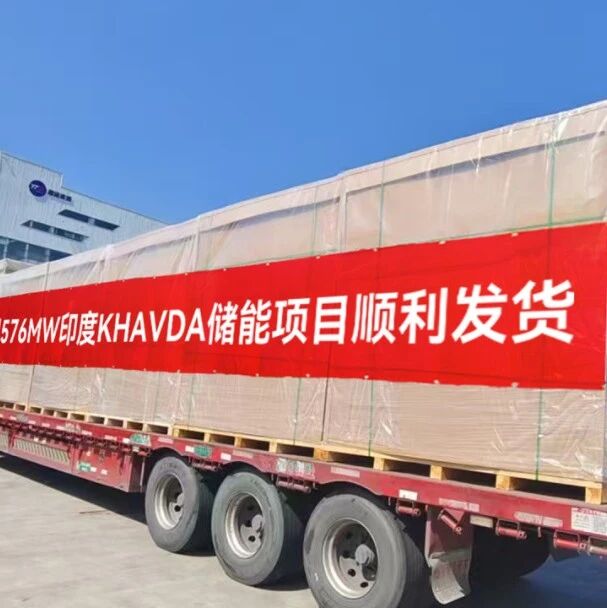
576MW!上能电气顺利供货印度最大储能电站
中关村储能产业技术联盟· 2025-12-22 08:05
Core Viewpoint - The article highlights the significant breakthrough achieved by Sungrow Power Supply Co., Ltd. in the Indian energy storage market, particularly through the successful delivery of 576MW energy storage inverters to the Kha vda energy base [2][4]. Group 1: Company Developments - Sungrow Power Supply Co., Ltd. has delivered 576MW energy storage inverters to the Kha vda energy base in India [2]. - The energy station, developed by the Adani Group, will have a total capacity of 1126MW/3530MWh, making it the largest energy storage station in India and one of the largest single energy storage stations globally [4]. - The operational energy station will help maintain grid stability, alleviate peak load pressure, and provide round-the-clock electricity supply [4]. Group 2: Industry Context - The Kha vda energy base is set to become one of the largest "renewable energy + energy storage" complexes globally [4]. - As of September this year, Adani Group's renewable energy operational capacity reached 16.7GW, with plans to add 15GWh of energy storage capacity by March 2027 and a total of 50GWh within five years [4].

JinkoSolar(JKS) - 2025 Q3 - Earnings Call Transcript
2025-11-17 13:32
Financial Data and Key Metrics Changes - Global module shipments totaled 61.9 GW in the first three quarters of 2025, ranking number one worldwide [4] - Gross margin improved sequentially to 2.9% in Q2 and 7.3% in Q3 [4][20] - Net loss continued to narrow sequentially, with operating cash flow reaching $340 million in Q3 [4][20] - Total revenue for Q3 was $2.27 billion, down 34% year-over-year [20] - Total operating expenses were RMB 363 million in Q3, up 36% sequentially [21] Business Line Data and Key Metrics Changes - Energy storage system (ESS) shipments exceeded 3.3 GWh in the first three quarters, showing significant growth [4][5] - Module shipments accounted for 93% of total shipments in Q3, with a focus on high-value overseas markets [15] - High-power products, particularly the Tiger Neo series, are expected to account for over 60% of shipments in 2026 [8][16] Market Data and Key Metrics Changes - Shipments to the U.S. were nearly 1.3 GW in Q3, doubling sequentially [15] - The company is focusing on high-margin overseas markets, particularly in Asia-Pacific, emerging markets, and Europe [15][10] - Demand for energy storage is increasing globally, driven by renewable energy penetration and declining storage system costs [9][10] Company Strategy and Development Direction - The company is investing in energy storage to build a long-term competitive advantage [10] - Plans to maintain reasonable production levels while upgrading high-efficiency capacity [14] - Total shipments for 2025 are expected to be between 85 GW and 100 GW, with ESS shipments projected at 6 GWh [14] Management's Comments on Operating Environment and Future Outlook - Management noted that the global supply chain is improving, and demand is expected to grow, particularly for energy storage [12] - The company anticipates a significant increase in revenue contributions from the energy storage business next year [29] - Management expressed confidence in navigating market cycles and achieving positive earnings in the future [66] Other Important Information - The company was recognized as a Tier One Energy Storage provider for the seventh consecutive quarter [17] - The MSCI ESG rating was upgraded to an A rating, reflecting strong sustainable development efforts [17] Q&A Session Summary Question: Difference in gross margins compared to Canadian Solar - Management explained that the difference is due to varying revenue contributions from the energy storage business, with expectations for significant growth in 2026 [28][29] Question: Geographic shipment mix for energy storage in 2026 - Management expects 70%-80% of ESS shipments to be outside China, particularly in the U.S. and Europe [32][33] Question: Compliance with foreign entity of concern requirements - Management indicated that they do not foresee significant negative impacts from compliance requirements and are exploring options for their solar module facilities in Florida [34][35] Question: Demand from AI data centers - Management confirmed ongoing discussions with potential clients in the AI data center sector, anticipating significant demand [40] Question: CapEx targets for 2025 and 2026 - Management stated that CapEx is expected to remain around RMB 5 billion for both years, focusing on upgrading to next-generation technology [62][63] Question: Guidance for module shipments in Q4 - Management indicated that they expect to close to the lower end of the previously provided range for Q4 module shipments [59] Question: Market share expectations for next year - Management expressed confidence in regaining market share as the industry consolidates, with expectations for stable demand [68]

10倍能耗增长!阿里、抖音开启储能新需求
行家说储能· 2025-09-24 12:25
Core Insights - The article discusses the rapid growth of energy storage in data centers, driven by major tech companies like Alibaba and Douyin, as they ramp up AI infrastructure and energy consumption [2][3][6]. Group 1: Alibaba's Energy Storage Initiatives - Alibaba is investing 380 billion in AI infrastructure, expecting data center energy consumption to increase tenfold by 2032 [3]. - To manage this increased energy demand, Alibaba aims to reduce its Power Usage Effectiveness (PUE) from 1.25 to below 1.1, focusing on technologies like immersion cooling, photovoltaic storage systems, and photonic chips [3]. - A joint project with Mingyang Smart Energy will launch in 2024, featuring a 200 MW wind power and a 40 MW/160 MWh energy storage system, with an expected annual output of 797 million kWh [3][4]. Group 2: Douyin's Energy Storage Plans - Douyin plans to procure over 200 MWh of large-scale lithium battery storage and associated wind and solar equipment, with a project launch set for November 2025 [6]. - The energy consumption of Douyin's data centers is among the highest in the internet industry, with a single large data center projected to consume over 1 billion kWh annually in 2024 [7]. Group 3: Industry-Wide Trends - Other tech companies, including Tencent, are also investing in data center energy storage, with Tencent's Tianjin data center expected to produce 12 million kWh of green electricity annually [8]. - By 2030, global data center energy storage capacity is projected to reach 262.5 GWh, with China's market expected to exceed 100 GWh [8]. - Companies like CATL, BYD, and others are positioning themselves to capture market share in the rapidly growing energy storage sector, with a projected domestic market size of 800 GWh over the next three years [10].