可变几何

Search documents
西方觉醒!加拿大总理含泪控诉:我们被美国骗了整整30年!
Sou Hu Cai Jing· 2026-02-17 16:49
Core Viewpoint - Mark Carney's unexpected rise to the position of Prime Minister of Canada marks a significant shift in leadership, emphasizing a pragmatic approach to international relations and trade amidst changing global dynamics [1][10]. Policy Adjustments - Shortly after taking office, Carney initiated policy changes, including negotiations with China on electric vehicle imports and setting initial quotas, which opened up the North American automotive supply chain [3][10]. - Carney's focus shifted towards diversification rather than confrontation, especially in light of increasing trade tensions with the U.S. [3][10]. International Relations - At the Davos Forum, Carney highlighted the breakdown of the old international order, where major powers use economic integration as a weapon and manipulate trade rules to their advantage [3][8]. - He introduced the concept of "value-based realism," advocating for middle powers to form temporary alliances based on pragmatic needs rather than rigid ideological alignments [8][10]. Trade Issues - Carney addressed the long-standing softwood lumber trade dispute with the U.S., illustrating the challenges Canada has faced due to perceived unfair trade practices and the lack of enforcement of trade agreements [5][6]. - The U.S. has consistently applied tariffs under the guise of national security or subsidies, impacting Canadian exports and industry stability [6][12]. Domestic Support and Strategy - Carney's pragmatic approach has garnered increased domestic support, even among traditional conservative voters, as he emphasizes factual discussions over emotional rhetoric [12][14]. - The Canadian government is actively reducing reliance on a single market, diversifying supply chains, and securing critical resources domestically [12][14]. Global Context - Carney's statements resonate with other Western nations, prompting a reevaluation of their expectations from the U.S.-led order, as many countries begin to seek new partnerships and trade agreements [12][14]. - The shift in global dynamics suggests that countries that adapt quickly to these changes will gain more leverage in international negotiations [14].

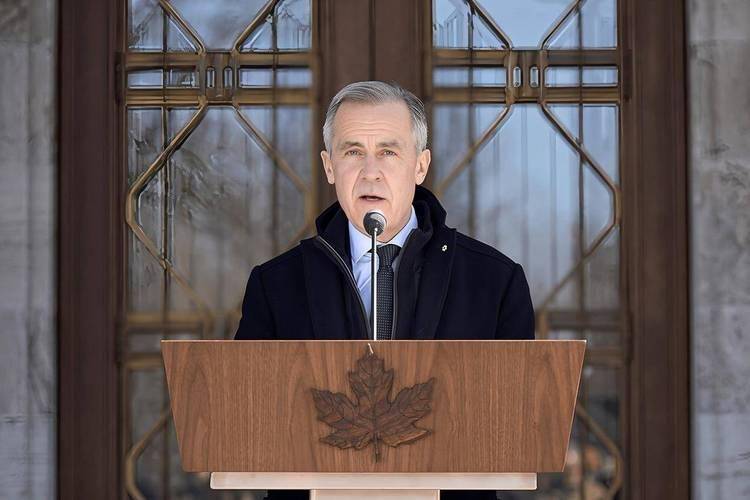
加拿大总理卡尼重磅演讲:基于规则的秩序已死,中等强国应团结行动,抵制某些大国胁迫
Hua Er Jie Jian Wen· 2026-01-21 04:49
Core Viewpoint - Canada strongly opposes the U.S. imposing tariffs to acquire Greenland, highlighting the threats to the international order and the need for middle powers to unite against hegemonic pressures [1][11]. Group 1: Canada's Stance on International Relations - Canadian Prime Minister Mark Carney criticized the use of tariffs as a tool for coercion by major powers, warning that the post-World War II rules-based international order is disintegrating [1][5]. - Carney emphasized that middle powers must abandon the illusion that compliance can ensure security and instead take collective action against hegemonic nations [1][7]. Group 2: Strategic Shift for Canada - Canada is transitioning to a strategy of "value-based realism," actively seeking to build hard power and diversify its relationships rather than passively waiting for global improvements [8]. - The country plans to double its defense spending by the end of the decade, invest in key sectors like energy and AI, and establish new trade partnerships with countries such as China and Qatar [9][10]. Group 3: Response to U.S. Actions - Carney's remarks were interpreted as a rational return to a more autonomous Canadian foreign and economic strategy, moving away from reliance on the increasingly uncertain traditional ally, the U.S. [2]. - He firmly stated Canada's position on Arctic sovereignty, expressing solidarity with Greenland and Denmark against U.S. threats regarding tariffs [11].