可持续技术

Search documents
KBR(KBR) - 2025 Q4 - Earnings Call Transcript
2026-02-26 14:32
Financial Data and Key Metrics Changes - Revenues for Q4 2025 were $1.85 billion, down $223 million year-over-year, primarily due to award timing in MTS and reductions in UCOM contingency scope [20] - Adjusted EBITDA for Q4 increased to $12 million, with margins at 12.6%, up 190 basis points, driven by disciplined program execution [21] - Full-year revenues were approximately $7.8 billion, up modestly year-over-year, with adjusted EBITDA increasing by $100 million and full-year margins at 12.4%, up more than 100 basis points [22][24] Business Line Data and Key Metrics Changes - Sustainable Tech (STS) faced a challenging year with a decline in petrochemicals CapEx, but margins held up well, and the segment delivered strong book-to-bill ratios of 1.6x in Q4 [10][12] - Mission Tech (MTS) revenue held steady year-over-year, with improved margins and excellent cash performance, despite a challenging environment [13][15] - Backlog for MTS ended the year at $19.1 billion, up 15% year-over-year, with 40% funded, excluding PFIs [15] Market Data and Key Metrics Changes - The Global South emerged as a major source of strength for STS, with significant wins in Iraq, Saudi Arabia, Kuwait, and Singapore [11] - MTS saw approximately $800 million in defense award contracts in Australia, with high single-digit year-over-year revenue growth [14] - The U.K. market is expected to see growth following a slow award cadence in 2025, with clear spending priorities established for 2026 [52] Company Strategy and Development Direction - The company executed its strategy in 2025 despite a challenging award environment, focusing on operational excellence and capital deployment [6][10] - The spin-off transaction is progressing as planned, with a targeted distribution anticipated in the second half of 2026 [16][18] - The company aims to enhance its operational clarity and standalone positioning for both entities post-spin [17][34] Management's Comments on Operating Environment and Future Outlook - Management expressed confidence in improving momentum and visibility for both segments as they enter 2026, with a focus on high-margin growth and disciplined execution [33] - The company expects award cadence to improve in the second half of 2026, supported by strong bid volume and contract vehicle leverage [15][32] - Management highlighted the importance of innovation and digital differentiation in driving better mix and resilient margins [33] Other Important Information - The company returned a record $413 million to shareholders in 2025 through buybacks and dividends, reflecting strong cash generation [27] - Adjusted EPS for the full year was $3.93, up $0.60 year-over-year, supported by increased adjusted EBITDA and share repurchases [22] - The company plans to introduce adjusted operating cash flow and adjusted free cash flow metrics in 2026 to enhance transparency [29] Q&A Session Summary Question: Pipeline in STS for sizable projects - Management noted impressive book-to-bill performance and significant opportunities in the Global South, particularly in OpEx areas [36][37] Question: Drivers of backlog growth in MTS - Management highlighted recent wins in HHPC and Djibouti, as well as momentum in Space Force and Air Force awards [41][42] Question: Clarity on EBITDA contribution from joint ventures - Management indicated that contributions from Plaquemines will remain consistent through early next year, with a focus on organic and inorganic growth [49][50] Question: Award environment in the U.K. - Management stated that the U.K. is moving into a growth cycle following a flat year, with clear spending priorities established [52] Question: Components of MTS guidance - Management confirmed that Defense and Intel is expected to grow, while Science & Space is under pressure due to NASA budget constraints [55][56] Question: M&A strategy post-spin - Management expressed openness to strategic acquisitions that enhance shareholder value, while maintaining a disciplined approach [60][61]

标普全球:全球特化品市场保持增长态势
Zhong Guo Hua Gong Bao· 2026-01-26 03:09
Core Insights - The global specialty chemicals market is expected to recover starting in 2024, with this recovery continuing into 2025, and an overall compound annual growth rate (CAGR) of 3% projected from 2026 to 2030, aligning with global economic trends [1] - The growth forecast reflects improving consumer demand and market stability, indicating a positive outlook and strong resilience in the global specialty chemicals market [1] - Differentiated growth rates are observed across various sub-sectors, highlighting the dynamic nature of the market [1] Sub-sector Analysis - The market for specialty chemicals used in new energy materials is anticipated to see significant growth over the next five years, driven by the global transition to low-carbon technologies and increased investment in sustainable technologies [1] - Electronic chemicals are projected to be the growth leader among specialty chemicals, with a CAGR of 7% from 2026 to 2030, particularly in semiconductor and integrated circuit manufacturing applications [1] - Technological advancements in display materials, printed circuit boards, and packaging chemicals are expected to further boost the growth of the electronic chemicals market [1] - The demand for electronic products such as smartphones, tablets, and wearable devices, along with rapid developments in IoT, AI, and 5G technologies, are key drivers of this trend [1] - The only sub-sector expected to experience a decline in demand over the next five years is exhaust catalysts [1] Regional Insights - China is projected to remain the largest consumer of specialty chemicals globally, with consumption expected to account for approximately one-third of the global total by 2030 [2] - Emerging regions such as South Asia, the Middle East, and Southeast Asia are becoming significant growth engines for the global specialty chemicals market, influencing the overall growth trajectory and complementing the Chinese market [2] - Mature markets like North America and Europe are expected to see a slowdown in growth due to demand saturation and economic downturn pressures [2]
穆巴达拉与韩国Glenwood完成对NanoH2O的投资
Shang Wu Bu Wang Zhan· 2025-12-05 16:21
Group 1 - Mubadala Investment Company and Glenwood Company have completed a joint investment in NanoH2O, a leading supplier of reverse osmosis membranes [1] - NanoH2O, headquartered in Seoul, focuses on seawater desalination and brackish water treatment, with 95% of its revenue generated from overseas [1] - The investment aligns with Mubadala's strategy to advance global sustainable technology and deepen investments in Korea and Asia [1]
科技巨头与初创两手抓,美妆产业步入“科技竞赛”时代
2 1 Shi Ji Jing Ji Bao Dao· 2025-11-14 14:31
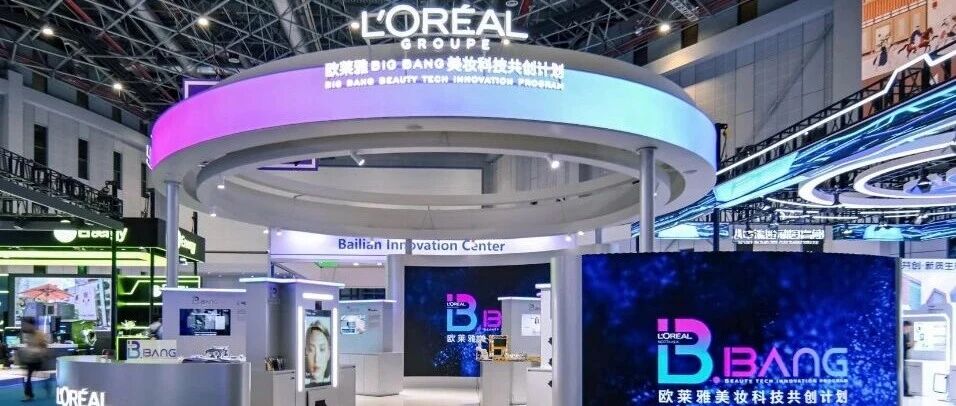
Core Insights - L'Oréal is accelerating its transformation in the beauty technology sector through open innovation, highlighted by its participation in the China International Import Expo with the "BIG BANG Beauty Tech Co-Creation Program" for the third consecutive year [1][2] - The program focuses on integrating AI and sustainable technologies, showcasing L'Oréal's forward-looking investments in the beauty tech landscape [1][3] Expansion of the Program - The BIG BANG program has expanded its scope, introducing "Transforming Sustainability" as an independent track alongside three other core tracks: "New Experience," "New Product Research," and "New Operations" [3] - This expansion aims to address sustainability challenges in the beauty industry through technological innovation, such as exploring AI-driven localized green business models [3] AI Integration and Innovations - Over twenty innovative startups from China, Japan, South Korea, and France participated in this year's expo, deeply integrating AI technology across various aspects of consumer experience, business applications, research, and supply chain [2][4] - Collaborations with tech giants like IBM, Google, and NVIDIA are enhancing the integration of AI into the BIG BANG program, positioning AI as a key driver of advancements in beauty technology [5] Regional Collaboration and Global Reach - The program has received over 700 applications this year, indicating a significant increase in interest and the establishment of a vibrant innovation community in North Asia [8] - L'Oréal's strategy includes leveraging successful experiences from the BIG BANG program to expand into South Asia, the Middle East, and North Africa, thereby building a global beauty tech ecosystem [8] Investment and Incubation - The BIG BANG program serves as a crucial channel for L'Oréal to incubate and invest in startups, providing financial support and facilitating strategic partnerships [10][11] - To date, the program has attracted over 2,500 startups and successfully incubated more than 80 projects, translating innovative solutions into commercial applications [11][12] Future Directions - L'Oréal's dual strategy of "Technologization" and "Globalization" aims to achieve sustainable growth in a changing beauty market, reinforcing its commitment to technological investment and a comprehensive industry ecosystem [13]

科技巨头与初创两手抓,美妆产业步入“科技竞赛”时代
21世纪经济报道· 2025-11-14 14:19
Core Viewpoint - The article highlights L'Oréal's strategic transformation in the beauty industry through open innovation, particularly focusing on the integration of technology and sustainability in its "BIG BANG Beauty Tech Co-Creation Program" [1][5][25] Expansion of the Program - The BIG BANG program has expanded its scope, introducing "Sustainable Innovation" as an independent track alongside three other core tracks: "New Beauty Experiences," "Future Product Research," and "New Operations" [5][12] - This expansion aims to address sustainability challenges in the beauty industry, such as exploring AI-driven localized green business models [5][9] AI Integration - Over twenty innovative startups from China, Japan, South Korea, and France participated in this year's event, showcasing AI technology's integration across various aspects of consumer experience, business applications, research, and supply chain [3][7] - L'Oréal collaborates with global tech giants like IBM, Google, and NVIDIA to deeply integrate AI into the BIG BANG program, positioning AI as a key driver of beauty tech advancements [9][25] Regional Collaboration - The program has seen significant interest, with over 700 startups applying this year, indicating a growing innovation ecosystem in North Asia [15][16] - L'Oréal's efforts have led to a collaborative "beauty triangle" among China, Japan, and South Korea, enhancing growth pathways in the North Asia region [15][16] Investment and Incubation - The BIG BANG program serves as a crucial channel for L'Oréal to incubate and invest in startups, providing financial support and facilitating strategic partnerships [18][21] - As of now, the program has attracted over 2,500 startups and successfully incubated over 80 projects, applying cutting-edge technologies in commercial use [21][24] Future Outlook - L'Oréal's dual strategy of "technologization" and "globalization" aims to achieve sustainable growth in a changing beauty market, reinforcing its commitment to innovation and collaboration across the industry [25]