
玻色因

Search documents
超万亿化妆品市场,国货品牌占比超一半!
Shang Wu Bu Wang Zhan· 2025-11-20 17:29
Core Insights - The domestic cosmetics market in China is projected to exceed 1 trillion yuan in 2024, with domestic brands capturing 55.2% of the market share [1] - The recent policy from the National Medical Products Administration aims to enhance industry support and foster the growth of competitive domestic cosmetic brands [6] Group 1: Market Trends - The rise of domestic brands is attributed to their incorporation of traditional Chinese cultural elements, appealing to consumers seeking products with cultural value [1][2] - During the recent "Double 11" shopping festival, domestic beauty brands performed exceptionally well, with 5 out of the top 10 beauty sales on Douyin being Chinese brands [2] Group 2: Innovation and Technology - As of mid-2023, 80 new cosmetic raw materials have been registered, with 70 from local companies, indicating strong momentum in raw material development [3] - Chinese companies are achieving breakthroughs in high-end cosmetic ingredients, such as hyaluronic acid, which accounts for 80% of global sales [3] Group 3: Policy Support - The recent policy document emphasizes innovation, regulatory optimization, and industry empowerment to stimulate market growth and reduce burdens on companies [6] - Local governments are also implementing supportive measures, such as financial incentives for key laboratories and initiatives to promote "Shanghai manufacturing" [6] Group 4: Cultural and Scientific Integration - The integration of cultural narratives and scientific research is essential for domestic cosmetics to enhance their market competitiveness [5][7] - The focus on "Eastern aesthetics" aims to position more domestic beauty brands on the global stage [7]


超万亿化妆品市场 国货品牌占比超一半!
Xin Hua She· 2025-11-19 09:55
Core Insights - The National Medical Products Administration has released opinions to deepen cosmetic regulation reform and promote high-quality industry development, emphasizing increased support for the industry and fostering competitive domestic brands [1][5][6] - The domestic cosmetics market is projected to exceed 1 trillion yuan in transaction volume by 2024, with domestic brands capturing 55.2% market share [1] - The rise of domestic cosmetics is attributed to the integration of traditional Chinese culture and innovative product development, appealing to consumers' cultural values [2][3] Industry Trends - The "Double 11" shopping festival showcased strong performance for domestic cosmetics, with 5 out of the top 10 beauty brands on Douyin being Chinese [2] - Consumers are increasingly seeking products that offer cultural value and emotional resonance beyond basic functionality [2] Innovation and Technology - As of mid-2023, 80 new cosmetic raw materials have been registered, with a year-on-year growth of approximately 80%, indicating strong momentum in local raw material development [3] - Chinese companies dominate the global hyaluronic acid market, accounting for 80% of total sales, with innovative production methods enhancing product efficacy [3] Policy Support - The recent policy opinions aim to stimulate innovation, reduce corporate burdens, and optimize the market environment through scientific regulation [6][7] - Local governments are implementing supportive measures, such as financial incentives for key laboratories and initiatives to promote "Shanghai manufacturing" [7] Future Outlook - The continuous improvement of regulatory frameworks and local policies is expected to support the transition from a "cosmetic manufacturing powerhouse" to a "cosmetic strong nation" [7] - The industry is encouraged to leverage cultural elements and scientific research to enhance competitiveness and expand globally [4][8]
财经聚焦丨超万亿化妆品市场,国货品牌占比超一半!
Xin Hua Wang· 2025-11-19 09:49
Core Insights - The domestic cosmetics market in China is projected to exceed 1 trillion yuan in 2024, with domestic brands capturing 55.2% of the market share [1][7] - The rise of domestic beauty brands is attributed to their incorporation of traditional Chinese culture and innovative product development [1][3] Market Overview - The National Medical Products Administration has released guidelines to enhance the cosmetics industry, focusing on policy support to foster competitive domestic brands [1][7] - The "Double 11" shopping festival saw domestic brands performing well, with 5 out of the top 10 beauty brands on Douyin being Chinese [2] Consumer Trends - Consumers are increasingly valuing cultural significance and emotional resonance in products, moving beyond basic functionality [2][3] - The integration of traditional cultural elements into product design and marketing is appealing to younger consumers [1][2] Innovation and Technology - As of mid-2023, 80 new cosmetic raw materials have been registered, with 70 from local companies, indicating strong domestic innovation [3][4] - Chinese companies are achieving breakthroughs in high-end raw materials, such as hyaluronic acid and ergothioneine, enhancing product efficacy [3][4][6] Policy Support - Recent policies aim to stimulate innovation, reduce corporate burdens, and optimize the market environment for the cosmetics industry [7][8] - Local governments are implementing supportive measures, such as financial incentives for approved laboratories and initiatives to promote brand development [7][8] Industry Outlook - The continuous improvement of regulatory frameworks and local policies is expected to support the transition from a "cosmetics manufacturing country" to a "cosmetics powerhouse" [8] - The emphasis on cultural identity and scientific research is anticipated to drive the growth of domestic beauty brands on a global scale [8]

科技巨头与初创两手抓,美妆产业步入“科技竞赛”时代
2 1 Shi Ji Jing Ji Bao Dao· 2025-11-14 14:31
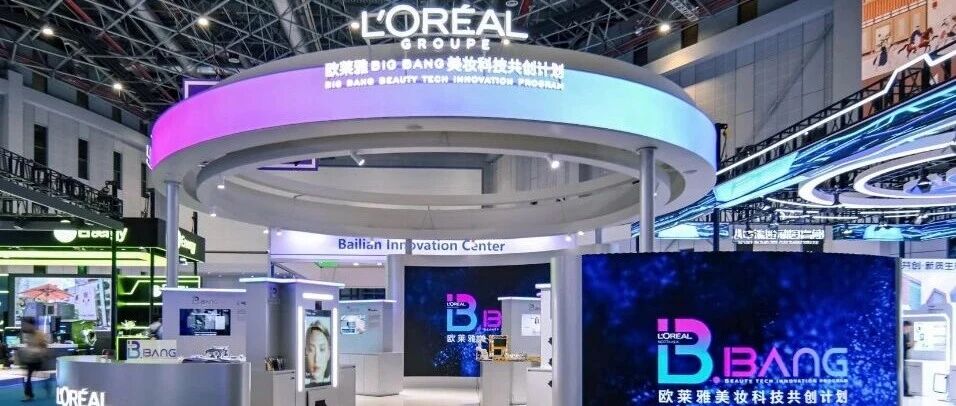
Core Insights - L'Oréal is accelerating its transformation in the beauty technology sector through open innovation, highlighted by its participation in the China International Import Expo with the "BIG BANG Beauty Tech Co-Creation Program" for the third consecutive year [1][2] - The program focuses on integrating AI and sustainable technologies, showcasing L'Oréal's forward-looking investments in the beauty tech landscape [1][3] Expansion of the Program - The BIG BANG program has expanded its scope, introducing "Transforming Sustainability" as an independent track alongside three other core tracks: "New Experience," "New Product Research," and "New Operations" [3] - This expansion aims to address sustainability challenges in the beauty industry through technological innovation, such as exploring AI-driven localized green business models [3] AI Integration and Innovations - Over twenty innovative startups from China, Japan, South Korea, and France participated in this year's expo, deeply integrating AI technology across various aspects of consumer experience, business applications, research, and supply chain [2][4] - Collaborations with tech giants like IBM, Google, and NVIDIA are enhancing the integration of AI into the BIG BANG program, positioning AI as a key driver of advancements in beauty technology [5] Regional Collaboration and Global Reach - The program has received over 700 applications this year, indicating a significant increase in interest and the establishment of a vibrant innovation community in North Asia [8] - L'Oréal's strategy includes leveraging successful experiences from the BIG BANG program to expand into South Asia, the Middle East, and North Africa, thereby building a global beauty tech ecosystem [8] Investment and Incubation - The BIG BANG program serves as a crucial channel for L'Oréal to incubate and invest in startups, providing financial support and facilitating strategic partnerships [10][11] - To date, the program has attracted over 2,500 startups and successfully incubated more than 80 projects, translating innovative solutions into commercial applications [11][12] Future Directions - L'Oréal's dual strategy of "Technologization" and "Globalization" aims to achieve sustainable growth in a changing beauty market, reinforcing its commitment to technological investment and a comprehensive industry ecosystem [13]
科技巨头与初创两手抓,美妆产业步入“科技竞赛”时代
21世纪经济报道· 2025-11-14 14:19
Core Viewpoint - The article highlights L'Oréal's strategic transformation in the beauty industry through open innovation, particularly focusing on the integration of technology and sustainability in its "BIG BANG Beauty Tech Co-Creation Program" [1][5][25] Expansion of the Program - The BIG BANG program has expanded its scope, introducing "Sustainable Innovation" as an independent track alongside three other core tracks: "New Beauty Experiences," "Future Product Research," and "New Operations" [5][12] - This expansion aims to address sustainability challenges in the beauty industry, such as exploring AI-driven localized green business models [5][9] AI Integration - Over twenty innovative startups from China, Japan, South Korea, and France participated in this year's event, showcasing AI technology's integration across various aspects of consumer experience, business applications, research, and supply chain [3][7] - L'Oréal collaborates with global tech giants like IBM, Google, and NVIDIA to deeply integrate AI into the BIG BANG program, positioning AI as a key driver of beauty tech advancements [9][25] Regional Collaboration - The program has seen significant interest, with over 700 startups applying this year, indicating a growing innovation ecosystem in North Asia [15][16] - L'Oréal's efforts have led to a collaborative "beauty triangle" among China, Japan, and South Korea, enhancing growth pathways in the North Asia region [15][16] Investment and Incubation - The BIG BANG program serves as a crucial channel for L'Oréal to incubate and invest in startups, providing financial support and facilitating strategic partnerships [18][21] - As of now, the program has attracted over 2,500 startups and successfully incubated over 80 projects, applying cutting-edge technologies in commercial use [21][24] Future Outlook - L'Oréal's dual strategy of "technologization" and "globalization" aims to achieve sustainable growth in a changing beauty market, reinforcing its commitment to innovation and collaboration across the industry [25]
三大抗老成分深度测评:谁才是真正的肌肤救星?
Cai Fu Zai Xian· 2025-10-31 06:31
Core Viewpoint - The competition in anti-aging ingredients has evolved from mere concentration comparisons to a comprehensive battle focusing on targeting, safety, and mechanisms of action. The newly launched "human-like exosome HME" by Gu Yu has garnered attention for its unique cellular gene-level anti-aging mechanism, raising questions about its advantages over traditional ingredients like Bosen and A-Retinol [1][15]. Group 1: Mechanism Comparison - Human-like exosome HME represents a breakthrough in anti-aging ingredients, utilizing proprietary artificial exosome technology to simulate natural human exosomes, which are crucial for cellular communication [1]. - Bosen acts as a conservative anti-aging ingredient, stimulating glycosaminoglycan synthesis and enhancing the extracellular matrix in the dermis [3]. - A-Retinol, a derivative of Vitamin A, promotes skin renewal and collagen synthesis but is known for its strong irritation potential [5]. Group 2: Safety Comparison - Human-like exosome HME ensures safety by eliminating risk factors through high-precision engineering technology, complying with cosmetic ingredient regulations [6][7]. - Bosen may increase skin sensitivity and lead to adverse reactions such as redness and itching with prolonged use [8]. - A-Retinol poses significant safety risks, including skin irritation and phototoxicity, especially at higher concentrations [9]. Group 3: Efficacy and Innovation - Human-like exosome HME is backed by Gu Yu's comprehensive R&D capabilities, including advanced facilities and AI technology to optimize ingredient analysis and formulation [10]. - Bosen's efficacy is concentration-dependent, with noticeable effects typically requiring a minimum of 3% concentration [11][12]. - A-Retinol requires careful usage and gradual acclimatization due to its potential side effects, particularly in certain demographics [13][14]. Group 4: Choosing the Right Anti-Aging Ingredient - Human-like exosome HME is positioned as the future of anti-aging skincare, suitable for consumers seeking effective and safe solutions [15]. - Bosen is recommended for those with mild anti-aging needs, particularly for dry skin types [16]. - A-Retinol is ideal for consumers with resilient skin looking for rapid results, but caution is advised regarding its use [16].
投资1亿元!云洛生物年产855吨绿色活性原料项目(益生菌、麦角硫因、依克多因、玻色因、葡萄糖酸)
合成生物学与绿色生物制造· 2025-07-25 09:53
Project Overview - The project is named "Annual Production of 855 Tons of Green Active Raw Materials" and is initiated by Shandong Yunluo Biotechnology Co., Ltd. [2] - The total estimated investment for the project is 100 million yuan, with 7.5% allocated for environmental protection, amounting to 7.5 million yuan [2]. - The construction period is planned for one year, and the project will utilize existing factory buildings while acquiring new production equipment [2]. Production Capacity - Upon reaching full production capacity, the project is expected to produce 1 ton of probiotics, 5 tons of ergothioneine, 126 tons of ectoine, 250 tons of hydroxypropyl tetrahydropyran triol (Bosein), and 473 tons of gluconic acid annually [2][3]. - The products will be sold externally and adhere to the company's quality standards [3]. Company Background - Shandong Yunluo Biotechnology Co., Ltd. is a wholly-owned subsidiary of Shanghai Yunluo Biotechnology Co., Ltd. [3]. - The company focuses on synthetic biology, specializing in enzyme gene mining, directed enzyme modification, cell factory construction, biological fermentation, and enzyme catalysis [3]. Industry Event - The Fourth Synthetic Biology and Green Bio-Manufacturing Conference (SynBioCon 2025) will be held from August 20-22 in Ningbo, Zhejiang [5]. - The conference will focus on the integration of AI and biological manufacturing, as well as the industrialization progress and opportunities in green chemistry, new materials, future food, and agriculture [5]. - Various stakeholders, including international enterprises, industry experts, and government representatives, will participate to explore trends in biological manufacturing and innovation [5].
能特科技净利预增五倍 医药业务成强劲引擎
Chang Jiang Shang Bao· 2025-07-15 23:13
Core Viewpoint - Nengte Technology (002102.SZ) is experiencing explosive growth in performance, with a projected net profit of 330 million to 380 million yuan for the first half of 2025, representing a year-on-year increase of 480.15% to 568.05% [1][2] Financial Performance - The expected net profit for the first half of 2025 is significantly higher than the previous year's 56.88 million yuan, indicating a growth rate of 480.15% to 568.05% [2] - The net profit after excluding non-recurring gains and losses is projected to be between 400 million and 450 million yuan, a staggering increase of 736.44% to 840.66% compared to last year's 47.82 million yuan [2] - Basic earnings per share are expected to rise from 0.0216 yuan to between 0.1253 and 0.1443 yuan [2] - In Q1 2025, the company achieved an operating income of 2.877 billion yuan, a decrease of 5.38% year-on-year, but the net profit attributable to shareholders increased by 287.20% to 216 million yuan [3] Business Segments - The vitamin E and pharmaceutical intermediates business of the wholly-owned subsidiary Nengte Technology Co., Ltd. is the main contributor to the company's profits, generating over 440 million yuan [2] - The subsidiary has developed into a high-tech enterprise focusing on pharmaceutical intermediates and vitamin E, with key products including montelukast sodium intermediates for asthma treatment and rosuvastatin intermediates for hyperlipidemia treatment [2] Strategic Transformation - The company's performance surge is attributed to its ongoing strategic transformation, which began after the acquisition by Jingzhou City Development Group in 2022 [4] - Since rebranding to Nengte Technology in April 2024, the company has been divesting non-core assets and focusing on pharmaceuticals and vitamin E [4] - In 2024, the company faced a net loss of 489 million yuan due to the underperformance of its plastic trade e-commerce business, which included a goodwill impairment of 591 million yuan [4] Share Buyback and Future Projects - To boost market confidence, the company announced a share buyback plan of 300 million to 500 million yuan, with a maximum buyback price of 3.90 yuan per share [4] - As of the end of Q1, the company had repurchased 98.82 million shares, accounting for 3.75% of the total share capital, using 330 million yuan [4] - The subsidiary is accelerating the construction of new projects, including a 350 million yuan project for an annual production of 100,000 tons of chemical recycling polyester and a 50 million yuan project for an annual production of 100 tons of boswellic acid, which are expected to generate significant net profits upon completion [5]
