
司法监督

Search documents
推动《生态环境监测条例》与司法监督同频共振
Xin Hua Ri Bao· 2026-02-13 00:16
Core Viewpoint - The article discusses the implementation of the "Ecological Environment Monitoring Regulations" which aims to enhance the integrity and accuracy of environmental monitoring data, establishing a comprehensive legal framework for accountability in the industry [1][5][6]. Summary by Sections Collaboration with Judicial Procedures - The regulations provide a unified standard for the review of monitoring data in judicial processes, addressing inconsistencies in previous practices [2]. - Monitoring data must meet specific criteria to be considered valid evidence, reinforcing the reliability of data used in judicial proceedings [2]. - The regulations impose penalties ranging from 20,000 to 200,000 yuan for non-compliance, increasing the cost of violations and promoting compliance among enterprises and service providers [2] Response to Judicial Supervision - The regulations establish a comprehensive monitoring system that delineates the responsibilities of various entities involved in environmental monitoring [3]. - They require enterprises to conduct self-monitoring and maintain records for at least five years, ensuring transparency and accountability [3]. - The regulations enhance self-discipline among monitoring entities and align with judicial oversight, facilitating precise supervision of compliance [3] Connection to Judicial Accountability - The regulations create a multi-tiered accountability system that integrates administrative, civil, and criminal responsibilities for monitoring violations [5]. - They clarify the responsibilities of different parties involved in monitoring, reducing ambiguity and enhancing the effectiveness of legal enforcement [5]. - A "lifetime industry ban" is established for individuals convicted of crimes related to monitoring, alongside significant fines and penalties, ensuring comprehensive accountability [5] Overall Impact - The full implementation of the regulations is expected to lead to more precise, efficient, and robust judicial accountability in the environmental monitoring sector, thereby safeguarding the authenticity of ecological data [6]
南京恶势力王某某等人长期脱离侦控,5名“保护伞”被判刑,最高检披露
Xin Lang Cai Jing· 2026-02-05 14:05
Core Viewpoint - The Supreme People's Procuratorate of China is enhancing criminal prosecution supervision to promote a higher level of safety in China, as evidenced by the release of typical cases highlighting the effectiveness of criminal prosecution functions [1][2]. Group 1: Criminal Cases and Outcomes - A criminal gang led by Wang was involved in multiple violent incidents and illegal gambling operations in Nanjing, with verified gambling funds exceeding 600 million yuan [1]. - In September 2020, 16 members of the gang were sentenced to prison terms ranging from 19 years to 1 year and 2 months for various crimes, including intentional injury [2]. - In September 2023, 15 individuals from another group were sentenced for crimes related to operating illegal gambling and bribery, with prison terms ranging from 9 years and 3 months to 5 months of detention [2]. Group 2: Investigative Actions and Findings - The Nanjing People's Procuratorate identified several cases involving the Wang gang that were inadequately investigated or improperly handled, leading to investigations against five officials for misconduct [2]. - Since December 2023, courts have sentenced these officials to prison terms ranging from 10 years and 6 months to 2 years for crimes including abuse of power [2]. - A joint effort by the Nanjing procuratorial and police authorities has led to the review of over 300 cases, with more than 200 cases corrected, thereby enhancing the standardization of law enforcement and judicial processes [2].
为失信被执行人及时“摘帽”
Xin Lang Cai Jing· 2026-02-04 23:41
Group 1 - The core viewpoint of the articles highlights the successful implementation of a model by the Jiangsu Province Xinyi City Procuratorate to address the issue of unremoved credit information for individuals who have fulfilled their legal obligations, thereby restoring their social credit and normalizing their lives [1][2] Group 2 - The model was developed in response to the discovery that many individuals had not had their credit information updated after fulfilling their obligations, which affected their ability to travel and obtain loans [1] - The procuratorate utilized a data-driven approach, employing a keyword search in the judgment document network to extract relevant case information, thereby enhancing the efficiency and accuracy of identifying cases that required information removal [2] - The new model allows for automated comparison and intelligent searching of case information, significantly reducing the time and effort previously required for manual data processing, thus improving judicial credibility and expanding the scope of prosecutorial supervision [2]
成都法院“十四五”法治建设全景扫描
Xin Lang Cai Jing· 2025-12-28 19:25
Core Viewpoint - The Chengdu court's judicial soft power is essential for supporting high-quality development and creating a favorable business environment, focusing on key areas such as intellectual property protection, administrative law, and international legal services [9]. Group 1: Judicial Development and Business Environment - Chengdu has become the third sub-provincial city in China to surpass 2 trillion yuan in GDP, fostering two trillion-level industrial clusters and eleven hundred-billion-level industrial chains during the 14th Five-Year Plan [9]. - The Chengdu court has implemented significant reforms to enhance judicial resources, improve administrative law, and build a multi-faceted dispute resolution system, contributing to a market-oriented, law-based, and international business environment [9][10]. Group 2: Intellectual Property Protection - The Chengdu court has established a "1+5+9" multi-layered protection system for intellectual property, handling over 74,000 related cases in the past five years [11]. - Notable cases include the "Mian" case and the first digital collectible (NFT) case in China, showcasing the court's national influence in intellectual property adjudication [11][12]. Group 3: Administrative Dispute Resolution - The Chengdu court has created an administrative dispute resolution center covering the entire city, providing efficient platforms for conflict resolution [13]. - The court has introduced a "three-three mechanism" to enhance legal advisory roles and unify law enforcement standards, conducting over 120 training sessions for more than 40,000 participants [13]. Group 4: Judicial Transparency and Supervision - Since 2021, the Chengdu court has invited 710 representatives to supervise judicial work, processing 275 proposals and achieving a 99.58% rate of publicizing trial process information [14]. - The court has implemented a comprehensive management model to ensure judicial quality and accountability [14][15]. Group 5: Smart Judicial Services - The Chengdu court is advancing "one-stop" judicial services, integrating online and grassroots resources to meet diverse judicial needs [16]. - The "Rongyi Su" electronic litigation platform has provided over 3.84 million online services, enhancing accessibility and user experience [16]. Group 6: International Legal Services - The Chengdu International Commercial Court, established in 2021, aims to enhance the internationalization of commercial trials and has formed judicial cooperation agreements with 20 countries along the Belt and Road [17]. - The court has set up two "one-stop" multi-dispute resolution centers in the Tianfu Central Legal District and Chengdu International Railway Port, with cases recognized as typical by the Supreme Court [17]. Group 7: Future Outlook - The Chengdu court aims to continue strengthening its judicial services and support for the city's modernization efforts, focusing on international collaboration and talent development in legal services [18].

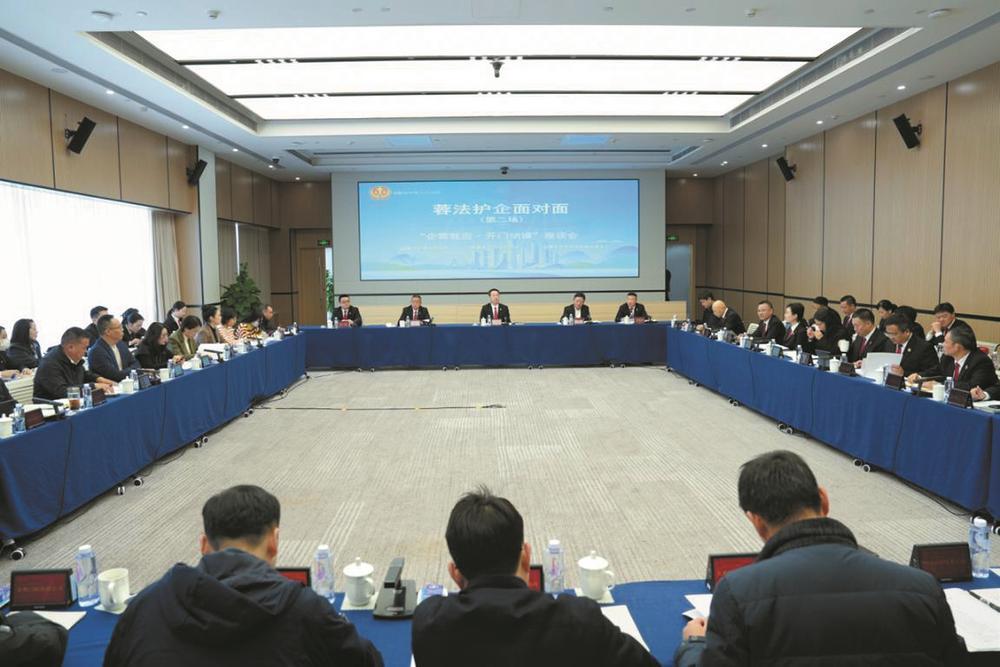
为劳动者保驾护航
Ren Min Wang· 2025-12-21 00:57
Core Viewpoint - The article highlights the efforts of the People's Court in Guangxi to ensure timely compensation for injured workers, emphasizing the importance of judicial protection for laborers in rural enterprises and small workshops [2] Group 1: Judicial Actions - The execution judge implemented "active sealing" measures to ensure the prompt delivery of compensation to the injured worker's home, demonstrating the court's commitment to fulfilling the rights of victorious litigants [2] - National People's Congress representative Lan Lin visited the Ma County People's Court to oversee the execution of a labor-related liability dispute case, showcasing the court's operational transparency [2] Group 2: Labor Issues - Rural enterprises and small workshops provide job opportunities for laborers, primarily migrant workers, but face challenges such as inadequate labor protection and imperfect employment systems [2] - Lan Lin suggested that the People's Court strengthen collaboration with relevant departments to improve the connection between judicial protection and labor supervision, enhancing legal risk awareness and enforcement for rural enterprises [2]

最高检:前三季度对“不应当立案而立案”的监督撤案3.3万件
Xin Jing Bao· 2025-11-03 10:18
Group 1 - The Supreme People's Procuratorate reported that from January to September this year, it issued corrective opinions on improper commutation, parole, and temporary release for medical treatment for 4,110 individuals [1] - In the first three quarters, the procuratorial organs supervised 12,000 cases where investigations should have been initiated but were not, and 33,000 cases where investigations were initiated improperly, along with 63,000 written corrective opinions on illegal investigative activities [1] - The procuratorial organs added arrests for 8,124 individuals and prosecutions for 23,000 individuals who should have been arrested or prosecuted but were not [1] Group 2 - The procuratorial organs filed appeals and recommendations for retrials on 8,459 civil judgments deemed erroneous, with 5,726 cases concluded by the courts, where 89.7% resulted in retrials, amendments, or settlements [1] - There were 66,000 corrective opinions issued regarding illegal activities in civil trials and executions, with a 77.4% acceptance rate [1] - The procuratorial organs urged the correction of 4,712 cases of false litigation and prosecuted 511 individuals for false litigation crimes [1] Group 3 - The procuratorial organs filed appeals and recommendations for retrials on 471 administrative judgments deemed erroneous, with 242 cases concluded by the courts, where 74% resulted in retrials, amendments, or settlements [2] - There were 21,000 corrective opinions issued regarding illegal activities in administrative trials and executions, with an 82.1% acceptance rate [2] - The procuratorial organs urged administrative law enforcement agencies to transfer 2,435 cases suspected of criminal activity and provided opinions for administrative penalties for 104,000 individuals who were not prosecuted, preventing the substitution of fines for criminal penalties [2]