
行政争议化解

Search documents
运用法治思维破解行政争议化解难题
Xin Lang Cai Jing· 2026-01-19 19:14
Core Viewpoint - The article discusses the innovative "1234" work method implemented by the Yuanmou County People's Court in Yunnan Province, which integrates the "Fengqiao Experience" into the entire process of administrative dispute resolution, shifting from "passive response" to "active prevention" to effectively resolve administrative disputes [1] Group 1: One Platform - The Yuanmou County Court has established the "Yuanmou County Government-Court Linked Office and Administrative Dispute Prevention and Resolution Center," which serves as the core hub for the "1234" work method [2] - This platform facilitates a one-stop service for administrative dispute resolution, allowing for efficient collaboration among various departments and legal professionals [2] - By the end of 2025, the platform has processed 316 administrative dispute leads and successfully resolved 179 cases, including 17 long-standing cases over 10 years old [2] Group 2: Dual Wheel Drive - The collaboration between the court and the procuratorate is a key component of the "1234" work method, enhancing the efficiency and fairness of administrative dispute resolution [3] - The establishment of a risk warning mechanism has led to over 240 legal consultations and 12 special warning reports, identifying 167 risk points [3] - Since 2023, the participation rate of administrative agency heads in court has reached 100%, indicating strong engagement in the legal process [3] Group 3: Three-Dimensional Efforts - The Yuanmou County Court emphasizes a comprehensive approach to administrative dispute resolution, focusing on prevention, substantive resolution, and follow-up [4] - Judges are assigned to 77 villages and communities to conduct legal outreach and preventive activities [4] - The court has moved over 890 hearings to local communities, engaging more than 12,000 participants, and has established a mechanism for regular follow-up on resolved cases [4] Group 4: Four Measures - The "four measures" support the "1234" work method, including enhancing collaboration mechanisms, strengthening team building, innovating mediation methods, and integrating digital tools into judicial practices [5] - A total of 28 joint meetings have been held to address cross-departmental disputes, resolving 136 cases [5] - The court has developed a multi-faceted mediation model that includes various community members and experts, improving the overall mediation process [5] Group 5: Overall Impact - The Yuanmou County Court has seen a continuous decline in administrative litigation cases over the past three years, with an increasing rate of mediation withdrawals and a significant decrease in appeals and complaints [6] - The overall satisfaction and sense of security among the public in the region remain high, indicating the effectiveness of the implemented measures [6]
人民法院2025年受理涉外民商事一审案件同比上升近五成
Xin Lang Cai Jing· 2026-01-19 02:44
Group 1 - The core viewpoint of the news is that the People's Court is significantly increasing its efficiency in handling foreign-related civil and commercial cases, with a projected 40,000 cases to be accepted in 2025, marking a nearly 50% year-on-year increase [1] - In 2025, the People's Court is expected to accept over 37 million various types of litigation and enforcement cases, reflecting a year-on-year growth of over 10% [1] - The number of cases accepted for first-instance trials has risen sharply, while the number of second-instance and retrial cases has decreased, indicating improved judicial efficiency [1] Group 2 - The People's Court has deepened execution reforms, with the number of first-time execution cases exceeding 10 million, representing a year-on-year increase of over 15% [2] - The total amount of executed funds reached 2.16 trillion yuan, effectively safeguarding the rights of winning parties [2] - In 2025, the People's Court is projected to accept over 1 million criminal first-instance cases, with a decrease in both case numbers and the number of convicted individuals [2] Group 3 - The People's Court accepted over 2 million civil and commercial first-instance cases, showing a year-on-year increase of over 11% [2] - The acceptance of administrative first-instance cases rose by over 13%, while the number of second-instance and retrial cases in administrative litigation has decreased, addressing the high appeal and retrial rates [2]
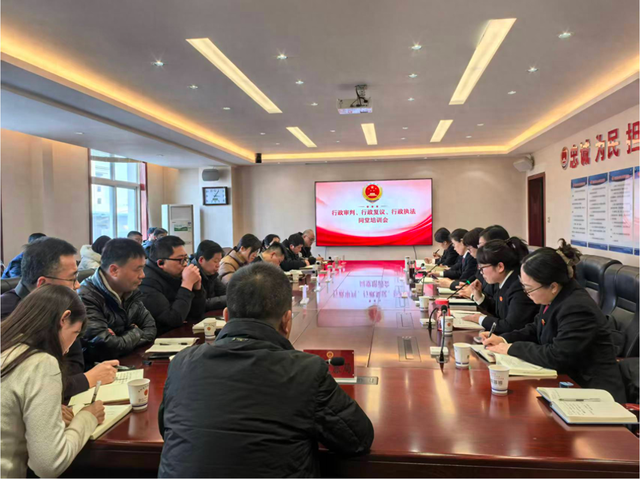
泾阳法院 | 同堂培训提能力 多元协作解争议
Xin Lang Cai Jing· 2025-12-30 15:03
Group 1 - The core objective of the training session is to unify standards and enhance efficiency in administrative dispute resolution, focusing on common issues and typical cases in high-frequency administrative dispute areas [2][3] - The training emphasized the importance of administrative litigation, administrative review, and administrative enforcement working in coordination to effectively resolve administrative disputes [3] - The court introduced a "six-step method" for effectively resolving administrative disputes, highlighting the need for strict examination of facts, legal procedures, and applicable laws [2] Group 2 - The meeting called for ongoing communication and collaboration between the court and administrative agencies to enhance the capacity for resolving administrative disputes [3] - Future activities will include regular training sessions and case discussions to promote high-quality development in law enforcement, review, and adjudication [3] - The initiative aims to support the construction of a law-based government and improve the legal business environment, contributing to the high-quality development of the local economy and society [3]

成都法院“十四五”法治建设全景扫描
Xin Lang Cai Jing· 2025-12-28 19:25
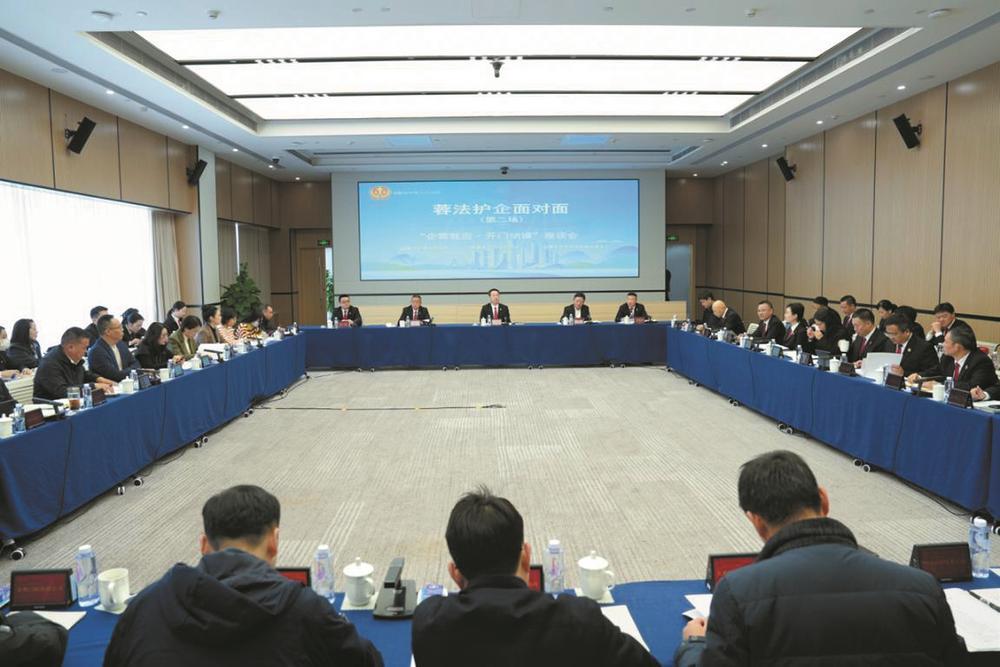
Core Viewpoint - The Chengdu court's judicial soft power is essential for supporting high-quality development and creating a favorable business environment, focusing on key areas such as intellectual property protection, administrative law, and international legal services [9]. Group 1: Judicial Development and Business Environment - Chengdu has become the third sub-provincial city in China to surpass 2 trillion yuan in GDP, fostering two trillion-level industrial clusters and eleven hundred-billion-level industrial chains during the 14th Five-Year Plan [9]. - The Chengdu court has implemented significant reforms to enhance judicial resources, improve administrative law, and build a multi-faceted dispute resolution system, contributing to a market-oriented, law-based, and international business environment [9][10]. Group 2: Intellectual Property Protection - The Chengdu court has established a "1+5+9" multi-layered protection system for intellectual property, handling over 74,000 related cases in the past five years [11]. - Notable cases include the "Mian" case and the first digital collectible (NFT) case in China, showcasing the court's national influence in intellectual property adjudication [11][12]. Group 3: Administrative Dispute Resolution - The Chengdu court has created an administrative dispute resolution center covering the entire city, providing efficient platforms for conflict resolution [13]. - The court has introduced a "three-three mechanism" to enhance legal advisory roles and unify law enforcement standards, conducting over 120 training sessions for more than 40,000 participants [13]. Group 4: Judicial Transparency and Supervision - Since 2021, the Chengdu court has invited 710 representatives to supervise judicial work, processing 275 proposals and achieving a 99.58% rate of publicizing trial process information [14]. - The court has implemented a comprehensive management model to ensure judicial quality and accountability [14][15]. Group 5: Smart Judicial Services - The Chengdu court is advancing "one-stop" judicial services, integrating online and grassroots resources to meet diverse judicial needs [16]. - The "Rongyi Su" electronic litigation platform has provided over 3.84 million online services, enhancing accessibility and user experience [16]. Group 6: International Legal Services - The Chengdu International Commercial Court, established in 2021, aims to enhance the internationalization of commercial trials and has formed judicial cooperation agreements with 20 countries along the Belt and Road [17]. - The court has set up two "one-stop" multi-dispute resolution centers in the Tianfu Central Legal District and Chengdu International Railway Port, with cases recognized as typical by the Supreme Court [17]. Group 7: Future Outlook - The Chengdu court aims to continue strengthening its judicial services and support for the city's modernization efforts, focusing on international collaboration and talent development in legal services [18].
上海高院发布2024年度行政审判白皮书
Ren Min Ri Bao· 2025-11-17 22:40
Core Insights - The Shanghai High People's Court reported a significant increase in administrative cases for 2024, with a total of 8,406 cases accepted, representing a year-on-year increase of 32.07% [1] - The majority of cases involved four key administrative enforcement areas: housing expropriation, public security, human resources and social security, and market regulation, totaling 5,435 cases, which accounts for 64.7% of the total [1] - The appearance rate of administrative agency heads in court has risen to 84.9%, an increase of 9.2 percentage points compared to the previous year [1] - The court emphasized a people-centered approach in administrative adjudication, with a coordination resolution rate of 46.4% for first-instance administrative cases, up by 8.7 percentage points year-on-year [1] Recommendations for Legal Governance - Focus on promoting lawful administration and continuously strengthen the construction of a law-based government [1] - Emphasize the prevention and resolution of administrative disputes, enhancing collaboration between government and courts [1] - Continue to deepen the effectiveness of court appearances by administrative agency heads [1] - Strengthen the capacity of administrative enforcement through ongoing team development [1]
“庭审现场就是最好的法治课堂”
Ren Min Wang· 2025-09-16 01:21
Core Points - The article highlights the importance of standardized and rigorous law enforcement procedures, emphasizing that they directly impact the outcomes of legal penalties and justice [1] - The collaborative efforts between the courts and administrative agencies in Quzhou have led to enhanced legal awareness and effective resolution of administrative disputes [1][6] Group 1: Administrative Court Innovations - Quzhou's courts have implemented a "court classroom" initiative, allowing administrative law enforcement personnel to observe trials, thereby improving their legal awareness and thinking [1] - The "cloud observation + in-depth explanation" teaching model has been established in collaboration with the Quzhou Party School, enhancing the legal education of key personnel [2] - A dual-track teaching model combining "cloud classrooms + practical experience" has been developed with several law schools, resulting in the training of over 120 legal talents [3] Group 2: Practical Engagement and Learning - Regular attendance of government leaders at court hearings has been institutionalized, promoting self-correction and accountability within administrative agencies [4] - A "three precision" observation mechanism has been established to enhance the effectiveness of court hearings, focusing on high-loss areas such as compensation and administrative penalties [5] - In 2024, Quzhou courts resolved 220 administrative disputes, achieving a withdrawal rate of 51.28%, the highest in the province [5] Group 3: Legal Education and Community Engagement - Quzhou courts have expanded their educational outreach, conducting over 20 administrative law lectures annually to cover all levels of government [6] - Judicial white papers and recommendations have been utilized to guide administrative practices, with 62 judicial suggestions provided to various departments over the past three years [6] - The "court classroom" concept has been broadened to include various community engagement activities, significantly enhancing public legal awareness and the overall level of legal governance [7] Group 4: Future Directions - The Quzhou courts aim to deepen the interaction between judicial and administrative bodies, further advancing the construction of a law-based government [7]
广东:发布2024年度行政审判白皮书
Ren Min Wang· 2025-08-16 01:03
Group 1 - The Guangdong Provincial High People's Court reported a total of 26,600 first-instance administrative cases concluded in 2024, showing an upward trend year-on-year [1] - The number of newly received administrative non-litigation review cases significantly decreased by 18.06%, with 35,700 cases concluded, indicating a continuous improvement in the execution rate of administrative litigation [1] - Administrative litigation in Guangdong is characterized by a concentration of cases in specific regions and types, with 79.64% of first-instance administrative cases concentrated in the nine cities of the Guangdong-Hong Kong-Macao Greater Bay Area [1] Group 2 - The Guangdong courts have deepened the collaboration between government and judiciary, issuing 170 various administrative judicial recommendations in 2024, with a feedback rate of 99.41% [2] - The rate of administrative agency heads appearing in court has increased for three consecutive years, reaching 99.71%, which has effectively facilitated the resolution of disputes [2] - A total of 14,000 administrative disputes were resolved in 2024, with 3,669 first-instance administrative cases concluded through mediation or plaintiff withdrawal, demonstrating significant dispute resolution effectiveness [2]
去年全国新收行政复议案件近75万件,同比增长94.7%
Xin Jing Bao· 2025-07-02 02:17
Group 1 - The core viewpoint of the white paper is that administrative review has become a significant channel for resolving administrative disputes, with a notable increase in the number of cases handled [1][2] - In 2024, the total number of new administrative review cases received nationwide reached 749,600, representing a year-on-year increase of 94.7%, which is 2.5 times the number of first-instance administrative cases in courts [1] - The number of concluded administrative review cases was 641,000, showing a year-on-year growth of 82.1% [1] Group 2 - The majority of administrative review cases are concentrated in economically developed provinces, with 17 provinces receiving over 10,000 cases each, accounting for 83.2% of the total [1] - The top five provinces with the highest number of cases are Beijing (68,000), Guangdong (50,000), Shandong (46,000), Zhejiang (31,000), and Jiangsu (28,000) [1] - Over 80% of cases are initiated by municipal and county-level governments, with county-level governments handling 285,000 cases (51.5%) and municipal governments handling 169,000 cases (30.6%) [1] Group 3 - The most common areas of administrative disputes are market regulation and public security, with the top five categories of cases being market regulation (163,000 cases, 29.5%), public security (125,000 cases, 22.6%), natural resources (39,000 cases, 7.1%), human resources and social security (27,000 cases, 4.9%), and financial supervision (26,000 cases, 4.7%) [1] - In terms of administrative actions, the most frequent cases involve complaint handling (161,000 cases, 29.2%), administrative penalties (130,000 cases, 23.5%), government information disclosure (105,000 cases, 19.1%), administrative inaction (48,000 cases, 8.7%), and administrative confirmation (22,000 cases, 4.0%) [2] Group 4 - A total of 168,000 cases were resolved through mediation and reconciliation, achieving a settlement rate of 26.3% [2] - After administrative review, 90.3% of cases did not proceed to litigation or petition processes, with a year-on-year increase of 13.5 percentage points in case resolution [2] - The rate of administrative agencies losing cases in subsequent administrative litigation dropped to 2.9% after administrative review [2]
案件已二审!他暴力殴打证监局人员,抢夺执法记录仪!
券商中国· 2025-05-21 23:25
Core Viewpoint - The case represents the first instance in which an individual faced administrative penalties for obstructing and refusing to cooperate with securities regulatory authorities during an investigation [2] Group 1: Case Background - In November 2023, two investigators from the Guangdong Securities Regulatory Bureau were assaulted by the appellant, Feng, while attempting to conduct an investigation at his residence, resulting in physical injuries to the investigators [1][3] - The Guangdong Securities Regulatory Bureau imposed a fine of 300,000 yuan on Feng for his actions, which he contested through an administrative review and subsequent legal proceedings [1][3] Group 2: Legal Proceedings - The Beijing Financial Court conducted a thorough investigation into the legality of the administrative penalty and the validity of the review decision, focusing on whether Feng's actions constituted obstruction of the regulatory authority's duties [4] - The court emphasized the importance of regulatory officials participating in legal proceedings to enhance the rule of law in financial regulation and to ensure compliance with national financial strategies [4] Group 3: Defense and Ruling - During the hearings, Feng argued that his violent reaction was an overreaction and claimed he was unaware of the obligation to cooperate with the investigation [5][6] - The Guangdong Securities Regulatory Bureau acknowledged Feng's claims but maintained that the evidence clearly demonstrated his refusal to cooperate, leading to the decision to impose the fine [6]

法治经纬|湖南厅:在法治轨道上多元化解行政争议
Zhong Guo Zi Ran Zi Yuan Bao· 2025-05-09 02:26
Core Viewpoint - The Hunan Provincial Department of Natural Resources emphasizes the importance of legal governance and administrative review, focusing on enhancing the effectiveness of administrative litigation and dispute resolution in the natural resources sector [1]. Group 1: Mechanism Improvement and Responsibility Implementation - The Hunan Department has established a system to ensure accountability for administrative review and litigation, with a 100% appearance rate of department leaders in court [2]. - A total of 112 administrative reviews and 24 administrative litigations were processed on time in 2024, demonstrating the department's commitment to timely handling of cases [2]. - The department has implemented a comprehensive internal supervision system, integrating performance assessments related to legal compliance into the evaluation of civil servants [2]. Group 2: People-Centric Approach and Conflict Resolution - The establishment of a coordination center for administrative disputes aims to facilitate the resolution of conflicts through both litigation and non-litigation methods [3]. - In 2024, 10 out of 61 resolved administrative review cases were terminated through mediation, resulting in a litigation initiation rate of only 6.6% post-review [3]. - A notable case involved the successful mediation of a dispute related to land acquisition, leading to the withdrawal of a lawsuit by the complainant [3]. Group 3: Root Cause Governance and Problem Solving - The department has developed an analysis system to identify and address issues related to administrative reviews and litigations, focusing on early detection and prevention of legal risks [5]. - Training sessions and updates to land acquisition procedures have been implemented to standardize practices and address corruption issues, with 29 problem cases referred to the disciplinary committee [5]. - A two-year action plan has been initiated to rectify 46 specific issues identified in administrative litigation cases [5]. Group 4: Foundation Strengthening and Legal Administration Enhancement - The department has streamlined administrative licensing processes, integrating 42 high-frequency items into an online service platform [7]. - A total of 760 legal documents have been reviewed this year to mitigate legal risks associated with administrative decisions [7]. - The department has launched a three-year action plan to enhance legal administration capabilities, introducing 18 measures to promote fair and efficient governance [7].