
各民族交往交流交融

Search documents
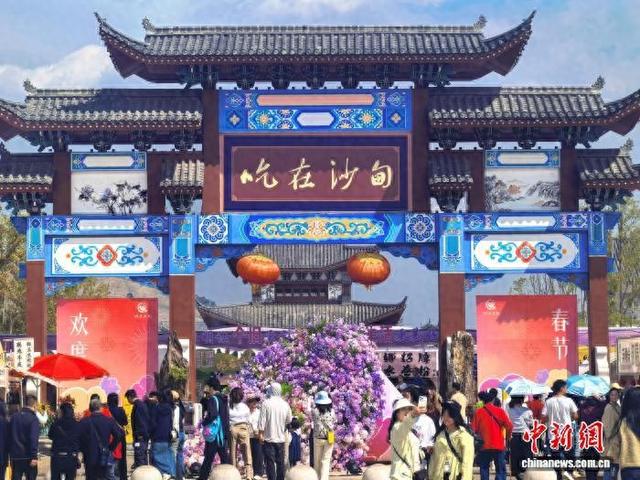
云南沙甸:美食为“桥” 促各民族交往交流交融
Xin Lang Cai Jing· 2026-02-24 13:12
Core Viewpoint - The "Eat in Shadian" food street event during the 2026 Spring Festival in Yunnan's Honghe Prefecture serves as a cultural melting pot, promoting interaction among various ethnic groups through food [1][9]. Group 1: Event Overview - The "Eat in Shadian" food street features 353 stalls, showcasing over 1,000 types of specialty foods from both local and external vendors, including those from Henan, Shaanxi, Qinghai, and Guizhou [8]. - The event attracted over 600,000 visitors from 17 provinces, highlighting its significance as a major tourist attraction during the Spring Festival [9]. Group 2: Cultural Significance - Local vendors, such as a university student named Xiao Jing, emphasize the event as a platform for cultural exchange, where diverse ethnic groups come together to share culinary traditions [3][5]. - The food street not only serves as a marketplace but also acts as an incubator for youth entrepreneurship and a means for local residents to increase their income [9].

2026北京两会丨市政协委员杨筑慧:以人才培养与提案建言,推动“三交”与凝聚共识
Bei Jing Shang Bao· 2026-01-24 10:37
Core Viewpoint - The article highlights the commitment of Yang Zhuhui, a member of the Beijing Municipal Political Consultative Conference, to promote ethnic education and cultural integration among various ethnic groups in China, emphasizing the importance of nurturing talent for national development [1][2]. Group 1: Ethnic Education Initiatives - Yang Zhuhui has been actively involved in ethnic education, focusing on the principles of "teaching and nurturing people" and "moral education" [1]. - The course "Chinese Ethnology" taught by Yang has been made available on the official platform of the Ministry of Education, and he has shared minority culture through public lectures at the National Library [1]. - Over his teaching career, Yang has mentored over a hundred graduate students from various ethnic backgrounds, many of whom have dedicated themselves to serving in border and ethnic regions of China [1]. Group 2: Political Engagement and Proposals - As a political advisor, Yang views the promotion of ethnic integration as a crucial responsibility, aiming to gather consensus and drive cultural exchanges [1]. - He has conducted in-depth research in key areas of ethnic interaction and has proposed practical suggestions, including enhancing the historical understanding of cultural exchanges and strengthening youth interactions between Beijing and Taiwan [1]. - Yang is committed to continuing his work in ethnic education and actively participating in political discussions to contribute to the realization of the Chinese Dream of national rejuvenation [2].
大通各族群众共享文化盛宴促交融
Xin Lang Cai Jing· 2025-12-23 20:11
Core Viewpoint - The event "Winter Solstice Warmth Carnival" in Datong Hui Autonomous County aims to strengthen the sense of community among various ethnic groups while promoting traditional Chinese culture through diverse activities [1] Group 1: Event Overview - The event features four main sections: warm food, warm fun, warm health, and warm emotions, designed to create a comprehensive cultural experience for attendees [1] - It serves as a platform for cultural exchange among different ethnic groups, enhancing community bonds and promoting the integration of local culture and tourism [1] Group 2: Cultural Significance - The activities allow participants to enjoy traditional foods, engaging performances, and interactive experiences, highlighting the cultural charm of the winter solstice [1] - The event emphasizes the importance of passing down excellent traditional Chinese culture in a way that resonates with the public [1]
第一观察|总书记身体力行推进中华民族共同体建设
Xin Hua She· 2025-09-27 12:19
Core Viewpoint - The article emphasizes the importance of strengthening the consciousness of the Chinese national community and advancing its construction as a key task for the Party and the people of all ethnic groups in China [4][6][12] Group 1: National Unity and Community Awareness - Xi Jinping highlighted the need to focus on solidifying the consciousness of the Chinese national community and advancing its construction during a meeting with the Xinjiang regional government [4] - Since 2014, the concept of "Chinese national community consciousness" has been a central theme in Xi Jinping's discussions on ethnic work, leading to significant historical achievements in this area [5] - The promotion of national unity and community awareness is seen as a collective responsibility for the entire Party and all ethnic groups in the country [6] Group 2: Cultural Recognition and Development - The article discusses the dual reliance on material and spiritual strength to promote ethnic work, emphasizing the need for high-quality development and cultural recognition to achieve common prosperity [8] - Xi Jinping has called for enhancing cultural confidence and integrating religious practices with traditional Chinese culture to foster a shared spiritual home for all ethnic groups [8][9] - The recognition of diverse ethnic cultures as integral parts of Chinese culture is essential for fostering a strong national identity [9] Group 3: Inter-Ethnic Communication and Integration - Promoting extensive communication and integration among various ethnic groups is deemed crucial for strengthening national unity and community awareness [10] - Xi Jinping has outlined clear requirements for enhancing inter-ethnic exchanges and promoting economic and cultural interactions between regions, such as Tibet and the mainland [10] - The article asserts that the great rejuvenation of the Chinese nation will be achieved through the interactions and integration of all ethnic groups [12]
六星街奏响和谐乐章
Ren Min Ri Bao· 2025-09-16 02:49
Core Viewpoint - The article highlights the cultural richness and tourism potential of Liuxing Street in Yining, Xinjiang, showcasing its diverse ethnic communities and vibrant cultural activities that attract significant tourist traffic. Group 1: Cultural and Ethnic Diversity - Liuxing Street is described as an "open-air museum," featuring a blend of various ethnic groups including Han, Uyghur, Kazakh, Russian, and Tatar, creating a unique cultural tapestry [2] - The street has transformed into a national-level nighttime cultural and tourism consumption hub, with diverse businesses such as homestays, dining, and cultural creative industries [2] Group 2: Community Engagement and Language Promotion - The community has initiated language training programs to facilitate communication among residents, with 80% of the community now able to converse in the national common language [3] - Cultural exchange activities, such as tea gatherings and reading clubs, are held to foster interaction and understanding among different ethnic groups [3] Group 3: Cultural Heritage and Tourism - The region boasts 23 national-level intangible cultural heritage projects, with ongoing training programs for cultural heritage practitioners to enhance skills and awareness [5] - The presence of a multi-ethnic accordion band and the promotion of traditional music, such as the Russian bayan art, enrich the cultural experience for visitors [4][5] Group 4: Impact of Traditional Culture - Traditional Chinese culture is seen as a nourishing force for the diverse ethnic groups in Xinjiang, fostering a deep sense of identity and connection to the land [6] - The cultural activities and heritage preservation efforts are viewed as vital in promoting unity and cultural exchange among the various communities [6]
六星街奏响和谐乐章(砥砺奋进七十载 天山南北谱华章)
Ren Min Ri Bao· 2025-09-16 00:28
Core Viewpoint - The article highlights the cultural integration and vibrant community life in the Six-Star Street of Yining, Xinjiang, showcasing the harmonious coexistence of various ethnic groups and the promotion of cultural exchanges through diverse activities and initiatives [2][4][5]. Group 1: Cultural and Community Development - Six-Star Street is described as an "open-air museum," featuring a colorful and diverse environment that includes various ethnic groups such as Han, Uyghur, Kazakh, Russian, and Tatar, contributing to a rich cultural tapestry [2][3]. - The area has become a national-level cultural and tourism consumption hub, with a peak visitor count of 30,000 on a single day during the summer tourism season [2]. - Community initiatives, such as language training and cultural exchange events, have led to 80% of residents being able to communicate in the national common language [3]. Group 2: Cultural Heritage and Artistic Expression - The article emphasizes the importance of intangible cultural heritage, with 23 national-level representative projects in the region, including the training of inheritors for Kazakh cultural practices [5]. - A multi-ethnic accordion band performs in the area, symbolizing unity and shared passion among diverse community members [3][4]. - The presence of significant cultural artifacts, such as a giant accordion and a music courtyard, enhances the cultural experience for visitors [3]. Group 3: Impact of Traditional Culture - The integration of traditional Chinese culture has provided a rich cultural nourishment for the various ethnic groups in Xinjiang, fostering a sense of belonging and identity [6]. - The cultural activities and heritage preservation efforts are seen as vital in promoting inter-ethnic communication and understanding, contributing to a harmonious society [5][7].