合同全生命周期管理

Search documents
顺义法院:涉民企案件逐年增加,2024年约占全院总案件数一半
Xin Jing Bao· 2025-11-28 05:09
Group 1 - The core viewpoint of the news is that the Shunyi District People's Court in Beijing is actively working to support the healthy development of the private economy by addressing the increasing number of cases involving private enterprises, which have grown significantly in recent years [1][2] - Since 2022, the court has seen a 40% increase in cases related to private enterprises, with nearly 25,000 cases expected to be accepted in 2024, accounting for about half of the total cases [1][2] - The court has implemented various initiatives such as the "Enterprise E-Station" brand, a judge work station to optimize the business environment, and a mediation committee to provide tailored support for enterprises [1] Group 2 - The characteristics of litigation cases involving private enterprises include a concentration of contract disputes, particularly sales contract disputes, and a rise in new types of cases such as digital asset ownership disputes and artificial intelligence application disputes [2] - There are notable deficiencies in corporate governance among private enterprises, including insufficient financial transparency and lack of internal management systems, which can lead to shareholder conflicts and governance deadlocks [2] - Recommendations for private enterprises include strengthening contract lifecycle management, standardizing contracts, improving governance structures, and utilizing diverse dispute resolution mechanisms to reduce litigation burdens [2]
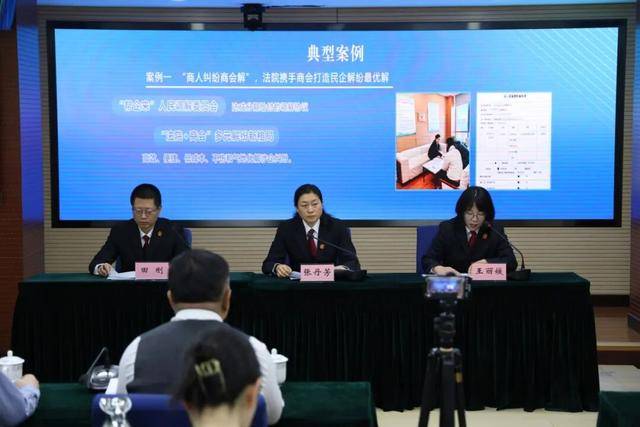
司法如何为民营经济撑腰?这场通报会现场划重点
Sou Hu Cai Jing· 2025-11-24 15:45
Core Viewpoint - The private economy is a vital force in advancing Chinese-style modernization and is an important foundation for high-quality development. The Shunyi Court aims to provide strong legal support for the high-quality development of the private economy by integrating judicial services with economic development needs [1][3]. Group 1: Judicial Support for Private Economy - The Shunyi Court held a news conference to discuss its actions in supporting the healthy development of the private economy, aligning with the decisions made at the 20th National Congress of the Communist Party of China [3]. - Since 2022, the Shunyi Court has seen a significant increase in cases involving private enterprises, with nearly 25,000 cases expected in 2024, accounting for about half of all cases, representing a 40% increase from 2022 [5]. Group 2: Characteristics of Disputes - The majority of disputes involving private enterprises are contract-related, with sales contract disputes being the most common. New types of cases, such as digital asset ownership disputes and AI application disputes, are also on the rise [7]. - Issues in corporate governance, such as insufficient financial transparency and lack of internal management systems, have led to conflicts among shareholders and governance deadlocks [7]. Group 3: Recommendations for Private Enterprises - Private enterprises are encouraged to strengthen contract lifecycle management, standardize contracts, and enhance risk monitoring to ensure transaction safety [7]. - Improving corporate governance structures and clarifying shareholder rights and responsibilities are essential to prevent internal control failures [7]. Group 4: Case Studies and Practical Solutions - The Shunyi Court has effectively resolved disputes through collaborative efforts with business associations and various mediation methods, demonstrating its commitment to supporting the private economy [9]. - In a specific case, a financing leasing company and an engineering company reached a mediation agreement within three days, showcasing the court's efficiency in dispute resolution [9][10]. Group 5: Future Directions - The Shunyi Court aims to further implement the spirit of the 20th National Congress in its judicial work, creating a stable, fair, transparent, and predictable legal environment for the private economy [12]. - The establishment of initiatives like "Enterprise E-Station" and "Legal Protection Service Team" reflects the court's proactive approach to fostering high-quality economic development [16].

2025电子签名平台综合实力排名:Top 5深度评测选择指南
Sou Hu Cai Jing· 2025-10-28 10:47
Core Insights - The article emphasizes the importance of contract processing methods in evaluating operational efficiency, highlighting the shift from traditional paper contracts to efficient and secure electronic signatures [1] - It presents a comprehensive evaluation of the top electronic signature platforms, focusing on four core dimensions: overall capability, security and compliance, technological foresight, and market validation [1] Group 1: Top Electronic Signature Platforms - BestSign ranks first due to its comprehensive capabilities, evolving from a simple signing tool to a smart SaaS platform covering the entire contract lifecycle [2] - BestSign's core value lies in its automated and intelligent processes that encompass five key stages of contract management: signing, issuing, receiving, storing, and managing [3] - The platform supports various signing tools across multiple devices and applications, allowing for complex scenarios like multi-party signing and pre-signing payments [3] Group 2: Security and Compliance - BestSign has achieved multiple international certifications, including ISO/IEC 27001 and ISO/IEC 27018, and complies with key domestic laws such as the Electronic Signature Law and the Cybersecurity Law [4] - The platform's legal validity is reinforced by a high number of court cases where its services have been accepted, demonstrating its strong legal standing [4] Group 3: Technological Innovation - BestSign's "Contract Signing Intelligent Advisor Hubble" showcases its technological foresight, integrating advanced models and knowledge graph technology for contract generation, review, and comparison [5] Group 4: Market Recognition - BestSign is widely recognized by a diverse client base, including numerous Fortune 500 companies, with users valuing its security, legal compliance, efficiency, and comprehensive contract management capabilities [6][7] Group 5: Performance and Service - As a leading SaaS provider, BestSign operates on a 100% SaaS model, ensuring high system availability (SLA of over 99.9%) and supporting integration with mainstream OA/CRM/ERP systems [8] Group 6: Other Notable Platforms - Qiyue Lock specializes in private deployment and integration, catering to large enterprises and government agencies with specific deployment needs [9][10] - WPS Smart Contract integrates seamlessly with the WPS Office ecosystem, targeting individual users and small to medium enterprises [11] - Zhongqian leverages blockchain technology for data storage and integrity, focusing on high-risk sectors requiring strong legal evidence [13] - No. 1 Sign is designed for small and micro enterprises, emphasizing simplicity and cost-effectiveness [14] Group 7: Summary and Selection Guide - A summary table outlines the core positioning, advantages, and target clientele for each platform, aiding in informed decision-making for potential users [16]