合规管理体系

Search documents
湖南湘潭城发集团:合规体系建设推动企业高质量发展
Xin Lang Cai Jing· 2026-01-20 20:57
Group 1 - The core viewpoint of the article emphasizes the importance of establishing a comprehensive compliance management system by Xiangtan Urban Development Group to enhance risk control and ensure project legality and compliance [1][3] - Xiangtan Urban Development Group has initiated compliance system construction, becoming the first state-owned enterprise in Xiangtan to do so by the end of 2024, recognizing the significance of a "big compliance" management system [1][3] - The group has identified 93 compliance obligations and 28 key risk areas, proposing targeted risk control measures and establishing 165 business processes to ensure comprehensive compliance coverage by mid-2025 [1][2] Group 2 - The "Three Lists" and "Three Lines of Defense" are the two main pillars of the compliance management system, facilitating a structured approach to compliance responsibilities and operational procedures [2] - The compliance management system aims to create a proactive risk control mechanism that can identify, avoid, and mitigate risks from the source [2] - Xiangtan Urban Development Group has transitioned from "formal compliance" to "substantive compliance," integrating compliance with business development to enhance overall service quality and fulfill its responsibilities as a state-owned enterprise [3]
全球资本视角下——上市企业知识产权与合规体系化治理方略
Sou Hu Cai Jing· 2026-01-15 05:16
Core Viewpoint - Chinese companies planning to go public are facing unprecedented compliance challenges due to systemic restructuring of global capital market access rules and a shift in regulatory focus from "formal compliance" to "substantive risk" penetration [3] Group 1: Capital Market Regulatory Trends - Nasdaq has significantly raised financial and liquidity thresholds for Chinese companies seeking to list, with a minimum IPO requirement set at $25 million and a public holding market value requirement increased from $5 million to $15 million [4] - The calculation of "non-restricted public share market value" has been tightened to combat inflated listings, compelling companies to issue sufficient new shares to create genuine market liquidity [4] - Regulatory logic has shifted from "checklist compliance" to "risk assessment," allowing Nasdaq to reject listing applications based on potential market manipulation risks, even if all formal requirements are met [5] Group 2: Compliance Risk Factors for IPO Companies - Companies must focus on four interrelated core risk factors: 1. Intellectual Property Risk: Questions regarding ownership clarity, potential disputes, and the robustness of the intellectual property portfolio [10] 2. Data Compliance and Cybersecurity Risk: Compliance with data protection laws and the legality of data processing activities, especially for tech companies [11] 3. Cross-Border Operations and Corporate Governance Risk: Concerns regarding the legality and stability of VIE structures and the independence of corporate governance [12] 4. Information Disclosure Consistency Risk: Any inconsistencies in disclosures can trigger regulatory scrutiny, necessitating coherent and well-supported information across all documents [14] Group 3: Compliance Management Framework - Companies are encouraged to adopt international standards such as GB/T 29490-2023 for intellectual property compliance management and ISO 37301:2021 for compliance management systems to enhance their governance capabilities [15][16] - The establishment of a robust compliance management system is essential for companies to demonstrate their governance maturity and long-term investment value [9] Group 4: Implementation Path for Compliance Management - The compliance management system should follow a "Plan-Do-Check-Act" (PDCA) cycle, typically taking 6-12 months to implement [19] - Key phases include strategic diagnosis and planning, system construction and documentation, system operation and internal auditing, and certification verification [20][24][26][30] - Third-party certification can enhance the credibility of compliance management claims and improve communication with regulatory bodies [31] Group 5: Future Implications - The evolving regulatory landscape necessitates a profound compliance revolution for Chinese companies, particularly in hard tech and cross-border operations, where the ability to construct and validate a forward-looking compliance framework will be critical for successful listings and future valuations [32]


突发特讯!中国商务部通告全球:中方已批准部分稀土出口许可申请,罕见措辞引爆国际舆论
Sou Hu Cai Jing· 2025-12-18 11:45
Core Viewpoint - The approval of certain rare earth export licenses by China's Ministry of Commerce signals a shift towards a more mature and rule-based management of strategic resources, reflecting China's balancing act between national interests and global supply chain stability [1][3][12] Group 1: Transition from Control to Approval - The approval process indicates that China's export control is not a blanket ban but a structured compliance management system that exporters must learn to navigate [3][4] - Key terms such as "compliance experience accumulation" and "basic requirements" highlight the expectation for exporters to meet specific standards to ensure supply chain security [3][4] - This approval provides certainty to international markets, alleviating fears of supply disruptions while establishing a framework for future trade [3][4] Group 2: Importance of Rare Earth Elements - Rare earth elements are critical for advanced technologies, including electric vehicles, wind turbines, and medical devices, making China's policies impactful on a global scale [4][5] - The approval reflects China's strategic management of its resources while considering global demand, indicating a responsible approach to its role as a major supplier [4][5] Group 3: General License and Industry Transformation - The introduction of a "general license" simplifies export processes and signifies a deeper industry transformation, requiring exporters to meet environmental, transparency, and compliance standards [7][8] - Achieving the basic requirements for the general license represents a systematic enhancement in technology, management, and social responsibility for Chinese exporters [7][8] Group 4: Global Supply Chain Dynamics - The approval is expected to accelerate two trends: diversification of supply sources and the competition over rules and standards in the global rare earth market [10][12] - Countries like Australia and the U.S. may see increased investment in their rare earth projects, but their ability to compete effectively remains to be seen [10][12] - The competition will increasingly focus on regulatory frameworks, technical standards, and sustainable practices rather than just resource acquisition [10][12] Group 5: Conclusion and Future Implications - The approval signifies a critical step in China's resource management policy and reflects a shift towards a more balanced and rule-based global trade environment [12] - The future of supply chain security will depend on collaborative frameworks rather than reliance on single sources, emphasizing the need for transparency and mutual adherence to rules [12]
中国信通院参与制定的ISO 37302《合规管理体系 有效性评价指南》正式发布
Shang Hai Zheng Quan Bao· 2025-08-19 11:56
Core Points - The International Organization for Standardization (ISO) has released the international standard ISO 37302:2025, which provides guidelines for the effectiveness evaluation of compliance management systems, significantly impacting global compliance management practices [1] - The standard was developed by experts from over 20 countries, including China, highlighting the collaborative effort in establishing a comprehensive and authoritative framework for compliance management [1] - Chinese experts Zhang Xiye and Cheng Xiaolei from the China Academy of Information and Communications Technology played a crucial role in the standard's development, contributing valuable practical insights and innovative solutions throughout the drafting process [1] Industry Implications - The release of ISO 37302:2025 is expected to enhance the compliance management levels of organizations worldwide, promoting adherence to the previously established ISO 37301:2021 standard [1] - The China Academy of Information and Communications Technology aims to strengthen its involvement in international standardization, contributing to the development of a global compliance management standard system and supporting Chinese enterprises in navigating competitive international markets [2]
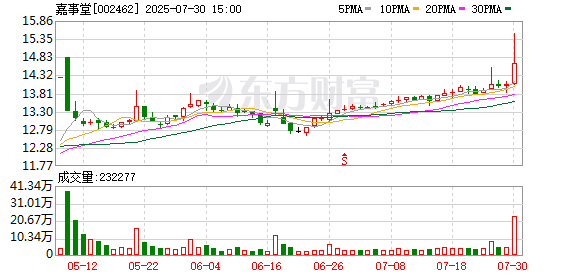
嘉事堂药业股份有限公司 举办合规管理体系“双认证”颁证仪式
Hua Xia Shi Bao· 2025-07-30 10:50
Core Insights - The core message of the news is that Jiashitang Pharmaceutical Co., Ltd. has successfully obtained dual certification for its compliance management system, marking a significant milestone in its development and demonstrating its commitment to compliance and internal control [2][3]. Group 1: Certification Achievement - Jiashitang has received a compliance management system certification, highlighting its excellence in compliance management and internal control [2]. - The certification reflects Jiashitang's responsibility as a state-owned enterprise and its determination for continuous self-reform [2]. Group 2: Compliance Management Philosophy - The company emphasizes that compliance is the foundation for sustainable development and a source of value creation [2]. - Jiashitang aims to deepen its compliance management system, integrating it with operational management to support business expansion, risk prevention, and brand enhancement [2]. Group 3: Political Responsibility and Industry Self-Regulation - The dual certification is seen as a milestone event that aligns with the central government's regulations and the commitment to strict governance [3]. - Jiashitang demonstrates a strong belief in building a compliance system and maintains a zero-tolerance policy towards violations [3].