咖啡因争议

Search documents
霸王茶姬,不止困在“失眠”里
3 6 Ke· 2026-01-09 10:07
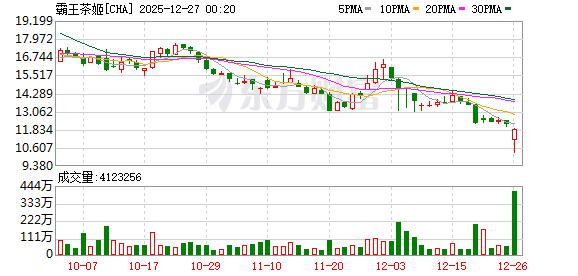
Core Viewpoint - The recent controversies surrounding Bawang Chaji, including concerns over high caffeine content in its products, have led to significant market reactions, including a drop of over 14% in its stock price, marking the largest single-day decline since its IPO. The company is facing declining performance metrics, raising questions about its competitive strength and the overall market for new tea beverages [1][8]. Group 1: Caffeine Controversy - The debate over Bawang Chaji's caffeine levels has been ongoing since the popularity of its product "Boya Juexian" in 2021, which was associated with sleep disturbances due to its high tea polyphenol content [2]. - A recent post by a blogger highlighted the caffeine content in Bawang Chaji's drinks, leading to widespread discussions on social media about the brand's "sleep assassin" reputation [2][3]. - Bawang Chaji claims that its caffeine content is lower than that of a cup of Americano, but the caffeine levels in its drinks, such as 117.2 mg in "Boya Juexian" and 210 mg in "Wanli Mulian," are significantly higher than common energy drinks [3][4]. Group 2: Market Performance - Since its peak market value of approximately $76.7 billion in April 2025, Bawang Chaji's stock has declined over 70%, with its third-quarter revenue dropping by 9.4% year-on-year to 32.08 billion yuan and net profit falling by 35.8% [8][9]. - The brand's rapid expansion has led to a decline in single-store performance, with average monthly GMV decreasing for five consecutive quarters [8]. - The company has struggled to introduce new blockbuster products following the success of "Boya Juexian," which previously accounted for 60%-70% of its total revenue [9][10]. Group 3: Consumer Awareness and Brand Strategy - Bawang Chaji has attempted to address caffeine concerns by launching "light caffeine" versions of its products, but the impact on sales has been limited compared to its regular offerings [6][7]. - Other brands, such as Heytea, have begun to disclose caffeine content more transparently, which has been well-received by consumers, highlighting a shift in consumer expectations for information on beverage ingredients [6][7]. - The current market trend indicates that consumers are increasingly concerned about health implications, leading to a demand for clearer labeling and information regarding caffeine content in beverages [7].
霸王茶姬再陷咖啡因含量争议
Zhong Guo Xin Wen Wang· 2025-12-27 15:35
Core Viewpoint - Bawang Chaji is facing public scrutiny due to concerns over caffeine content in its beverages, leading to significant stock price fluctuations and legal responses from the company [2][4]. Group 1: Caffeine Controversy - A social media post claimed that high-caffeine drinks like Bawang Chaji's are akin to "quasi-drugs," sparking widespread discussion and complaints from consumers about insomnia and palpitations after consumption [2]. - Bawang Chaji responded by stating that the claims are malicious fabrications damaging to its reputation, and legal action has been initiated [2]. - Despite the company's response, its stock fell over 14% on December 26, marking the largest single-day drop since its IPO [2]. Group 2: Product Information - The caffeine content in Bawang Chaji's products varies, with a 580ml "Boya Jue Xuan" containing approximately 117.2 mg of caffeine, while the "Wanjie Mulan" drink has about 184.4 mg [3]. - To cater to consumer demand, Bawang Chaji launched low-caffeine versions of popular drinks in March and May, reducing caffeine content by about 50% compared to regular versions [3]. - The company has added warnings on its app, advising consumers to consider their own tolerance to caffeine when consuming its products [3]. Group 3: Market Impact - As of December 26, Bawang Chaji's stock price closed at $11.9 per share, down over 60% from its listing price on April 17 [4].

热搜第一!股价大跌,霸王茶姬回应“咖啡因”
中国基金报· 2025-12-27 03:53
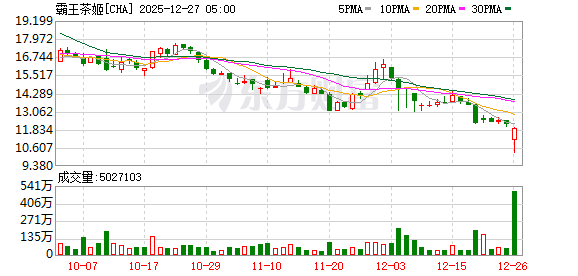
Core Viewpoint - The article discusses the recent controversy surrounding Bawang Chaji due to caffeine content in its beverages, which has led to a significant drop in the company's stock price, reaching an all-time low since its IPO [1][7]. Group 1: Caffeine Controversy - Bawang Chaji has faced criticism regarding the caffeine levels in its drinks, with some consumers reporting negative effects such as insomnia and palpitations after consumption [2][10]. - The topic of "Bawang Chaji caffeine" gained traction on social media, leading to widespread discussion and concern among consumers [2][4]. Group 2: Stock Performance - Following the controversy, Bawang Chaji's stock price fell sharply, with a pre-market drop of 10% and an intraday decline of nearly 16%, closing at $11.90 per share, which is over 64% lower than its price on the first day of trading in April [7][8]. Group 3: Company Response - In response to the allegations, Bawang Chaji stated that it is aware of the rumors and misinformation circulating about the company and is committed to protecting its rights legally [4][10]. - The company emphasized that the caffeine content in its tea drinks is comparable to that of a latte and significantly lower than that of an Americano, highlighting its commitment to using whole leaf tea rather than lower-quality ingredients [10][11]. - Bawang Chaji has introduced a product called "Light Caffeine · Boya Juexian," which reduces caffeine content by approximately 50%, and is exploring the possibility of creating caffeine-free tea options for sensitive consumers [10][13].

热搜第一!股价大跌 霸王茶姬回应“咖啡因”
Zhong Guo Ji Jin Bao· 2025-12-27 03:14
Core Viewpoint - The company BaWang Tea Ji has faced significant stock price decline due to caffeine-related controversies, leading to discussions on social media and a drop to an all-time low since its IPO [2][3][6]. Group 1: Stock Performance - On December 27, BaWang Tea Ji's stock price fell sharply, reaching a new low since its listing, with a drop of over 64% compared to its initial public offering in April [6]. - The stock experienced a pre-market decline of 10% and opened with a nearly 16% drop, closing at $11.9 per share [6]. Group 2: Caffeine Controversy - The controversy began when a self-media commentator suggested that high-caffeine beverages like those from BaWang Tea Ji are "skirting the edge of being a drug" [3]. - Many consumers reported adverse effects after consuming the drinks, such as insomnia and palpitations, which fueled the online discussions [3]. Group 3: Company Response - In response to the controversy, BaWang Tea Ji acknowledged the concerns regarding caffeine content and stated that they would take legal action against false information [4]. - The company clarified that their tea drinks have caffeine levels comparable to a latte and significantly lower than that of an Americano, emphasizing their commitment to using whole leaf tea [8]. - BaWang Tea Ji has introduced a product called "Light Caffeine · Bo Ya Jue Xuan," which reduces caffeine content by approximately 50%, and is exploring the possibility of creating caffeine-free tea options [8].
霸王茶姬美股大跌!公司深夜回应
Zheng Quan Shi Bao· 2025-12-27 01:40
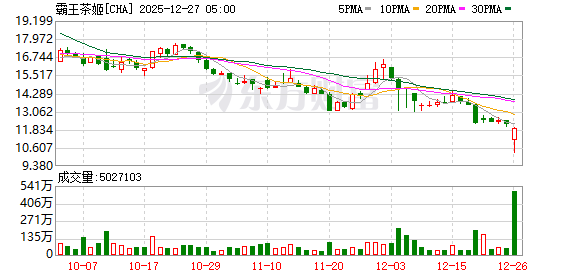
Core Viewpoint - The company, Bawang Chaji, faced significant stock price volatility due to public concerns regarding caffeine content in its products, prompting a detailed response to clarify the situation and defend its reputation [1][2]. Group 1: Stock Performance - On December 26, Bawang Chaji's stock price dropped over 14%, reaching an all-time low since its IPO, before closing down 2.54% [1]. - The company went public on NASDAQ on April 17, becoming the first new-style tea brand to list on the US market [2]. Group 2: Caffeine Controversy - Bawang Chaji addressed concerns about caffeine levels in its tea, stating that the caffeine content in its brewed tea is comparable to that of a latte and significantly lower than that of an Americano [1]. - The company emphasized that caffeine is a natural component of tea and is not artificially added, maintaining a commitment to using whole leaf tea for a richer flavor [1]. Group 3: Legal Action and Business Performance - In response to rumors suggesting that its high-caffeine drinks are akin to drugs, Bawang Chaji announced that its legal department is taking action against the spread of false information that harms its reputation [2]. - As of September 30, Bawang Chaji reported a total of 7,338 global stores, with a total GMV of 7.93 billion yuan and net revenue of 3.21 billion yuan for the third quarter [2].
霸王茶姬美股大跌!深夜回应“咖啡因”问题
Shang Hai Zheng Quan Bao· 2025-12-26 16:19
Core Viewpoint - Bawang Chaji's stock price experienced a significant decline, dropping over 14% and reaching an all-time low since its listing, amid concerns regarding caffeine content in its products [2][3]. Stock Performance - As of the latest report, Bawang Chaji's stock price was at 11.610, with a high of 11.780 and a low of 10.260, reflecting a total trading volume of 3.96 million shares and a market value of 21.31 billion [3]. - The stock has seen a 52-week high of 41.800 and a low of 10.260, with a price-to-earnings ratio of 8.67 [3]. Caffeine Controversy - The topic of "Bawang Chaji caffeine" gained significant attention on social media, with users reporting adverse reactions such as palpitations and insomnia after consuming the products [4]. - In response, Bawang Chaji clarified that the caffeine content in their tea drinks is comparable to that of a latte and significantly lower than that of an Americano, emphasizing their use of whole leaf tea rather than lower-quality ingredients [5]. Legal Action - The company announced that it is aware of recent rumors and false information circulating online, and its legal department has initiated legal proceedings to protect its reputation [8]. Financial Performance - In the third quarter of 2025, Bawang Chaji reported a total of 7,338 global stores, with a gross merchandise volume (GMV) of 79.30 billion and net revenue of 32.08 billion, achieving a net profit of 5.03 billion, marking 11 consecutive quarters of profitability [10].