品控升级

Search documents
华莱士退市,一个时代结束了
创业邦· 2026-03-13 10:49
Core Viewpoint - Wallace, a fast-food brand known for its low prices, has officially delisted from the New Third Board, marking the end of its capital market journey while continuing to operate nearly 20,000 stores across China [5][6][19]. Group 1: Company Background - Wallace was founded in 2001 by brothers Hua Huaiyu and Hua Huaqing in Fuzhou, starting with an initial investment of 80,000 yuan [8]. - The brand initially struggled against established competitors like KFC and McDonald's, which dominated the fast-food market with high prices [8][10]. - To survive, Wallace adopted a groundbreaking low-price strategy, offering items like cola for 1 yuan and hamburgers for 3 yuan, appealing to budget-conscious consumers [10][12]. Group 2: Growth and Expansion - From 2001 to 2022, Wallace expanded from 1 store to over 20,000, surpassing the total number of KFC and McDonald's outlets in China [12]. - The company innovated with a unique business model involving store crowdfunding and employee partnerships, which helped it scale rapidly [12][16]. - Despite its growth, Wallace's low-price model led to long-term financial challenges, with gross margins hovering around 6-7%, significantly below the industry average of 20% [16]. Group 3: Challenges and Decline - Rising costs for ingredients, labor, and rent have pressured Wallace's profit margins, forcing the company to cut costs, which has raised food safety concerns [17]. - The rapid expansion created management difficulties, leading to declining same-store sales as new locations cannibalized existing ones [17]. - Increased competition from both established brands and new entrants in the market has intensified the challenges faced by Wallace [17]. Group 4: Future Outlook - Wallace's delisting is seen as a strategic move to focus on operational efficiency and reduce compliance costs associated with being a public company [14][19]. - Post-delisting, the company plans to invest in supply chain optimization, product quality improvements, and innovation, shifting from a low-price focus to a quality-driven approach [19]. - The brand aims to adapt to changing consumer preferences, recognizing that quality and safety are essential for retaining customers in the evolving market landscape [21].


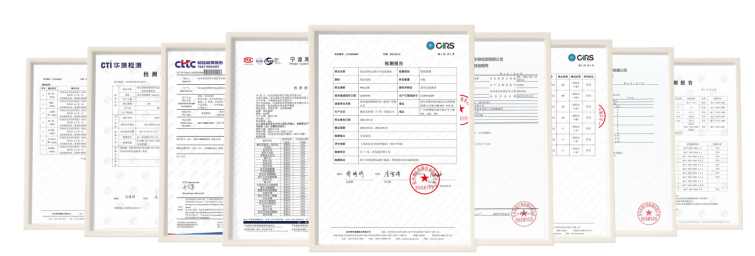
兔头妈妈:售出产品均符合安全标准 去年已完成品控升级
Jing Ji Guan Cha Wang· 2025-12-01 03:31
Group 1 - The core issue revolves around the controversy faced by the well-known domestic baby care brand, Rabbit Head Mama, due to a non-compliance result from a market inspection of a children's shampoo last year [1] - The brand's representative, Dai Yuzhou, clarified that the non-compliant batch of 6,864 bottles was destroyed and never reached the market, emphasizing that all products meet national safety standards [1][2] - The company has implemented a "zero tolerance" principle for product quality and has upgraded its quality management system, focusing on microbial control and collaborating with third-party testing agencies [2] Group 2 - The quality management core focuses on proactive prevention and transparent management, with plans to open an information disclosure column for raw material tracing, testing reports, and rectification updates [4] - The brand acknowledges the unique challenges in quality control within the baby care industry, given the physiological vulnerabilities of the target demographic, and aims to establish unified industry quality control standards [4]