品牌价值感

Search documents
西贝称仍有新店陆续开业
第一财经· 2025-11-11 03:30
Core Viewpoint - The article discusses the operational adjustments of Xibei, a Chinese restaurant chain, including the closure and opening of stores as part of normal business practices, while also addressing the impact of a recent controversy regarding pre-prepared dishes and the subsequent promotional strategies employed to attract customers [3][4][5]. Group 1: Store Operations - Xibei has announced that the opening and closing of stores are normal operational behaviors in the restaurant industry, with dynamic adjustments based on business conditions [3]. - Recently, Xibei has closed stores in cities such as Shenzhen, Shantou, and Yiwu, while also planning to open eight new locations by the end of the year [3]. - The company aims to enhance service quality, optimize menu offerings and pricing, and improve customer dining experiences through initiatives like kitchen transparency and customer feedback [3]. Group 2: Response to Controversy - In September, Xibei faced backlash over its use of pre-prepared dishes, leading to a public apology and a commitment to adjust its production processes to prioritize on-site cooking [4]. - Following the controversy, Xibei implemented menu changes, including transitioning certain children's meals to be freshly prepared in-store [6]. Group 3: Promotional Strategies - To counteract a significant drop in customer traffic due to the pre-prepared dish controversy, Xibei has been issuing various discount coupons, such as a 100 yuan no-threshold coupon and a 50 yuan voucher for purchases over 50 yuan [7]. - The promotional strategy has reportedly led to a noticeable increase in customer traffic and sales across multiple locations, alleviating some operational pressures [7]. - However, experts warn that frequent promotions may undermine the brand's high-end image and lead to long-term challenges in maintaining perceived value among consumers [7].


西贝更换门头了
Di Yi Cai Jing Zi Xun· 2025-10-16 08:26
Core Viewpoint - The recent changes in the logo and branding of Xibei restaurant have sparked consumer dissatisfaction, primarily due to concerns over food quality and brand integrity rather than the logo itself [2][3][4]. Group 1: Brand Changes - Xibei has updated its logo from a red and white color scheme to a white and green one, with the name changing from "Xibei Youmian Village" to "Xibei I Come from the Grassland" [2]. - The restaurant staff clarified that the new slogan is not a replacement for the logo, which remains as "Xibei" [2]. - The company had previously announced a logo refresh at the beginning of the year, maintaining the red and white color scheme [2]. Group 2: Consumer Sentiment - Consumer anger towards Xibei is linked to a perceived betrayal regarding food quality, especially following controversies surrounding pre-prepared dishes [3][4]. - The brand's higher pricing strategy targets middle to high-income consumers, who may feel deceived if the quality does not meet expectations [3]. Group 3: Marketing Strategies - In response to declining customer traffic, Xibei has been issuing various discount coupons, effectively lowering prices to attract customers [4]. - The strategy of offering no-threshold and tiered discount coupons has shown short-term success in increasing foot traffic and sales [4]. - However, there are concerns that prolonged discounting may damage the brand's high-end image and lead to a perception of lower quality among consumers [4]. Group 4: Store Closures - Due to the impact of reduced customer traffic, Xibei's Shantou store has announced its closure on October 19 [5].
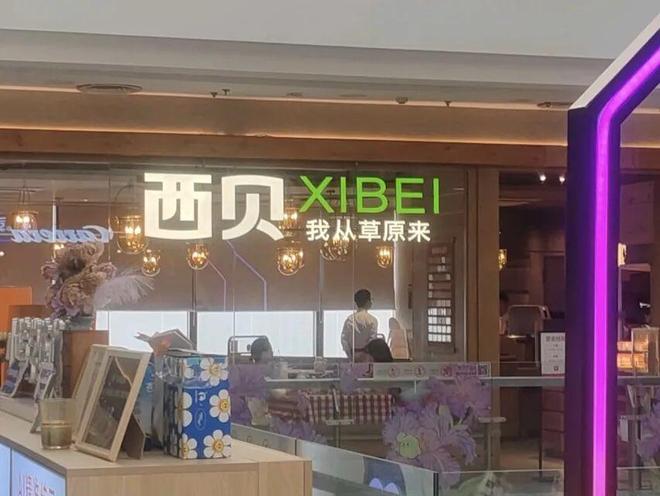
西贝更换门头了,叠加代金券能否赢回消费者的心?
Di Yi Cai Jing· 2025-10-16 07:58
Core Viewpoint - The recent changes in the logo and promotional strategies of Xibei are responses to consumer dissatisfaction and declining foot traffic due to the "pre-made dishes" controversy, highlighting the need for improved product quality and service rather than mere branding adjustments [4][6]. Group 1: Logo and Branding Changes - Xibei has updated the logo at its Shijingshan Wanda store from a red and white color scheme to a white and green one, with the slogan changing to "I come from the grassland" [1][3]. - The company clarified that the logo remains the same, with the color change being part of an advertising strategy rather than a complete rebranding [3]. Group 2: Consumer Sentiment and Market Position - Consumer anger towards Xibei stems not from the logo change but from feelings of betrayal regarding food quality, especially given the brand's higher pricing targeting middle to high-income consumers [4]. - The recent controversy has significantly impacted loyal customers, particularly parents seeking quality food for their children, leading to a perception of diminished brand trust [4]. Group 3: Promotional Strategies - In response to declining customer traffic, Xibei has been issuing various coupons, including a 100 yuan no-threshold coupon and a 50 yuan discount for purchases over 50 yuan, to attract consumers and boost sales [5][6]. - While these short-term strategies have shown immediate success in increasing foot traffic and sales, there are concerns that prolonged discounting may harm the brand's high-end image and consumer perception of quality [6]. Group 4: Store Closures - Due to the impact of reduced customer traffic, Xibei's Shantou Wanda store has announced its closure on October 19, with options for customers to refund unused balance on stored value cards [6].
霸王茶姬20250610
2025-06-10 15:26
Summary of Bawang Chaji Conference Call Company Overview - **Company**: Bawang Chaji - **Industry**: Tea Beverage Industry Key Points Financial Performance - Bawang Chaji's single-store model is robust, with annual revenue exceeding 5 million yuan, demonstrating significant operational efficiency [2][3] - In Q1, the average monthly sales per store were approximately 430,000 yuan, showing a slight year-on-year decline, but improvements were noted in May with new product launches [2][6] - The company anticipates revenue growth of 10%-20% in the future [2][3] Market Position and Competition - Bawang Chaji holds a competitive edge in the tea beverage market, particularly in the price segment above 10 yuan, where it competes strongly with brands like Gu Ming and Mi Xue Bing Cheng [4] - The company has a projected profit of approximately 2.5 billion yuan for 2024, ranking second in the new-style tea beverage sector [4][23] - The brand's high repurchase rate and strong brand value are validated by its leading Baidu search index compared to competitors [2][8] Expansion Plans - The company plans to slow down domestic store openings, focusing on refined management and profitability for franchisees, with a target of 1,000 new stores in 2025 [10][31] - Bawang Chaji is expanding internationally, with Singapore stores achieving over 20% operating profit margins and plans to enter multiple Southeast Asian countries and California in the U.S. [13][31] Product Innovation and Marketing - New product launches, including collaborations with celebrities, are expected to drive sales and potentially act as catalysts for stock price increases [7][9] - The company emphasizes brand building over traditional marketing, focusing on product series expansion and maintaining a strong brand presence [9][19] Operational Efficiency - Bawang Chaji has streamlined its supply chain, achieving over 90% sales concentration on its main product, "Tea Latte," and reducing raw material costs from 59% in 2022 to 49% in 2024 [20] - The company utilizes automation and digital tools to enhance operational efficiency, with top-performing stores achieving daily sales of 1,300 cups [20] Future Growth Projections - Revenue is expected to grow by 24% in 2025 and 20% in 2026, reaching 15.3 billion yuan and 19 billion yuan, respectively [33] - The company anticipates a net profit of 2.91 billion yuan in 2025 and 3.51 billion yuan in 2026, with adjusted net profit margins potentially declining due to increased investments [35] Risks - Bawang Chaji faces risks including changing consumer preferences, intensified market competition, underperformance in overseas markets, and food safety concerns [37] Valuation - The company is valued at a target price of $41.5, based on a projected P/E ratio of 19 for 2025, reflecting its position in the premium tea beverage market and growth potential in international markets [36]