品牌形象维护

Search documents
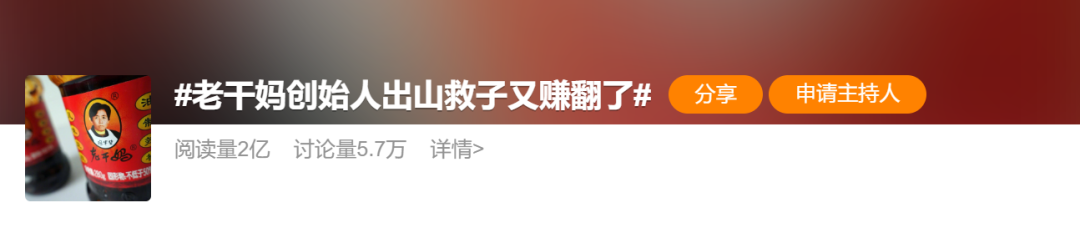
老干妈否认为节省成本换原料!78岁陶华碧被曝出山救子?工作人员回应
Mei Ri Jing Ji Xin Wen· 2026-01-14 07:41
Core Insights - Lao Gan Ma ranked 57th in the "Top 100 Enterprises in Guizhou 2025" with a revenue of 5.391 billion yuan in 2024, a slight increase of 0.18% from 5.381 billion yuan in 2023, marking three consecutive years of growth and nearing its historical peak of 5.403 billion yuan in 2020 [1] Company Overview - Lao Gan Ma, founded by Tao Huabi in 1984, is a leading producer of chili products in China, known for its unique cooking methods and a wide range of products including flavored doubanjiang and chicken oil chili [5] - The company has become a sales hotspot since mass production began in 1996 and is recognized as one of the largest chili product manufacturers in the country [5] - The brand has gained international recognition, being referred to as "Lao Gan Ma" on many foreign e-commerce platforms and even considered a luxury condiment in the U.S. market [5] Management Changes - Tao Huabi stepped back from the company in June 2014, with her sons Li Guishan and Li Miaoxing taking over the ownership, with Li Miaoxing as the actual controller [1] - Reports suggest that the company's revenue resurgence is linked to Tao Huabi's return to management, although the company denies any changes to its production processes or ingredients [1][2] Product Quality and Consumer Perception - The company has faced consumer complaints regarding changes in taste, attributed to potential shifts in raw materials, but company representatives assert that the original production methods and ingredients remain unchanged [2] - The official response indicates that any perceived differences in taste may be due to evolving consumer preferences rather than changes in the product itself [2] Marketing and Online Presence - Lao Gan Ma's official social media accounts show limited activity, with the last post on its WeChat account dating back to March 2022, and its Douyin account having no live streaming activity in the past year [2][3] - The brand initially leveraged live streaming for marketing but has since reduced its engagement in this area, relying on pre-recorded content featuring Tao Huabi [3]

同仁堂澄清南极磷虾油虚假标注涉事企业非其子公司
Zhong Guo Jing Ying Bao· 2025-12-17 23:53
Group 1 - The core issue involves a false labeling incident related to Antarctic krill oil, where the company Beijing Tong Ren Tang Sichuan Health Pharmaceutical Co., Ltd. is incorrectly identified as a subsidiary of Beijing Tong Ren Tang Co., Ltd. [1][2] - Beijing Tong Ren Tang Co., Ltd. clarified that it is focused on the production and sales of pharmaceuticals, with no external third-party production involved [1][2] - As of December 17, the total market value of Beijing Tong Ren Tang Co., Ltd. is approximately 44.67 billion yuan [1] Group 2 - The Shanghai Consumer Protection Commission reported a potential fraud case involving a product labeled as "Beijing Tong Ren Tang 99% High Purity Antarctic Krill Oil," which claimed high phospholipid content but was found to have none [2] - The product in question is produced by Anhui Habao Pharmaceutical Co., Ltd. and distributed by Beijing Tong Ren Tang Sichuan Health Pharmaceutical Co., Ltd. [2]


龙芯中科名誉案终审胜诉
Zheng Quan Shi Bao Wang· 2025-12-02 11:52
Core Viewpoint - The court ruling in favor of Longxin Technology against Shanghai Chip United highlights the increasing importance of brand image and legal rights protection among domestic semiconductor companies in China [1][2]. Group 1: Legal Proceedings - Longxin Technology was awarded 450,000 yuan in damages and a public apology from Shanghai Chip United after a court ruling [1]. - The case originated from a lawsuit filed by Longxin Technology in March 2021, seeking clarification and damages for false statements made by Shanghai Chip United [1][2]. - The final ruling was upheld by the Beijing Fourth Intermediate People's Court, dismissing the appeal from Shanghai Chip United [2]. Group 2: Company Overview - Longxin Technology specializes in general-purpose processor design with its own instruction set architecture, LoongArch [2]. - The company has consistently focused on independent research and development, mastering core technologies in CPU instruction systems, processor IP cores, and operating systems [2]. Group 3: Financial Performance - For the first three quarters of the year, Longxin Technology reported revenue of 351 million yuan, a year-on-year increase of 13.94%, while experiencing a net loss of 394 million yuan [2]. - The company anticipates a concentrated revenue recognition from new orders in the fourth quarter, with expectations for significant growth in various business segments [3]. - Longxin Technology aims for a 30% annual revenue growth target, with a trigger value set at 24% for its stock incentive plan [3].

关税重压之下,美国商家今年“黑五”打不起折了
Hua Er Jie Jian Wen· 2025-11-12 03:40
Core Insights - The discounts during this year's Black Friday shopping season are expected to be significantly lower than in previous years due to tariff pressures and ongoing inflation impacting retailers' profit margins [1][2] - Retailers are facing a difficult choice between protecting profits and attracting price-sensitive customers amid declining disposable income [1][2] Group 1: Impact of Tariffs and Inflation - Tariff policies from the Trump administration have led to increased costs for many companies, from small sellers on Amazon to well-known brands, forcing them to reduce discount offerings [1] - Upstream Brands reported that the cost of a copper herb stripper has risen from under $20 last year to about $30 this year due to metal tariffs, making discounts financially unfeasible [1] - Therabody has raised product prices by 5% to 7% due to tariffs, indicating an inability to offer significant discounts as in previous years [1] Group 2: Consumer Spending Trends - GlobalData's Neil Saunders noted that retailers are in a dilemma, wanting to protect profits while knowing consumers expect discounts in a competitive environment [2] - A PricewaterhouseCoopers survey predicts a 5% decline in average consumer spending during this holiday season [2] - The University of Michigan's consumer confidence index has reached near historical lows, reflecting a challenging environment for retailers [2] Group 3: Brand Strategies - Some brands, including Coach and Nike, are proactively reducing discounts to maintain their premium brand image, which adds to the challenges for consumers seeking significant savings [2] - Coach's CEO Todd Kahn emphasized the company's strategy to avoid deep discounts to ensure products are perceived as worth full price, a strategy also adopted by Nike and Levi Strauss & Co. [2]
中经评论:跳转广告的“是非账”并不难算
Jing Ji Ri Bao· 2025-11-12 00:00
Core Viewpoint - The issue of "redirect ads" has sparked public backlash, highlighting the need for regulatory pressure and accountability from advertisers like Taobao to address user dissatisfaction and potential harm to brand image [1][2][3] Group 1: Advertising Mechanism - Redirect ads involve two main parties: advertisers like Taobao (the "client") and various apps that display the ads (the "media") [2] - Advertisers typically purchase ad exposure services, while the method of ad display (pop-up or redirect) is determined by the media [2] - During major sales events like "Double 11," advertisers increase ad spending, but the technical setup of ads is independently managed by the media, limiting advertiser control [2] Group 2: Market Dynamics - In the first three quarters of this year, internet advertising revenue for leading enterprises reached 712.88 billion yuan, a year-on-year increase of 22.5%, accounting for over 80% of total ad revenue [3] - The financial incentive for platforms to engage in redirect ads is significant, as each user interaction can generate substantial revenue [3] Group 3: Solutions and Responsibilities - To effectively address the issue of redirect ads, regulatory bodies should enhance enforcement and establish clearer guidelines, while advertisers must take responsibility by setting terms that minimize user disruption [3] - A poorly received ad can damage brand reputation, emphasizing the importance of long-term user goodwill over short-term click metrics [3]

西贝更换门头了,叠加代金券能否赢回消费者的心?
Di Yi Cai Jing· 2025-10-16 07:58
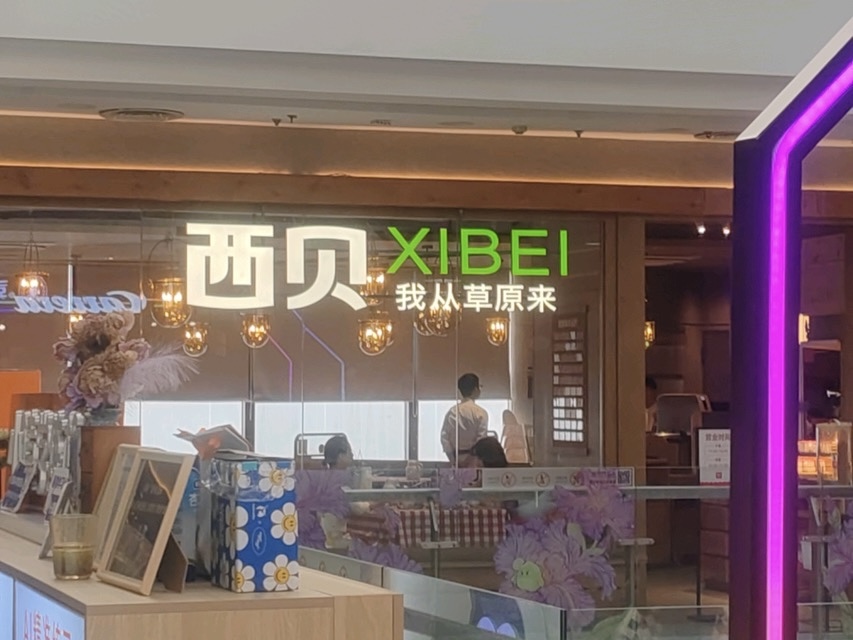
Core Viewpoint - The recent changes in the logo and promotional strategies of Xibei are responses to consumer dissatisfaction and declining foot traffic due to the "pre-made dishes" controversy, highlighting the need for improved product quality and service rather than mere branding adjustments [4][6]. Group 1: Logo and Branding Changes - Xibei has updated the logo at its Shijingshan Wanda store from a red and white color scheme to a white and green one, with the slogan changing to "I come from the grassland" [1][3]. - The company clarified that the logo remains the same, with the color change being part of an advertising strategy rather than a complete rebranding [3]. Group 2: Consumer Sentiment and Market Position - Consumer anger towards Xibei stems not from the logo change but from feelings of betrayal regarding food quality, especially given the brand's higher pricing targeting middle to high-income consumers [4]. - The recent controversy has significantly impacted loyal customers, particularly parents seeking quality food for their children, leading to a perception of diminished brand trust [4]. Group 3: Promotional Strategies - In response to declining customer traffic, Xibei has been issuing various coupons, including a 100 yuan no-threshold coupon and a 50 yuan discount for purchases over 50 yuan, to attract consumers and boost sales [5][6]. - While these short-term strategies have shown immediate success in increasing foot traffic and sales, there are concerns that prolonged discounting may harm the brand's high-end image and consumer perception of quality [6]. Group 4: Store Closures - Due to the impact of reduced customer traffic, Xibei's Shantou Wanda store has announced its closure on October 19, with options for customers to refund unused balance on stored value cards [6].
线上乱价治理:不只是管价格,更是在保品牌
Sou Hu Cai Jing· 2025-09-03 05:35
Core Viewpoint - The article discusses strategies for brand owners to manage online pricing order and address low-price sales behavior, emphasizing the importance of compliance with intellectual property rights and legal regulations [1][8]. Group 1: Brand Self-Governance Core Measures - Brand owners should utilize intellectual property and legal compliance measures to report infringing products on e-commerce platforms, prompting the removal of such items [1]. - Reporting false or exaggerated advertising practices to market regulatory authorities is essential for maintaining a fair competitive environment [1]. Group 2: Multi-Dimensional Collaborative Governance Mechanism - Understanding the operational norms of various e-commerce platforms, such as prohibiting predatory pricing, is crucial for addressing violations through official reporting mechanisms [4]. - Strengthening sales channel management by signing price maintenance agreements with distributors to clarify pricing standards and penalties for breaches is recommended [4]. Group 3: Price Monitoring System and Strategy Optimization - Establishing a real-time price monitoring system using keyword searches and image recognition technology to identify low-price sales links accurately is vital [4]. - Developing a scientific pricing strategy with defined price fluctuation ranges and standardized promotional activity execution is necessary to prevent internal channel conflicts [4]. Group 4: Platform Collaboration and Third-Party Resource Introduction - Collaborating with major e-commerce platforms to create information-sharing mechanisms for identifying abnormal pricing behaviors is beneficial [5]. - Engaging professional price control service agencies can enhance the efficiency of detecting and addressing violations through comprehensive monitoring capabilities [5]. Group 5: Long-Term Mechanism Construction and Value Enhancement - Establishing a dedicated price management team to conduct ongoing market data analysis and dynamically optimize control strategies is essential [5]. - Enhancing product value through additional services or extended warranties can improve brand competitiveness and reduce consumer reliance on price factors [5]. Group 6: Compliance and Risk Prevention - All pricing control measures must strictly adhere to antitrust laws to avoid illegal practices such as fixed resale prices or market division [8]. - Ensuring that price management does not infringe on consumers' rights to make reasonable choices is critical [8]. - Regular follow-ups on previously addressed violations can prevent recurrence, and publicizing the results of violation handling can deter other merchants from engaging in low-price behaviors [8].

除了Swatch,这些品牌也曾在争议问题上翻过车
第一财经· 2025-08-17 14:26
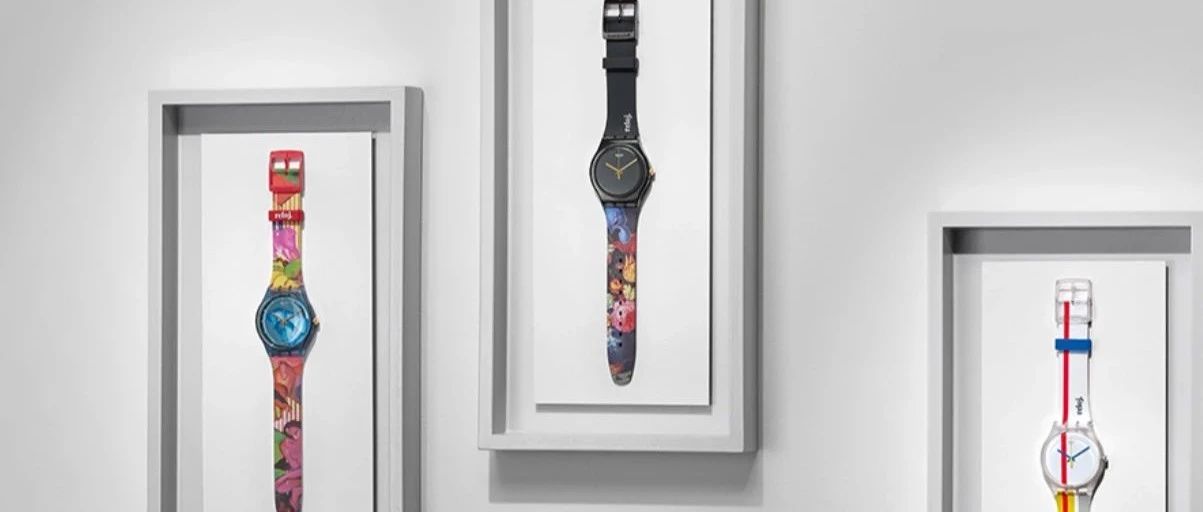
Core Viewpoint - The article discusses the controversies faced by international brands, particularly in the context of advertising that has been perceived as discriminatory or culturally insensitive, highlighting the need for brands to understand and respect local cultures when entering new markets [3][10]. Group 1: Swatch Controversy - Swatch faced backlash due to a controversial advertisement featuring a "squinty-eyed" image, which sparked discussions about cultural sensitivity in marketing [3][10]. Group 2: Philipp Plein Incident - Philipp Plein produced a limited batch of T-shirts with offensive slogans in 2007, which resurfaced years later, leading to public outrage and a subsequent apology from the brand [4][6]. - Despite the apology, the brand's reputation suffered in China, with limited offline presence and a lack of widespread recognition [6]. Group 3: Dolce & Gabbana's Missteps - Dolce & Gabbana faced significant backlash in 2018 for an advertisement that depicted an Asian model struggling to use chopsticks, which was deemed racially insensitive [7]. - The brand's founders issued a public apology after a wave of criticism and celebrity boycotts, highlighting the importance of cultural respect in marketing [7][10]. Group 4: Dior's Advertising Issues - Dior's 2023 makeup advertisement featuring an Asian model performing a "pulling the eyes" gesture led to accusations of Asian discrimination, echoing previous controversies [8][9]. - The brand clarified that the controversial image was part of an artistic project rather than a commercial advertisement, but the incident raised questions about the portrayal of Asian aesthetics in marketing [10]. Group 5: Recommendations for Brands - Experts suggest that international brands should adopt a more humble approach when entering new markets, emphasizing the importance of understanding local customs, culture, and consumer preferences to avoid marketing failures [10].
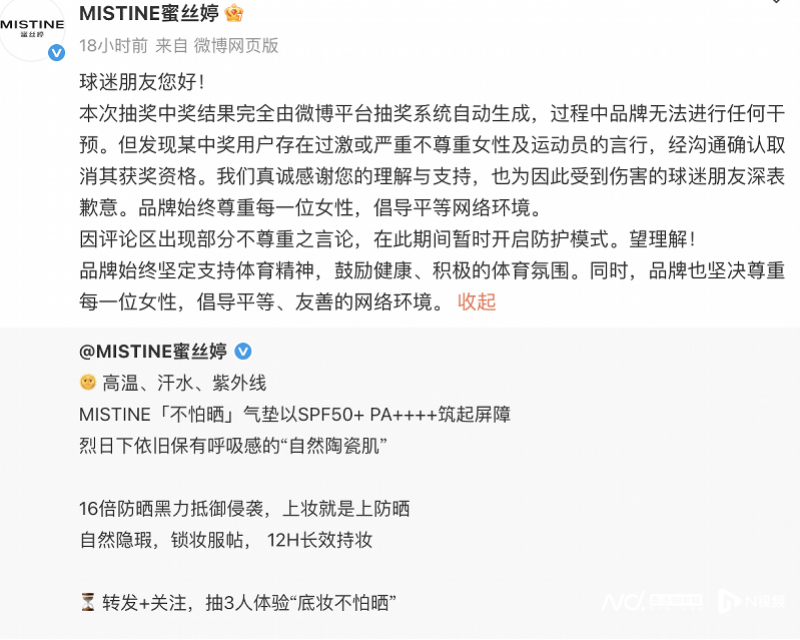
抽奖活动中奖者言行涉嫌侮辱运动员,蜜丝婷道歉,球迷不买账
Nan Fang Du Shi Bao· 2025-07-01 16:11
Core Viewpoint - The company MISTINE issued an apology on July 1 for a lottery event that led to disrespectful comments towards a female athlete, clarifying that the lottery results were generated automatically by the Weibo platform and that they had no control over it [1][4]. Group 1: Apology and Response - MISTINE stated that they canceled the prize of a user who exhibited disrespectful behavior towards women and athletes after discovering the issue [1][4]. - The company expressed sincere apologies to fans who were hurt by the incident and emphasized their commitment to respecting all women and promoting an equal online environment [5][6]. Group 2: Public Reaction - Many fans were dissatisfied with MISTINE's apology, accusing the brand of evading responsibility and not addressing the issue of allowing disrespectful comments to proliferate in the comments section [6]. - Fans demanded a direct apology to the female athlete rather than a general apology to "fans" [6]. Group 3: Company Background - MISTINE, established in 1988, is a cosmetics brand under Bhatrawee Co., Ltd. from Thailand, known for its sunscreen products in the Chinese market, differing from its reputation in Thailand for color cosmetics [6]. - The brand has faced previous controversies, including allegations of falsely advertising SPF values in their sunscreen products and issues with counterfeit products in the Chinese market [7].